





![Does ta’wīl mean interpretation or fulfilment? A Quranic reassessment [+video]](https://muslimviews.co.za/wp-content/uploads/2026/10/Tawil-Kaskas-360x180.webp)












![Why becoming a wealthy Muslim is commendable in Islam [+videos]](https://muslimviews.co.za/wp-content/uploads/2026/09/Muslim-Trade-Business-1-360x180.webp)




Countries in the Global South should continue to be vigilant of the creeping scope of neocolonialism on its governance and be able to eradicate the conditions which will allow for the continued control of their countries.
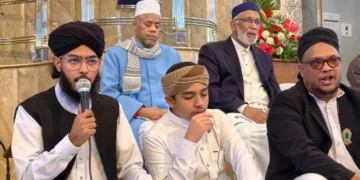
SEDICK CROMBIE was one of three keynote speakers invited by Brainware University in Kolkata, India to address the fourth International Conference hosted by the university’s Department of English and Literary Studies on May 17, 2025. The theme of the conference was ‘Understanding the Global South: Transition and Transmission’. The topic focused on contextualising the term Global South, the consequences and influence of colonialism, neo-colonialism and the case of Africa.
The topic will focus on three key areas:
- Understanding the context of the Global South and other terminology
- The consequences of colonialism and neo-colonialism and the perpetuation of its influence on the Global South
- Transition and transmission and the case of Africa – removing the yoke of subjugation
Understanding the context of the Global South and the concomitant parts
It is widely accepted that the term Global South was coined in 1969 by American political activist Carl Oglesby, during the era of the Vietnam War. The term was a collective one which denoted countries that make up the Global South and include those in Africa, Latin America, Middle East, Asia and the Caribbean.
Despite its denotation it was not one determined by geographical location – southern hemisphere – but rather by factors such as countries beset by challenges of poverty, inequality, education, healthcare, and dependence on foreign aid. Countries in the southern hemisphere such as Australia, New Zealand, and countries in Asia such as Japan and Singapore, including Israel, were excluded from this categorisation. What seems obvious and interesting to note is that the term mostly includes countries inhabited by Black and Brown people. It would thus be hard to resist the conclusion that the term Global South is a construct based on racism.
The factors which continue to demonstrate the disparity between the Global South and the wealthier Global North are unfortunately a facet of history and its current context is a throwback and legacy of that history. One cannot divorce this aspect, and the continued status quo of this divide has further been perpetuated and continues to be embedded by other facets of history.
Here the continent of Africa is a case in point. Africa is a continent richly blessed with natural resources ranging from every mineral imaginable to vast tracks of fertile and arable land, water, flora and fauna not found anywhere else. Despite the immense wealth and possession of vast mineral deposits, the countries on the continent remain in a perpetual state of development, underdevelopment, lacking in basic amenities for its population and beset by abject poverty, dependent on international aid.
Africa continues to be labelled with a derogatory label of ‘The Dark Continent’, (a pejorative term) indicating its backwardness, despite the vast wealth under its surface. A cursory glance at the table below indicates some of the natural resources that the continent is blessed with.
| Resource (minerals and other) | Percentage of the World’s Reserves | Usage |
| 1. Oil | 9% of the world reserves | Currently there is further exploration done across different countries to unearth latent deposits |
| 2. Platinum | 90% of world supply | Platinum is used in catalytic converters for motor vehicles. South Africa holds 90% of reserves |
| 3. Cobalt | 80 to 90% of global supply | Cobalt is used in lithium-ion batteries, aerospace and healthcare. It is critical for enhancing battery performance |
| 4. Gold | 27% of the world’s gold | Gold is used as a symbol of wealth and was previously used as a means of intrinsic value during an exchange and trading |
| 5. Manganese | 69% of the world’s manganese supply | Manganese is essential for human health and is used in healthcare |
| 6. Uranium | 35% of world supply | Uranium is a critical and vital component necessary in nuclear energy production |
| 7. Diamonds | 60% of the world’s reserves | Diamonds are valued for their beauty and durability. |
| 8. Arable land | 874 hectares of the world’s arable land | Remains 60% of the world’s uncultivated arable land reserves |
The information in the table above was compiled from various source material and are listed in the reference material
Although the topic and context of the Global South does not solely relate to Africa alone, the exercise and table is indicative of why Africa has been so viciously exploited and plundered.
The Global South, and Africa in particular, have experienced and continue to experience different forms of exploitation which come in different forms and through different mechanisms and institutions. Upon the realisation by the Global North that Global South, especially Africa, is possessed with great and abundant reserves of natural resources and wealth, it became a rush to claim ownership of the resources in Africa. This rush became known as ‘The Scramble for Africa’ and later known as colonialism.
Colonialism and its influence on the Global South:
Colonialism is defined as:
‘…a practice or policy of control by one people or power over other people or areas, often by establishing colonies and generally with the aim of economic dominance.’
and
‘The act of taking control of an area or a country that is not your own, especially using force and sending people from your own country to live there’.
If we look at the history of colonialism, it is patently clear that it has not brought overwhelming benefits to the native populations it subdued and controlled, and certain writers try to whitewash its consequences. The influences and aftermath of colonialism on different countries in Latin America, Asia, Africa, Middle East and the Caribbean have been debilitating and left the countries on these continents poverty stricken, undeveloped and underdeveloped. The latter two are concomitant terms and intermittently used with colonialism to describe and denote countries in the Global South.
The ‘Scramble for Africa’, as colonialism on the African continent became known – not excluding other countries in the Global South – were predominantly executed by European countries of which Britian, France, Spain, Portugal, Belgium and Italy were at the forefront of this ‘invasion of foreign lands’. This invasion of the Global South by Global North countries was sanitised through terminologies and contexts which framed it as something akin to the adoption of an adventurous spirit, ‘pioneering expeditions’, ‘discovery of new lands/territories’, ‘bringing civilisation’ and more. These terminologies would later play a defining role in shaping the perspectives of those around the globe and were subtly infused by the media and entertainment industry, but which were tools and techniques designed to make these invasions and control by foreign powers acceptable.
This process of sanitising colonialism can be defined in the psychological contexts of percepticide and perspecticide. These terms are best described by psychologists as a manipulative process of brainwashing victims into accepting abusive and controlling relationships.
In this context, the dominating power defines the terms of the relationship and determines what appropriate behaviour is. It is an adopted process aiming at bringing psychological terror to a victim/s, a measure which the colonisers utilised in the conquest of countries of the Global South. The process of percepticide and perspecticide is not done in an isolated context and is strengthened through the support and infusion of the mainstream media and entertainment industry. The latter industries purvey and entrench a narrative which absolves the perpetrator (the colonialist), from all blame and puts the blame for their precarious position squarely on the shoulders of the victim, in this case the colonised.
For centuries, countries in the Global South have endured profound exploitation under colonial rule, which has severely hindered – and continues to obstruct – their development.
Colonial powers from the Global North approached the Global South with calculated ruthlessness, subjugating indigenous populations through campaigns of psychological domination and enforced inferiority. Control was maintained through the application of violence and coercion, casting a long and painful shadow over the legacy of colonialism.
What initially appeared to be the beginning of trade relations was soon revealed as a strategy of domination and dispossession. When indigenous peoples resisted the unequal terms imposed by the colonisers – who were later referred to as settlers – the relationship devolved into systematic oppression and, in many cases, cultural and physical annihilation. Not only were the indigenous population subdued, and their population numbers decimated, but their language, culture, customs, habitat land, resources, traditions and more, eliminated.
The idea of percepticide and perspecticide is particularly powerful in understanding how colonialism was not just about territorial conquest but also about reshaping the identities, values, and worldviews of the colonised. In effect, colonial powers were not just stealing land and resources; they were also ‘stealing’ the minds and perceptions of the people they subjugated. What stands out in this process is how the colonial narrative painted the coloniser as the hero.
During the era of colonialism in Africa, the Americas, Middle East, Asia and the Caribbean millions of indigenes lost their lives when they did not wish to accept the yoke of colonialism. Below are some of the recorded figures of the loss of life during the era of colonialism:
- Belgian Congo – between 5 and 10 million people.
- Algeria during the French colonial rule – 5.6 million.
- Namibia during German colonial rule – 65 000 Herero and 10 000 Nama.
- South Africa during British rule – 100 000 people
- Morocco under French rule – more than 100 000 people
- Somalia under British rule – lost close to one-third of the population.
- Libya under Italian rule lost between 40 000 and 100 000 people.
- In 100 years, 56 million indigenous people were killed in South, Central and North America, according to studies by the University College of London.
- In 100 years, 100 million indigenous people lost their lives in India under British colonialism, and which spanned over a period of 40 years.
Neocolonialism and its continued effect on the Global South
The word ‘neo’ is derived from the Greek word ‘néos’ meaning new or recent. Neocolonialism is defined as:
‘… the subtle propagation of socio-economic and political activity by former colonial rulers aimed at reinforcing colonialism’
and
‘Neocolonialism is where another state (usually a former colonial power) has control over a nominally independent state (usually its former colony) through indirect means’
In analysing neocolonialism, it is understood as meaning colonialism in a new form, having undergone a metamorphosis, and where the former colonial power still controls its former colony. The term is just an adaptation of a new methodology and technique although remaining in control of its erstwhile colony and not really relinquishing its control. The reasons for this becomes patently obvious as to why this control is maintained, especially if we look at the previous table depicting the wealth which many of the former colonies possess.
Colonialism and its metamorphic form of neocolonialism have the same objectives, the only difference being the difference in approach. Where the previous colonial methodology has been very dogmatic and the wealth and resources exploited and plundered through force, under neocolonialism it is being done by stealth and sleight of hand by the colonial powers.
The modern-day approach of neocolonialism uses different mechanisms to colonialism while still maintaining the same outcome – ensuring the control and manipulation of its former colonies.
Despite many former colonies having thrown off the yoke of colonialism, they have not really shrugged off its influence and the continued exploitation of resources under neocolonialism. Many former colonies are still dependent and beholden to the exploitative practices of the former system under neocolonialism where the former colonial system has remained and only been refined.
A cursory glance of some of the continued colonial practices under neocolonialism show that despite its immense wealth the countries of the Global South, especially on the African continent, remain impoverished.
Francophone Africa, which includes countries of the former colonial power, France, is a clear demonstration of how the process of colonialism has evolved into neocolonialism. The Francophone countries in North and West Africa, although having received independence during the 1960’s, are still largely dependent on their former colonial power. These countries, some which include Niger, Burkina Faso, Benin, Ivory Coast, Chad, Central African Republic (CAR), Algeria, Morocco, Tunisia, Gabon, Republic of Congo, Senegal etc. still use the French franc (CFA) as their national currency. These currencies are still being printed in France; this, despite France not using the French franc as its own national currency but instead using the Euro.
The French Central Bank is further used as a depository for the gold reserves of these Francophone countries. Mali, a former colony has 14 gold mines but zero gold reserves in its Central bank, while another, Democratic Republic of Congo (DRC) has five gold mines but no gold reserves in its Reserve Bank. France has no gold mines but is the fifth largest holder of gold reserves in the world.
The trade relations between the former colonial power, France, and its colonies further determine that any trade contracts which these countries intend to establish with a foreign partner must first be afforded to French companies and only if not feasible can these be offered to other countries’ companies.
The governments of these Francophone countries must also allow France to establish and maintain military bases in most of these former colonies. The prevalence of military bases by former colonial powers is not only the prerogative of France, but many other countries from the Global North. The statistics show the number of military bases which countries of the Global North have in countries of the Global South,
- United States of America: 759 bases in 80 countries
- France: 5
- Russia: 12
- United Kingdom: 60
These bases are often used for rapid deployment during times of internal upheavals in former colonies or when the leadership of the former colonial power perceive that their strategic interests might be under threat.
The most damning indictment in the maintenance of control of former colonies by the Global North is the practice of removing popular leaders of countries in the Global South and the instillation and imposition of compliant ones who are well disposed to the former colonial power. These ‘leaders’ or presidents that have been parachuted into these positions are kept in power for decades, usually with the support of the army or former colonial power to ensure that the colonial agenda continues unfettered. If there are any upheavals, aimed at unseating such illegitimate ‘leaders’ or presidents foisted on the local populations, then the former colonial power reserves itself the right to intervene in such domestic politics of the former colony.
The media is also a vehicle to perpetuate the narrative of percepticide and perspecticide whereby it is utilised to denigrate and run a relentless publicity campaign against populous leaders and direct facetious claims against progressive leaders.
The strategy is to claim that they are oppressing their own population, and to save ‘democracy’ an invasion, coup or even assassination of such leaders is adopted as a means and justification to remove them and conduct a regime change. This unlawful intervention is framed as justified action despite it not having any legal standing in international law nor conducted through international institutions. Claims by the usurpers would include ‘protecting democracy’ and ‘ensuring that the human rights of the population of the former colony were not infringed’.
If a leader or popular grassroots movement, opposed to the objectives of the former colonial power becomes too popular, covert tactics will be used to ensure such popular movements are put down, usually through operations by spy agencies of the Global North. These actions continue to occur across the former colonies of the Global South, from South America to Africa and the Far East.
There are many examples where popular leaders or movements were first tarnished through a vicious media campaign and then violently removed or put down, especially when it is vehemently opposed to the erstwhile colonial power. We have witnessed how Thomas Sankara, former President of Burkina Faso was assassinated when he tried to give greater impetus and establish full independence to his country, making a clean break from the colonial power. This also happened to Muammar Gaddafi, Libyan President, who was violently killed when he demanded to be paid in gold for his country’s oil and his attempt to create a unified African with one currency. Even President Saddam Hussein was brutally killed when he decided to go against the colonial agenda and requested payment for his country’s oil in gold, thus moving away from the American dollar dominated Global currency. There have been many other leaders from the Global South who have met the same fate: Patrice Lumumba, Idi Amin, Salvadore Allende etc.
Colonialism and its transformation into neocolonialism has continued to leave its debilitating consequences on the Global South. Claims that colonialism has ensured development and advancement to the Global South is not supported by its legacy and what is happening on the ground for the indigenous populations of the colonised countries.
According to the Afrocania site, it is claimed that Ghana (20% of global cocoa exports) and Ivory Coast (75% of global cocoa exports) together with Ecuador are the biggest exporters of cocoa beans to the Global North. Ghana’s cocoa exports result in a return of $125million, while the chocolate industry, derived from the cocoa beans, ensures for France a return of $3,1 billion in processed cocoa beans.
Three hundred and seventy years of colonialism and neocolonialism in South Africa has continued to embed and entrench the greatest disparity in income inequality between rich and poor in the world. The Gini coefficient – the measurement tool by which this disparity is conducted – places South Africa between 0.63 and 0.67, which remains as one of the highest in the world. The range the measuring tool uses is between 0 – which denotes perfect equality – and 1 –which denotes perfect inequality. South Africa is well over the halfway threshold of inequality. This inequality continues to remain a sad indictment and an unwelcome legacy that exists between rich and poor and the haves and have-nots for this extremely mineral rich country.
What makes it equally disturbing is that South Africa possesses 80% of the global platinum reserves, a mineral which is an essential component in catalytic converters in motor vehicles to minimise the toxic emissions. It is therefore unfathomable as to how this country could continue to have such disparities in wealth distribution in its society, where the global motor industry is dependent on this resource.
South Africa is also a country which possesses gold, uranium, cobalt, diamonds, coal and more. It is furthermore a country which numbers seven US-Dollar billionaires amongst its richest people, four of whom count among the top ten richest people on the African continent. To top it all, the unemployment figures in the country, according to Statista (Statistics South Africa) for 2024 stand at 33,17%.
These vast disparities remain part of the colonial legacy and has seamlessly become an integral component of the neocolonial order where selected individuals, who hold political sway and are connected, are earmarked, ‘captured’ and made part of the neocolonial project. The new political elite continues to allow its own populations to remain poverty stricken.
The Global South countries therefore remain plagued by such inequality, a direct result of the perpetuation of the ravages and consequences of historic colonialism and prevailing neocolonialism. Although colonialism in its coercive form has receded, the residue it left and its new adaptation as neocolonialism, continues to leave the Global South in extreme poverty and degradation.
The legacy and impact which these interventions from the Global North have made to the Global South are evidenced in the lack of infrastructure, low quality of life of indigenous populations, disease, child labour, continued exploitation, unequal trade relations, suppressing of popular uprisings, currency manipulation and more. This status quo means the Global South labours and remains disadvantaged and underdeveloped.
The Global South: Transition and transmission, and the rise of Africa
It is obvious that the Global South has been strategically kept impoverished at the expense of enriching the Global North. Centuries of colonialism and modern-day neocolonialism have led to the underdeveloped and under-resourced status of the Global South.
There have been attempts to try and rid the countries of the Global South from the yoke of colonialism and neocolonialism together with its concomitant parts of slavery, imperialism, economic exploitation, plundering and more. The attempts to eradicate the Global South countries from this scourge have been an insurmountable task and have been conducted in a haphazard fashion by individual countries and their leaders. These sporadic actions led to abject failure and the demise of many progressive leaders from the Global South.
There are many factors as to why this push back from the Global South leaders has been so difficult to accomplish. The Global North has not only continued to perpetuate the spectre of colonialism in its revamped form but has utilised different institutional mechanisms and thrown global forums into the equation. These latter mentioned bodies have all been established to ensure the neocolonial system maintains its stranglehold and global hegemony over the Global South.
Global institutions and organisations such as the World Bank, International Monetary Fund (IMF), World Trade Organisation (WTO), United Nations (UN) and the UN Security Council (UNSC), International Court of Justice (ICJ), International Criminal Court (ICC), G7 countries (representing the world’s seven richest countries), G20 countries, financial institutions such as the US Federal Reserve, and ratings agencies such as Standards and Poor, Fitch, Moody’s and even the North Atlantic Treaty Organisation (NATO) etc. are all tools and ,mechanisms to control and manage global activity. The activities they interact on in the global context range from political, economic, social, scientific, legal, trade, military intervention, humanitarian etc.
What is obvious, and a stark factor, is that in basically all these institutions the Global North continue to hold sway. They afford themselves the liberty and power to make unilateral decisions, are afforded veto powers to scupper decisions they deem to have a negative effect on their domestic policies and are in most cases overrepresented on forums, to ensure voting will always be slanted towards their perspectives. In the case of the World Bank, it is an unwritten rule that an American will always hold the presidency of the bank, while a European will hold the presidency of the IMF, a quid pro quo understanding between these Global North continents.
It is noticeable that the highest decision-making body in the world, the Security Council, (UNSC), consists of five permanent members of which the majority are from Global North countries. Only China represents the Global South, while the others are the United States, United Kingdom, France and Russia. The UN Security Council only adopts decisions on consensus, and history has shown that the Global North would ally against the Global South in the case of critical decisions. The Genocide taking place in Gaza, Palestine, currently is a stark example of this context, where the United States, and some of its allies such as the UK, France and Germany have always used their veto power to vote against any UN decision which criticises Israel’s activities in Occupied Palestine. This despite Israel violating the UN Charter and principles on numerous occasions.
What is important to note is that these global institutions are not inclusive or representative of the global population and its countries and are clearly slanted towards the Global North. Many issues which have changed the global landscape in recent decades have been determined by these different global institutions which are, in the majority cases, beholden to the Global North. The result is that the Global South is sidelined in critical decision-making platforms and marginalised in facets, such as economic advancement, which leads to continued debilitating poverty in their countries.
Furthermore, the Global South become beset by unfair trade practices, regime change initiatives, interference in their countries’ domestic affairs and its politics, the determination of unfair loan agreements from the IMF and World Bank, dumping of agricultural and other products in their countries, perpetuation of slave and child labour, currency manipulation, a dumping ground for lethal, hazardous and toxic waste, becoming an offset for obsolete military equipment, armaments and non-biodegradable articles such as batteries, tyres, computers etc.
This marginalisation of the Global South has been the scourge which many of its leaders have tried in vain to eradicate from their countries. History is littered with examples of where attempts have been made to rid countries of it.
During the past two decades this context has started to change and came through the rise of alternative international structures such as BRICS and BRICS+ initiated by Global South countries. The unipolar world where the United States held sway as the sole superpower and used this hegemonic position to exert and determine the global outlook in its image, has led to the seeking and establishment of alternatives by Global South, to this hegemony.
The initial body, BRIC was first established in 2009 by Brazil, Russia, India and China; South Africa was invited as a full member in 2010 to become BRICS. The group became BRICS+ in 2024 and has now expanded to include Ethiopia, Egypt, United Arab Emirates (UAE), Iran and Indonesia (2025).
You may also want to read


Another critical factor in ensuring a more equitable spread of power and influence in world affairs and trade has been the initiative of de-dollarisation, where BRICS countries are actively seeking to bypass the United States (US) dollar to ensure it does not remain the sole reserve currency for international and global trade. The stranglehold which the dollar has on the world’s economies has been utilised by the US to weaponise the dollar’s strength and use it as a means of coercion to pressurise countries who do not follow the American geopolitical agenda.
The election of Donald Trump as US President in 2025 has drastically altered the landscape as he made his agenda clear: perpetuating and exacerbating the dictum of US hegemony and global supremacy over all global matters. The political ideology of Trump is further based on right-wing populism, anti-globalism and white conservative autocratic beliefs – an extremely racist doctrine.
The toxicity of this Trumpian ideology has led to Global South countries deciding to embark on and fast track the process of seeking alternative payment systems. This has expedited the de-dollarisation process and exploring alternative trading mechanisms and institutions to conduct trade amongst countries of the Global South. Many Global South countries are now conducting trade with trading partners using the Yuan (China), Rupee (India), Ruble (Russia) and their own currencies.
The manipulation of global currencies largely in favour of the US Dollar, together with the British Pound and Euro, has further necessitated this paradigm shift as foreign exchange is determined by the strength of these currencies. These three major currencies, with the US Dollar as the global reserve currency, has allowed the United States to dictate terms for the global economy and which always remains slanted in its favour.
The currencies of Global South countries are mostly ten- to forty-fold less than the American dollar. This allows the American administration and its businesses to gain a massive advantage in trade. Natural resources are bought from the Global South countries for a fraction of the price, remodelled into finished products and resold at exorbitant prices (in Dollars and Euros) to the country of origin.
This great disparity in exchange rates further allows Global North citizens greater access and benefits to different sectors in the Global South, such as tourism, property and more. The Global North citizenry can buy houses and stay at luxurious resorts at prices which local inhabitants cannot purchase nor afford to stay at. The converse is also true that Global South citizens cannot visit or buy in the Global North due to exorbitant prices. This neocolonialism measure is designed to maintain the inequality between the Global North and South and must be ameliorated to ensure the global stranglehold of global inequality is broken.
The rise of BRICS+, de-dollarisation, alternative international platforms for Global South trade and cooperation have led to many African countries becoming rejuvenated during the early half of 2020 in the process of ridding themselves from the yoke of colonialism and neocolonialism.
The process initiated in the West African region quickly picked up momentum as one country after the other emulated the former French colony of Mali in stamping their authority and seeking real independence from their former colonial power.
Although Mali gained independence from France in 1960, it was still beholden to France through the prevalence of the system of neocolonialism, where France maintained its hold over Malian affairs and exerted influence over the country’s natural resources, its currency and being allowed to house a military base in the country. In 2022 the government of Mali requested France to close its military base and leave the country.
In 2023, another former French colony, Niger, requested the same of France.
It was, however, the young and charismatic 38-year-old leader of Burkina Faso, Ibrahim Traore, who made the greatest impact when he joined the chorus which echoed across the West African region and told the former colonial power, France, to leave his country. The young Traore’s brand of leadership, youthfulness and clarity of vision quickly brought immediate changes to the lives of the country’s embattled and impoverished population. After only being at the helm for a short span of three years the trickling effect, which the young leader through his leadership style brought to Burkina Faso, left many in the Global North and Global South in awe and exasperation.
Under President Traore’s leadership, Burkina Faso has rejuvenated the agricultural sector and made his goal of food self-sufficiency very clear. In the publication, Malawi AC, February 7, 2025, his numerous achievements are listed. In only three years in office, he has brought immense benefits and clear independence from neocolonial powers and the institutions which perpetuate its influence.
President Traore has grown Burkina Faso’s Gross Domestic Product (GDP) from $18.8 billion to $22.1 billion. He has rejected loans from the IMF and World Bank and declared ‘Africa doesn’t need the World Bank, IMF, Europe or America’. This is indeed a clear paradigm shift and distancing from neo-colonialist influence. He even went beyond the normal practice prevalent in African countries where politicians pay themselves exorbitant salaries and obscene perks, something which their indebted countries can ill afford. Traore cut the salaries of Burkinabe (as Burkina Faso citizens are called) parliamentarians by 30% and increased that of civil servants by 50%. He continued in this vein and paid off all the country’s debt which allowed him not to be beholden to global financial institutions and exert their control through austerity measures imposed on countries seeking loans.
The President built a second tomato processing plant, a state-of-the art gold mine processing plant to stop the export of the country’s unrefined gold to Europe, built a second cotton processing plant and more. The focus on food self-sufficiency continued by encouraging and supporting the agricultural sector with the purchase of 400 tractors, 239 tillers, 710 motor pumps, 714 motorcycles, seeds and other farm equipment to enhance and boost agricultural production for rural stakeholders.
The spinoffs from President Traore’s interventionist strategy and distancing the country from neocolonial overlords has immediately brought benefits in production output. Tomato production increased from 315 000 metric tons in 2022 to 360 metric tons in 2024, while millet production rose from 907 000 metric tons to 1.1 million metric tons in 2024. The Burkina Faso president also took decisive action against the continued presence of its former colonial power and expelled French troops from the country, banned French military operations and the French media from the country. All this while he continued the remake of Burkina Faso, building a new international airport, housing complexes for its inhabitants and increasing the road network through laying thousands of kilometres of new roads.
The achievements his new leadership brought to the formerly indebted and poverty-stricken country was unmatched in the history of Burkina Faso. The presence of President Traore at the helm has invigorated Burkina Faso and it was like a breath of fresh air which pervaded and permeated the lives of the Burkinabe, allowing for a new pride to take hold amongst the population and especially amongst the younger generation.
This shift of ridding the country from the stifling influence of neocolonialism has not gone down well with the former colonial powers and there have been numerous attempts to assassinate him, instigate a coup to oust him, used the Western media and other compliant African heads of state to denigrate and criticise him as a dictator, usurper of power and despotic ruler. All the numerous attempts to oust him failed and instead aroused the population to pledge their total allegiance and protection of him.
The neocolonial control began to fray in the Central West African republics of Mali, Niger and Burkina Faso. The effect of this new awakening to the ravages which colonialism and neocolonialism continue to visit upon the rich natural resourced African continent have been dramatic.
Conclusion
The transition and transmission of the Global South from the depressing consequences and legacy of colonialism and neocolonialism to more equitable societies is a continuous process. Countries in the Global South should continue to be vigilant of the creeping scope of neocolonialism on its governance and be able to eradicate the conditions which will allow for the continued control of their countries.
The awakening has begun and the embarking on the creation of alternative global structures to harness their own development is taking shape. The establishment of a BRICS bank and the mooted drive for a BRICS currency together with the process of instituting the process of de-dollarisation, as a means of bypassing the dollar in trade, are sound initiatives in the transition and transmission of unburdening and alleviating the control of the Global North.
The Global South should similarly be cognizant of the benevolent aid, which the Global North continuously flouts as its demonstration of caring for the developed world. These aid mechanisms have similarly been used as tools of subservience to the Global North and are in essence a pittance and inconsequential in relation to the years of exploitation of the resources of the Global South. The mechanisms through which such aid is channelled, like the international non-governmental sector (NGO), are intertwined and linked to ensure the prevailing agenda of the Global North is maintained. These gestures of bringing aid to the embattled Global South are solely the soothing and stilling of a guilty conscience of endless colonial and neocolonial exploitation.
It would be wise of the Global North to refrain from interfering in the domestic affairs of the Global South countries and seek mutually beneficial relationships of trade, politics, defence, science, exploration etc. Although this would be the preferred objective it would be difficult to fathom because history has shown and continues to show, it remains a bridge too far.
Currently we are witness to how Palestine is being ravaged by a genocide by a colonial power that has all but taken the indigenes’ land and their resources. Where we believe the brutal consequences of rampant colonialism have been put to rest, it has reared its ghastly head in debilitating fashion in the last two years.
History has proven that it will be extremely difficult to convince the hegemonic and highly militarised Global North to allow their unfettered power and unilateral approach to global geopolitical issues to be diluted. Only through a unitary sense of purpose will the countries of the Global South extricate themselves from the harrowing consequences and influence of colonialism and neocolonialism as is currently shown by the AES (Alliance of Sahel States) countries which comprise Mali, Burkina Faso and Mali. This will ensure and lead to a successful transition and transmission of the Global South to take its rightful position and on an equal footing in global affairs.
Sedick Crombie is a former student of the University of the Western Cape (UWC) School of Government (SOG) and former media analyst for the Voice of the Cape (VOC) radio station. He is the author of the books My Apartheid Diary and South African Rugby – Untold stories of a divided country.
References:
- Carl Oglesby, ‘After Vietnam, What?’, Commonweal 90, no.001 (March 21, 1969)
- Dylan Sullivan and Justin Hickel (2022), ‘How British colonialism killed 100 million Indians in 40 years’, Al Jazeera
- Malawi ACE, February 2025 edition
- University College of London (UCL, 2022), community commons
- ‘Why Africa is the Real Powerhouse of the World’, Africa the Hidden engine behind Global Wealth (2025)
Links to source of the paper:
en.wikipedia.org
iep.utm.edu
https//byjus.com
https://www.communitycommons.org