
















![The market-builder who restrained the market [Part 2]](https://muslimviews.co.za/wp-content/uploads/2026/08/PHOTO-2026-08-25-17-16-32-360x180.jpg)
![The merchant preceding the Prophetic mission [Part 1]](https://muslimviews.co.za/wp-content/uploads/2026/08/01-360x180.jpg)






A reflection on Alex La Guma and the Battle of Cuito Cuanavale, highlighting Cuba’s role in Southern African liberation and enduring solidarity.
By SAALIEGAH ZARDAD
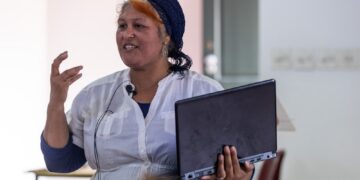
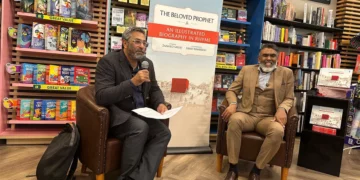
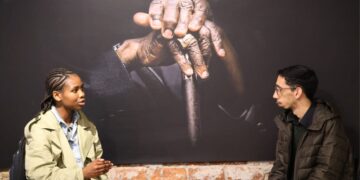
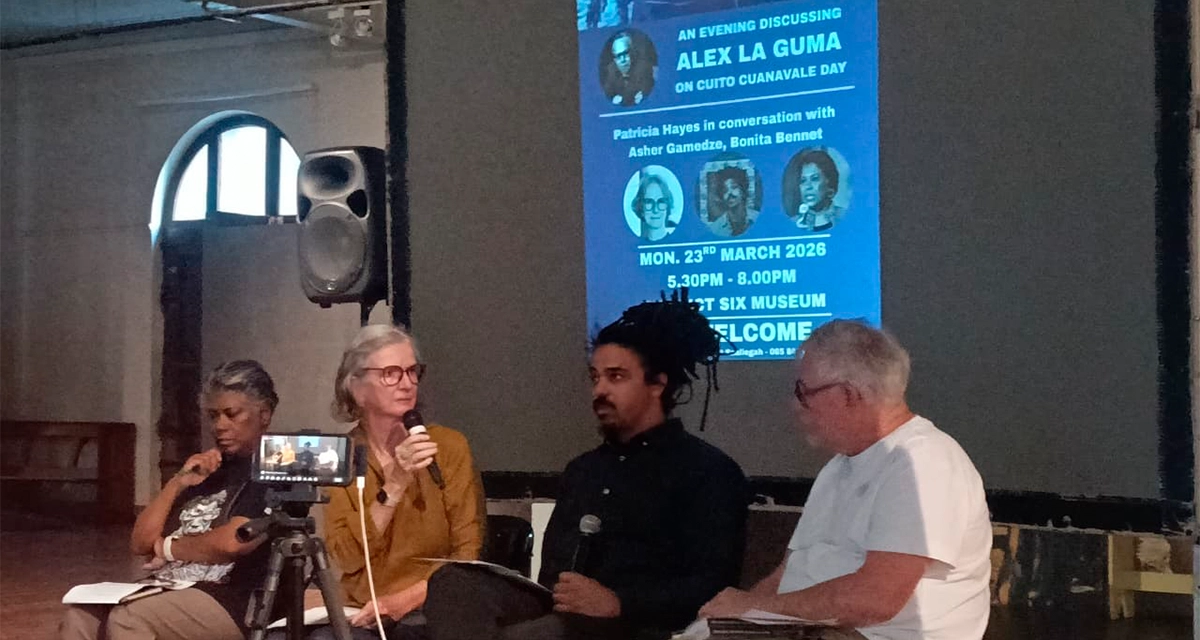
On Monday, March 23, 2026, on Southern African Liberation Day as commemorated in Southern African Development Community (SADC) contexts, the Friends of Cuba Society, together with the District Six Museum, hosted an event to commemorate the historic Battle of Cuito Cuanavale and to honour the life and legacy of South African revolutionary writer Alex La Guma. A distinguished panel composed of Patricia Hayes, Asher Gamedze, André Odendaal and Bonita Bennett joined us.
A voice from District Six
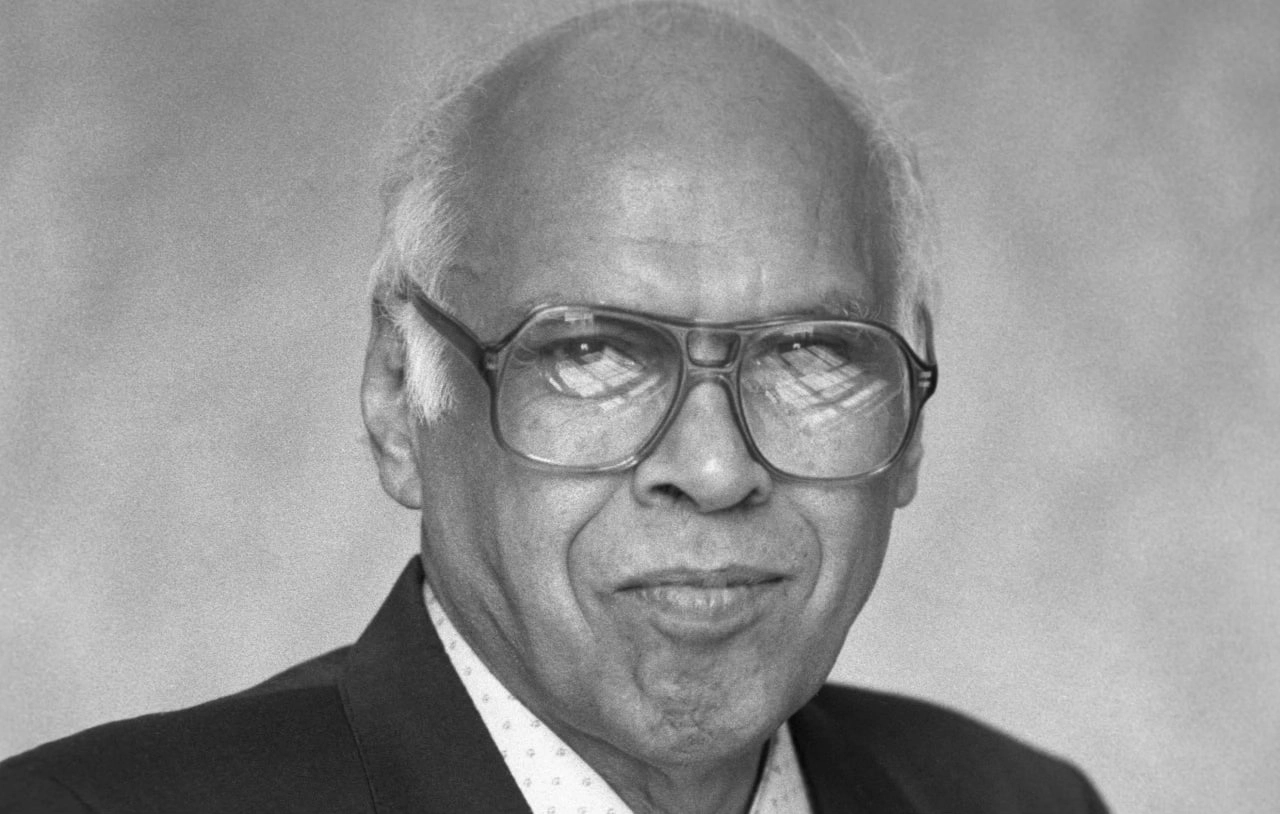
Born in 1925 in the vibrant, diverse neighbourhood of District Six, Cape Town, Alex La Guma grew up in a world that apartheid would later bulldoze. He became a novelist, journalist and revolutionary. His works, including A Walk in the Night, The Stone Country, and In the Fog of the Seasons’ End, gave voice to the voiceless, bearing witness to the everyday brutality of racism and capitalism and the determined dignity of those who resisted it.
He endured banning orders and house arrest and was driven into exile in 1966. He spent years in exile, including in London, but his heart remained with the struggle at home. In the late 1970s, he moved to Havana as the African National Congress’s chief representative for Latin America and the Caribbean. There, in the land of the Cuban Revolution, he continued to write and organise until his death in 1985.
He lies buried in Cuba. But his words and his example remain rooted in the streets of District Six.
Hosting our event at the District Six Museum’s Homecoming Centre was therefore no mere choice of venue. It was a homecoming of sorts, a recognition that La Guma’s literature emerged from this soil and that the struggle he wrote about was always connected to the internationalist battles being fought far from these shores.
The turning point that changed the region
The Battle of Cuito Cuanavale (August 14, 1987–March 23, 1988) did not happen in a vacuum. It was the culmination of decades of internal resistance inside South Africa. From the Defiance Campaign of the 1950s to the armed struggle launched by the ANC and PAC, from the mass mobilisation of the United Democratic Front in the 1980s to the unyielding spirit of workers, students and brutalised communities. It was also the product of an international anti-apartheid movement that had made South Africa a global pariah, with sanctions, boycotts and solidarity actions that weakened the regime economically and morally.
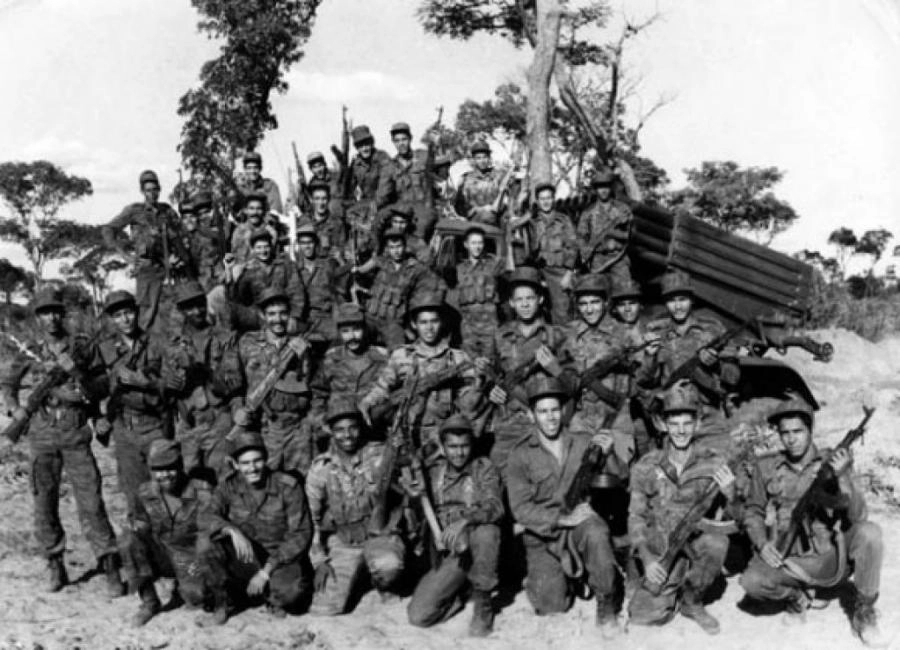
Starting in 1975, thousands of Cuban soldiers had fought alongside Angolan and Namibian forces against repeated South African Defence Force (SADF) invasions, driven by a conviction that the freedom of one people is inseparable from the freedom of all. By 1987–88, the SADF launched its deepest incursion yet, aiming to deal a final blow to the Angolan government and the liberation movements. What unfolded at Cuito Cuanavale was a complex series of engagements that ultimately halted the SADF advance and contributed to a strategic stalemate that shifted the military balance.
The Cuban forces, under the strategic direction of Fidel Castro, did not merely hold their ground; they managed to turn the military balance, contributing to the SADF adopting a defensive posture and to the subsequent negotiated withdrawal.
The significance of Cuito Cuanavale lies not in a simple battlefield victory or defeat, but in its strategic consequences. The apartheid military machine had been shown to be containable and, more importantly, vulnerable.
Shortly thereafter, Namibia’s independence process advanced under the UN-supervised transition that began in 1989 following the 1988 Tripartite Accord, to which the battlefield developments contributed. For apartheid South Africa, the events in Angola significantly constrained its capacity for sustained large-scale regional military intervention, compelling it to the negotiating table. The internal resistance, the international solidarity movement and the military containment at Cuito Cuanavale together formed a chain of pressures that apartheid could no longer withstand.
That is why we call March 23 Southern African Liberation Day. It is a day to remember that liberation was a continental and global project and that Cuba stood with us, not as a distant ally, but as comrades in arms.
A symmetry of centenaries
This year, 2026, the world commemorates the centenary of Fidel Castro (born August 13, 1926). It was Fidel who led Cuba’s internationalist missions, who declared that sending soldiers to Angola was ‘a historical debt to Africa’. Across South Africa and the globe, friends of Cuba are honouring his legacy this year: the legacy of a man who understood that solidarity is not charity but shared struggle.
And last year, 2025, marked the centenary of Alex La Guma’s birth.
Two sons of distant shores, born a year apart, whose lives converged in the same cause. La Guma spent his final years in the Cuba that Fidel led, representing the ANC in a country that had already given so much to our freedom. He died in 1985, a few years before the formal end of apartheid, but his work, like the strategic turning point at Cuito Cuanavale, helped pave the way.
What we carry forward
When we commemorate Cuito Cuanavale Day, we are not simply recalling a military engagement. We are reaffirming that the freedom we enjoy today was won on many fronts: in the streets of Soweto and District Six, in the corridors of the United Nations, in the solidarity campaigns of ordinary people across the world, and on the battlefields of Angola where Angolans, Namibians and Cubans fought against the South African apartheid military.
Alex La Guma understood this. He wrote, in In the Fog of the Seasons’ End, of ordinary men and women who carried the future in their hearts. That future, he believed, was not a gift to be received but a world to be built through struggle.
Today, that struggle continues in the fight for economic justice, for land, for the full promise of our Constitution. And it continues in the stories we tell. La Guma’s novels remain as urgent as ever, reminding us that literature is not a luxury but a weapon. And the friendship between South Africa and Cuba remains a beacon of what international solidarity can achieve.
And let it be clear: Cuba is not alone. We stand with Cuba as Cuba stood with us.
As I reflect on the event that took place at the District Six Museum on March 23, 2026, including the words exchanged, the connections drawn, the shared sense of history, I am reminded that the work of solidarity continues. The panellists who shared their insights, the comrades and friends who filled the District Six Homecoming Centre, the memory of Alex La Guma hovering in the very walls of his birthplace; all of it testified to a struggle that is not bound by geography or time.
Let us carry forward the legacy of those who imagined freedom before it existed and who fought for it on every front.
You may also want to read


![Why becoming a wealthy Muslim is commendable in Islam [+videos]](https://muslimviews.co.za/wp-content/uploads/2026/09/Muslim-Trade-Business-1-120x86.webp)


#Long live the spirit of Cuito Cuanavale.
#Long live the legacy of Alex La Guma.
#Long live the friendship between our peoples.
#ABetterWorldIsPossible
Saaliegah Zardad is a member of Friends of Cuba Society, Western Cape.