



















![The market-builder who restrained the market [Part 2]](https://muslimviews.co.za/wp-content/uploads/2026/08/PHOTO-2026-08-25-17-16-32-360x180.jpg)
![The merchant preceding the Prophetic mission [Part 1]](https://muslimviews.co.za/wp-content/uploads/2026/08/01-360x180.jpg)









Ready to tackle South Africa’s literacy crisis
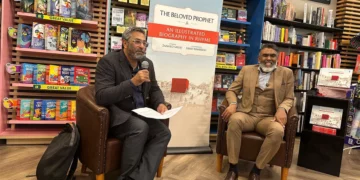
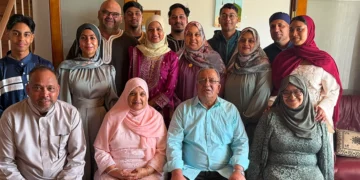
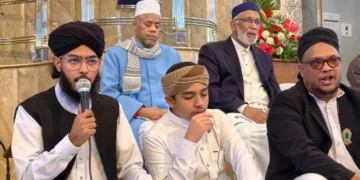
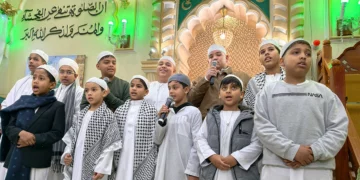
TWENTY-FIVE imams and muallimas from the Islamic Dawah Movement (IDM) in KwaZulu-Natal and the Eastern Cape have been trained as Reading Ambassadors in a new initiative to promote literacy among young children.
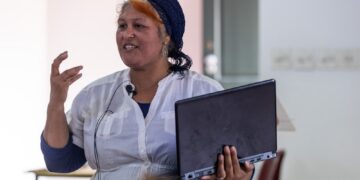
The training, conducted by Advocate Mahomed Vahed, founder of the Young Leaders Academy (YLA) and a Department of Basic Education (DBE) Literacy Ambassador, forms part of the ‘We Love Reading’ (WLR) pilot programme. The project aims to nurture a love for reading among children aged four to ten through weekly storytelling and book-lending sessions in local communities.
‘Reading is the secret weapon to success,’ said Advocate Vahed. ‘It strengthens imagination, improves language skills and builds the foundation for lifelong learning. Yet too many of our children are being left behind.’


A literacy emergency
South Africa faces a dire literacy crisis. According to the Progress in International Reading Literacy Study (PIRLS 2021), 81 per cent of Grade 4 learners cannot read for meaning. Furthermore, 78 per cent of public schools have no library, and 72 per cent of households do not own a single leisure book.
‘Reading failure is not a school problem alone – it begins at home, before children even enter the classroom,’ explained Vahed. ‘If children are not read to in their mother tongue and do not see books as a source of joy, they struggle later on.’
Faith, community and action
The WLR model, founded by Dr Rana Dajani in Jordan and active in more than 70 countries, has received global recognition, including the UNESCO King Sejong Literacy Prize. Research from leading universities such as Harvard, Yale, Queen Mary University and the University of Chicago confirms its effectiveness in enhancing children’s cognitive, emotional and social development.
Under the South African pilot, each of the 25 volunteers will host weekly 20–30-minute reading sessions in their communities. Each has been provided with 20 age-appropriate books in isiZulu and English, which children may borrow and take home for a week.
The training covered techniques for reading aloud, including how to use expression, engage children through questions and create a welcoming reading environment.
‘This initiative revives the spirit of Iqra – “Read!” – the first word revealed in the Qur’an,’ said Dr Ebrahim Dada, Managing Director of IDM. ‘By combining faith and literacy, we can uplift both hearts and minds.’
Benefits beyond the page
Reading aloud at an early age offers measurable benefits. Studies show that it:
• strengthens vocabulary, comprehension and concentration;
• enhances empathy, imagination and emotional intelligence;
• builds confidence and a love for learning; and
• reduces screen time while strengthening family bonds.

A seed for national impact
You may also want to read




The pilot, which runs over three months, aims to reach between 500 and 1 000 children. Following its evaluation, the programme hopes to expand nationally through faith-based and community partnerships.
‘This is not just about books – it is about giving our children the tools to dream, to think and to lead,’ concluded Advocate Vahed.
For more information contact Advocate Mahomed Vahed. Founder: Young Leaders Academy and Department of Basic Education Literacy Ambassador. Email: mahomed@youngleadersacademy.co.za or 📞 083 640 9054.