





























![The market-builder who restrained the market [Part 2]](https://muslimviews.co.za/wp-content/uploads/2026/08/PHOTO-2026-08-25-17-16-32-360x180.jpg)
![The merchant preceding the Prophetic mission [Part 1]](https://muslimviews.co.za/wp-content/uploads/2026/08/01-360x180.jpg)












Cape Town’s push for densification is raising urgent questions about spatial justice, inequality and the moral responsibilities of town planners.
By RASHARD DAVIDS
Very recently, I was accused by a City-appointed town planner of spreading ‘disinformation’ during a radio interview on the City’s apartheid-style spatial development plan. I wish to clarify my position.
Town planners are servants of the public, not of private developers or political agendas. Their foremost duty is to ensure that planning decisions advance the collective good — not the convenience of the few.
For those planners who may have forgotten their ethical duties, allow me to remind you of the key principles: to promote equity and spatial justice — ensuring that development does not perpetuate apartheid-era divides; to prevent environmental degradation and overcrowding that compromise dignity and public health; and to ensure access to adequate housing, open spaces and infrastructure for all citizens.
In a city like Cape Town, where inequality runs deep — from Khayelitsha to Athlone and Rondebosch East — every zoning decision reflects not just technical expertise but moral values. Those values are now being tested by the City’s push for massive densification in already overburdened neighbourhoods.
Government-appointed town planners are not mere bureaucrats. They are custodians of space, bound by duty to the public, not developers. Their oath is to plan for people, not profits. When densification is selectively imposed on working-class areas while vast tracts of land in affluent suburbs remain untouched, it is not just poor planning — it is a moral failure.
Town planners, as public servants, are bound by ethics to serve the public interest. That means ensuring that development happens fairly and sustainably, uplifting rather than eroding communities. The South African Council for Planners (SACPLAN) states that planners must ‘promote the public interest in the development of safe, healthy and sustainable communities’.
When overcrowding is forced onto underserviced neighbourhoods while wealthier suburbs remain low-density and protected, the result is planning apartheid by another name. Densification, applied unequally, deepens spatial injustice and sends a clear message: some communities must bear the burden of ‘affordable housing’, while others enjoy exclusivity.
Fairness in planning does not mean stopping development; it means placing it where it makes sense — where infrastructure can cope, schools and clinics are accessible, and where community character and liveability are respected.
A planner’s professional independence is sacred. They must be willing to tell the truth about the real consequences of overdevelopment, even when politically inconvenient. They are ethically bound to warn against infrastructure overload, the loss of green space, and the social costs of cramming thousands into areas already stretched to their limits. Planners also have a moral duty to treat residents — especially those from historically disadvantaged communities — as co-designers of space, not as obstacles to progress.
Integrity means saying no when planning serves politics rather than people. Section 195 of the Constitution is clear: public administration must be ethical, fair, transparent and accountable. That includes urban planning.
Densification cannot be imposed from above without genuine community consultation. True participation means listening — not hosting ‘open days’ or ‘information sessions’ that merely tick a box.
Why must working-class and overcrowded areas absorb all the high-density housing while leafy suburbs remain protected? Why are poorer citizens told to ‘accept change’ in the name of progress while the privileged are shielded from it?
Spatial justice demands shared development — where wealthier areas also open up to inclusionary housing, mixed-income projects and social diversity. Anything less is hypocrisy.
Town planners are not simply map-drawers or policy enforcers. They are guardians of human dignity. Their work determines how people live, where children play, how communities connect, and whether cities heal or harden.
When densification ignores infrastructure limits, erases heritage, and silences residents, it ceases to be planning — it becomes imposition.
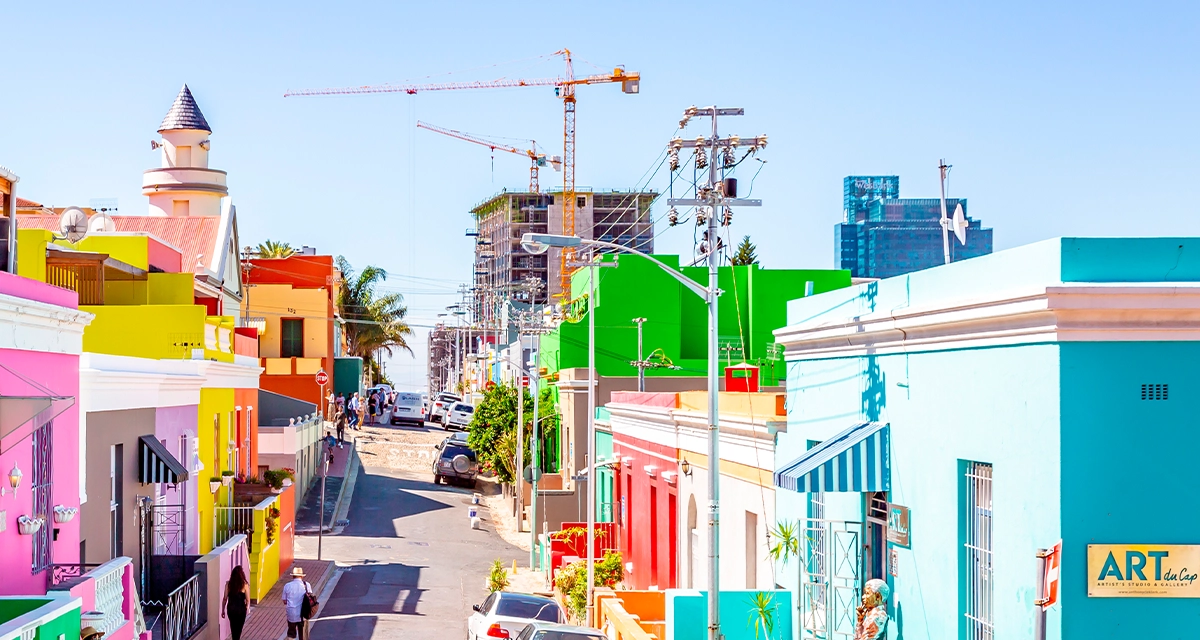
Bo-Kaap: a warning from history
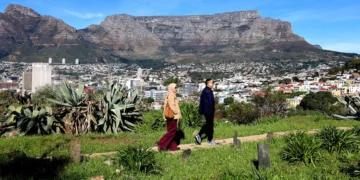
Nowhere is this urban injustice more visible than in Bo-Kaap, one of Cape Town’s oldest and most culturally significant communities. For more than 300 years, it has been home to generations of Muslim families — a living archive of resilience, culture and heritage.
Yet many long-time residents are now trapped by soaring rates and taxes disconnected from their incomes and modest homes. Property values, inflated by speculative development and gentrification, have priced families out of the very neighbourhoods their ancestors built.
Elderly residents, unable to meet the financial strain, are being forced to sell — often to wealthy newcomers or developers capitalising on the area’s prime location. This is not urban renewal; it is cultural erasure.
The same scenario is unfolding in Rondebosch East, where more than 1 100 low-cost housing units are being planned along Smuts Road and Seventh Avenue — in an already well-settled neighbourhood.
Bo-Kaap, Khayelitsha and Rondebosch East all reveal the same pattern: when planning ignores heritage, affordability and community cohesion, it becomes unethical and complicit in displacement.
You may also want to read


As Cape Town continues its push for ‘urban efficiency’, the question we must ask is not merely how we densify — but where, why, and for whom.
Because, at its heart, planning is not only about land — it is about justice.
Rashard Davids BA, MBA, is chairperson of the Civic Association of Rondebosch East (CARE).
- This article was first published in the November 14, 2025 print edition of Muslim Views.