












![Does ta’wīl mean interpretation or fulfilment? A Quranic reassessment [+video]](https://muslimviews.co.za/wp-content/uploads/2026/10/Tawil-Kaskas-360x180.webp)





















![Why becoming a wealthy Muslim is commendable in Islam [+videos]](https://muslimviews.co.za/wp-content/uploads/2026/09/Muslim-Trade-Business-1-360x180.webp)







Reimagining leadership, service and educational formation
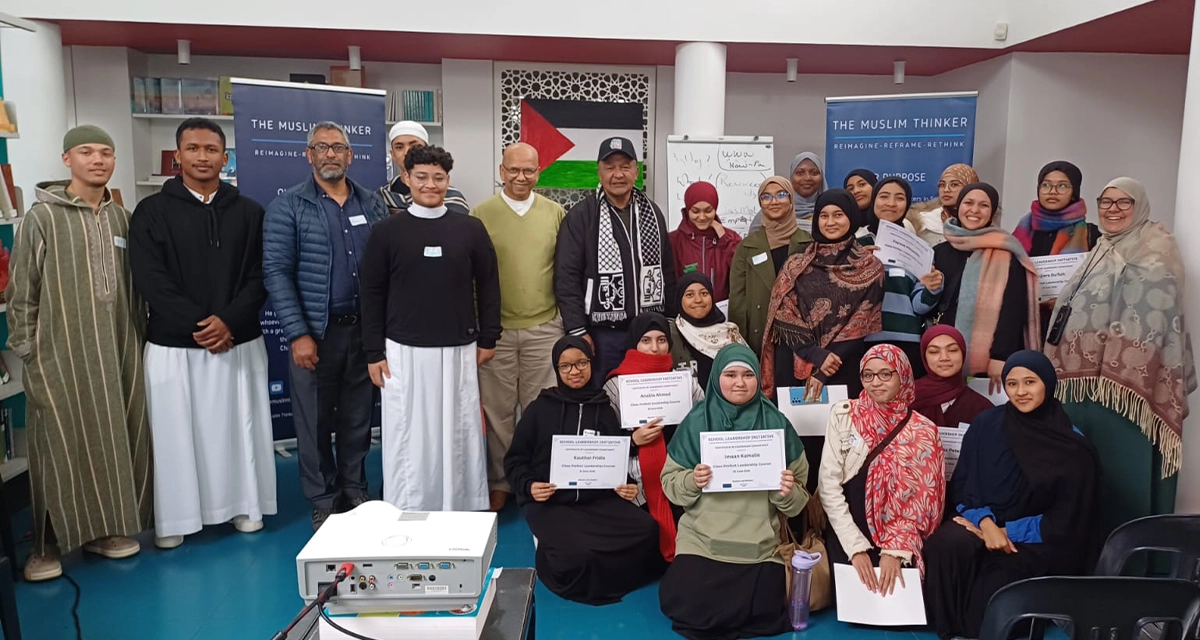
Hosted by The Muslim Thinker, a leadership workshop with Al Azhar High School students encouraged learners to rethink leadership as a lifelong commitment to service, integrity and ethical responsibility.
By ADNAAN ADAMS
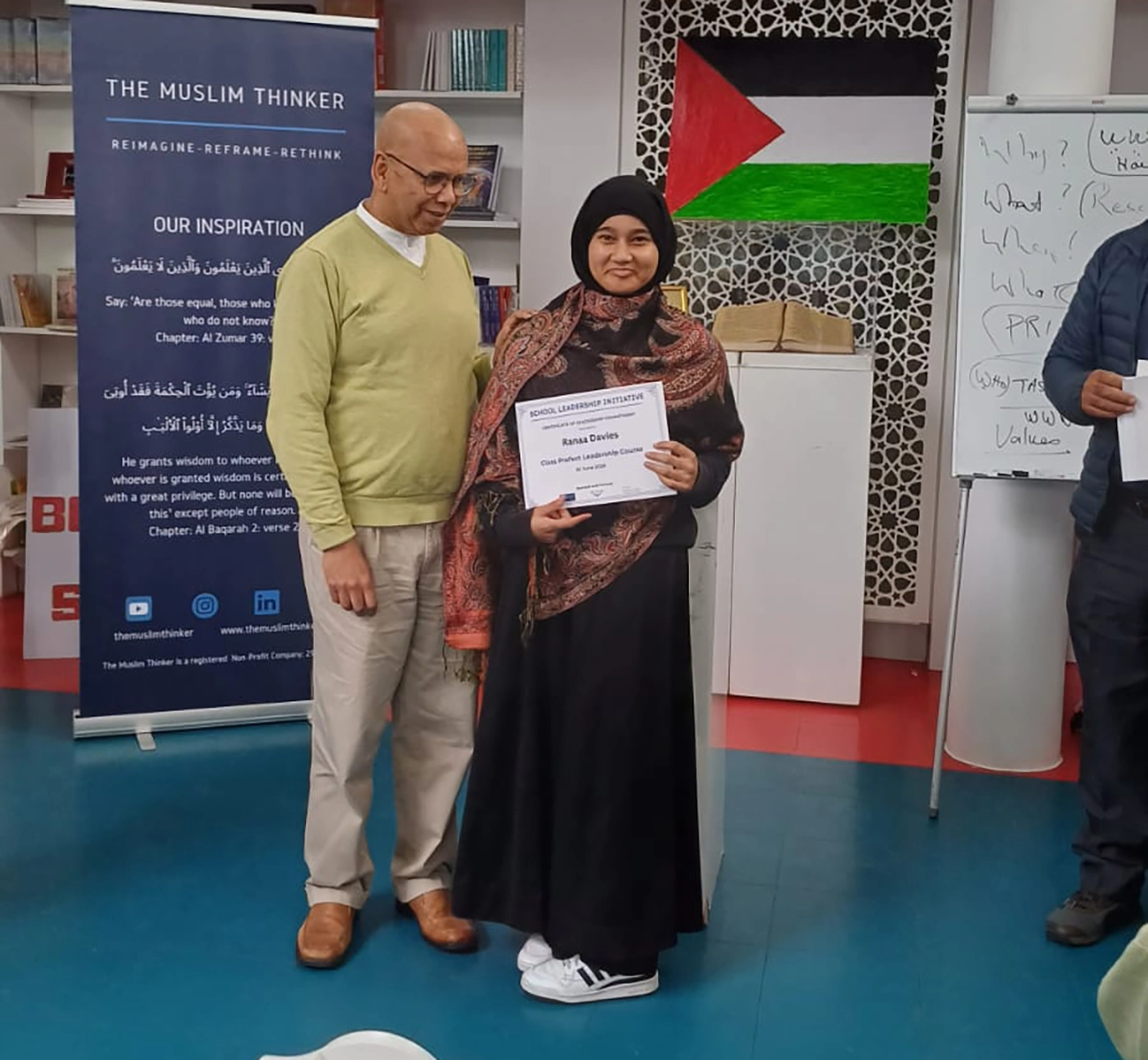
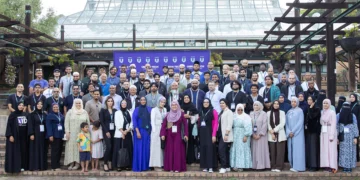
On June 22, 2026, The Muslim Thinker, in partnership with Al Azhar High School and Academia Library, hosted a Class Prefect Leadership Workshop under the theme ‘Leadership, Service and Responsibility’.
While the programme focused on leadership, the conversations quickly moved beyond titles, positions and prefect badges. Learners were invited to reflect on deeper questions: What kind of person am I becoming? What responsibilities accompany influence? And how should leadership be exercised in service of others?
The workshop was enriched by the contributions of two distinguished educators and public intellectuals, Professor Yusuf Chikte and Professor Farid Esack.
Professor Yusuf Chikte challenged learners to think about leadership as character, integrity, responsibility and influence. Leadership, he reminded participants, begins long before one occupies positions of authority. It begins with everyday choices, the values we uphold, and the example we set for others. Leadership is not merely about directing people; it is about cultivating the moral character necessary to influence others positively.
Professor Farid Esack’s presentation was rich with personal anecdotes, thoughtful analogies, and reflections on justice, compassion, service and the common good. While many of his observations invited careful consideration, one in particular continued to resonate after the workshop had ended. In passing, he referred to the familiar school slogan, ‘Enter to Learn, Leave to Serve’. Although it occupied only a small part of his presentation, it provided a compelling point of departure for the reflections developed in this article.

It prompted a deeper question about the place of service within educational institutions themselves. If schools are spaces where character is formed and values are cultivated, why should service be understood as something that begins only once learners leave? Is there not already within schools a moral and social landscape that calls for service towards fellow learners, educators, support staff and the broader school community?
The question becomes even more pertinent when extended to religious and madrasah environments. Too often, educational success is measured through academic achievement or the mastery of ritual knowledge. An equally important question concerns the formation of ethical dispositions: empathy, care, responsibility, solidarity and attentiveness to others. Perhaps a more fitting slogan would be: ‘Enter to Learn, Learn to Serve.’
Such a proposition shifts service from being the outcome of education to being part of the educational process itself. It suggests that learning and service should develop together. Service becomes a pedagogical practice through which learners cultivate ethical awareness and social responsibility.
Schools should not only concern themselves with the transmission of knowledge in subjects such as mathematics, science and language. They should also be places where young people learn what it means to live responsibly with others. The cultivation of empathy, care, solidarity and service is not an optional addition to education; it is central to the formation of ethical and socially responsible citizens.
The workshop concluded with learners drafting practical recommendations for an Al Azhar Class Prefect Roadmap, translating reflection into action and considering how they might contribute to a more caring, inclusive and responsible school culture.
You may also want to read


For The Muslim Thinker, however, the significance of the morning extended beyond leadership development. It reaffirmed the importance of creating meaningful encounters between young people and those whose lives have been devoted to education, scholarship, public service and community leadership. Such encounters should not be viewed merely as enrichment activities; they form part of the educational project itself.
Education is not simply the transmission of information. It is also the formation of character, judgement, responsibility and purpose. Young people are shaped not only by what they learn but by whom they encounter and the examples they are invited to consider. When learners engage with individuals who have dedicated themselves to service, scholarship, justice and community engagement, they are exposed to possibilities of what leadership can mean beyond titles and positions.
The workshop therefore served as a reminder that schools, madrasahs, mosques, libraries and community institutions all share a responsibility in the formation of ethical citizens. Each plays a role in nurturing empathy, responsibility, service and a commitment to the common good. Leadership, in this sense, is not merely about influence; it is about how one chooses to live in relation to others.
The future of our communities will depend not only on the leaders we produce, but on the values we cultivate and the examples we provide. Perhaps that is where service begins: not only beyond the school gate, but within our classrooms, libraries, madrasahs, mosques and communities, where character is formed, responsibility is nurtured, and young people learn that leadership is, ultimately, a commitment to others.
At the end of the leadership workshop, all the participants received a Certificate of Leadership Commitment.
Adnaan Adams is founder and director of The Muslim Thinker (www.themuslimthinker.org). He can be contacted via WhatsApp on 083 867 0559.