

















![The market-builder who restrained the market [Part 2]](https://muslimviews.co.za/wp-content/uploads/2026/08/PHOTO-2026-08-25-17-16-32-360x180.jpg)
![The merchant preceding the Prophetic mission [Part 1]](https://muslimviews.co.za/wp-content/uploads/2026/08/01-360x180.jpg)








“The epidemic of gang violence on the Cape Flats [is] not just a policing failure, but a constitutional, humanitarian, and spiritual crisis demanding unified action.”
By SHAKIR ACHMAT
In the wake of ongoing gang violence across the Cape Flats, faith leaders, civil society representatives, and community organisers gathered in Lansdowne for an urgent meeting hosted by the Muslim Judicial Council (MJC), the Western Province Council of Churches (WPCC), and the Cape Crime Crisis Coalition (C4). The meeting culminated in a powerful Declaration of Intent aimed at restoring peace, accountability, and justice in vulnerable communities.
The gathering was prompted by escalating gun violence, including incidents in Bishop Lavis and Mitchells Plain, and the brutal killings, which has once again brought the trauma of communities to the fore. The urgent dialogue brought together a cross-section of community voices—including Reverend Rodney Naidoo, Sister Mariam Oliver, Shaikh Riad Fataar, and others—to commit to moral and structural interventions.
Shaikh Fataar, president of the MJC, emphasised the necessity for faith institutions to move beyond the traditional separation between devotional practice and socio-political engagement.
‘Faith institutions must shift beyond the conventional separation between devotional practice and socio-political engagement by embracing a holistic understanding of human dignity (karamat al-Insaan) that permeates every dimension of life,’ he said.
Shaikh Fataar outlined that the MJC views the epidemic of gang violence on the Cape Flats not just as a policing failure, but as a constitutional, humanitarian, and spiritual crisis demanding unified action.
‘Grounded in the Qur’anic injunction to ‘stand firm for justice’ (Surah An-Nisa, 4:135), faith institutions are both theologically authorised and ethically obliged to intervene when the right to life, dignity, and safety — rights enshrined in Section 7(2) of our Constitution — is systematically denied. By integrating spiritual counsel with targeted social programmes, religious bodies become catalysts for resilience, offering ritual solace and practical pathways out of violence and systemic neglect.’
In response to questions from Muslim Views, Reverend Rodney Naidoo from The Church of Cape Town expressed a deep concern that this coalition must not become merely symbolic.
‘I hope that this coalition is not just another popularity contest or talk shop, but really action driven,’ he said. ‘All organisations must bring action to the table. Government needs to allow us to take the reins. You see, this is not a government issue — it is spiritual warfare. The enemy is Satan, and he knows his time is over.’
Naidoo called for bold spiritual leadership and divine guidance to confront the root causes of violence, urging faith leaders not only to speak but to act.
You may also want to read




Feminist activist Nandi Vanqa-Mgijima brought critical insight into the gendered dynamics within faith-based institutions and, more broadly, society.
She elaborated on the need to change not only institutional structures but also mindsets among congregants.
‘The first thing would be to conscientize society, the faith-based community and their institutions about the importance and the role of women in society and their importance.’
Mgjima also addressed political leadership and policy-making, emphasising that meaningful women’s ministries and government institutions need to confront root causes such as inequality, poverty, unemployment and youth isolation.
She stressed the importance of feminist political education in addressing the violent nature of society:
‘My issue is that feminist political education is paramount in addressing our challenges, in addressing the violent nature of our society. And government and faith leaders need to be politically conscious about the role that women play in society and why we need women-friendly policies.’
Mgjima highlighted the failure of state and faith institutions to recognise women’s interventions:
‘In terms of gang violence, these efforts get nowhere. Women’s efforts are not being recognised by government – national, provincial and local. And, as a result of our socialisation, faith-based institutions also don’t acknowledge interventions by women.’
She added that the neoliberal policies of the state had failed to respond to the needs of women and the youth.

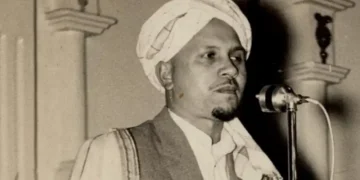
‘The Imam Haron Road Call To Action and Declaration of Intent’ is thus named to acknowledge the location of the venue but, more significantly, to honour the social justice role of the martyr, Imam Abdullah Haron, who was killed in detention by the Apartheid regime’s security police.
The joint Declaration of Intent commits faith and civil society leaders to:
- Support the protection of whistleblowers and victims’ families
- Strengthen interfaith collaboration against crime and corruption
- Engage government to ensure action on the parole system and gang activity
- Establish safe, faith-based sanctuaries for youth, ex-offenders, and families in crisis
The meeting also discussed the urgent need for collaborative governance, transparency, trauma healing, and restorative justice. Participants acknowledged the deep distrust between communities and law enforcement but highlighted practical pathways to build partnerships rooted in accountability and shared purpose.
The faith leaders also confronted the challenges within law enforcement agencies, referencing public concerns around Western Cape Police Commissioner, Lieutenant-General Thembisile Patekile, National Police Commissioner General Fannie Masemola’s deputy, Lieutenant-General Tebello Mosikili, and recent allegations by KwaZulu-Natal Police Commissioner, Lieutenant-General Nhlanhla Mkhwanazi. This highlights a broader crisis of trust that the coalition aims to address through advocacy and community pressure.
The Imam Haron Road gathering marked a critical moment where faith, civic, and feminist voices converged to confront gang violence not only as a security issue but as a spiritual and social crisis. With commitments grounded in constitutional rights and sacred texts, leaders called for action that is both practical and principled.
The road ahead requires courage, honest reckoning, and inclusive leadership. As Reverend Naidoo reminded the gathering: this is ‘spiritual warfare,’ and the enemy ‘knows his time is over.’
Download ‘The Imam Haron Road Call To Action and Declaration of Intent’ here.