













![The market-builder who restrained the market [Part 2]](https://muslimviews.co.za/wp-content/uploads/2026/08/PHOTO-2026-08-25-17-16-32-360x180.jpg)
![The merchant preceding the Prophetic mission [Part 1]](https://muslimviews.co.za/wp-content/uploads/2026/08/01-360x180.jpg)


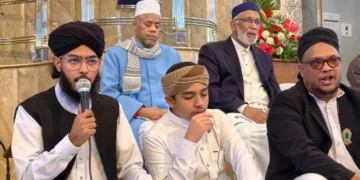



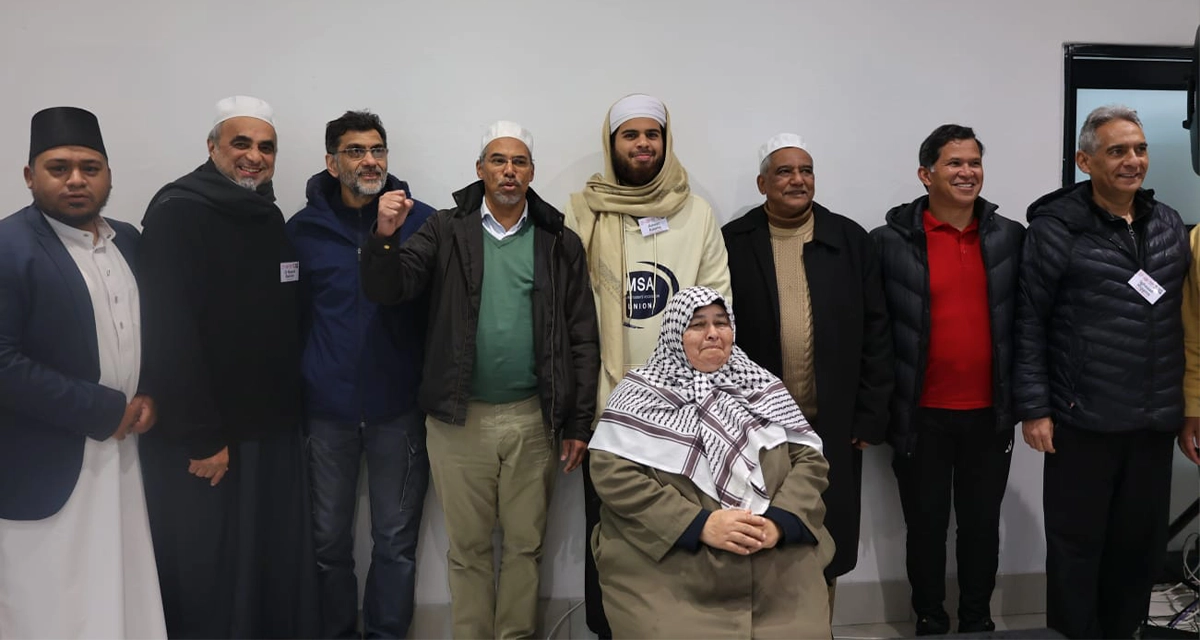

Religious leaders, activists and residents have taken the first formal steps towards creating a coordinated strategy to protect Bo-Kaap’s cultural heritage from the growing pressures of gentrification.
By YASEEN BARDIEN
Community leaders concerned about gentrification in Bo-Kaap have agreed to establish a working committee tasked with developing a formal structure to coordinate efforts to protect the area’s heritage.
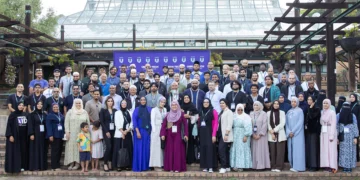
The decision was one of the main outcomes of the second leadership forum. Held at the Boorhaanol Cultural Hub in Bo-Kaap on Saturday, July 4, the forum brought together religious leaders, community organisations, politicians and residents, marking the first concrete step towards building a coordinated response to gentrification in Bo-Kaap.
Shaykh Muhammad West, Imam of Masjid Boorhaanol Islam, explained that, if left unchecked, gentrification would fundamentally alter the living heritage of the Bo-Kaap neighbourhood.
‘If left to continue as it is, the identity, the culture, the feel, and the lived experience of Bo-Kaap is going to be very different,’ said Shaykh West.
The urgency to act stems from years of rising property prices, increased municipal rates and rental costs, which have placed long-standing pressure on residents.
‘You can see the change in the culture and the impact on Bo-Kaap,’ said Shaykh West.
What began as a mosque-led initiative has expanded into a broader community effort because gentrification affects not only Muslims but everyone within the Bo-Kaap area. Participants reflected on previous development and gentrification disputes in Bo-Kaap, arguing that without a permanent structure the community would be forced to oppose developments individually rather than through a coordinated strategy.
The forum focused on converting various proposals into action.
There were multiple proposals tabled. Among them was the Bo-Kaap Accord. It is currently an eight-point declaration calling on imams to commit to a shared position on preserving Bo-Kaap’s Cape Muslim heritage against gentrification. Several signatures had already been recorded on the day, with hopes that more would follow. While the accord received broad support, participants debated aspects of its wording and scope. Some argued that it should be framed as a mosque accord rather than a Bo-Kaap Accord, while others called for mosque committees, churches and other faith communities to be included.
Another proposal was the development of a gentrification dashboard, building on data presented by Dr Ihsaan Bassier at the first forum. The dashboard would establish a baseline and monitor indicators such as resident headcount, household turnover and rates burdens to track the long-term impact of gentrification in Bo-Kaap. Members also suggested adding indicators such as economic status, pensioner households, indigent residents and homes at risk of being sold.
The Boorhaanol Islam Movement committed itself to compiling the baseline and updating the dashboard periodically.
Possible roles for the South African National Zakah Fund (SANZAF) and Awqaf SA in supporting the initiative were outlined. Discussions with SANZAF included exploring whether zakah could be used to assist vulnerable homeowners, while discussions with Awqaf SA included proposals for property models aimed at helping homeowners avoid selling their properties.
Anwar Omar, founder of the Salt River Heritage Society, argued that framing the issue as one of cultural heritage rather than solely religious rights could strengthen the initiative legally.
He said: ‘When we frame it as a religious response, it is balanced against property rights, and we are at a disadvantage in terms of the law.’
Omar’s presentation also outlined several immediate actions, including lodging formal objections to developments that ignore intangible cultural heritage (ICH) and challenging existing heritage gradings where ICH was never considered.
Other proposals included appointing a full-time administrator and establishing a dedicated housing hotline for Bo-Kaap residents.
‘That hotline will be made accessible to each and every household in Bo-Kaap,’ said Dr Majedi Bassier, executive committee member of the Boorhaanol Islam Movement.
You may also want to read






There was also an open call for volunteers. Anyone wishing to serve on the working committee could volunteer or nominate someone else with that person’s permission.
Organisers stressed that the committee should reflect a broad range of skills rather than become an exclusive club.
EFF MP Nazier Paulsen encouraged organisers to petition Parliament, saying it would place Bo-Kaap’s heritage concerns on the national agenda. He argued that the community should exhaust all avenues to protect its cultural heritage.
‘I think you must exhaust all avenues. That will show your seriousness, your commitment,’ he said.
Questions about the initiative’s name, vision and structure remained undecided on the day. While many of the proposals remain under development, the forum laid the foundation for a coordinated response to gentrification in Bo-Kaap.