



![Does ta’wīl mean interpretation or fulfilment? A Quranic reassessment [+video]](https://muslimviews.co.za/wp-content/uploads/2026/10/Tawil-Kaskas-360x180.webp)







![Why becoming a wealthy Muslim is commendable in Islam [+videos]](https://muslimviews.co.za/wp-content/uploads/2026/09/Muslim-Trade-Business-1-360x180.webp)




For Hraichie, his global platform as ‘The Muslim Undertaker’ is not about fame; it is a means to remind Muslims of their shared responsibility toward the deceased, the living, and the faith that unites them all.
By SHAKIR ACHMAT
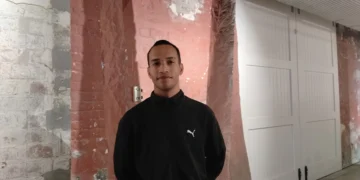
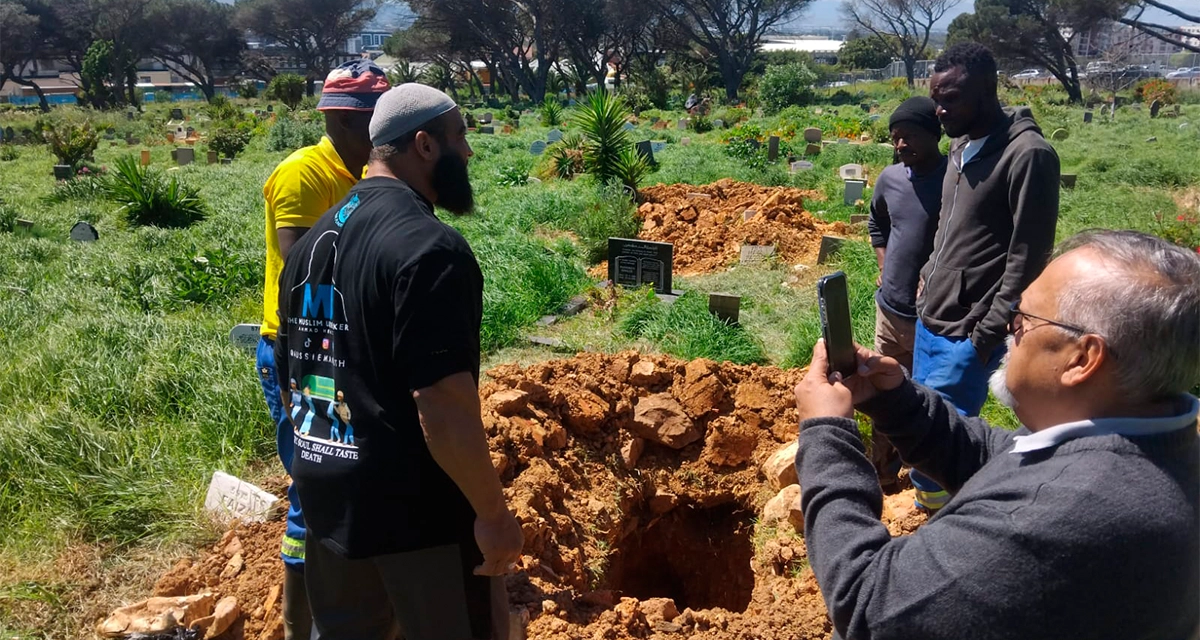
Under the auspices of the Moslem Cemetery Board (MCB) and the Muslim Judicial Council (MJC), Cape Town welcomed funeral director, Ahmad Hraichie, widely known as ‘The Muslim Undertaker’ and ‘Aussie Mammoth’.
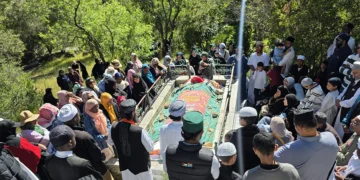
The talk, hosted at the Mowbray Cemetery on Friday October 3, brought together undertakers, imams, and community leaders for a deeply spiritual and practical discussion about death, service, and the importance of community training in Islamic burial rights.
The event, led by Faizal Sayed, Chairperson of the Moslem Cemetery Board and Secretary of the MJC’s Burial Administration, was attended by invited guests who work closely with janaazah (funeral) services across the Western Cape.
The session began with a warm welcome by the President of the MJC, Shaykh Riad Fataar, who expressed gratitude to Allah for uniting Muslims across borders under the banner of service and brotherhood.
‘The beauty of Islam is that there are no borders, so a brother from Australia, a brother from America, a brother from Europe, a brother from Africa and from the best city in the world, Cape Town, we stay brothers. The Mu’min are all brothers and sisters of one another’, said Shaykh Riad.
He reminded attendees of the legacy of the MJC, established in 1945, and its early activism for Palestine, linking today’s work in burial administration to a broader tradition of community service and justice.

When Hraichie took the floor, his first words were filled with humility.
‘I am overwhelmed and honoured,’ he said. ‘I travel the world for what I do, and this was never intended for fame. There is no fame in death — only the words said to you by the angels at the time of death.’
He shared the challenges of his long journey to South Africa: a five-hour layover in Dubai, an eight-hour flight to Johannesburg, and a six-hour delay before finally arriving in Cape Town after midnight. Yet, he said, ‘Every struggle comes with reward, and I’m honoured to be among those who do this job.’
Hraichie paid tribute to the ghassalaat (female washers), often overlooked despite their decades of service.
‘We always talk about the men,’ he said, ‘but we mustn’t forget the sisters who wash. They have their rights too.’
Hraichie’s talk was a heartfelt reminder of mortality and purpose. ‘When you do this job,’ he said, ‘you lose attachment to the dunya. You stop having long hopes.’
He revealed the scale of his experience: over the past decade, he has washed over 6 000 and buried more than 10 000 bodies.
He shared a moving story from his early years in funeral service. On New Year’s Eve in 2016, while the world celebrated, he was collecting the body of an elderly man who had died while feeding stray cats.
‘As everyone was planning parties, I was putting him in a fridge,’ Hraichie recalled. ‘That night, I made a video telling people to spend New Year’s in the masjid, not the streets. There was a backlash from the Western media. They said I was changing our way of life. But when COVID came, there were no celebrations, no fireworks. Now, our youth centres are full on those nights. Alhamdulillah’.
Central to Hraichie’s message was the importance of involving youth in burial work — not just as an obligation but as a form of spiritual awakening.
‘Train the young generation,’ he urged. ‘They will be better than us, and they will carry our work forward as sadaqah jariyah (ongoing charity).’
He described how his team coordinates multiple janaazah networks, ensuring that no one is buried alone.
‘If I post that a man has passed with no family, hundreds of people show up for his janaazah. That’s the level of unity we must build here. Announce funerals, get the youth involved — let them witness the reality of death. Sometimes seeing a lifeless body is the biggest wake-up call a person can have.’
During the discussion, MCB chairperson Sayed highlighted efforts to modernise cemetery management.
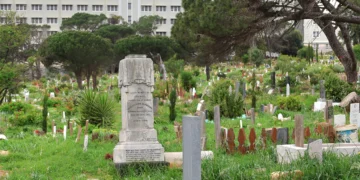
‘This cemetery, along with others, has developed software allowing undertakers to book online. All the paperwork and bookings go through the system and are approved by supervisors, and every grave is geotagged,’ he explained. ‘This institution dates back to 1886, with thousands of graves, so geotagging really helps.’
Hraichie noted that similar mapping and management systems have greatly improved burial coordination.
‘We can find a loved one through our app. I can put my grandfather’s name, and it gives me walking or driving directions right to his grave,’ he said, describing how digital tools can preserve accuracy and accessibility for families.
The discussion also turned to the pressing issue of burial space in Cape Town.
You may also want to read



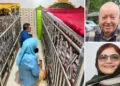

Ebrahim Solomon, Western Cape Muslim Undertakers’ Forum chairperson, said: ‘We’re running out of burial space very fast because of the high water-table, and that’s one of the main reasons why applications are rejected.’
Shaykh Riad responded by explaining local adjustments made to address this challenge. ‘We’ve started a portfolio looking into solutions,’ he said. ‘To save space, graves are now dug two metres deep instead of 1.6, leaving a layer of soil on top. A fatwa was passed permitting this approach.’
On the matter of water in graves, Hraichie, who personally dug for over 15 years, shared his reflection.
‘It’s all clay — water has nowhere to go once you break the surface,’ he said. ‘There was always water in there. But it means nothing; this is just a body. It’s the soul that matters. We worry about the outward, not the inward. We see horrific deaths in Gaza — but to them, it’s not horrific, it’s a pinch. They are shuhada (martyrs). The body is temporary; the soul is eternal.’
The event concluded with heartfelt gratitude from attendees and prayers for continued collaboration between Muslim burial services. Hraichie’s sincerity, humility, and depth of reflection left a lasting impression on all who attended.
As Shaykh Riad noted, ‘When Allah grants you fame, but it doesn’t benefit the Ummah, there is no benefit in it.’
For Hraichie, his global platform as ‘The Muslim Undertaker’ is not about fame; it is a means to remind Muslims of their shared responsibility toward the deceased, the living, and the faith that unites them all.