


















![The market-builder who restrained the market [Part 2]](https://muslimviews.co.za/wp-content/uploads/2026/08/PHOTO-2026-08-25-17-16-32-360x180.jpg)
![The merchant preceding the Prophetic mission [Part 1]](https://muslimviews.co.za/wp-content/uploads/2026/08/01-360x180.jpg)








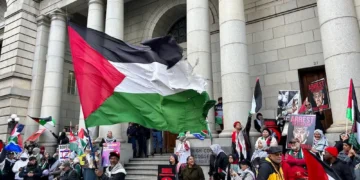
The Palestine Solidarity Campaign (PSC) issued a press release and an extended statement to form a coherent, urgent indictment of how parts of South Africa’s media ecosystem have failed in their mission.
By PROF GONDA PEREZ
Click here to download the PSC Press Release
Click here to download the PSC extended statement
The documents criticise the Daily Maverick, the SABC and Radio 702 for platforming Israeli talking points about the Global Sumud Flotilla and Gaza’s ongoing catastrophe without adequate challenge. Read together, they document facts, locate those facts within binding ethical codes, and insist that ‘balance’ cannot be a euphemism for normalising atrocity.
The backdrop to this critique of the media is the UN Commission of Inquiry’s determination that Israel is committing genocide in Gaza. That framing is not rhetorical flourish; it is the ethical baseline from which responsible reporting must proceed. In crises of this magnitude, newsrooms have a heightened duty to verify claims, foreground context, and resist laundering of state propaganda under the guise of ‘both sides’.
The Daily Maverick, SABC and Radio 702 failed this duty when they amplified assertions about the flotilla being a ‘publicity stunt’, the legality of the Gaza blockade, and the treatment of detainees— without adequate testing against established international findings and the record on the interception in international waters.
The flotilla is a vivid case study. There are vital material facts that must be taken into account: a civilian humanitarian mission; interception roughly 70 nautical miles off Gaza; mass detentions; and subsequent reports of denial of food, water, medication and legal access—all amid a UN-confirmed famine and a devastated health system. In that context, to platform untested claims that the blockade is ‘legal’ or that the flotilla had ‘no aid’ is not neutrality; it is a departure from accuracy, context and verification—precisely the guardrails the Press and Broadcasting Codes require.
You may also want to read


Activists demand fairness and justice from our print and broadcast media whose professional oversight bodies must translate ethics into enforceable standards. Alleged breaches to the Press Code (truthfulness, accuracy, context, verification of doubtful information), and to the Free-to-Air and Online Broadcasting Codes (truthful, contextual news; prohibitions on propaganda for war and advocacy of hatred) must be clearly mapped. The PSC statement elaborates on those clauses and applies them directly to the SABC and Radio 702 segments. This is crucial so that activists are not merely lamenting bias. They must be seen to identify where editorial choices clash with the black- letter obligations of South African media law and self-regulation.
The PSC is also right to situate this moment within our own media history. Just as politically progressive South African outlets refused to normalise apartheid while still practising rigorous, fair reporting, contemporary media should not be cowed into false equivalence between occupier and occupied, or aggressor and victim. Speaking out against a universally recognised injustice—here, the genocide of Palestinians in Gaza—does not erode credibility; it strengthens professional standing by aligning journalism with truth and public interest. This point bears repeating throughout any analysis of the press: fairness is not a 50/50 split between fact and disinformation; balance is not symmetry between international crimes and those documenting them. Falsehoods and propaganda on behalf of a genocidal regime does not merit a platform in the absence of an opposing view.
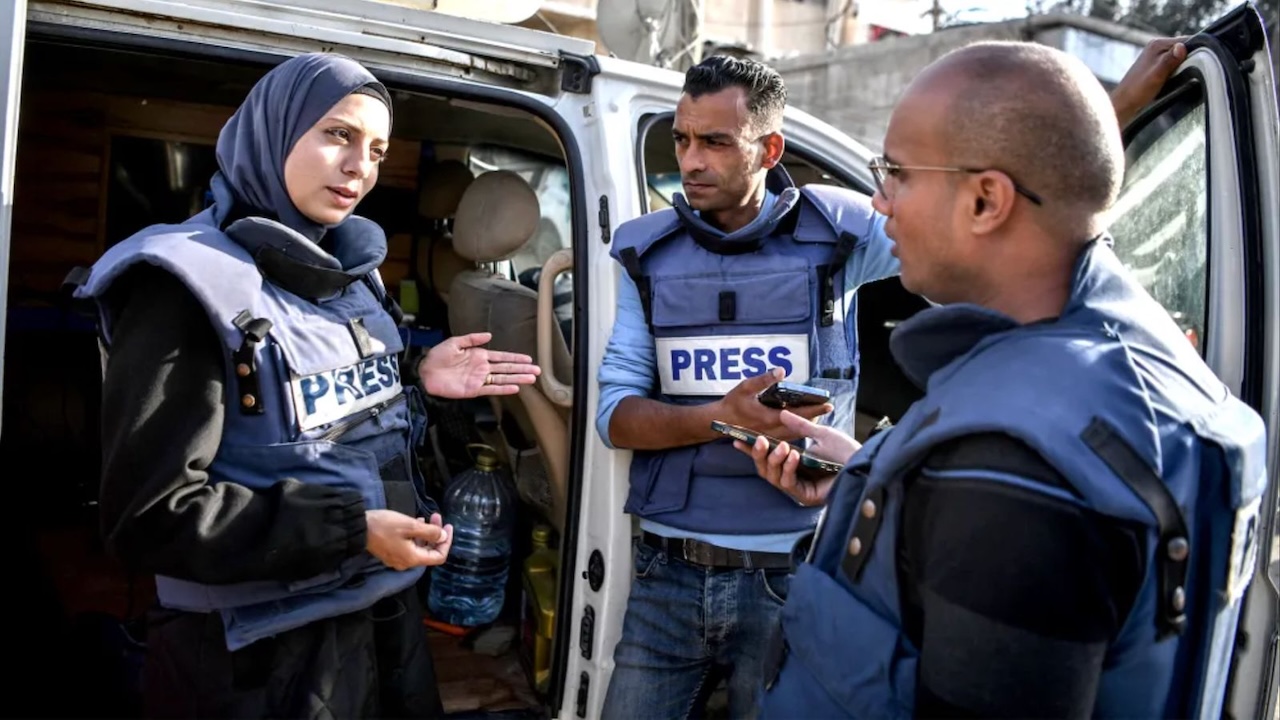
This ethical imperative intensifies when journalists themselves are being targeted. In Gaza, reporters, camera operators and fixers have been killed in unprecedented numbers; press infrastructure has been attacked; and newsgathering conditions are perilous. In such environments, the profession’s duty of care extends beyond collegial solidarity: it requires editors to scrutinise, not amplify, narratives from the military power prosecuting the war. A media that shrugs at the deaths of its own—while lending credibility to talking points that excuse siege and starvation—abandons both its craft and its audience. The PSC statements implicitly connect these realities to the broader ethics of coverage: accuracy, verification, and context are the minimum; centring victims and protecting the public from deception are obligations, not options.
We do not argue for advocacy at the expense of independence. Rather, it delineates a path that keeps both commitments in view: a newsroom may be openly supportive of social justice causes and still be scrupulously independent in its reporting. Independence means your facts are bullet-proof, your sources are tested, and your audience is never misled. It does not mean awarding equal epistemic weight to official claims already contradicted by international investigations; nor does it mean hosting known falsehoods unchallenged in the name of ‘hearing both sides’.
It is perfectly reasonable to demand that the Daily Maverick, the SABC and Radio 702 offer the following remedies: publish corrections and apologies; platform flotilla participants and Palestinian voices; adopt policies that prevent uncritical platforming of propaganda; and cover the UN genocide determination prominently. This is a practicable editorial roadmap for restoring trust and aligning with code-based obligations.
Furthermore, it makes sense that we propose a set of principles that any South African editor can action tomorrow:
- Name the reality: Genocide, starvation through siege, and unlawful interception of aid are not ‘views’; they are documented facts that set the frame for coverage.
- Reject false balance: Do not confuse balance with moral equivalence between persecutor and persecuted. Balance without context misinforms.
- Interrogate power: Official claims must be verified against international law and on-the-ground reporting, especially where those officials are executing or defending mass violations.
- Centre the victims: Give sustained prominence to the voices of detainees, their lawyers and Palestinians living under siege; this is not partisanship—it is public interest.
This is not a demand for partisan journalism. It is a call back to first principles: truth, verification, context and accountability. South African media do not diminish themselves by taking a principled stand against Zionist and Israeli apartheid and settler colonialism; they honour the best of our tradition—reporting that is fair and balanced without pretending that atrocity and resistance to it are ethically symmetrical.
Emeritus Associate Professor Gonda Perez is the former Deputy Dean of Undergraduate Education, Faculty of Health Sciences at the University of Cape Town (UCT) .