





![Does ta’wīl mean interpretation or fulfilment? A Quranic reassessment [+video]](https://muslimviews.co.za/wp-content/uploads/2026/10/Tawil-Kaskas-360x180.webp)








![Why becoming a wealthy Muslim is commendable in Islam [+videos]](https://muslimviews.co.za/wp-content/uploads/2026/09/Muslim-Trade-Business-1-360x180.webp)



Gaza, Cloetesville, and Die Vlakte show us different dimensions of responding to testing with moral beauty. Gaza highlights a global solidarity. Cloetesville highlights the tangible work of caring for near neighbours. Die Vlakte reveals the power of memory and ethical continuity.
This is the text of a khutbah delivered at Ghujjatul Islam Masjid, Stellenbosch, on October 10, 2025.
By ASLAM FATAAR
Peace and blessings to the congregation on this sacred day of Jumu’ah. May our hearts be illuminated with clarity and strengthened with steadfastness in these testing times.
The world is facing a series of tests that challenge our faith, ethics, and sense of community. The Qur’an calls such moments fitan. These are periods of upheaval that unsettle individuals and communities, demanding a thoughtful and steady response.
These tests take many forms. They are visible in the persecution and suffering in Gaza. They appear in poverty, unemployment, and violence, affecting local communities. They are felt in the erosion of trust and dignity in our shared lives. These realities affect families, relationships, and communal bonds.
The Qur’an draws attention to the seriousness of persecution and oppression, describing it as worse than killing (Al-Baqarah, 2:191). This verse was revealed to early Muslims when they faced persecution in Makkah. It reminds us that sustained injustice can destroy the moral fabric of communities. It weakens faith, fractures relationships, and strips people of dignity.
The Prophet Muhammad ﷺ described the experience of living through such tests in vivid terms. He said that tribulations will come like pieces of a dark night. This image helps us understand the emotional and spiritual atmosphere of our times. Crises arrive one after another, like falling pieces of darkness. People struggle to see clearly. Challenges overlap. Life feels confusing and overwhelming.
The Qur’an and Sunnah invite us to respond to these tests with moral beauty, patience, mercy, forgiveness, and firm resolve. The Prophetic response is steady and clear. It is rooted in justice and compassion.
We can think about our response on three levels. The first is global. The second is local. The third involves memory and history.

Gaza: ‘Faraway neighbours’ and global solidarity
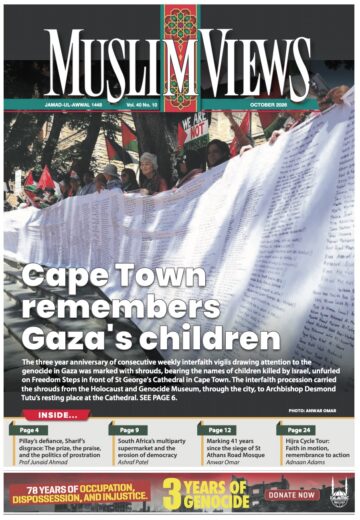
The first story is about Gaza. South African activists recently joined the Global Sumud Flotilla to express solidarity with the Palestinian people. Nkosi Zwelivelile Mandla Mandela, Fatima Hendricks, Corrie Shelver, Zukiswa Wanner, Zaheera Soomar and Reaaz Moola were abducted by Israeli forces on October 2. They endured harsh treatment before being released. Their courage drew attention to the ongoing genocide in Gaza.
This took place alongside the announcement of the latest Trump ‘peace plan’, which aims to consolidate Israeli control politically, economically, and geographically. It rewards occupation and settlement expansion, stripping Palestinians of their rights and dignity. South Africa’s genocide case at the International Court of Justice and the recent United Nations report have aligned our country with the struggle for Palestinian justice.
The Qur’an provides a moral orientation for such moments: ‘And be good to the near neighbour and the distant neighbour.’ (An-Nisa, 4:36)
This verse calls on us to act with goodness and responsibility toward those close to us and those far away. Palestinians in Gaza are so-called faraway neighbours whose suffering reaches us daily through digital media. Their images, voices, and stories appear on our smartphones in real time. Their plight is never distant. It enters our homes and hearts, demanding a response that matches the gravity of their struggle.
Supporting Gaza is an essential part of a broader ethical response. It calls for informed solidarity, advocacy, humanitarian work, and public engagement. Our ‘distant neighbours’, to use the language of the Qur’an, require a sustained and active moral commitment from us.

Cloetesville: ‘Near neighbours’ and concrete action
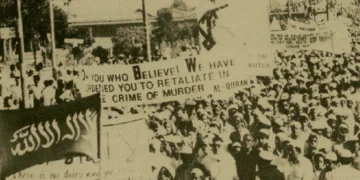
The second story comes from Cloetesville. Last week, more than a hundred community members marched with PAGAD to confront drug peddling and gangsterism. They demanded an end to the destruction of young lives and asked authorities to act.
This march marked a significant moment in reclaiming safety and dignity in a community deeply affected by unemployment, crime, and despair. It reflects a growing commitment among residents to rebuild community life through tangible action.
The Prophet Muhammad ﷺ said that Jibril kept advising him about the neighbour until he thought the neighbour would be made an heir. This teaching highlights the centrality of neighbourliness to our faith.
‘Near neighbours’ are those with whom we share physical spaces and everyday struggles. Our responsibilities toward them are concrete and practical. This involves showing up, working with others, addressing social challenges, and building safer environments together.
Cloetesville represents the terrain of near neighbourly response. It is immediate, palpable, and rooted in collective action. It is about standing with communities to nurture hope and restore dignity in places we inhabit together.

Die Vlakte: memory and ethical continuity
You may also want to read


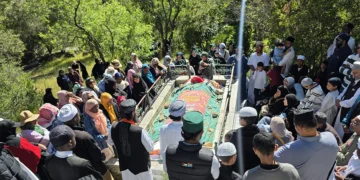
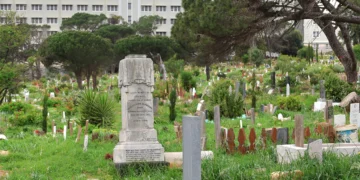
The third story comes from a recent Die Vlakte mapping workshop. Die Vlakte is a locality in Stellenbosch from which people were forcibly removed. Community members, including Moulana Shaakier Vermeulen, the imam of the masjid, Yusuf October, and Moegammad Tahier Kara, came together to reflect on and deliberate over the constructed map of their displaced neighbourhood.
The memories of Boeta Moegammad Cassiem Ras were central to this effort. His stories helped bring lost homes and streets back into focus. This is a form of remembrance which strengthens communal bonds and restores dignity.
The Qur’an teaches, ‘So remember Me; I will remember you’ (Al-Baqarah, 2:152). Remembrance works in three ways. It is liturgical, through prayer and recitation. It is historical, through storytelling and remembering collective struggles. It is ethical, as it shapes conscience and inspires just action.
At the Cape, remembrance has always been a source of resilience. Under slavery and colonialism, Qur’anic recitation, Jawi writing, and oral teaching became acts of resistance. Communities kept their dignity alive through remembrance.
The Prophetic grammar of response
The Qur’an offers a moral orientation for times of testing: ‘The servants of the Most Merciful are those who walk upon the earth gently, and when the ignorant address them [harshly], they respond with words of peace’ (Al-Furqan, 25:63).
This verse gives two clear instructions. Believers should walk gently, with humility and dignity. They should respond to ignorance with peace. This is a model of composure, patience, and moral strength.
Gaza, Cloetesville, and Die Vlakte show us different dimensions of responding to testing with moral beauty. Gaza highlights a global solidarity response that reaches us through digital connections and compels action for our faraway neighbours. Cloetesville highlights the tangible work of caring for near neighbours. Die Vlakte reveals the power of memory and ethical continuity.
These responses draw on the prophetic example. They offer a way to live with clarity and grace during difficult times. They guide us to build communities rooted in justice, compassion, and hope.
As we face these tests, we are called to live in fidelity to Allah’s tawhid. This means holding firm to divine oneness as the moral centre of our lives. It means aligning our actions with justice and mercy, locally and globally, and nurturing communities that reflect our faith’s highest values.
May Allah strengthen us in this task, guide our hearts, and make our neighbourly ethics a source of light in these testing times.
Aslam Fataar is Professor of Higher Education Transformation at Stellenbosch University. He writes regularly on Islamic ethics, pedagogy, justice, and community.