






















![The market-builder who restrained the market [Part 2]](https://muslimviews.co.za/wp-content/uploads/2026/08/PHOTO-2026-08-25-17-16-32-360x180.jpg)
![The merchant preceding the Prophetic mission [Part 1]](https://muslimviews.co.za/wp-content/uploads/2026/08/01-360x180.jpg)



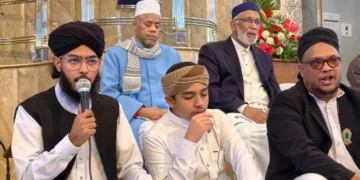







Mowbray Cemetery’s board election moves ahead with 53 nominees after the court removes the shortlist cap and reallocates the case to a new judge. Financial disclosures and verification questions remain ahead of the August 23 vote.
By ANWAR OMAR
As the day for the election of a new board for the governance of the Mowbray Muslim cemetery nears, the judge who has been dealing with the matter has been replaced and the limit on the number of candidates eligible for election has been lifted.
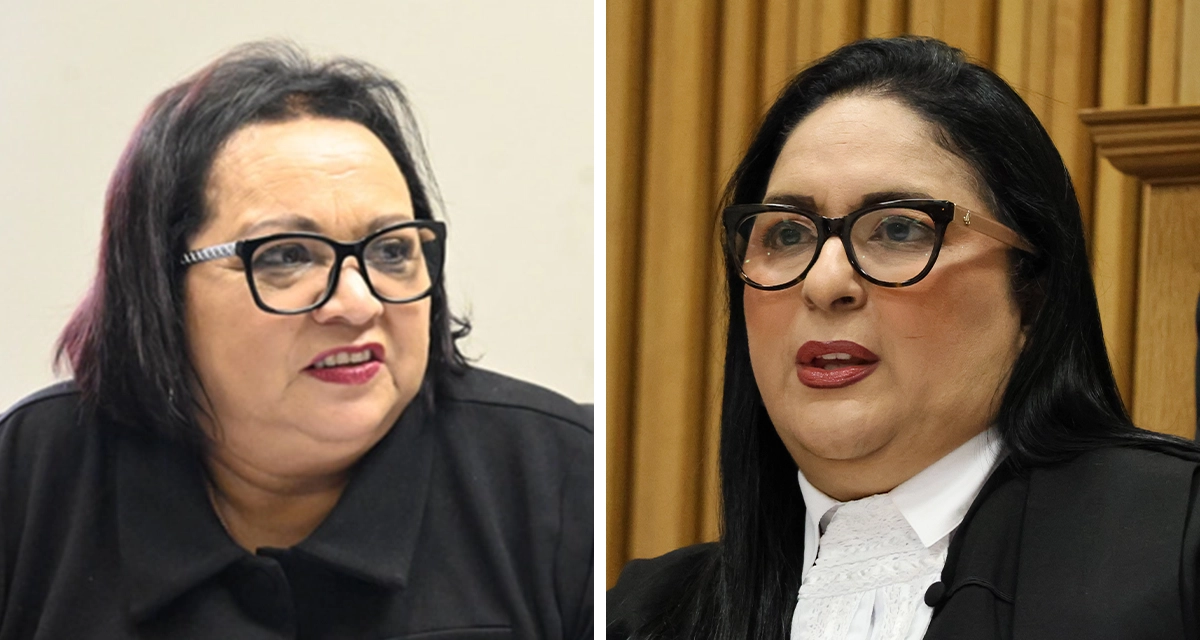
Muslim Views is in possession of a Judicial Case Management Directive dated August 18, 2026, confirming that “Bassier v The Moslem Cemetery Board” has been reallocated and is now before Judge Chantel MJ Fortuin, replacing Judge Gayaat da Silva Salie, who handed down the August 4 judgment and August 5 directives.
Late Tuesday night (August 18), the Panel of Independent Convenors published a full list of 53 candidates for the Board’s 11 seats, alongside a media statement and election website.
Shortlisting removed
The Panel had been required to shortlist a maximum of 22 candidates, with discretion to consider “various skills, knowledge and experience.” The Panel’s statement confirms the directive followed its own request for an amendment. Judge Fortuin’s directive explicitly deletes the shortlisting entirely and directs the Panel to publish, on August 18, “the full list of nominees determined eligible”.
A financial position that remains undisclosed
The Board’s actual financial position has never been made public. The August 4 judgment ordered its bank statements, covering March 1 to August 4, 2026, to be delivered to the Registrar for confidential review, stating they “will not be available to the parties,” retained “pending further direction of this Court.”
An earlier order requires the Board to deliver its financial records to members at least 48 hours before the Special General Meeting, a deadline falling on Friday, August 21. It remains unclear whether this includes anything more current than the audited statements up to February 2024 or the bank statements reviewed confidentially by the court.
The only concrete outcome from that review is the R250 000 the Board was ordered to pay into the Panel attorney’s trust account on August 5. The figures behind that amount remain undisclosed.
Notable names on the candidate list
Among the 53 names is Dr Tolgah Bassier, the applicant in the litigation that produced the August 4 judgment and the court’s continued supervision of the election. He is now standing for election to the Board he took to court. His profile describes him as “a strong advocate for transparent governance, pushing for strict constitutional compliance and proper financial oversight to protect the community’s Amanah.”
Also listed is Mr Faizel Sayed, the acting chairperson named throughout the judgment as the respondent’s deponent, described as “a distinguished broadcaster and law student” who has “spearheaded the modernisation of cemetery administration.”
Notably, at least six of the 53 candidates hold, or have held, senior positions within the Muslim Judicial Council (MJC):
· Shaykh Riad Fataar – President;
· Moulana Salmaan Abrahams – First Deputy President;
· Shaykh Muhammad West – Treasurer and Chartered Accountant;
· Moulana Siraaj Girie – Fatwa Department;
· Professor Muneer Abduroaf – Executive Council member; and
· Nabeweya Malick – former media liaison officer for the MJC.
Other notable candidates include Advocate Shameemah Salie, a City Councillor, and Advocate Yusuf Khan Dalwai, a High Court Advocate and Chairperson of the Cape Mazaar Society. Also standing are Nazeem Dejongh and Mohamed Ayub, the latter instrumental in digitising Mowbray Cemetery’s records. All four served on the previous Board.
With the MJC’s president, deputy president, treasurer, a Fatwa Department member, its Executive Council, and its PRO standing for seats on a board the court found, until August 4, unlawfully constituted, the election raises the question of how closely intertwined the incoming leadership may be with one of South Africa’s most senior and long-standing Islamic religious institutions.
A judicial connection
Also among the nominees is Mauro Nunes Mendes Da Silva. Public records confirm he is the husband of Judge Gayaat Salie, who handed down the August 4 judgment and the August 5 directives. The case was then reallocated to Judge Fortuin, as per the August 18 directive, which provides no reason for the reallocation.
Some concerns now addressed
The MCB elections website discloses considerably more than previously.
The digital voting system is now identified as Election Runner, SSL-secured with 256-bit encryption. Each member will receive a unique Voter ID and Voter Key; a shared live voters’ roll updates in real time, so a member who has voted digitally cannot also receive a physical ballot, and vice versa.
Members will obtain their credentials via SMS or email; those without details on file must vote in person or request a link with ID. Voting will occur digitally and physically simultaneously from 10h00-16h00; wheelchair access is confirmed, and results will be announced by radio on Monday night, August 24.
Concerns that remain outstanding
Several concerns put to the Panel by Muslim Views remain unanswered, with an initial midday deadline and an extended 20h00 deadline on August 18 having passed without response:
· The cost of the platform, and its relationship to the R250 000 paid into trust, is undisclosed;
· The platform’s reliability claims rest on a Capterra rating and the platform’s own marketing information, with no testing disclosed specific to this election process;
· No detailed Special General Meeting programme has been published beyond voting hours and the results timeline;
· While duplicate-voting prevention is explained, this is only a gatekeeping control, not an audit. It offers no means to verify, after voting closes, that the live roll was accurate, that the final count matches votes cast, or that none were altered;
· No further independent verification mechanism has been disclosed.
What’s next?
With 53 candidates confirmed, the ballot includes the litigant whose case set this process in motion, the Board’s former chairperson, past board members, several senior MJC office-bearers, and the husband of the judge who presided over a large proportion of this litigation.
Whatever the outcome on Sunday, the process itself offers a broader lesson. The governance of a waqf or any public benefit institution held in trust for a community rests on principles this case has tested in real time. The scrutiny this election has drawn from the courts, the candidates and the community, including this publication, is not a distraction from good governance. It is good governance in action.
Nominations have closed, and voting is set for Sunday, August 23, 2026, at the Castle of Good Hope, using a named digital platform whose cost and independent verification remain undisclosed, under a judge newly assigned to the matter. Several concerns raised with the Panel remain outstanding. Any response will be reported by this publication immediately.
- You may also want to read:
Heritage, governance and contestation at the Mowbray Muslim Cemetery
Court orders Mowbray cemetery overhaul
Court resets Mowbray Cemetery nomination rules days before deadline
Application for access to Mowbray cemetery bank records fails
You may also want to read