


















![The market-builder who restrained the market [Part 2]](https://muslimviews.co.za/wp-content/uploads/2026/08/PHOTO-2026-08-25-17-16-32-360x180.jpg)
![The merchant preceding the Prophetic mission [Part 1]](https://muslimviews.co.za/wp-content/uploads/2026/08/01-360x180.jpg)


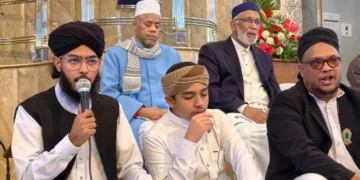






The second day of the International Zakah and Waqf Conference, co-hosted by Awqaf South Africa and SANZAF, concluded at Islamia College on October 18. MAHMOOD SANGLAY offers an analysis of the closing day.
The conference theme, From Obligation to Opportunity, brought together scholars, practitioners, and civil-society leaders from South Africa and abroad to explore the transformative role of Islamic social finance. Delegates called for collaboration, integration, and leadership rooted in maqāṣid al-sharīʿah.
The first day established a powerful premise: finance in Islam must serve justice, not power; renewal, not replication. The second day extended that vision—confronting how to institutionalise justice through collaboration, governance, and civilisational purpose. The sessions focused on youth empowerment, innovation, ethical leadership, impact measurement, and a strategic vision for a unified African framework. The discourse matured from moral appeal to strategic blueprint, blending Qurʾānic ethics with pragmatic development suited to African realities.
Confronting the threats to the moral economy
Mahomed Vawda’s presentation on Challenges for SMME Development sounded an alarm about online gambling—largely unregulated yet with an estimated annual turnover of R1.5 trillion, surpassing mining while employing almost no one.
This, he said, is the antithesis of a moral economy and threatens the sustainability of zakah funds. Vawda urged SANZAF and others to investigate and counter its impact. Vawda’s high-impact call invited Muslim professionals to donate one hour monthly for mentorship, a practical step to fight macro-economic decay from the micro-level upward.
Vawda and Prof Shahida Cassim proposed intensifying support for SMMEs—the engine of employment, since 86% of South African SMEs employ others. Prof Cassim emphasised that disadvantaged communities possess untapped potential, which can be unlocked through guidance and the right tools.
To demonstrate this, she launched a Creativity Bootcamp during the Covid 19 pandemic that inspired participants to innovate and transform their businesses. The program produced remarkable outcomes, such as street vendors evolving into suppliers for major supermarkets and creating new products like dried fruit and juices from nearly expired produce.
The session Innovation through Waqf underlined the urgency of professionalising the sector to protect assets from decay. Benazous Abdelkadir delivered a remote presentation on Algeria’s new Waqf Law, which seeks full regulation, digitisation, and integration with the UN SDGs. His case illustrated how state-level modernisation secures waqf’s potential and why South African institutions must pursue professional asset management and digital governance to safeguard amānah-based endowments.
Zakah, waqf and development
The session on Waqf for Development and Civilisational Renewal mapped how Islamic endowments anchor social purpose. Professor Riham Khafagy traced the structural tension between autonomous waqf and the sovereign state, worsened by colonial confiscations, and argued for professionally governed, Shariah-anchored civil-society institutions to restore social and economic self-determination for Muslim communities.
Urban development expert Rudewaan Arendse proposed adapting the Waterfall City model to public land through long leases so municipalities retain ownership while enabling development. His blueprint leverages land-value capture and ninety-nine-year leasing to finance social housing without alienating assets, urging replication of hybrid waqf arrangements that blend family and community endowments for equitable urban transformation.
Islamic finance educator Igshaan Samsodien reframed waqf as a youth-development engine. From Cape Flats realities, he advocated dedicated awqaf for sport, arts, entrepreneurship and skills centres providing safe spaces, mentorship, turning receivers into givers. Framed as ṣadaqah jāriyah, these funds convert immediate relief into long-term capability, reducing exposure to gangs and unemployment through investing in talent, dignity and pathways to work.
What if a single seed could change the destiny of a child? Igshaan Samsodien takes us into the heart of the Cape Flats, where a teenager stands at a crossroads—gang life or his dream.
Investment professional Kieyaam Gamieldien showcased a collaborative fund with Old Mutual and Gift of the Givers that preserves donor capital while routing income to relief, aligning Shariah ethics with regulated finance. He highlighted Section 18A incentives, sukuk underpinnings and the potential of blended finance. The session concluded: such hybrids can further scale waqf’s role in innovation, youth and sustainable development.
You may also want to read




From moral economy to economic model
If Day 1 reclaimed zakah and waqf as moral economies rooted in prophetic renewal, Day 2 offered the developmental blueprint—transitioning from moral imperative to pragmatic, data-driven economic model. The emphasis shifted from charity to sustainable wealth creation and systemic change. The collective discourse of five sessions pointed to one strategic direction: Islamic social finance must mature through unity, professional governance, and entrepreneurial endowment management.
The session The Future of Zakah and Waqf in Africa yielded the most compelling public-interest insights, offering scalable alternatives to dependency. Amir Kulungile Raheem Nkumane’s Winterveldt Case Study demonstrated empirical success: his Umveling Ngangi model integrates masjid-based skills centres (welding, carpentry) and clinics. Dependency on government grants in Winterveldt dropped from 94% to 54%—proof that zakah-funded development can transform beneficiaries into providers.
Complementing this, Shiraz Gany’s Township Economic Development model outlined income-generating waqf projects—such as small-scale wholesale funding for spaza shops and a Last Mile Bike Rental Project—yielding an 87% return in year one. These ventures exemplify justice and renewal by investing in dignity and agency rather than perpetuating handouts.
Integration and accountability
A high-impact conversation centred on unity and accountability in humanitarian and social-finance sectors. The session Integration and Scaling Organisational Impact brought together CEOs of SANZAF, Awqaf SA, Penny Appeal, and Zamzam Foundation—an unprecedented show of organisational humility. The consensus: scaling impact requires a unified framework.
Shanaaz Paruk of Penny Appeal South Africa issued a sharp critique of toxic charity—the kind that “feels good to the giver but disempowers the receiver.” She warned that South Africa hosts one of the world’s largest yet least-regulated charity sectors, lacking mandatory reporting or central oversight beyond basic NPO registration. This revelation carries high public-interest value: donor funds and beneficiaries remain vulnerable without collective regulation.
In the closing plenary, Yasmina Francke of SANZAF urged a shift from competition to cooperation in project work, calling for collaboration despite ideological differences. Zeinoul Cajee advocated structural re-organisation within Muslim society to empower youth leadership and recognise talent beyond entrenched hierarchies.
Moderator Shafiq Morton summed up the challenge: moving “from obligation to opportunity—with the challenge lying in the opportunity.” The opportunity is vast, but implementation demands transcending organisational friction and internal politics. Delegates endorsed establishing a Strategic Roundtable and unified framework anchored in professionalism, transparency, and measurable impact.
A manifesto for action
Day Two concluded with an activist manifesto. The conference translated the moral language of justice and renewal into actionable, politically conscious, and economically sound proposals. The message was clear: the future of zakah and waqf in Africa depends not on donation volume but on courageous leadership committed to development, accountability, and integration.
By institutionalising justice through ethical governance and data-driven management, Muslim civil-society organisations can transform zakah and waqf from instruments of relief into engines of renewal—an African framework capable of ending dependency and realising the Qurʾānic vision of economic dignity for all.