








![Does ta’wīl mean interpretation or fulfilment? A Quranic reassessment [+video]](https://muslimviews.co.za/wp-content/uploads/2026/10/Tawil-Kaskas-360x180.webp)






















![Why becoming a wealthy Muslim is commendable in Islam [+videos]](https://muslimviews.co.za/wp-content/uploads/2026/09/Muslim-Trade-Business-1-360x180.webp)



![The market-builder who restrained the market [Part 2]](https://muslimviews.co.za/wp-content/uploads/2026/08/PHOTO-2026-08-25-17-16-32-360x180.jpg)









By HASSEN LORGAT
The writer argues that claims of a sweeping Cape Union Mart victory are overblown, as the Krawitz ruling, its costs decision and the appeal reopen deeper questions about protest, free speech and Nelson Mandela’s political legacy.
The Palestinian Solidarity Campaign (PSC) and four individuals have just approached the court, seeking leave to appeal a Western Cape High Court order that restricted their protest statements and conduct involving Cape Union Mart. The PSC argues, amongst other things, that the ruling that imposed restrictions on activists are too broad and unjustifiably limit freedom of expression. This article will deal with the politics surrounding the original ruling as it may offer us some underlying strategies at play by Israeli supporters.
Like all legal battles, this case is part of an ongoing battle of narratives. The usual claims of “We won, they lost” will be in full flight, although the truth lies somewhere in between. A long struggle lies ahead, in which the well-resourced will continue — in a David and Goliath contest — to fight against less well-off adversaries.
One newspaper ran this celebratory headline: “Cape Union Mart victory shows ‘protest cannot extend to harassment'” (September 4, 2026). The story described it as “a landmark judgment that curtails anti-Zionist hate.”
Just the other day, a Politicsweb headline read: Phumlani Majozi says PSC is chasing a radical political agenda — not the wellbeing of South Africans.
In the text, Majozi congratulates Krawitz and Cape Union Mart (CUM) “for winning their case against the Palestine Solidarity Campaign (PSC) … Justice has been served, and as law-abiding South Africans, we should celebrate that. It’s significant.” The case, he believes, is damaging “not only to Krawitz and his company, but to South Africa as a whole.”
The case was heard in the Western Cape High Court: Cape Union Mart International (Pty) Ltd and Another v Ockards and Others (2025/092980) [2026] ZAWCHC 477 (September 4, 2026). Judge Cloete delivered the judgment, with Judges Barendse and Nziweni agreeing.
The excitement over a Krawitz win is overblown and unsupported by the facts. Three things need examining: what the court actually decided, how the applicants (Krawitz and the SAZF) reacted, and how the respondents (the PSC) reacted.
I will not rehearse the ruling in detail; readers are referred to Ziyad Motala’s legal dissection, which addresses the political overreach in the charges of “complicity”, “support” and “association”. The court ruled against the PSC, to the delight of the Zionist Federation, which argued that “had it succeeded, any Jewish South African in business could have been held responsible for the actions of the Israeli government”. Elsewhere I argued that the judge erred in finding Krawitz’s role in Israeli organisations to be legally of no substance. See here and here.
The social justice movement has been enriched by partisans and progressives — many of them Jewish — who developed the discourse on corporate complicity with the Holocaust. They called out IG Farben and Krupp, but also the everyday factories that kept the Reich running, such as Graetz, Ehrich & Graetz. This is not to say Krawitz and his co-applicants are complicit. It is to say that the argument has a long history in international human rights law, running through the UN Guiding Principles on Business and Human Rights to contemporary work on corporations reportedly violating rights in Palestine. The judge’s failure to engage with these arguments will spur further litigation, appeals and new cases — as is already evident.
The costs order failure
This is an underwhelming result, but it has not stopped supporters of the company, and Israeli supporters, from spinning it as a victory — even calling themselves champions of democracy and freedom. It makes you wonder: what would Madiba say? The record will answer that, not the spin.
The Palestine Solidarity Campaign (PSC) has always argued that the lawsuit was a SLAPP suit — a Strategic Lawsuit Against Public Participation — meant to intimidate and silence its boycott campaign.
In a post-judgment interview, Krawitz said the judgment did not suit the PSC because “they really wanted a cost order against civil society”. He added: “We feel it might have been more appropriate to award costs in our favour, rather than having each party cover its own costs.”
The court gave specific reasons for refusing a costs order. It found that Cape Union Mart and Krawitz’s lawyers sought overbroad relief — wider than was ultimately justified — and that Krawitz’s own conduct contributed to the dispute, particularly interview remarks that had “unhelpfully stoked” it. The court was right: the applicants overreached.
It is worth recalling what the initial application sought beyond the interdict. According to the founding affidavit, Krawitz and Cape Union Mart also asked for a public apology from the defendants, and for “sentimental damages” to be donated to a charity of the applicants’ choice. The final order granted none of these — no damages, no apology, no costs. Only the interdict itself, with each side bearing its own legal expenses.
With the costs order refused, the spin machine shifted to a display of humanity and graciousness. The narrative now paints the company and the Krawitz family as peace-loving democrats who never opposed the right to protest. To back this up, we are told Philip Krawitz loves Mandela and his vision — unlike his detractors in the PSC, who apparently do not.
The voice for South African Jews?
A useful resource here is Tali Feinberg’s piece in the SA Jewish Report (September 10, 2026), “Krawitz: A voice for South African Jews”. It is a modest account of “a victory”, but it betrays a yearning for more. It opens with “community and business leader Philip Krawitz” recalling Mandela’s address to Jewish people at the Marais Road Shul in Cape Town, on the first Shabbat after the 1994 elections.
Krawitz recalls Mandela saying “stay home or go home” — implying that he understood the centrality of Israel in Jewish life, and the right to “go home” if one chose to make aliya. “However, he also made the point that if we were thinking of emigrating to anywhere other than Israel, we should ‘stay home’ and help build South Africa.”
The story is not new. Mirah Langer’s article “The Day Mandela Came to Shul”, written five years ago, opens with the recollections of Ambassador Alon Liel, Israel’s Ambassador to South Africa from 1992 to 1994. Quoting Liel, Langer writes: “However, Mandela added in a caveat, saying that this was ‘except for the Jews who had gone to Israel because they went to their homeland’.” Liel says he was surprised Mandela had such a sentence, and later discovered that Mandela had taken up the suggestion of another community leader to acknowledge the special relationship between the Jewish community and the two nations.
We stand by our friends
Make of that what you will, but neither Madiba nor the ANC made policy off the cuff. As early as 1990, Mandela told a global audience:
“Your enemies are not my enemies.”
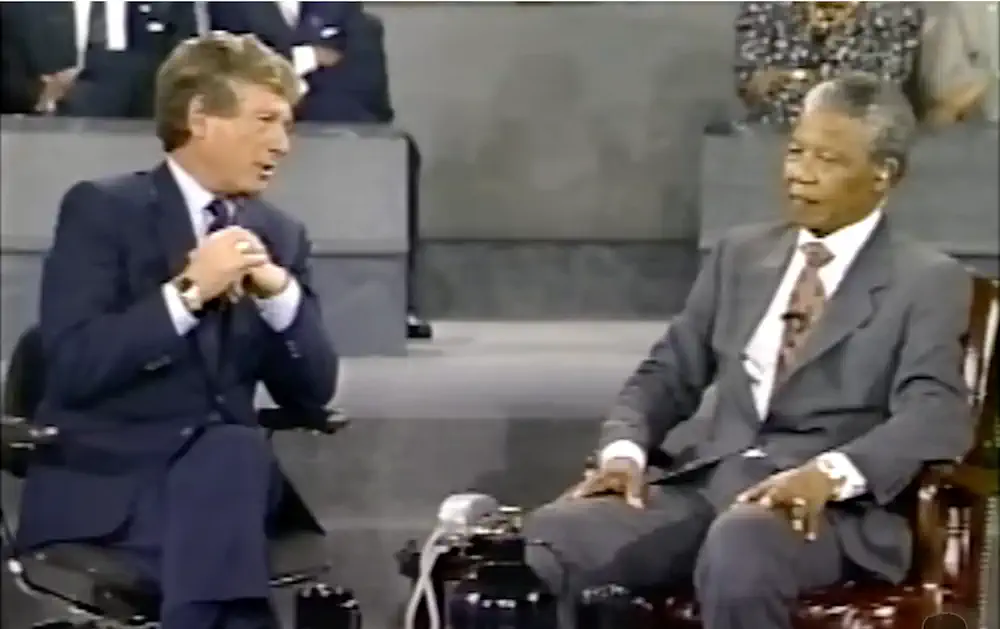
Mandela defended the ANC’s solidarity with the Palestine Liberation Organisation, declaring that “your enemies are not my enemies” and affirming Palestinian self-determination.
Photo: Reelblack One
Click here to watch the video.
“How you relate to our struggle in South Africa determines how we will relate to you.”
“We identify with the PLO because just like ourselves they are fighting for the right of self-determination,” confirming that Yasser Arafat was “a comrade in arms, and we treat him as such.”
In the same interview with Ted Koppel (June 1990) Mandela clarified what he meant by secure borders: “… that we carefully define what we mean by secure borders. We do not mean that Israel has the right to retain the territories they conquered from the Arabs, like the Gaza Strip, the Golan Heights, and the West Bank. We don’t agree with that. Those territories should be returned to the Arab people.”
In 1997 he said South Africa’s freedom was incomplete without Palestinian liberation.
Madiba meets the Jewish Board
You may also want to read



![Jeffrey Sachs critiques the US, Israel and Europe + [video]](https://muslimviews.co.za/wp-content/uploads/2025/03/Jeffery-Sachs-Michael-Von-Der-Schulenburg-120x86.jpg)
Few remember that Mandela addressed the SA Jewish Board of Deputies at the opening of its 37th Congress at the Carlton Hotel on Saturday, August 21, 1993. He spoke frankly, reminding them of one Ben-Yehuda, who spread fear about an ANC victory on false claims of antisemitism: “The suggestion that an ANC-led government could ever indulge in or connive at anti-Semitism is a scandalous slander inspired either by sheer ignorance or malice!” The SAJBD, he acknowledged, had reprimanded Ben-Yehuda.
He noted the Board’s concern about the ANC’s relationship with the PLO, but remained steadfast. He recognised both nationalist struggles — Palestinian and Zionist — and added: “The ANC insists on Israel’s right to exist within secure borders while equally supporting the Palestinian right to national self-determination.”
He returned to this theme repeatedly. In the same address he chastised Israel for collaborating with apartheid: “The ANC, in common with the international community, was extremely unhappy about the military cooperation between the State of Israel and the apartheid regime in South Africa. The refusal of Israel, over many years, to honour its international obligations to isolate the apartheid regime did influence our attitude towards that government.”
This is the Madiba the PSC still stands alongside.
Facts getting in the way of protest
I want to turn now to the court’s treatment of facts and protest. Judge Cloete held that “It has been established on the admissible evidence that the ‘facts’ upon which respondents’ statements are based are not true, and accordingly one of the essential elements underpinning such a defence is absent.” The SAZF Cape Council welcomed the ruling, noting that the judges ordered protesters to “stop making false, defamatory claims that the company or Krawitz funds genocide, the Israeli army, or the killing of children”.
The ruling and its framing are problematic. Ziyad Motala and others have argued that the court overstepped into politics by rejecting the protesters’ defences of “truth” and “fair opinion”, treating internet articles as insufficient factual evidence. The SAZF, for its part, notes that protests, boycotts and criticism of Israel or Gaza were not banned. Protesters remain free to protest or call for a boycott, “provided they do not make false statements, block store entrances, or violate the Regulation of Gatherings Act”. The SAZF’s most controversial claim is that “fair opinion has to be based on true facts, and the court found the facts here were not true.” It adds that the complicity argument was dropped by PSC lawyers and that “the court said this concept does not exist in our law”.
Krawitz’s voice
Quoting Krawitz directly, the SA Jewish Report confirms that he went to court to interdict defamation and lawless protests: “We have the right to freedom of belief, and the right to operate businesses in a safe environment.” He said the judgment “vindicates our faith in the judiciary and the independence of South Africa’s law courts. It is also a triumph for democracy: it endorses the right to protest, providing the protests fall within the ambit of the law.”
The article says the PSC and its supporters accused the company and family of “complicity in a ‘genocide’ in Gaza, including the killing of babies”, and that the court ordered “the protesters to stop making defamatory statements about him as executive chairperson of Cape Union Mart, the company, and its brands”.
This is the key point. Palestinian activists have always viewed the case as a SLAPP suit, in which restricting free speech by legal means — including a costs order — was the objective. They did not get the costs order, nor did they lose the right to protest creatively. That is why the victory claims are overblown.
There is, however, a further matter that troubles me regarding their public commitment to universal freedoms and rights, and it compels me to wonder: whilst the Zionist Federation and the Krawitz family take credit for not having called for restrictions on the right to protest, why do they fail to appreciate that a fact-based protest does not, in itself, constitute a limitation of that right?
Back to Madiba?
Feinberg quotes Krawitz saying he was present when Mandela made those remarks and “I will never forget them.” She continues: “We therefore felt it important to take a stand against those trying to badger us into cutting our connection with Israel. For that reason, we decided to say… ‘So far, and no further!’ Thank heavens, we have a Constitution and judges who endorse that right.”
Krawitz affirms the right to protest as a fundamental democratic right, but says the court made an important point: the right to protest is tied to dignity and respect. Besides contravening numerous aspects of the Gatherings Act, he says, protesters continued to propagate lies. As long as protests are lawful and fact-based, “we have no argument against their legal right to protest”, but it is “grossly unfair to target companies because of any perceived affiliations with which people may not agree.”
The SAZF clarified what the ruling does not cover: Cape Union Mart did not seek orders limiting criticism of Israel or Gaza, preventing public gatherings, or calling for a boycott. None of those were restricted. People remain free to protest, criticise Israel, and urge others not to shop at Cape Union Mart — but may not make false claims about the company or Krawitz, nor block customers from entering stores.
Campaigners will continue to call out those they believe give moral or material support to a state perpetrating genocide. As chair of Keren Hayesod South Africa, and through his involvement in Keren Hayesod and the Jewish Agency for Israel, Krawitz’s leadership will continue to draw scrutiny. B’Tselem’s July 2025 report, Our Genocide, concluded that “Israel is taking coordinated, deliberate action to destroy Palestinian society in the Gaza Strip.” Amnesty International (December 2024) found that Israel is carrying out genocide against Palestinians in Gaza. Human Rights Watch (December 2024) documented the deliberate deprivation of water, food and fuel — extermination and acts of genocide. Al-Haq has long documented genocide, citing the UN Commission of Inquiry’s finding that genocidal intent was the “only reasonable inference”. Its report or toolkit on the genocide is a particularly useful resource.
This is not the smoking gun the judges wanted — direct proof pointing to the hand of Mr Philip Krawitz. On that narrow question, the case was lost. But in the long run, campaigners are winning, as shifts in the Global North show.
Fair comment and a fair fight
The legal test for fair comment in defamation rests on four elements:
It must be opinion, not fact.
It must be fair and not malicious.
The facts they are based on must be true (judge’s emphasis, paragraph 56).
It must concern a matter of public interest.
But this is not as easy for social justice movements engaged in daily struggles that can be seen as a form of non-violent guerrilla warfare. They must obtain their rights from power and vested interests through demanding, among other strategies, greater transparency and accountability. Often the facts are hidden from activists, who nonetheless hold strong feelings of grievance and hurt, and a deep conviction — not yet verifiable — that justice is on their side.
Section 17 of the Bill of Rights, the right to protest, has no factual precondition. The fair comment defence requires a factual basis for the facts underlying the opinion, but the opinion itself need not be true — only honestly held, as Ziyad Motala has pointed out. The judges went wrong when they treated a political opinion (“supports an oppressive project, genocide”) as though it required proof of a fact. In doing so, they regulated political vocabulary and free speech.
If this reasoning stands, every social justice movement that organises before the facts are fully available becomes legally vulnerable. Our history — the struggle against slavery, the anti-colonial struggles, the labour movement — affirms the right to act on grievance, on the indignity of denied rights. It could be argued that this ruling is anti-constitutional, undermining the right to protest by placing unnecessary demands before a protest can be waged.
Movement building through inalienable rights
People’s movements, unions, NGOs and other civil society formations all suffer power and information deficits, because information is monopolised by corporations, governments and other powerful actors. These asymmetries benefit the powerful. Inalienable rights are a moral counterbalance: they are enjoyed by all humans, not granted by governments, cannot be transferred or sold, and no state can take them away. They are often entrenched in constitutions.
If the Constitution intended facts as a precondition to protest, it would have said so. Had it done so, we would have lost many battles — because struggle itself is a process of education for the public, the jurists and the judges. Struggle is a great teacher, and we make the path by walking it. Ethical movements fight for inalienable rights, for truth and justice, and for grievances to be addressed. The right to protest is about protecting a right as I will show briefly in these cases.
Treatment Action Campaign (TAC). TAC succeeded in the fight against AIDS because, although the fact of people dying was clear, the government was neglecting the crisis and refusing to accept the science. The breakthrough came when antiretrovirals were introduced and pharmaceutical corporations were pressured to lower drug prices in order to save lives. The tobacco industry followed a similar pattern: it flooded the market with its own “facts” to counter anti-smoking campaigns, but ultimately lost.
Anti-smoking campaign: The National Council Against Smoking (led by Dr Yussuf Saloojee) succeeded by exposing corporate greed and manufactured doubt. We learnt from them how they funded misleading research to protect profits. As Saloojee said in 2012: “The industry has put its own profits before the health and welfare of its customers.” The Minnesota Tobacco Trial in 1998 released internal documents proving the industry had lied for decades, destroying its credibility. Domestic pressure and international action by the WHO propelled governments to act. Despite these efforts, post-apartheid South Africa enacted strict laws that cut smoking rates because of the efforts of the campaigners.
The anti-Vietnam War movement in the USA tells a similar story. Before the Pentagon Papers, its arguments were dismissed as unfounded while the government kept the “facts” classified. The absence of documents did not invalidate the movement’s underlying analysis — in particular, its moral outrage at the futility of wars fought for control and profit. The 1971 leak of the Pentagon Papers vindicated that analysis, confirming what the movement had long claimed. The diverse and organised US anti-war movement rallied around three core demands: the immediate withdrawal of US troops, the abolition of the military draft, and an end to US interference in Vietnam’s internal affairs.
The trade union movement has historically functioned as a broad social justice force, originating from severe workplace grievances like the Tolpuddle Martyrs of 1834 to fight not just for basic survival, but for a dignified quality of life. Beyond addressing bread-and-butter economic issues, these unions have challenged corporate monopolies on power and knowledge by establishing independent, worker-controlled networks for education, research, and communication. Furthermore, by expanding their organised model outside the factory floor, trade unions have successfully countered employer narratives and actively reshaped ideas of accountable democracy. This broader mission has been especially vital in challenging systemic oppression and racism, as seen in historical struggles in South Africa and globally.
Conclusion
Struggles around law are also contestations over narrative, in which adversaries seek the moral high ground. Struggles for autonomy, justice and genuine majority democracy are long-drawn-out; they are not resolved by a single event, even a court case.
Those with money and resources often try to tie the hands of their opponents — the intention of SLAPP suits. As I have shown, that intention was not realised by the court.
The lifeblood of genuine popular movements — not those that astroturf into our society to foment backward ideas of racism and xenophobia — is movements that unify, believe in equality and justice, and seek to democratise all of society. The right to dissent is integral to freedom of expression, to the right to organise, and to movement building.
This court case did not dampen that. The fight for truth and justice is never settled by a single ruling. It is carried forward by those imbued with the Palestinian fighting spirit, loosely called sumud: those who will not be subdued, and in this case refuse to be silenced. The appeal, the next campaign, and the next case are already being prepared. As the activists say: We exist, and we are obliged to resist.
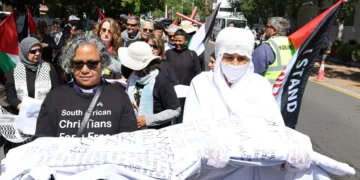
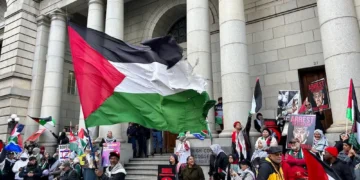
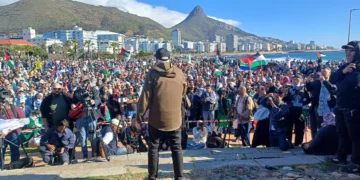
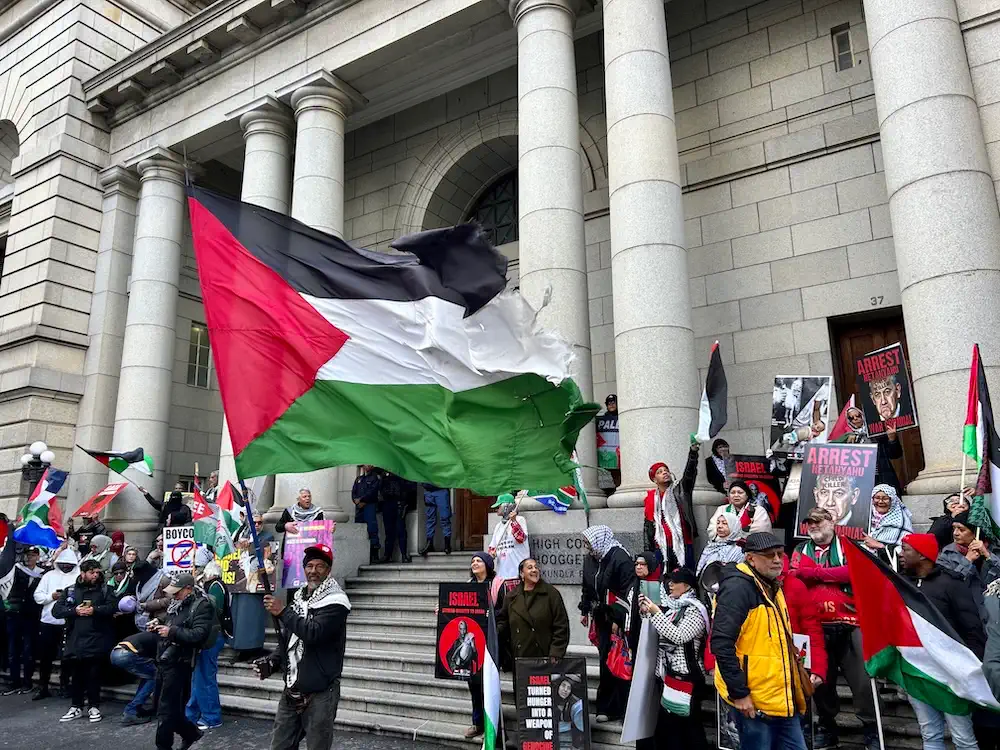
A day after the ruling, the activists took to the streets, underscoring the fact that this is a long struggle and they are in it for the long haul.