













![The market-builder who restrained the market [Part 2]](https://muslimviews.co.za/wp-content/uploads/2026/08/PHOTO-2026-08-25-17-16-32-360x180.jpg)
![The merchant preceding the Prophetic mission [Part 1]](https://muslimviews.co.za/wp-content/uploads/2026/08/01-360x180.jpg)






By MOGAMAT MOGODIEN SAMODIEN
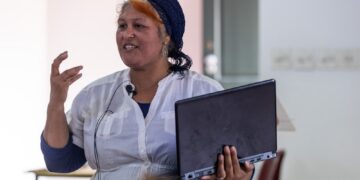
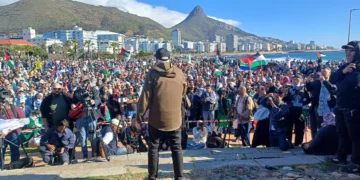
Professor Aslam Fataar’s khutbah at Owwal Masjid in Belhar, Cape Town on May 23, 2025 stands as a deeply moving and timely reminder of the interconnectedness of global and local struggles. His words, delivered on the sacred eve of the Hajj, resonated far beyond ritual, touching the raw realities faced by the people of Belhar, Delft, and all those living under the shadow of oppression of a special kind and violence.
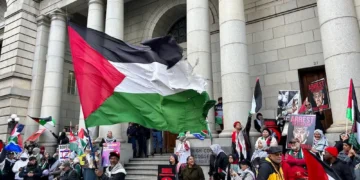
What made this khutbah truly remarkable was its ability to bridge the suffering of the people of Palestine—enduring a genocide that has shocked the conscience of the world—with the daily hardships experienced in our own neighbourhoods. Fataar did not allow the pain of others to remain distant or abstract; instead, he wove it into the fabric of our own lives, urging us to see the sacredness in our struggles for security, peace, and survival.
His reflection on Arafah—the day when pilgrims stand exposed before Allah, seeking forgiveness and renewal—was especially poignant. It is a reminder that Arafah is not confined to the plains of Makkah; it is lived every day by those who raise their hands in supplication amidst poverty, neglect, and violence. In this way, the people of Belhar and Delft are not forgotten or invisible; they are seen by the Most Merciful, and their steadfastness becomes an act of worship, a daily Hajj.
The khutbah’s contextualisation of the stages of the Hajj—Arafah, Muzdalifah, Ramy, Tawaf, and Saie—offered profound lessons for our own context. Each ritual became a metaphor for our lived reality: moments of standing firm in the face of adversity, pausing for reflection, casting away injustice, realigning our lives with higher purpose, and striving with hope even when the outcome is uncertain.
May I just add, despite the overwhelming challenges, there remains a glaring absence of political will from the very parties entrusted with the safety and wellbeing of our communities. The persistent gang violence and crime on the Cape Flats continue unabated, with over 200 gang-related murders reported in recent months alone. Calls from civil society and safety forums for decisive action—including the deployment of the national defence force—have been met with insufficient response and a lack of coordinated political commitment to truly address the root causes and ongoing violence.



This political inertia compounds the suffering, leaving communities feeling overlooked and vulnerable. Fataar’s khutbah captures this reality with compassion and clarity, urging us not to turn away or grow numb to these struggles. Instead, it calls for steadfastness—sumud—and moral resistance, affirming that the fight for justice and dignity is itself a sacred act.
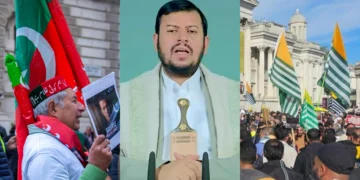
By drawing these parallels, the speaker honoured the resilience of our community. He affirmed that our struggles are not signs of abandonment but are imbued with spiritual meaning and dignity. He called us to embody ihsan—excellence, beauty, and presence—even when the world overlooks us. In the same breath, he reminded us that our struggle is not isolated; it is part of a global tapestry of resistance, from Belhar to Palestine, Kashmir, and beyond.
This khutbah was a call to moral action and solidarity. It challenged us to refuse erasure, to reject despair, and to hold fast to justice and human worth. It reminded us that the Hajj is not only a journey to a distant land, but a living, breathing reality in our streets, homes, and hearts.
May we carry forward these lessons, standing in unwavering faith and compassion, and may our daily acts of resistance and service be accepted as sacred by the Most Merciful. May we never lose sight of our shared humanity, and may we always strive for a world where peace, justice, and dignity prevail—for ourselves, for Palestine, and for all who suffer.