

Muslim Views
No Result
View All Result
  • News
    • All
    • Local
    • National
    • World
    Cape Town musicians rally behind displaced Palestinian composer

    Cape Town musicians rally behind displaced Palestinian composer

    Rally for solidarity with migrants ahead of planned march

    Rally for solidarity with migrants ahead of planned march

    The scholar who refused to turn Islam into an enemy: The legacy of John Esposito

    The scholar who refused to turn Islam into an enemy: The legacy of John Esposito

    The greatest monuments are not in stone, but in lives transformed

    The greatest monuments are not in stone, but in lives transformed

    Mass march to Parliament planned to combat xenophobia and Afrophobia

    Mass march to Parliament planned to combat xenophobia and Afrophobia

    How Sanef is helping journalists build mental resilience

    How Sanef is helping journalists build mental resilience

    Awqaf SA strengthens water security at Rahima Moosa Hospital

    Awqaf SA strengthens water security at Rahima Moosa Hospital

    Bo-Kaap forum reveals first steps to tackle gentrification

    Bo-Kaap forum reveals first steps to tackle gentrification

    The Sunnah as a way of being: The path to complete humanity

    The Sunnah as a way of being: The path to complete humanity

    Amaanat chief must account for R646m of payments in civil claims

    Amaanat chief must account for R646m of payments in civil claims

    • National
    • World
    • Local
  • Opinion
    • All
    • Columnists
    • Discussions with Dangor
    • Editorial
    • Guest Writer
    The nuclear leash: Washington’s deal to put Saudi back in its place

    The nuclear leash: Washington’s deal to put Saudi back in its place

    Spain’s World Cup triumph, Messi and the politics of Palestine

    Spain’s World Cup triumph, Messi and the politics of Palestine

    The myth of apolitical law

    The myth of apolitical law

    Grappling with Apartheid labels

    Grappling with Apartheid labels

    The scholar who refused to turn Islam into an enemy: The legacy of John Esposito

    The scholar who refused to turn Islam into an enemy: The legacy of John Esposito

    More than a game, or the Clash of Titans

    More than a game, or the Clash of Titans

    An empire battered, bluffing and buying time

    An empire battered, bluffing and buying time

    India’s Israeli mirror: A template for moral decline

    India’s Israeli mirror: A template for moral decline

    Notes from the launch of the School of Solidarity

    Notes from the launch of the School of Solidarity

    From green claims to verified impact through environmental risk-sharing

    From green claims to verified impact through environmental risk-sharing

  • Features
    • All
    • 1500 Years of Prophetic Legacy
    • AWQAF SA
    • General Features
    • Imam Haron
    • Tributes
    Grappling with Apartheid labels

    Grappling with Apartheid labels

    The scholar who refused to turn Islam into an enemy: The legacy of John Esposito

    The scholar who refused to turn Islam into an enemy: The legacy of John Esposito

    The greatest monuments are not in stone, but in lives transformed

    The greatest monuments are not in stone, but in lives transformed

    Legacy of educator Haji Mogamat Rashad Jedaar lives on

    Legacy of educator Haji Mogamat Rashad Jedaar lives on

    Reclaiming agency: From ritual to action Part 3

    Reclaiming agency: From ritual to action Part 3

    June 16, the Call of Islam, and the many rivers of liberation

    June 16, the Call of Islam, and the many rivers of liberation

    Reclaiming agency: From ritual to action Part 2

    Reclaiming agency: From ritual to action Part 2

    Reclaiming agency: From ritual to action Part 1

    Reclaiming agency: From ritual to action Part 1

    Goolam Hoosain Abed: The last of the famous sporting family departs

    Goolam Hoosain Abed: The last of the famous sporting family departs

    Abdullah Ibrahim crafted a magnificent new culture for South Africa

    Abdullah Ibrahim crafted a magnificent new culture for South Africa

    The hidden heritage of racial ‘passing’

    The hidden heritage of racial ‘passing’

    The Commonwealth war graves at the Mowbray Muslim Cemetery

    The Commonwealth war graves at the Mowbray Muslim Cemetery

    Honouring a chess giant: The legacy of Dr Shabier Bhawoodien

    Honouring a chess giant: The legacy of Dr Shabier Bhawoodien

    Mapping national and provincial heritage at the Mowbray Muslim Cemetery

    Mapping national and provincial heritage at the Mowbray Muslim Cemetery

    Reclaiming Nordic solidarity in South Africa’s liberation

    Reclaiming Nordic solidarity in South Africa’s liberation

  • Lifestyle
    • All
    • Arts
    • Books
    • Education
    • Food
    • Health
    • Motoring
    • Sport
    • Technology
    Cape Town musicians rally behind displaced Palestinian composer

    Cape Town musicians rally behind displaced Palestinian composer

    More than a game, or the Clash of Titans

    More than a game, or the Clash of Titans

    Help Ruqaya Ismail represent SA at the Commonwealth Fencing Championship

    Help Ruqaya Ismail represent SA at the Commonwealth Fencing Championship

    Goolam Hoosain Abed: The last of the famous sporting family departs

    Goolam Hoosain Abed: The last of the famous sporting family departs

    Abdeyah da Costa and the dihlīz of Dorp Street

    Abdeyah da Costa and the dihlīz of Dorp Street

    A mother’s taweez and the Cape’s interfaith traditions [+ video]

    A mother’s taweez and the Cape’s interfaith traditions [+ video]

    Inaugural Islamic Expo to be hosted in Cape Town

    Inaugural Islamic Expo to be hosted in Cape Town

    Imraan Buccus on faith, activism and SA’s political crisis

    Imraan Buccus on faith, activism and SA’s political crisis

    The Book of Mercy: A powerful Ramadan read on compassion in Islam

    The Book of Mercy: A powerful Ramadan read on compassion in Islam

    UpScrolled and the rise of ethical Muslim tech in a censored digital world

    UpScrolled and the rise of ethical Muslim tech in a censored digital world

  • Finance
    • All
    • Islamic Finance
    Why Shariah compliance alone cannot guarantee sound investment returns

    Why Shariah compliance alone cannot guarantee sound investment returns

    Why serious Muslim investors must look beyond basic Shariah screens today

    Why serious Muslim investors must look beyond basic Shariah screens today

    Why Mufti Taqi Usmani says cryptocurrency is not Shariah compliant today

    Why Mufti Taqi Usmani says cryptocurrency is not Shariah compliant today

    Today’s two-pot withdrawal could threaten tomorrow’s retirement security

    Today’s two-pot withdrawal could threaten tomorrow’s retirement security

    War clouds gather over the Islamic finance boom

    War clouds gather over the Islamic finance boom

    Israel and the perfect storm of global economic isolation

    Israel and the perfect storm of global economic isolation

    AI needs an ethical compass, say Islamic finance researchers

    AI needs an ethical compass, say Islamic finance researchers

    From green claims to verified impact through environmental risk-sharing

    From green claims to verified impact through environmental risk-sharing

    Amaanat chief must account for R646m of payments in civil claims

    Amaanat chief must account for R646m of payments in civil claims

    The $6 trillion shift in global Islamic Finance

    The $6 trillion shift in global Islamic Finance

  • Islam
    • All
    • Eid
    • Faith and Practice
    • Family
    • Hajj and Umrah
    • Moulood
    • Quran
    • Ramadaan
    A sound heart in a world of strangers

    A sound heart in a world of strangers

    Can our mosques become the heart of the Ummah?

    Can our mosques become the heart of the Ummah?

    Karbala – between obligation and inability

    Karbala – between obligation and inability

    16 June 1976: Qibla’s call to conscience

    Reclaiming our future – drawing lessons from Karbala and Soweto 1976

    Karbala, Gaza and xenophobia: Why history still matters today

    Karbala, Gaza and xenophobia: Why history still matters today

    Adnaan Adams (right) addressing the congregation at Masjidut Taqwa in Newfields Estate, Cape Town, on Friday, June 12. (Photo: Supplied)

    Reflecting on a khutbah and the community it seeks to serve

    The panellists at the Muslim Personal Law symposium at the University of Cape Town on June 8, clockwise from top right: Professor Fatima Seedat, Ayesha Royker, Rehema Namukose and Khensani Motlhante. (Photos: Anwar Omar)

    Advancing gender justice in Muslim Personal Law

    What do we owe the Earth?

    What do we owe the Earth?

    Hajj, human frailty and the compassion of Allah

    Hajj, human frailty and the compassion of Allah

    At Hajj we gather pebbles, but the devils remain standing

    At Hajj we gather pebbles, but the devils remain standing

  • Archives
  • Donate
Muslim Views
  • News
    • All
    • Local
    • National
    • World
    Cape Town musicians rally behind displaced Palestinian composer

    Cape Town musicians rally behind displaced Palestinian composer

    Rally for solidarity with migrants ahead of planned march

    Rally for solidarity with migrants ahead of planned march

    The scholar who refused to turn Islam into an enemy: The legacy of John Esposito

    The scholar who refused to turn Islam into an enemy: The legacy of John Esposito

    The greatest monuments are not in stone, but in lives transformed

    The greatest monuments are not in stone, but in lives transformed

    Mass march to Parliament planned to combat xenophobia and Afrophobia

    Mass march to Parliament planned to combat xenophobia and Afrophobia

    How Sanef is helping journalists build mental resilience

    How Sanef is helping journalists build mental resilience

    Awqaf SA strengthens water security at Rahima Moosa Hospital

    Awqaf SA strengthens water security at Rahima Moosa Hospital

    Bo-Kaap forum reveals first steps to tackle gentrification

    Bo-Kaap forum reveals first steps to tackle gentrification

    The Sunnah as a way of being: The path to complete humanity

    The Sunnah as a way of being: The path to complete humanity

    Amaanat chief must account for R646m of payments in civil claims

    Amaanat chief must account for R646m of payments in civil claims

    • National
    • World
    • Local
  • Opinion
    • All
    • Columnists
    • Discussions with Dangor
    • Editorial
    • Guest Writer
    The nuclear leash: Washington’s deal to put Saudi back in its place

    The nuclear leash: Washington’s deal to put Saudi back in its place

    Spain’s World Cup triumph, Messi and the politics of Palestine

    Spain’s World Cup triumph, Messi and the politics of Palestine

    The myth of apolitical law

    The myth of apolitical law

    Grappling with Apartheid labels

    Grappling with Apartheid labels

    The scholar who refused to turn Islam into an enemy: The legacy of John Esposito

    The scholar who refused to turn Islam into an enemy: The legacy of John Esposito

    More than a game, or the Clash of Titans

    More than a game, or the Clash of Titans

    An empire battered, bluffing and buying time

    An empire battered, bluffing and buying time

    India’s Israeli mirror: A template for moral decline

    India’s Israeli mirror: A template for moral decline

    Notes from the launch of the School of Solidarity

    Notes from the launch of the School of Solidarity

    From green claims to verified impact through environmental risk-sharing

    From green claims to verified impact through environmental risk-sharing

  • Features
    • All
    • 1500 Years of Prophetic Legacy
    • AWQAF SA
    • General Features
    • Imam Haron
    • Tributes
    Grappling with Apartheid labels

    Grappling with Apartheid labels

    The scholar who refused to turn Islam into an enemy: The legacy of John Esposito

    The scholar who refused to turn Islam into an enemy: The legacy of John Esposito

    The greatest monuments are not in stone, but in lives transformed

    The greatest monuments are not in stone, but in lives transformed

    Legacy of educator Haji Mogamat Rashad Jedaar lives on

    Legacy of educator Haji Mogamat Rashad Jedaar lives on

    Reclaiming agency: From ritual to action Part 3

    Reclaiming agency: From ritual to action Part 3

    June 16, the Call of Islam, and the many rivers of liberation

    June 16, the Call of Islam, and the many rivers of liberation

    Reclaiming agency: From ritual to action Part 2

    Reclaiming agency: From ritual to action Part 2

    Reclaiming agency: From ritual to action Part 1

    Reclaiming agency: From ritual to action Part 1

    Goolam Hoosain Abed: The last of the famous sporting family departs

    Goolam Hoosain Abed: The last of the famous sporting family departs

    Abdullah Ibrahim crafted a magnificent new culture for South Africa

    Abdullah Ibrahim crafted a magnificent new culture for South Africa

    The hidden heritage of racial ‘passing’

    The hidden heritage of racial ‘passing’

    The Commonwealth war graves at the Mowbray Muslim Cemetery

    The Commonwealth war graves at the Mowbray Muslim Cemetery

    Honouring a chess giant: The legacy of Dr Shabier Bhawoodien

    Honouring a chess giant: The legacy of Dr Shabier Bhawoodien

    Mapping national and provincial heritage at the Mowbray Muslim Cemetery

    Mapping national and provincial heritage at the Mowbray Muslim Cemetery

    Reclaiming Nordic solidarity in South Africa’s liberation

    Reclaiming Nordic solidarity in South Africa’s liberation

  • Lifestyle
    • All
    • Arts
    • Books
    • Education
    • Food
    • Health
    • Motoring
    • Sport
    • Technology
    Cape Town musicians rally behind displaced Palestinian composer

    Cape Town musicians rally behind displaced Palestinian composer

    More than a game, or the Clash of Titans

    More than a game, or the Clash of Titans

    Help Ruqaya Ismail represent SA at the Commonwealth Fencing Championship

    Help Ruqaya Ismail represent SA at the Commonwealth Fencing Championship

    Goolam Hoosain Abed: The last of the famous sporting family departs

    Goolam Hoosain Abed: The last of the famous sporting family departs

    Abdeyah da Costa and the dihlīz of Dorp Street

    Abdeyah da Costa and the dihlīz of Dorp Street

    A mother’s taweez and the Cape’s interfaith traditions [+ video]

    A mother’s taweez and the Cape’s interfaith traditions [+ video]

    Inaugural Islamic Expo to be hosted in Cape Town

    Inaugural Islamic Expo to be hosted in Cape Town

    Imraan Buccus on faith, activism and SA’s political crisis

    Imraan Buccus on faith, activism and SA’s political crisis

    The Book of Mercy: A powerful Ramadan read on compassion in Islam

    The Book of Mercy: A powerful Ramadan read on compassion in Islam

    UpScrolled and the rise of ethical Muslim tech in a censored digital world

    UpScrolled and the rise of ethical Muslim tech in a censored digital world

  • Finance
    • All
    • Islamic Finance
    Why Shariah compliance alone cannot guarantee sound investment returns

    Why Shariah compliance alone cannot guarantee sound investment returns

    Why serious Muslim investors must look beyond basic Shariah screens today

    Why serious Muslim investors must look beyond basic Shariah screens today

    Why Mufti Taqi Usmani says cryptocurrency is not Shariah compliant today

    Why Mufti Taqi Usmani says cryptocurrency is not Shariah compliant today

    Today’s two-pot withdrawal could threaten tomorrow’s retirement security

    Today’s two-pot withdrawal could threaten tomorrow’s retirement security

    War clouds gather over the Islamic finance boom

    War clouds gather over the Islamic finance boom

    Israel and the perfect storm of global economic isolation

    Israel and the perfect storm of global economic isolation

    AI needs an ethical compass, say Islamic finance researchers

    AI needs an ethical compass, say Islamic finance researchers

    From green claims to verified impact through environmental risk-sharing

    From green claims to verified impact through environmental risk-sharing

    Amaanat chief must account for R646m of payments in civil claims

    Amaanat chief must account for R646m of payments in civil claims

    The $6 trillion shift in global Islamic Finance

    The $6 trillion shift in global Islamic Finance

  • Islam
    • All
    • Eid
    • Faith and Practice
    • Family
    • Hajj and Umrah
    • Moulood
    • Quran
    • Ramadaan
    A sound heart in a world of strangers

    A sound heart in a world of strangers

    Can our mosques become the heart of the Ummah?

    Can our mosques become the heart of the Ummah?

    Karbala – between obligation and inability

    Karbala – between obligation and inability

    16 June 1976: Qibla’s call to conscience

    Reclaiming our future – drawing lessons from Karbala and Soweto 1976

    Karbala, Gaza and xenophobia: Why history still matters today

    Karbala, Gaza and xenophobia: Why history still matters today

    Adnaan Adams (right) addressing the congregation at Masjidut Taqwa in Newfields Estate, Cape Town, on Friday, June 12. (Photo: Supplied)

    Reflecting on a khutbah and the community it seeks to serve

    The panellists at the Muslim Personal Law symposium at the University of Cape Town on June 8, clockwise from top right: Professor Fatima Seedat, Ayesha Royker, Rehema Namukose and Khensani Motlhante. (Photos: Anwar Omar)

    Advancing gender justice in Muslim Personal Law

    What do we owe the Earth?

    What do we owe the Earth?

    Hajj, human frailty and the compassion of Allah

    Hajj, human frailty and the compassion of Allah

    At Hajj we gather pebbles, but the devils remain standing

    At Hajj we gather pebbles, but the devils remain standing

  • Archives
  • Donate
Muslim Views
Advertisement

June 16, the Call of Islam, and the many rivers of liberation

25 June 2026
in FEATURES, Guest Writer
Reading Time: 5 mins read
A A
June 16, the Call of Islam, and the many rivers of liberation

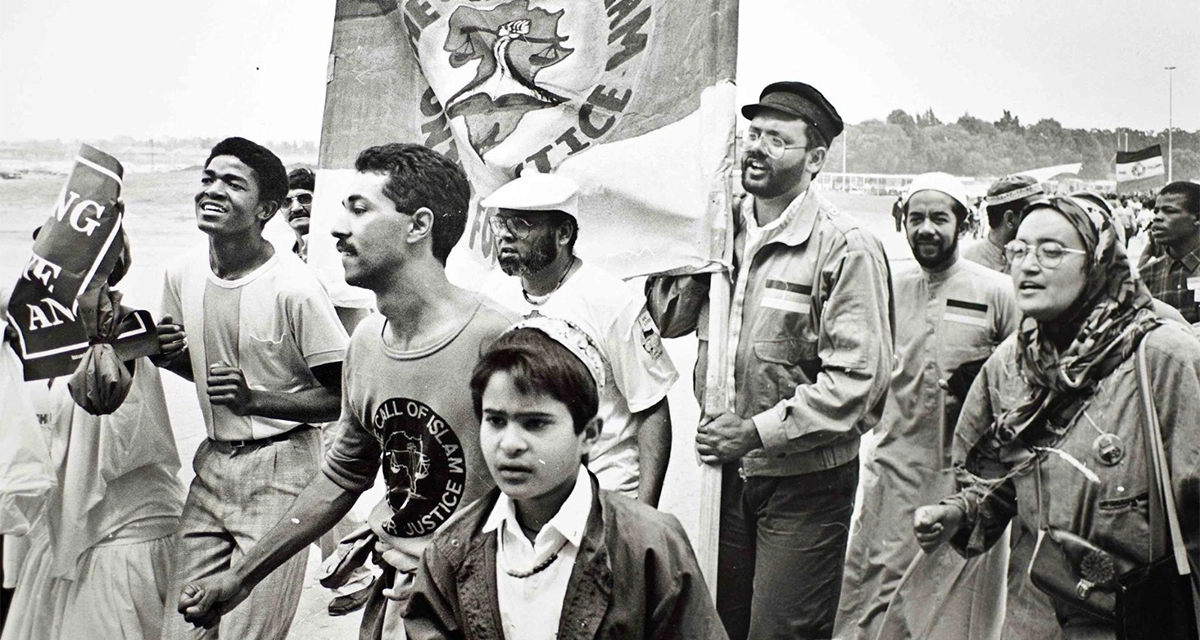
Call of Islam activists at a mass democratic rally during the 1980s. The organisation was one of several Muslim formations that emerged after the 1976 Soweto Uprising and participated in the broader struggle against apartheid. The writer, Adli Yacubi (in the Call of Islam T-shirt), leads the group, which includes, behind him from left, Ahmed ‘Gorabahi’ Saloojee, Ebrahim Rasool, Imam Gassan Solomon, Rosieda Shabodien and, in front, Shaheed Saloojee, the son of Ahmed. (Photo: Supplied / Call of Islam Archives)

Share on TwitterShare on FacebookShare on Whatsapp

Fifty years after the Soweto Uprising, Adli Yacubi reflects on how June 16 shaped a generation of Muslim activists, the emergence of the Call of Islam, and the enduring struggle for justice and human dignity.

By ADLI YACUBI

We grew up in the aftermath

By the time we came into political consciousness in the 1980s, June 16 was already part of the air.

Not history.

Air.

In the townships, in the schools, in the Friday khutbahs that suddenly became more dangerous, in student meetings, in the silence of parents who feared detention, banning orders, police raids and funerals that could turn political before the janazah even reached the maqbara.

We were younger than the generation of Hector Pieterson.

But we grew up in the aftershock of Soweto.

In Primrose Park, in Manenberg, in Athlone, and across the Cape Flats generally, June 16 had already travelled ahead of us. It had entered the political vocabulary of the country. Even those who wanted ‘peace’ now spoke differently. The apartheid state had exposed itself too openly. Children had been shot in the streets. After that, neutrality became harder to perform.

For Muslim youth especially, the question became unavoidable:

What does Islam mean in a country like this?

Not in theory.

Here.

You may also want to read

Good Jew, Bad Jew: new book explores why the west views brutality against Ukrainians and Palestinians differently

Good Jew, Bad Jew: new book explores why the west views brutality against Ukrainians and Palestinians differently

23 November 2023

Historic meeting in Cape Town with Saudi Scholar

7 August 2024 - Updated on 8 August 2024
Legacy of educator Haji Mogamat Rashad Jedaar lives on

Legacy of educator Haji Mogamat Rashad Jedaar lives on

7 July 2026 - Updated on 8 July 2026
When you make your mark don’t negate your solidarity with Palestine

When you make your mark don’t negate your solidarity with Palestine

27 May 2024 - Updated on 28 August 2024
Imam Husayn

Imam Husayn’s sacrifice serves as a light in times of darkness and despair

7 July 2024 - Updated on 20 November 2024
‘Good Jews’, ‘bad Jews’ and imperialist lies

‘Good Jews’, ‘bad Jews’ and imperialist lies

18 June 2025

Under apartheid.

That question did not produce one answer.

Some moved towards Black Consciousness traditions. Some entered worker formations and civic struggles. Some were drawn into Islamic political movements such as Qibla. Others found a home in the broad democratic culture emerging through civic organisations, trade unions, the United Democratic Front (UDF), and formations like the Call of Islam. Many moved between these spaces as the struggle intensified.

But all of us, in one way or another, were standing in the long shadow of June 1976.

Graphic: Rabbani Art Studio

June was never only about Afrikaans

To reduce June 16 to a protest against Afrikaans is to misunderstand the depth of what erupted in 1976.

The issue was never merely linguistic.

The issue was power.

The issue was dignity.

The issue was who had the right to think, to speak, to dream, and to belong fully in the land of their birth.

Bantu Education was not simply a broken schooling system. It was an instrument designed to produce obedience instead of imagination. Submission instead of citizenship. Labourers instead of free human beings.

And yet there is another irony history sometimes forgets.

Afrikaans itself was not the enemy.

In the Cape especially, Afrikaans also carried the memory of slaves, workers, labourers and imams. Long before the apartheid state tried to weaponise the language politically, Cape Muslims had already written Afrikaans in Arabic script. The language carried du‘ā, madrasah notes, family letters, recipes, poems and fragments of survival.

The political language of the 1980s was changing too. In the Cape especially, pamphlets, speeches and public meetings moved easily between English and Afrikaaps, between Quranic references and street language, between the vocabulary of resistance and the rhythms of ordinary people. Politics no longer sounded distant or academic. It sounded like the townships themselves.

Languages themselves are not innocent or guilty.

Power is.

The children of 1976 understood this instinctively. Even if they did not yet possess the vocabulary to articulate it fully, they recognised humiliation when they encountered it. They recognised domination when it entered the classroom disguised as education.

And they refused it.

The mosque enters history

By the 1980s, the aftershocks of June 16 had spread into nearly every corner of South African life.

Mosques increasingly became spaces not only of prayer but of political discussion, solidarity and moral witness. Muslim activists entered worker struggles, student organisations, civic movements and interfaith formations. Questions of race, justice, gender and economic inequality entered Muslim discourse with a new urgency.

For many, Islam could no longer remain confined to ritual while the country burned.

The Call of Islam emerged within this atmosphere.

Like many formations of the period, it was shaped by the energy and tensions of the 1980s: the growth of mass democratic politics, the influence of the UDF, the rise of civic resistance, worker struggles, youth activism and international liberation movements. But it also emerged from distinctly Muslim questions:

How should Muslims respond to oppression?

Could faith remain silent before apartheid?

What did justice require from believers living inside a racial state?

The answers were not always the same. There were debates, disagreements and different ideological tendencies within Muslim political life itself. Yet what June 16 produced, unmistakably, was a generation unwilling to separate Islam from the condition of the oppressed.

Many rivers of liberation

One of the mistakes we make today is to remember the struggle as if it moved through one channel only.

It did not.

South African liberation politics was crowded, argumentative, fragmented, overlapping and alive. There were Black Consciousness formations, trade union traditions, underground movements, church networks, women’s organisations, student structures, Islamic movements, civic associations and broad-front democratic formations. Some cooperated closely. Others distrusted one another deeply.

Yet despite these differences, people found ways to move together against apartheid.

That was one of the moral achievements of the period.

The broad-front traditions of the 1980s understood something important: apartheid did not only segregate people physically. It fragmented them psychologically and socially. Resistance therefore also required building difficult solidarities across race, class, religion and ideology.

This did not mean everyone agreed.

Far from it.

But many recognised that no single organisation, ideology or community could defeat apartheid alone.

There were many rivers flowing towards liberation.

Women also walked into the struggle

Another quiet transformation of that generation was the changing role of women within Muslim political life.

Women were no longer expected to remain invisible while history unfolded around them. Muslim women organised, marched, debated, wrote, mobilised communities and entered leadership spaces that had often been restricted to men.

This shift was not smooth.

Patriarchies did not disappear because activists wished them away. Religious conservatism frequently collided with democratic aspirations. Yet the political atmosphere after June 16 forced difficult conversations into the open.

The struggle itself changed people.

Not completely.

But significantly.

What happened to the dream?

Fifty years later, South Africa remains wounded.

Political freedom did not automatically produce economic justice. Wealth remains concentrated. Schools remain unequal. Entire communities continue to live with unemployment, violence and abandonment.

And there are other heartbreaks too.

The rise of xenophobia.

The normalisation of corruption.

The exhaustion of public trust.

The shrinking moral imagination of political leadership.

Sometimes one wonders what the children of 1976 would recognise in the country that emerged from their sacrifice.

And yet despair is too easy.

The generation of June teaches something more demanding than cynicism.

It teaches endurance.

June is not finished with us

We should be careful not to turn June 16 into ritual nostalgia.

The children of Soweto were not asking to become museum pieces.

They were asking future generations to continue the struggle for human dignity in their own time.

That amanah remains with us.

Each generation must answer for the injustices of its own age. For some, that may mean confronting racism. For others, economic inequality, xenophobia, patriarchy, state violence or the abandonment of the poor.

The forms change.

The moral question does not.

Will we stand with the oppressed?

Or will we slowly learn to accommodate oppression because it has become familiar?

June 16 does not ask us to repeat old slogans mechanically.

It asks whether we still possess the courage to disturb injustice when it becomes normalised.

Whether we still possess the imagination to build solidarity across difference.

Whether we still remember that liberation was always larger than ourselves.

The children of June carried many dreams into the future.

Some were fulfilled.

Some were betrayed.

Some are still waiting for us.

Adli Yacubi is a South African writer and former anti-apartheid activist whose work explores memory, Islam, liberation history and Cape Muslim life. A founding member of the Call of Islam in the 1980s, he writes on the intersections of faith, justice, spirituality and resistance in South Africa. He is the author of Punching Above Its Weight: The Story of the Call of Islam and currently writes the ‘Cape Memoir & Resistance’ series.

* indicates required
Choose the newsletters you'd like to receive
Advertisement

You may also want to read

The nuclear leash: Washington’s deal to put Saudi back in its place
OPINION

The nuclear leash: Washington’s deal to put Saudi back in its place

25 July 2026
Spain’s World Cup triumph, Messi and the politics of Palestine
OPINION

Spain’s World Cup triumph, Messi and the politics of Palestine

24 July 2026
The myth of apolitical law
OPINION

The myth of apolitical law

23 July 2026
Grappling with Apartheid labels
FEATURES

Grappling with Apartheid labels

23 July 2026
The scholar who refused to turn Islam into an enemy: The legacy of John Esposito
Guest Writer

The scholar who refused to turn Islam into an enemy: The legacy of John Esposito

23 July 2026
More than a game, or the Clash of Titans
Guest Writer

More than a game, or the Clash of Titans

17 July 2026 - Updated on 19 July 2026
July 2026

July 2026

FILE SIZE : 9 MB
Download
Advertisement

Latest News

The nuclear leash: Washington’s deal to put Saudi back in its place

25 July 2026

A sound heart in a world of strangers

24 July 2026

Spain’s World Cup triumph, Messi and the politics of Palestine

24 July 2026

Cape Town musicians rally behind displaced Palestinian composer

24 July 2026

Rally for solidarity with migrants ahead of planned march

23 July 2026

The myth of apolitical law

23 July 2026
Advertisement
Advertisement
Next Post
From Tsushima to Hormuz: A new moment in the revolt against empire

From Tsushima to Hormuz: A new moment in the revolt against empire

Reclaiming agency: From ritual to action Part 3

Reclaiming agency: From ritual to action Part 3

Little hands, big money: Raising financially wise Muslim children

Little hands, big money: Raising financially wise Muslim children

Little hands, big money: Lessons for Muslim families

Little hands, big money: Lessons for Muslim families

ABOUT MUSLIM VIEWS
About Us
Archives
Terms & Conditions
Privacy Policy
Contact Us
Donate to Muslim Views
NEWS
Local
National
World
OPINION
Columnists
Discussion with Dangor
Editorial
Guest Writers
FEATURES
AWQAF SA
Imam Haroon
Tributes
FINANCE
Islamic Finance
ISLAM
Eid
Faith and Practice
Family
Hajj and Umrah
Moulood
Quraan
Ramadaan
FEATURES
Arts
Books
Education
Food
Health
Motoring
Sport
Technology

© Muslim Views 2026. All Rights Reserved

Design by: Rashaad Sallie

Loading...
No Result
View All Result
  • NEWS
    • Local
    • National
    • World
  • OPINION
    • Columnists
    • Discussions with Dangor
    • Editorial
    • Guest Writer
  • FEATURES
    • AWQAF SA
    • Imam Haron
    • Tributes
    • 1500 Years of Prophetic Legacy
  • LIFESTYLE
    • Arts
    • Books
    • Education
    • Food
    • Health
    • Motoring
    • Sport
    • Technology
  • FINANCE
    • Islamic Finance
  • ISLAM
    • Eid
    • Faith and Practice
    • Family
    • Hajj and Umrah
    • Moulood
    • Quran
    • Ramadaan
  • ARCHIVES
  • DONATE