



![Does ta’wīl mean interpretation or fulfilment? A Quranic reassessment [+video]](https://muslimviews.co.za/wp-content/uploads/2026/10/Tawil-Kaskas-360x180.webp)








![Why becoming a wealthy Muslim is commendable in Islam [+videos]](https://muslimviews.co.za/wp-content/uploads/2026/09/Muslim-Trade-Business-1-360x180.webp)



The Cape Town launch of Rising for Palestine highlighted how African histories of resistance, decolonisation and solidarity shape support for Palestine.
By YASEEN BARDIEN
Speakers at the Cape Town launch of a new pan-African anthology called for solidarity with Palestinians to be understood through broader African histories of colonialism, liberation and resistance.
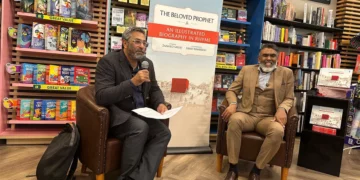
The launch of Rising for Palestine: Africans in Solidarity for Decolonisation and Liberation was held on May 18, 2026, at Bertha House, Mowbray. Hosted by Surplus Radical Bookshop and the Institute for African Alternatives, it was the book’s first launch on African soil.

The launch formed part of a broader series of events that took place in both Cape Town and Johannesburg.
The anthology, co-edited by South African writer Suraya Dadoo and Algerian researcher Raouf Farrah, brings together contributors from across Africa and Palestine, including academics, activists, journalists and ambassadors.
Dadoo said the anthology aimed to broaden discussions on Palestine solidarity beyond South Africa by including voices from across the continent.
Many contributors were activists working within political and solidarity movements across the continent rather than only academics.
Opening the event, Surplus Radical Bookshop founder Andre Marais described the anthology as part of a broader conversation around colonialism and liberation, telling the audience that ‘Palestine is part of our DNA’.
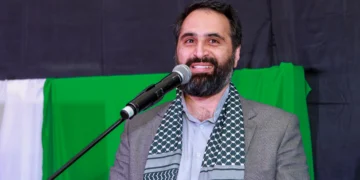
Present at the event was Palestine Solidarity Campaign (PSC) coordinator Professor Usuf Chikte.
Quoting Palestinian writer Ghassan Kanafani, he said: ‘The Palestinian cause is not a cause for Palestinians only, but a cause for every revolutionary, wherever he or she is, as a cause of the exploited and oppressed masses in our era.’
Chikte, whose organisation was one of the hosts, said Africans needed to write ‘about us, from us, through our lenses’.
‘People often ask me: “Why Palestine? Why do you speak about Palestine?” And I think that is the answer around here.’
‘This is very much a book by us, for us. And the “us” here is Africans and Palestinians,’ said Dadoo.
Farrah described South Africa as one of the most significant global centres for Palestine solidarity, while arguing that further mobilisation was still necessary.
He said the anthology aimed to show that solidarity with Palestine extended beyond South Africa and formed part of a broader continental tradition of anti-colonial struggle and political commitment.
Farrah said several chapters examined Israel’s growing political and security relationships across Africa, including lobbying efforts within continental institutions.
‘I think it’s important for South Africa to go beyond that, to mobilise further because there is, as it’s mentioned in the book, a lot of things that still need to be done in South Africa in terms of mobilisation for Palestine, but also in terms of ending the complicity of corporations.’
Dadoo and Farrah also discussed the role of Christian Zionism in shaping Israeli diplomacy across Africa, particularly in West and East Africa, where Pentecostal movements have contributed to pro-Israel sentiment.
Farrah also discussed how counter-terrorism cooperation in countries such as Kenya and Ethiopia had influenced public perceptions of Palestine solidarity.
University students, activists and members of the media filled the venue, engaging speakers throughout the evening during a question-and-answer session.
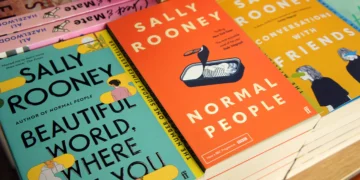
Copies of the anthology and other liberation literature were displayed on a table inside the venue for audience members to view both before and after the proceedings.
Among those attending the launch was University of Cape Town honours graduate Sobaagh Zoutenberg, who said the discussion deepened her understanding of Palestine solidarity beyond religious identity.
‘What stood out for me was hearing how solidarity with Palestine looks outside South Africa,’ she said.
You may also want to read





‘I had never really considered how people across the continent engage with issues differently.’
American attendee Candice Choo-Kang said the discussion highlighted how much Palestine solidarity could be understood through shared histories of oppression and resistance.
‘Viewing Palestine through an African lens shows that people are often fighting for the same things and facing interconnected systems of oppression.’
Farrah said solidarity initiatives across Africa were equally important, whether through legal action or cultural activism.
‘South Africa’s ICJ case is super important. For me, this political initiative is as important as a group of artists in Senegal painting walls and organising cultural discussions around the situation in Palestine.’
Yaseen Bardien is a Cape Town-based journalist and media practitioner.