











![Does ta’wīl mean interpretation or fulfilment? A Quranic reassessment [+video]](https://muslimviews.co.za/wp-content/uploads/2026/10/Tawil-Kaskas-360x180.webp)
















![Why becoming a wealthy Muslim is commendable in Islam [+videos]](https://muslimviews.co.za/wp-content/uploads/2026/09/Muslim-Trade-Business-1-360x180.webp)






A University of Cape Town (UCT) symposium examined the future of Muslim Personal Law in South Africa, exploring gender justice, legal reform and constitutional recognition.
By ANWAR OMAR
Introduction
For more than three decades, Muslim Personal Law (MPL) has occupied a grey area in South Africa’s legislative framework, formally unrecognised and constitutionally anomalous, thus leaving Muslim women and children exposed to serious hardships.
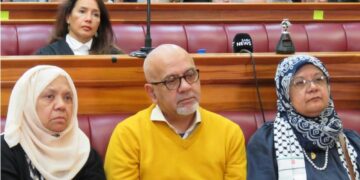
On June 8, 2026, the Muslim Personal Law Network (MPLN), in collaboration with the African Gender Institute (AGI), University of Cape Town’s Centre for Contemporary Islam, convened a panel discussion at the Centre for African Studies at UCT to confront this reality.
Four voices examined why the deadlock persists and mapped the road forward: Ayesha Royker, an attorney with the Muslim Personal Law Network (MPLN); Professor Fatima Seedat, an Associate Professor in the Department of African Feminist Studies at UCT; attorney Khensani Motileni from the Women’s Legal Centre (WLC); and Rehema Namukose, a representative from the Musawah movement.
Setting the scene, Ayesha Royker declared: ‘The question before us is not whether change occurs, but how and whether it advances the values of justice and compassion at the heart of our faith.’
A history of failed attempts
The South African Constitution of 1996 formally recognised religious freedom for the first time, raising the prospect that MPL governing marriage, divorce, maintenance, custody and inheritance for South Africa’s 1.6 per cent Muslim minority could finally be recognised under South African law. What followed was three decades of contestation and, by many accounts, a community divided against itself.
The South African Law Reform Commission began investigating MPL recognition as early as 1990. An Islamic Marriage Bill (IMB) was produced in 2001 and handed to the Minister of Justice in 2003. Extensive revisions produced the Muslim Marriages Bill (MMB) by 2004, which was published for public comment in January 2011.
The response was striking: 13 700 SMS objections, approximately 7 184 signed petitions against, and only 734 messages in support. The Minister of Justice declined to proceed, citing irreconcilable community division.
The decisive legal intervention came in 2020. In Women’s Legal Centre Trust v President, the High Court declared the Marriage Act and Divorce Act unconstitutional for failing to recognise Muslim marriages, suspending invalidity for two years to allow legislative rectification. That order, and the government’s slow response to it, is one of the primary reasons why this panel convened on June 8, 2026.
Two Bills, two philosophies: The MMB 2004 vs the SA Marriage Bill 2023
The government responded to the 2020 court order with the South African Marriage Bill (SAMB) 2023, which is not the same legal instrument as the Muslim Marriages Bill (MMB). Understanding the difference between them is essential to understanding both the panel’s critique thereof and the community’s ongoing resistance.
The MMB was a dedicated, standalone Bill for Muslim marriages exclusively, grounded in Section 15(3) of the Constitution, which expressly permits systems of personal and family law under religious traditions. It treated MPL as jurisprudentially distinct from civil or customary law, recognising the nikah, talaq, fasakh, mahr and the wali’s role, in an attempt to interface Islamic divorce proceedings with civil court proceedings (Moola, 2021).
The SAMB 2023 takes the opposite approach. It presents a Single Marriage Act (SMA) bringing all marriages – civil, customary, Muslim and other religious – under one uniform legislative framework. It prescribes equal legal status for spouses, a mandatory minimum age of 18, and court approval plus spousal consent for polygynous marriages.
What it does not do is name or protect any Islamic ceremony, provide for talaq or fasakh, address mahr, or regulate the specific maintenance and inheritance consequences of Muslim marriages, deferring these entirely to the Maintenance Act and Intestate Succession Act, both of which are potentially at odds with MPL (SAMB, 2023).
Some scholars argue that the SAMB might not be suitable for the country’s pluralistic society and note that the Department of Home Affairs’ own Green Paper anticipated that it might not pass constitutional muster. They note that the government considered three options: a Single Marriage Act; an Omnibus Act with separate chapters for each marriage type; and a Parallel Act adding new legislation for unrecognised marriages. The DHA chose the SMA – arguably the least accommodating of MPL’s religious specificity.
Key tensions
Several fault lines run through the comparison of the MMB 2004 and the SAMB 2023:
- Dissolution
The SAMB’s silence on talaq and fasakh leaves the constitutional validity of Islamic divorce deeply uncertain. The Jamiatul Ulama insisted that no secular court has jurisdiction over an Islamic marriage.
- Polygyny
Wifaqul Ulama SA argued that requiring court approval and spousal consent restricts what Islam allows. Other scholars countered that the historical abuse of polygyny – secret marriages and denial of first wives’ rights – makes state oversight imperative.
- Inheritance
Both Bills fail to bridge the gap between the Quranic fixed-share distribution and South African intestate succession. According to Omar (2023), the only available solution under both frameworks is a mandatory requirement for every Muslim to draft a will.
- Minimum age
On the 18-year minimum age threshold, Omar (2023) argues that the overwhelming evidence of harm to child brides satisfies the principle of mafsadah (prevention of harm).
The contribution of each panellist
Ayesha Royker – Muslim Personal Law Network (MPLN)
Royker framed MPL reform as a moral imperative within Islam itself, not a capitulation to secular norms. She invoked the Prophet’s (SAW) teaching that the best among people are those who are best to their families, placing gender justice at the heart of the faith.
She set four objectives for the dialogue:
- To explore the remaining challenges in MPL gender justice;
• To reflect on local advocacy lessons;
• To draw on the experience of global movements; and
• To engage constructively to envision a just and compassionate legal framework.
This defined the panel’s entire register.
Professor Fatima Seedat – African Gender Institute, UCT
Seedat presented a three-pillar theoretical framework:
You may also want to read



- The Tawhidi Paradigm – divine unity as the basis for social equality;
• The Tafsir of Praxis – women’s lived experiences as a legitimate jurisprudential source; and
• Ahliyya Kamila – women’s full legal capacity, supporting marriage as a partnership.
She outlined specific nikah contractual stipulations that couples can deploy without waiting for legislation, including informed consent to polygyny and its consequences, deferred dower, delegated talaq allowing a wife to initiate divorce, and maintenance tied to living standards.
She explained that the MPLN deploys these tools in direct service alongside education on marriage and inheritance law, advocacy at Parliament and the South African Human Rights Commission, and engagement with the global campaign of Musawah.
She declared: ‘We must address the gap between the expectation that Islamic law provides justice and the lived experiences of injustice that Muslim women endure in its application.’
Khensani Motileni – Women’s Legal Centre (WLC)
Motileni provided the panel’s most legally consequential update.
On behalf of the WLC, a public-interest feminist litigation organisation pivotal in the 2020 court order, she disclosed that the Speaker of Parliament had again approached the Constitutional Court in May 2026 for a further extension to December 2027, citing public participation requirements, a potential revised draft, and the November 2026 local elections.
The WLC filed a notice to abide rather than oppose, awaiting a Constitutional Court directive.
One of her critical jurisprudential points was that the recent interim maintenance judgment demonstrates that Islamic principles can be accommodated within South African law. According to her:
‘Islamic principles can be accommodated within South African law; the two systems are not irreconcilable.’
She nonetheless insisted that the SAMB must address MPL’s specificities, not dissolve them into a universal framework.
Rehema Namukose – Musawah, Uganda
Namukose situated the South African struggle for the recognition of MPL within a global context.
She described how Musawah was launched in Malaysia in 2009, and how it operates through a four-pillar framework integrating constitutional law, human rights principles, women’s lived realities and Islamic jurisprudential tradition. According to Musawah, these four pillars support rather than contradict one another.
One of her core arguments was that gender injustice in Muslim family law stems not from divine text but from its misinterpretation, shaped by culture and historical context:
‘It is not divine text that produces injustice. It is the misinterpretation of that text, shaped by culture and historical context, that we must address.’
Comparative precedents from Morocco, Tunisia and Malaysia demonstrate that reform within the Islamic tradition is already occurring across the Muslim world. In many respects, South Africa is catching up, not pioneering new ground.
What the panel collectively established
- The SAMB 2023’s ‘one-size-fits-all’ approach does not adequately serve MPL’s religious specificities. The WLC’s support for the Bill is conditional on those specificities being properly incorporated, not dissolved into a universal framework.
- With the constitutional deadline now potentially extended to December 2027, Muslim women in unrecognised marriages face at least another 18 months without legal protection. Legislative and community-level contractual strategies must therefore proceed simultaneously.
- The jurisprudential key is the distinction between immutable Shariah and historically contingent fiqh. Eighth-century rulings developed by male jurists in specific cultural contexts are not divine command; they are human interpretation, and a framework centred on maslahah and mafsadah provides the Islamic basis for revising them.
- The tools for protecting Muslim women exist within the tradition right now. Nikah contract stipulations, delegated talaq and deferred dower can be implemented without waiting for legislation. The barrier is power imbalance, knowledge gaps and cultural resistance, not Islamic law itself.
- South Africa’s Muslim minority of 1.6 per cent does not make the rules, but the constitutional rights framework demands accommodation. Global models from Musawah’s network demonstrate that reform is both possible and Islamic.
Conclusion
The panel did not resolve three decades of deadlock. However, it reframed the question.
The issue is not whether MPL and the South African secular legal dispensation can coexist. The panel was unanimous that they can and must coexist. The issue is whether South Africa’s religious leadership has the will to embrace a flexible approach that the coexistence requires, without compromising the overarching objectives of the Shariah.
The distinction between the MMB and the SAMB 2023 is not merely technical; it represents a choice between honouring MPL’s religious specificity without dissolving it into administrative convenience.
With December 2027 now the likely new deadline, that choice – and its consequences for Muslim women – cannot be deferred indefinitely.
The MPLN’s closing aspiration captures the panel’s verdict:
‘To envision legal and social frameworks that are more just, more compassionate, and more reflective of the values that Muslim communities hold dear.’
That is not a challenge to Islam. It is a challenge from within it.
References:
- Moola M. (2021). The Imperative to Implement Muslim Personal Law in South Africa, a Mini Thesis submitted in partial fulfillment of the requirements for the LLM Degree at the University of the Western Cape.
- Omar, A. (2023). The Marriage Bill 2023 as a solution to govern Muslim marriages within the South African legal context, and the previous attempts to have Muslim marriages regulated, since the enactment of the South African Constitution of 1996. Unpublished Paper submitted in partial fulfilment of the Masters in Applied Islamic Thought, IPSA.