




![Does ta’wīl mean interpretation or fulfilment? A Quranic reassessment [+video]](https://muslimviews.co.za/wp-content/uploads/2026/10/Tawil-Kaskas-360x180.webp)











![Why becoming a wealthy Muslim is commendable in Islam [+videos]](https://muslimviews.co.za/wp-content/uploads/2026/09/Muslim-Trade-Business-1-360x180.webp)




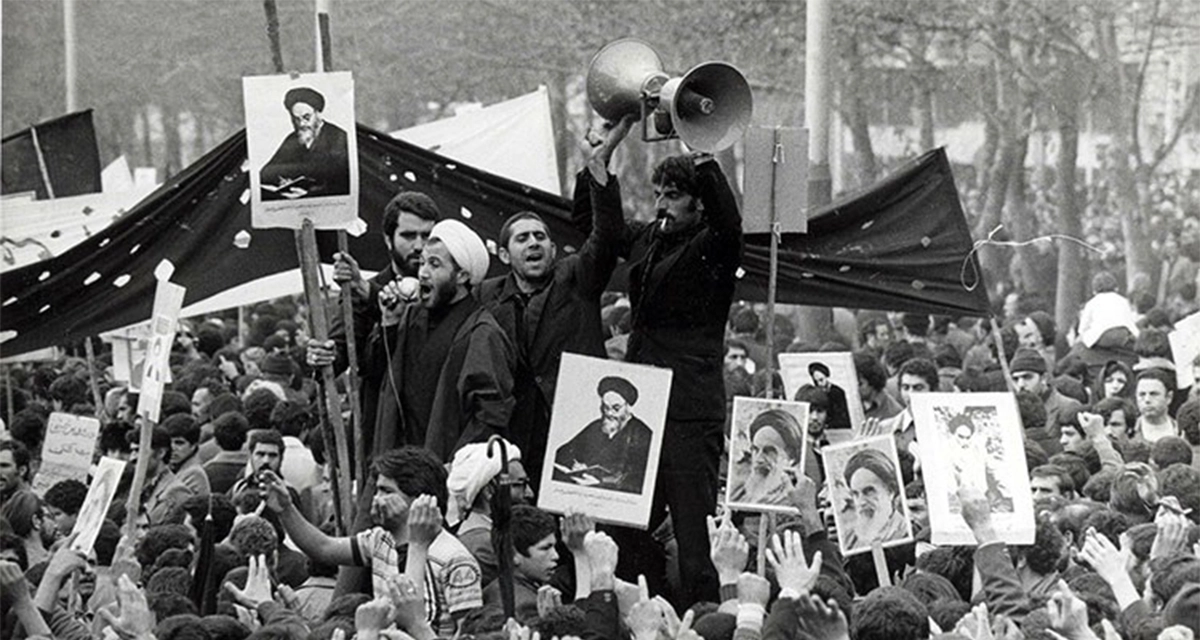

A critical response by QIBLA examining Iran’s Islamic Revolution, sanctions, and global narratives, calling for moral clarity over simplistic ‘regime’ labels.
It is not hard to find people on the liberal left who oppose foreign intervention against Iran while at the same time rejecting the Iranian government as a ‘regime’ (Al-Qalam, January 23, 2026 and March 13, 2026).
That word choice is not neutral. In political science and international relations, the term ‘government’ usually refers to the institutions and individuals who exercise official authority within a recognised state. It is a neutral, descriptive term. ‘Regime’, on the other hand, is a more contested word. It can refer more broadly to the rules, structures, and norms that determine how power is organised and exercised in a country. However, it is often used to imply illegitimacy, repression, and moral failure. To call something a regime is already to pass judgment on its legitimacy or character. The regime is ideological. It signals the conclusion before the argument has even begun.
That distinction matters because how we begin shapes everything that follows.
Qibla suggests that one can offer unqualified support for the Islamic Revolution without supporting every policy or action of the Islamic Republic. The Revolution was an event of world-historical significance. It reshaped power in West Asia. The Iran–Iraq war, the Soviet invasion of Afghanistan, the shifting alignments of the Cold War, and even the political scene we see today – all of these were, in one way or another, responses to that moment in 1979. To deny that is to misunderstand modern West Asia entirely.
Support does not mean blindness. It means taking the Revolution seriously enough to examine what has been done in its name. It means recognising that the Islamic Republic, like any political system, is the outcome of competing forces, compromises, and internal struggles. Being critical is not the same as being against. It is, rather, a duty to speak truth both to power and to those who suffer under it.
And yet, much of the criticism aimed at Iran ignores the most important fact: the country has lived under one of the most comprehensive sanctions regimes in modern history.
Sanctions are not abstract. They are not symbolic. They are economic warfare.
When Iran’s oil exports were reduced from over two million barrels a day to a fraction of that, the country lost hundreds of billions in revenue. Foreign currency inflows collapsed. Reserves shrank. The national currency followed. In less than a decade, the rial lost the vast majority of its value.
From there, the chain is brutally simple:
Sanctions → collapse in exports and capital inflows → currency depreciation → inflation → shrinking economy → falling living standards.
This is not ideology. It is economics.
A weaker currency makes imports more expensive. Inflation rises – often dramatically. Wages do not keep pace. Rent becomes unaffordable. The car is sold. Food quality declines. Fresh fruit and vegetables are rare. Education costs are cut. What was once stability becomes precarity. This is the result of sanctions.
Yet critics regularly overlook that these hardships stem largely from sanctions, not just internal mismanagement or corruption. Lifting sanctions improves the economy – these are structural realities.
This does not mean the Islamic Republic is beyond criticism. It is not.
Sanctions have forced the state into opaque and unaccountable economic practices in order to survive – using intermediaries, operating through shadow networks, and absorbing inefficiencies that would not exist in a normal trading environment. Some call this corruption. The state calls it survival. In truth, it is both a constraint and a distortion imposed from outside.
At the same time, the state has continued to build schools, universities, hospitals, and infrastructure under conditions that would cripple most economies. It has had to educate its population, develop national industries, and construct an entire technological and military base while cut off from normal global trading and financial systems. This is not a defence of every decision, but it is a recognition of context.
You may also want to read
![Does ta’wīl mean interpretation or fulfilment? A Quranic reassessment [+video]](https://muslimviews.co.za/wp-content/uploads/2026/10/Tawil-Kaskas-120x86.webp)


Even dissent within Iran must be interpreted through this lens. When people protest, their grievances are often real. Inflation, unemployment, and declining living standards are not imagined. But those conditions are not simply the product of internal policy. Sanctions, as sustained external pressure, are designed precisely to produce them.
The aim of sanctions is not subtle: to impoverish, to destabilise, and to turn economic suffering into political rupture. Sanctions aim to precipitate ‘regime’ change and colour revolutions.
In that environment, the state’s suspicion of external interference is not paranoia. It is grounded in history. For example, the 1953 coup against Prime Minister Mossadegh – engineered by British and American intelligence – left a legacy of distrust that persists to this day. In recent decades, foreign intelligence agencies have shown interest in supporting separatist movements in areas such as Khuzestan and Sistan and Baluchistan, sometimes encouraging unrest or funnelling resources and weapons to opposition groups. Separatist tensions are not accidental. The line between legitimate protest and international manipulation is not always easy to draw. However, recently both Scott Bessent and Donald Trump have publicly admitted to attacking Iran’s currency and infiltrating armed Mossad insurgents among the protesters.
This is where critics must be careful. It is easy to oppose imperial intervention. It is much harder to situate people’s suffering within the global structures that produce it. It is easy to call for change. It is harder to recognise how that call may be instrumentalised by forces that have no interest in justice, only domination.
Supporting the Islamic Revolution means recognising its significance, resilience, and the conditions of its survival – not denying imperfections. Criticising the Islamic Republic ought to be a call for improvement, not an association with its enemies, while understanding its constraints.
Both things can be true at once. A Muslim activist, a revolutionary, and a critical academic should always be with the oppressed and never with the oppressor. At no stage can an activist side with Zionists and imperialists or use the language of humanitarian interventionists.
The Revolution and the Republic are human projects. They are not beyond error. But neither are they what their harshest critics claim. That Iran has endured decades of pressure, war, isolation, and economic siege – and still functions, still builds, still resists – is not something easily dismissed. It requires a more serious, more careful, and more honest critique.
Qibla gives unqualified support to the Islamic Revolution in Iran. It extends critical support for the policies of the Islamic Republic. That the Islamic Republic and Revolution in Iran have survived for almost 50 years is a mystery. That it is the only country willing and capable of not losing in a military confrontation with both Zionism and imperialism is a miracle. In this there is wisdom for activists for whom there is a reality beyond the material world.
Issued by Yusuf Patel, Aziz Kader and Reederwaan Craayenstein on behalf of Qibla.