




![Does ta’wīl mean interpretation or fulfilment? A Quranic reassessment [+video]](https://muslimviews.co.za/wp-content/uploads/2026/10/Tawil-Kaskas-360x180.webp)









![Why becoming a wealthy Muslim is commendable in Islam [+videos]](https://muslimviews.co.za/wp-content/uploads/2026/09/Muslim-Trade-Business-1-360x180.webp)



True solidarity also demands that we learn to connect across our own fault lines. Our communities, even within the same faith, are marked by differences – theological, ideological, and cultural. Yet, difference need not divide us; they should be honoured.
By ADNAAN ADAMS
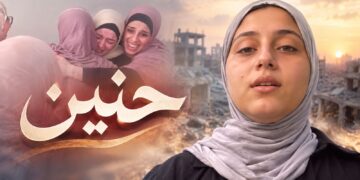
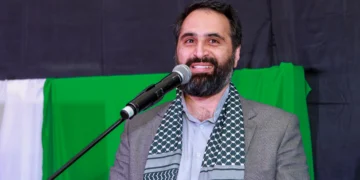
THE recent visit of Youmna El Sayed, Palestinian correspondent for Al-Jazeera, Dr Mustafa Barghouti, Secretary General of the Palestinian National Initiative, and Jeremy Corbyn, former UK Labour Party leader, to Cape Town reminded me that solidarity is not an abstract slogan but a lived encounter.
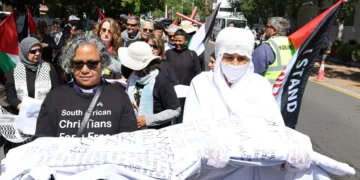
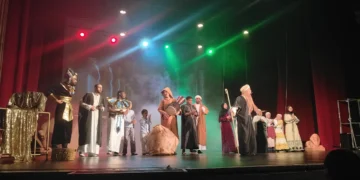
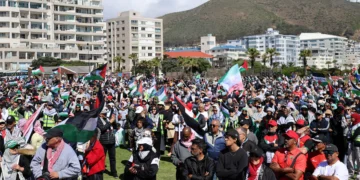
From their arrival at Cape Town International Airport to the welcome committee lunch at Dr Gulzar Sablay’s residence, a mass gathering at Wittebome Civic Centre, the Gala fundraiser at Islamia Hall, the jum’ah lecture at Masjidul Quds, and our final farewell lunch at Dr Elias Parker’s residence, I witnessed a rhythm of conviction and humility that resonated deeply with the prophetic spirit of service.

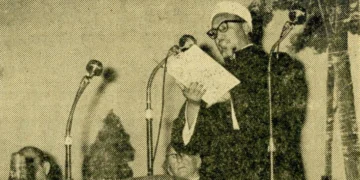
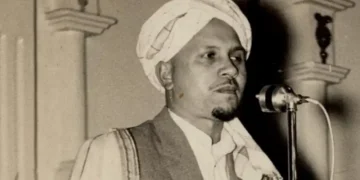
At the same time, I was reminded of Moulana Ihsaan Hendricks, former MJC president, a towering presence whose voice for Palestine still echoes across our collective memory (May Allah grant him a high place in paradise). His rhetorical power, his moral clarity, and his unrelenting commitment to justice gave expression to a struggle that was both global and profoundly human. At the farewell lunch, when his name was mentioned around our table, it felt as though his spirit lingered, urging us to continue speaking truth, to carry forward that moral voice that refuses silence.
Moulana Ihsaan Hendricks engaged across all fault lines, understanding the value of dissent as a living encounter. He knew that our strength as a community lies not in sameness but in the courage to engage difference with grace and purpose.His legacy reminds us that faith, when lived fully, does not withdraw from complexity; it enters it, listens, reconciles, and transforms – inwardly and outwardly.
You may also want to read


Listening to Dr Barghouti and sister Youmna, I recognised the same uncompromising commitment, the insistence that dignity is not negotiable, that justice begins with empathy.
Engaging them up close allowed me to feel what is often only read in headlines or watching on social media – the resilience, composure, and faith of a people under siege, experiencing unimaginable destruction and devastation. Their testimony and lived experiences transformed suffering into human proximity. It was not politics I felt; it was humanity. They carried themselves with a grace that demanded more than sympathy; it demanded that we live our ethics locally, connecting their struggle to the injustices that persist in our own communities.
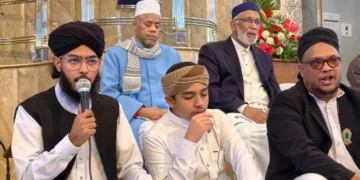
But true solidarity also demands that we learn to connect across our own fault lines. Our communities, even within the same faith, are marked by difference, theological, ideological, and cultural. Yet, difference need not divide us; they should be honoured. Our faith teaches us to uphold dignity even when we differ on matters of belief or interpretation. When seated at a banquet table with those holding seemingly opposing views, we are invited not merely to tolerate dissent but to see it as a form of enrichment. Living with dissent, rather than conformity, can strengthen us in ways uniformity never will.
To stand with Palestine is also to stand with the hungry child at a street corner, the displaced family in Bonteheuwel, Gugulethu or elsewhere, and the neglected learner in an under-resourced classroom.
Justice is indivisible. Solidarity must move in both directions – outward, in empathy with the suffering of others, and inward, in honest self-critique (as an individual or organisation we identify with).
The true measure of compassion lies not in distant declarations but in how we restore dignity within the spaces we inhabit each day, in the person beside us in a taxi, the stranger ahead of us in a queue, the cashier at the store, the guy in the car opposite or next to us at a four-way stop, or the seemingly outsider who shares our table. It is reflected in how we come together, as a community and as a society, united by a single moral purpose, to ensure that every human being, not just some, lives in dignity, with us, beside us, and in the world we share.
As Professor Yusef Waghid reminds us, education and ethical life are always relational; we become human through others. Encounters such as these reawaken that truth.
May we pause to self-reflect on how we honour others, how we extend dignity, hospitality, and connection in both word and deed. And may we continue to welcome those who visit our shores with warmth, moral clarity, and the courage to connect across boundaries, across differences, and across all that seeks to divide us, so that, together, we may shape a more just and humane world.
Finally, I wish to extend heartfelt gratitude to those who made this visit possible, for their vision, coordination, and unwavering commitment to the cause of justice, particularly Academia Library and the Al Ghazali Global Relief Fund. Thank you for including us in sharing this moment of learning, empathy, and solidarity. Your efforts remind us that meaningful encounters are never incidental; they are cultivated through sincerity, collective purpose, and a shared belief in the dignity of all.
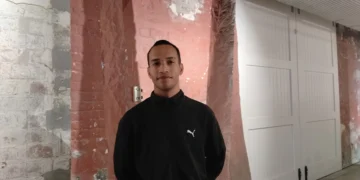
Adnaan Adams is the founder and director of The Muslim Thinker. He can be contacted via email: info@themuslimthinker.org