



![Does ta’wīl mean interpretation or fulfilment? A Quranic reassessment [+video]](https://muslimviews.co.za/wp-content/uploads/2026/10/Tawil-Kaskas-360x180.webp)







![Why becoming a wealthy Muslim is commendable in Islam [+videos]](https://muslimviews.co.za/wp-content/uploads/2026/09/Muslim-Trade-Business-1-360x180.webp)



The life of Mogamat Cassiem Ras offers a powerful lens on Die Vlakte, forced removals, and the enduring ethics of dignity, faith, and community in Cape Muslim history.
By PROFESSOR ASLAM FATAAR
The passing of Mogamat Cassiem Ras, a long-time resident of Stellenbosch, invites reflection beyond the mourning of a remarkable individual life. It calls us to remember a broader moral and social world: Die Vlakte, a once-thriving area whose residents were forcibly displaced, and the ethical and spiritual environment that shaped generations of Cape Muslims and their neighbours.
Remembering Ras for his active, multidimensional life and his quiet, restorative activism necessarily involves recalling the fabric of life that shaped, sustained, and endowed him with his distinctive dignity.
Die Vlakte was never merely a ‘location’ on a map. It was a vibrant social and ethical universe where children attended school together, young people played rugby and cricket, and neighbours shared food, labour, humour, and grief. It embodied a lived diversity, forged through everyday interaction across religious, racial, and class boundaries rather than abstract slogans.
The spiritual life of Die Vlakte drew on layered inheritances. Indigenous traditions fostered a sense of ancestry, land, and continuity with those who came before. Transoceanic histories shaped by slavery, exile, and displacement across the Indian Ocean carried spiritual disciplines and practices that travelled with the enslaved and banished: ways of praying, gathering, remembering, and surviving. These traditions were practical, teaching people how to remain human when their humanity was denied.
For Cape Muslims in the area, Sufi-influenced Islamic traditions offered essential spiritual support. Practices such as dhikr gatherings, devotional recitation, communal prayer, and shared meals were not optional activities but vital moral resources for survival. They cultivated patience (ṣabr), mercy (raḥma), love (mawaddah), and accountability before God and community.
These practices did not exist in isolation. In Die Vlakte, they coexisted with Christian ethics of neighbourliness and indigenous spiritual sensibilities, producing a shared moral language rooted in dignity and mutual care.
You may also want to read


As a young Muslim man, Mogamat Cassiem Ras moved with ease within this diverse moral world. He was deeply grounded in his faith without being insular. He understood instinctively that to live Islam well in the Cape tradition was not to withdraw from others but to meet them with generosity and integrity. This was the everyday beauty of Die Vlakte: excellence in conduct towards God and fellow human beings.
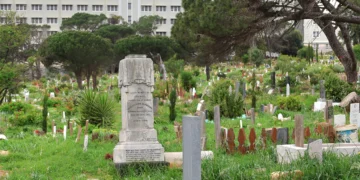
This world was violently ruptured by apartheid’s forced removals. On September 25, 1964, Die Vlakte was declared a White-only area. Thousands of families were ordered to leave their homes, schools, mosques, churches, shops, and kinship networks. Between 1969 and 1972, the community was dismantled and homes demolished. Today, parking lots and institutional buildings occupy spaces where lives once unfolded.
This was not simply the destruction of buildings. It was an attempt to erase memory, belonging, and moral world-making. Families were relocated to areas such as Cloetesville and Ida’s Valley, where life had to be rebuilt under harsh conditions. The wound of dispossession was never healed; it became a quiet inheritance carried across generations.
What stands out about Ras and his generation, however, is their refusal to live diminished lives. They carried the pain of removal without allowing it to hollow them out. They worked, studied, raised families, practised their faiths, played sport, and remained socially engaged. They lived critically, yet convivially, refusing to surrender joy, dignity, or moral agency.
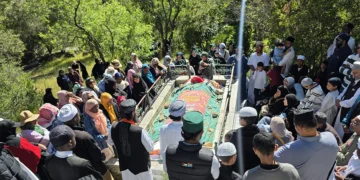
Spiritual life remained central to Ras’s endurance. In homes and community spaces, people gathered to pray, remember the departed, share food, and sit together in silence. These were not merely ritual acts; they were forms of moral repair. They taught how to hold grief without bitterness and how to endure injustice without reproducing its violence.
In Qur’anic language, moments of loss are marked by the phrase, ‘We belong to God, and to God we return.’ Spoken plainly, it reminds us that life is entrusted rather than owned, and that even loss unfolds within a wider horizon of meaning.
The Qur’an also reminds us that every soul shall taste death, a universal truth that equalises all of humanity. Another verse speaks of God gently calling the peaceful soul back to its Lord, at peace and reconciled. These ideas are not sectarian abstractions; they express a shared human intuition that a life lived with integrity ultimately seeks peace at its end.
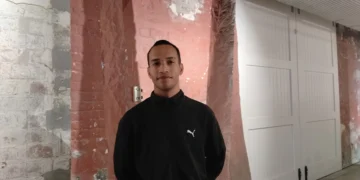
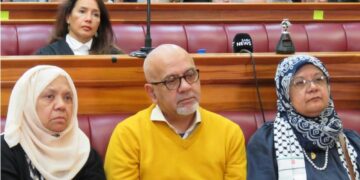
Just months before his passing, Ras, affectionately known as Boeta Gammie, attended a presentation on Die Vlakte in Stellenbosch. Calm and attentive, he identified the precise location of his ancestral home and recalled where neighbours once lived. His memory became an important contribution to mapping the former community.
There was no bitterness in him, only clarity, dignity, and calm, what Islamic tradition calls a ‘qalbun salīm’, a sound heart.
His life reminds us that memory is not nostalgia but an ethical act. Remembering Die Vlakte and the values of its inhabitants resists erasure and affirms a way of life rooted in mercy, community, and moral integrity. In an era when urban development often overwrites history, such remembrance becomes an act of justice.
May Mogamat Cassiem Ras rest in peace. His life invites us to live with the same dignity under pressure and generosity across difference that he embodied so quietly and faithfully.
- This article is based on a presentation at a commemoration event in honour of Mogamat Cassiem Ras held on Thursday, December 18, 2025, at Stellenbosch University. He passed away on Friday, December 5, 2025, at the age of 78.
Aslam Fataar is a research professor in higher education transformation in the Department of Education Policy Studies at Stellenbosch University.