

















![A mother’s taweez and the Cape’s interfaith traditions [+ video]](https://muslimviews.co.za/wp-content/uploads/2026/05/Michael-Weeder-Book-Launch-9May26-360x180.webp)









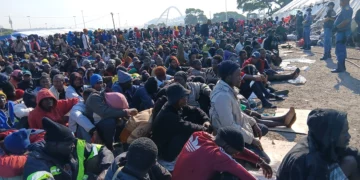


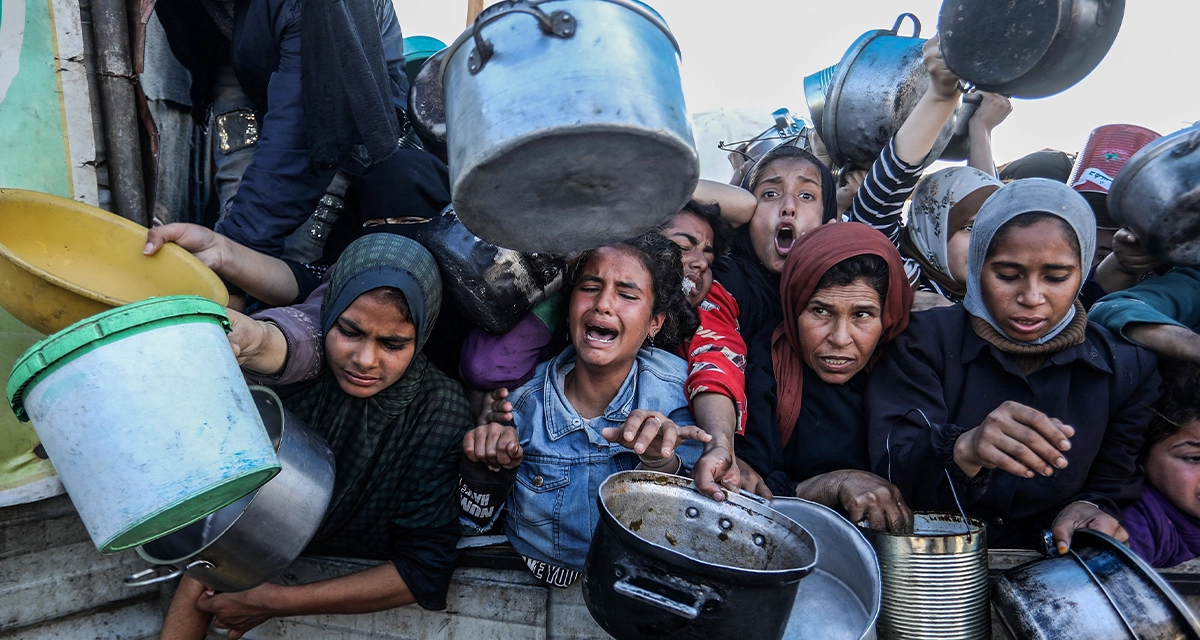

The situation in Gaza is not merely a crisis – it is a profound indictment of the global order. It exposes the failure of international law, the hypocrisy of Western democracies, and the complicity of those who remain silent.
By FASEEGAH DAVIDS
A manufactured catastrophe
As Israeli airstrikes persist and humanitarian aid remains blocked, Gaza stands at the precipice of collapse. According to the latest figures, quoted by Al Jazeera, over 61 709 Palestinians have been killed in Gaza alone since October 7, 2023 – including 17 492 children – with more than 14 000 still missing and presumed dead. As of today, the death toll is nearing 62 000, with hundreds more injured daily due to the continuing bombardment and the absence of critical medical support.
This is a systematic campaign of erasure, enabled by global capitalism and normalised through political inaction.
The human cost: Starvation, displacement and indiscriminate violence
The humanitarian disaster in Gaza has worsened into a declared famine. The World Food Programme (WFP) confirmed that food stocks have completely run out, with border closures preventing any new supplies from entering for over three weeks. Over 2.3 million Palestinians are now surviving without reliable access to food, clean water, or medical supplies. Aid convoys, when not blocked, are often targeted by military action, forcing organisations like World Central Kitchen to suspend operations.
Meanwhile, airstrikes have levelled hospitals, schools, and civilian shelters. On May 8, at least 39 Palestinians were killed in drone attacks targeting a restaurant and a bustling market. The same day, dozens were killed in an Israeli strike on a UN school where displaced families had sought refuge. This pattern of targeting civilian infrastructure is not accidental – it is strategic.
You may also want to read




![The Muslim vote and connecting the dots between potholes and Gaza [+ videos]](https://muslimviews.co.za/wp-content/uploads/2026/06/1-UUCSA-120x86.webp)
International condemnation but little action
Global leaders have offered condemnation, but few have taken steps to hold Israel accountable. The Israeli government’s plan for the indefinite occupation of Gaza and statements from top officials – like Finance Minister Bezalel Smotrich’s call to ‘entirely destroy Gaza’ – have been labelled by human rights organisations as indicative of ethnic cleansing. As reported by The Guardian, Amnesty International, along with UN experts, described the situation as approaching ‘annihilation’ and potentially constituting war crimes.
Norway, Iceland and Spain have denounced the mass displacement of Palestinians as illegal under international law, but their words have yet to translate into meaningful diplomatic or economic consequences for Israel.
The United States, Israel’s principal ally, continues to provide military aid and political cover, effectively shielding Israel from accountability in international forums. The result is a devaluation of Palestinian lives – treated as disposable in the name of ‘security’.
Palestinian leadership vacuum and internal crisis
Palestinians face this onslaught not only from without, but from within. The Palestinian Authority, led by President Mahmoud Abbas, has long lost its legitimacy. Abbas remains in power well past his term, and the recent promotion of Hussein al-Sheikh to PLO vice president – without a democratic process – has only deepened divisions.
The absence of unified leadership weakens the Palestinian position on the global stage and reinforces Israel’s claim that there is no credible partner for peace.
The role of youth and civil society
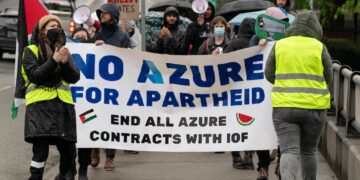
Despite the despair, youth-led resistance is growing worldwide. University campuses from Melbourne to New York are organising mass protests, sit-ins, and calls to divest from institutions complicit in Israeli apartheid. Cultural boycotts are gaining momentum, with artists and public figures demanding Israel’s exclusion from global events like the Eurovision Song Contest.
These are not just symbolic gestures – they are expressions of moral clarity. They show that solidarity with Palestine is not limited to the Arab world or the Muslim diaspora. It is a human issue. A justice issue.
A personal reflection: Justice begins with return
As someone who bears witness, I am both devastated and enraged. Despite the marches, the petitions and the speeches, the core demand – a free Palestine – remains unfulfilled. The Rafah border stays closed. Gaza is starving.
Justice for Palestine begins not with foreign aid or ceasefire negotiations – it begins with return. The right of return is not negotiable. Without it, justice is incomplete, and peace is a mirage. Every displaced family, every bombed home, every murdered child is a testament to a world that has prioritised geopolitics over humanity.
Conscience
The situation in Gaza is not merely a crisis – it is a profound indictment of the global order. It exposes the failure of international law, the hypocrisy of Western democracies, and the complicity of those who remain silent. As South Africans, we have long stood in solidarity with the oppressed, yet true solidarity cannot be achieved while our trade relations with Israel persist, reinforcing the very systems of injustice we claim to oppose.
To the youth: it is time to lead. Your solidarity must be expressed through the passions that drive you. To all citizens, young and old: it is imperative that we move beyond complacency. We must wake up, show up, and actively challenge the systems that perpetuate inequality.
The struggle for justice in Palestine is part of a larger, global movement. It is a fight for the right to resist injustice, the right to belong, and the right to stay grounded in our shared humanity. Liberation will not come from those in power – it will come from the people, united in their resolve and unyielding in their pursuit of justice.
Sources:


