















![The market-builder who restrained the market [Part 2]](https://muslimviews.co.za/wp-content/uploads/2026/08/PHOTO-2026-08-25-17-16-32-360x180.jpg)
![The merchant preceding the Prophetic mission [Part 1]](https://muslimviews.co.za/wp-content/uploads/2026/08/01-360x180.jpg)






Our nation’s deep wounds will not be healed by eloquent speeches or glossy reports. They will only be healed by the moral courage to take decisive action against corruption, crime and economic injustice and to build a society founded upon truth and accountability.
By IMAM DR ABDUL RASHIED OMAR
This past weekend, from Friday August 15 to Sunday August 18, 2025, South Africans representing many sectors of our nation, government officials, faith leaders, civil society activists, labour unions, business representatives, academics, and community organisations, gathered at the University of South Africa in Pretoria (UNISA) to launch what has been called yet another ‘National Dialogue’.
This National Dialogue has been framed and presented as a broad-based consultation process aimed at confronting our country’s deepest crises: corruption, crime, unemployment, poverty, and the erosion of public trust in state institutions. According to its organisers, the process is expected to unfold over the next two years, moving through provincial consultations and thematic working groups, before culminating in a final report with recommendations to government in 2027.
Dialogue of this nature, when it genuinely seeks to uncover root causes and propose meaningful ways pathways for renewal, is in principle both necessary and commendable. It reflects the Quranic principle of shura (mutual consultation), a foundational virtue of Islamic governance and social life. The Glorious Qur’an, the most primary source of Islamic guidance, in Surah al-Shura, chapter 42, verse 38, praises those who:
أَمْرُهُمْ شُورَىٰ بَيْنَهُمْ
‘conduct their affairs through mutual consultation’ – teaching us that true justice and renewal can only emerge when the voices of the people are heard, respected, and acted upon.
Yet, as people of faith and conscience, we must be candid: if such dialogue does not lead to decisive action, action against corruption, action against crime, and action against the huge divide between the rich and poor, then it risks degenerating into little more than an empty ritual. Our nation’s deep wounds will not be healed by eloquent speeches or glossy reports. They will only be healed by the moral courage to take decisive action against corruption, crime and economic injustice and to build a society founded upon truth and accountability.

The real crisis in South Africa is not a shortage of ideas, strategies, or vision documents. Our crisis is far deeper: it is the absence of political will, the lack of a moral backbone to confront the entrenched networks of corruption and crime that have looted our nation for over three decades.
It has been more than two years since the Zondo Commission on State Capture clearly identified individuals who should be brought to justice. Yet the corrupt still walk free, living lives of privilege, while millions of ordinary South Africans are crushed by hunger, poverty, and indignity. This is not merely a political failure; it is a profound moral betrayal. When leaders enrich themselves while people suffer, they embody the very hypocrisy condemned by the Glorious Quran: uttering lofty promises while committing acts of injustice.
In this regard, Allah, the Lord of Compassionate Justice proclaims in Surah al-Saff, chapter 61, verses 2 and 3:
يَا أَيُّهَا الَّذِينَ آمَنُوا لِمَ تَقُولُونَ مَا لَا تَفْعَلُونَ
كَبُرَ مَقْتًا عِندَ اللَّهِ أَنْ تَقُولُوا مَا لَا تَفْعَلُونَ
‘Believers! Why do you say that which you do not do? It is gravely detested in the sight of God that you should say that which you do not do’
The renowned tenth century commentator of the Quran, Imam Muhammad ibn Jarir al-Tabari (d. 923 CE) explains that this verse was revealed to rebuke certain believers in Madinah who loudly proclaimed of their willingness for sacrifice in the path of God yet failed to act on their words. From this, he derives a universal principle: Allah despises words that are not matched by deeds.
Building on this interpretation of verses 2 and 3 of Surah al-Saff, the thirteenth century exegete al-Qurtubi (d.1273 CE), teaches that these verses lay down a timeless ethical foundation, that a believer’s word must be consistent with their action, for sincerity (ikhlaṣ) and justice (ʿadl) are the bedrock of trustworthy leadership.
Together, these classical interpretations show that the Quran exposes and unmasks the very moral disease at the heart of our present crisis – the hypocrisy of words without deeds. Leaders who promise reform while continuing to plunder and oppress are guilty of the very hypocrisy that Allah condemns in this powerful verse. Their betrayal is not only political failure; it is a profound moral violation. This is the very essence of the crisis our country is facing, and it should be the central focus of any genuine National Dialogue.
The real question before us is this: How can we, as ordinary citizens, use the National Dialogue as a vehicle to push for decisive action against corruption and economic injustice?
The real question before us is this: How can we, as ordinary citizens, use the National Dialogue as a vehicle to push for decisive action against corruption and economic injustice? I would like to offer three modest points of advice on how we, both inside and outside the structures of the Dialogue, can play our role in advancing this urgent moral cause.
First and foremost, as conscientious and responsible citizens we must hold our elected leaders accountable for their political and moral mandates. In this regard our exemplar, the Prophet Muhammad (may Allah’s everlasting peace and blessing be upon him) proclaimed:
أَفْضَلُ الْجِهَادِ كَلِمَةُ حَقٍّ عِندَ سُلْطَانٍ جَائِرٍ
‘The best form of Jihad is a word of truth spoken in the presence of an oppressive and unjust ruler.’
(This hadith was narrated by the companion Abū Sa‘īd al-Khudrī, and recorded in Sunan Abi Dawud and also in Jami‘ al-Tirmidhi)
This Prophetic teaching makes it clear that silence in the face of injustice is not an option for the believer. Each of us can write, speak, organise, and use every available platform to ensure that the words of our leaders are matched by their deeds.
My second point of advice is this: we must insist on transparency and inclusion. In this regard, the Quran proclaims in surah al-Baqarah, chapter 2, verse 283:
وَلَا تَكْتُمُوا الشَّهَادَةَ
‘Do not conceal or hide testimony.’
Justice dies in secrecy. That is why we must demand open reporting, independent oversight, and honest monitoring of government pledges and promises, especially the commitments and outcomes of the National Dialogue.
We commend our national press and journalists, who have played a vital role in exposing corruption and holding leaders to account. We encourage them to persist with courage. But more is required: the media must also amplify the voices of the marginalised, the poor, the unemployed, women, youth, and shack dwellers. Their voices must not be silenced or sidelined but heard as full participants and co-creators of solutions.
A nation of integrity is built on individuals who live with honesty, justice, and trustworthiness.
My third and final point of advice on how we as responsible citizens can, both inside and outside the structures of the National Dialogue, play our role in advancing this urgent moral cause, is by modelling integrity and mobilising our local communities. Integrity begins at home. Corruption must be uprooted not only from government contracts but also from our hearts, homes, businesses, and communities. A nation of integrity is built on individuals who live with honesty, justice, and trustworthiness. As conscientious believers, we must be scrupulously honest in business, fair in our workplaces, and just in our families and communities. If we demand integrity from our leaders, we must also embody it in our own lives. A society of justice can only be built upon individuals who practice justice.
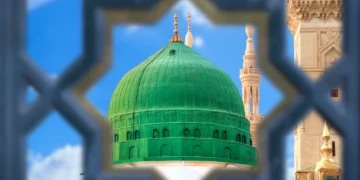
Finally, we need to let our places of worship be more than ritual halls. They must be centres of moral conscience and collective action. Like the Prophet’s masjid in Madinah, which was not only a place of prayer but a hub for community engagement, our masajid should become spaces and platforms for justice and mobilisation, where faith inspires action, and sermons move us from words to deeds. If we embody these values, accountability, transparency with inclusion, and integrity with mobilisation, then the National Dialogue will not be an empty ritual, but a step toward renewal, a step toward justice, a step toward healing.
Please join me in a special dua for our country:
You may also want to read


O Allah, make this National Dialogue a path to truth and justice.
Bless our country with honest leaders and trustworthy citizens.
Remove corruption and oppression from among us,
and guide us to the ways of peace, justice, and righteousness.
Allahumma Amin
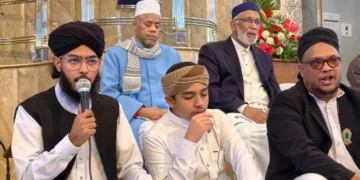
This is the text of the Khutbah delivered by Imam Dr Abdul Rashied Omar at Claremont Main Road Masjid, Cape Town on Friday August 22, 2025.