














![Does ta’wīl mean interpretation or fulfilment? A Quranic reassessment [+video]](https://muslimviews.co.za/wp-content/uploads/2026/10/Tawil-Kaskas-360x180.webp)

















![Why becoming a wealthy Muslim is commendable in Islam [+videos]](https://muslimviews.co.za/wp-content/uploads/2026/09/Muslim-Trade-Business-1-360x180.webp)





As we prepare for the last ten nights of Ramadan, Imam Dr A Rashied Omar reflects on the spiritual significance of Laylat al-Qadr and offers practical guidance on how believers can maximise these sacred nights through prayer, Qur’an, charity and supplication.
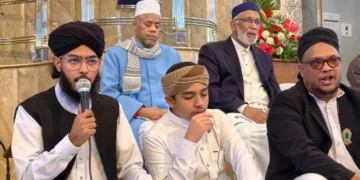
This is the text of the khutbah delivered on Friday, March 6, 2026 at the Islamic Society of Michiana in South Bend, Indiana (USA).
By IMAM DR A RASHIED OMAR
Beloved brothers and sisters,
By the Grace and Mercy of Allah we have reached the second half of the blessed month of Ramadan. We pray and make duʿa that Allah, the Most Merciful, accepts our fasting, our standing in prayer, our charity, and all the acts of devotion we have striven to perform during these blessed days. We ask Allah, the Lord of Mercy, to forgive our shortcomings, overlook our weaknesses, and grant us sincerity in all that we do. Allahumma amin.
In just a few days’ time we will enter the last ten nights of this sacred month. The last ten nights of Ramadan begin on the 21st night of the month, insha-Allah. These are the most precious nights of the entire year, nights filled with divine mercy (rahma), forgiveness (maghfira), and extraordinary spiritual opportunity.
We ask Allah to allow us to reach these nights in good health and strong faith, and to make the remainder of this Ramadan even more beneficial, spiritually transformative, and filled with Allah’s mercy and forgiveness. Allahumma amin.
The Glorious Qur’an itself draws our attention to the immense significance of these nights through the blessed night known as Laylat al-Qadr (the Night of Power). Listen carefully to how Allah describes the greatness of this night in the Qur’an. Allah, Rabb al-Hidayah – the Lord of Guidance – reminds us of the greatness of this night in Surat al-Qadr, Chapter 97:
اِنَّاۤ اَنۡزَلۡنٰهُ فِىۡ لَيۡلَةِ الۡقَدۡرِ ۖ ۚ
Indeed, We revealed it (the Qur’an) in the Night of Power.
وَمَاۤ اَدۡرٰٮكَ مَا لَيۡلَةُ الۡقَدۡرِؕ
And what will make you understand what the Night of Power is?
لَيۡلَةُ الۡقَدۡرِ ۙ خَيۡرٌ مِّنۡ اَلۡفِ شَهۡرٍؕ
The Night of Power is better than a thousand months.
Brothers and sisters,
When Allah tells us that Laylat al-Qadr is better than a thousand months, Allah is reminding us that sincere worship in a single night can be more valuable than a lifetime of devotion. Such is the vast mercy and generosity of Allah toward those who seek the Divine during these blessed nights. The last ten nights of Ramadan are therefore a profound gift from Allah.
Following the example of the Prophet Muhammad (may Allah’s everlasting peace and blessings be upon him), Lady ʿAʾishah (may Allah be pleased with her) describes how the Prophet (peace be upon him) approached these nights in an authentic hadith recorded in the collection of Imam Muslim. She reports:
ʿAʾishah (may Allah be pleased with her) said:
‘When the last ten nights of Ramadan began, the Messenger of Allah ﷺ would revive the night with worship, awaken his family, and strive with even greater devotion.’ (Sahih Muslim)
This hadith teaches us that when these blessed nights arrived, the Prophet (peace be upon him) increased his devotion in every way. He revived the night with prayer, remembrance, and recitation of the Qur’an. He awakened his family so that they too could share in these blessings. And he exerted himself with greater seriousness and dedication in worship.
You may also want to read




Beloved brothers and sisters,
As we prepare to enter the blessed last ten nights of Ramadan, an important question naturally arises:
How can we derive the maximum benefit from these sacred nights?
How can we ensure that we do not allow these precious opportunities to pass us by?
As I sit down between the two khutbahs, I invite each one of us to reflect on these questions and to make a sincere intention (niyyah) to renew our commitment to Allah by deepening the quality of our fasting, increasing our prayers, and enhancing our acts of devotion during the final ten nights of Ramadan.
Some suggestions on how to take full advantage of the last ten nights
In this second khutbah, I would like to offer five modest suggestions on how we might take full advantage of the great opportunity presented by the blessed last ten nights of Ramadan.
First, we should strive to revive the nights with qiyam al-layl, the voluntary night vigil prayers offered in the quiet stillness of the night.
In the Glorious Qur’an, in Surah al-Muzzamil, Chapter 73, verses 1–4, Allah addresses the Prophet (peace be upon him) and calls upon him, and by extension his followers, to stand in prayer during the night:
يَـٰٓأَيُّهَا ٱلْمُزَّمِّلُ ١
قُمِ ٱلَّيْلَ إِلَّا قَلِيلًۭا ٢
نِّصْفَهُۥٓ أَوِ ٱنقُصْ مِنْهُ قَلِيلًا ٣
أَوْ زِدْ عَلَيْهِ وَرَتِّلِ ٱلْقُرْءَانَ تَرْتِيلًا ٤
‘O you wrapped in your cloak,
rise in prayer during the night,
even if only for a small portion of it;
half of the night,
or a little less than that;
and recite the Qur’an slowly and in measured tones.’ (Sura Al Muzzamil, 73:1–4)
Even if we are unable to remain awake for the entire night, we can still wake up a little earlier before suhur, especially on weekends when we are not working and have fewer obligations, and offer two or four rakaʿahs of prayer. Those quiet moments in the stillness of the night can soften the heart, deepen our faith, and draw us closer to Allah.
The second suggestion for benefiting from the blessed last ten nights of Ramadan is to deepen our relationship with the Glorious Qur’an. The last ten nights of Ramadan are intimately connected with the revelation of the Qur’an, for it was during these nights that the Qur’an was first revealed. Let us therefore increase our recitation of the Qur’an, but also strive to deepen our understanding of its meanings and renew our commitment to living by its guidance.
The third suggestion for benefiting from the blessed last ten nights of Ramadan is to spend some time in iʿtikaf, seclusion and spiritual retreat in the masjid, even if only for a few hours. While some people are able to remain in the masjid for the full ten days, many of us may not be able to do so. But we can still try to spend some time in the masjid, reciting the Qur’an, offering prayers, and reconnecting with our Creator.
The fourth suggestion for benefiting from the blessed last ten nights of Ramadan is to increase in charity and generosity. These last ten nights of Ramadan are a time to increase our acts of generosity: supporting those in need, assisting struggling families, strengthening and expanding our masjid, our Islamic institutions and community centres, and sharing with others the blessings that Allah has bestowed upon us.
Fifth and finally, the last ten nights of Ramadan are a time for deep supplication, duʿa, and sincere repentance. When our mother ʿAʾishah (raḍiyallahu ʿanha – may Allah be pleased with her) asked the Prophet (peace be upon him) what she should say if she encountered Laylat al-Qadr, he taught her this beautiful supplication:
اللَّهُمَّ إِنَّكَ عَفُوٌّ تُحِبُّ الْعَفْوَ فَاعْفُ عَنِّي.
‘O Allah, You are the Pardoner and the Most Forgiving, and You love to pardon and forgive, so pardon me.’ (Reported by al-Tirmidhi)
Let us therefore fill these nights with remembrance of Allah and duʿas for repentance, seeking Allah’s mercy, forgiveness and guidance.
Beloved brothers and sisters,
Alongside these five modest suggestions for benefiting from the immense spiritual opportunities of the final days of Ramadan, I also encourage all of us to strive to increase in every form of goodness: showing kindness to our families, practising patience and forbearance with one another, and engaging in acts of service to our communities, our masjid, and the Islamic Center of Michiana.
For the true spirit of these blessed nights is not only found in our prayers and recitation, but also in the goodness we extend to others and the compassion we embody in our daily lives.
Let me conclude with the following reflection.
As conscientious believers and responsible global citizens, we are deeply concerned and distressed by the ongoing devastating and unjust war and the tragic loss of innocent life currently unfolding in Iran and across the Middle East.
At this sacred hour of Jumuʿah, and in this blessed month of Ramadan – a time when prayers are especially accepted – we turn to Allah with humility and hope, trusting in Allah’s inexhaustible mercy.
We supplicate and make duʿa that Allah protect the innocent children, women and men who are caught in the devastation of violence and war.
We pray that Allah bring peace with justice to Iran, to Palestine and to the wider Middle East region, and that Allah guide the leaders of the world with wisdom, compassion and moral courage to work for peace rooted in justice and the protection of human dignity for all people.
Ya Allah, allow us to reach the blessed last ten nights of Ramadan.
Ya Allah, allow us to witness Laylat al-Qadr.
Ya Allah, accept our fasting, our prayers and our charity.
Ya Allah, relieve the suffering of the oppressed and grant freedom and dignity to all those who are afflicted by injustice across the world.
Imam Dr A Rashied Omar is currently in the United States where he is a visiting research scholar of Islamic Studies and Peacebuilding at the University of Notre Dame, and serves as Imam at Claremont Main Road Masjid, Cape Town.