

























![The market-builder who restrained the market [Part 2]](https://muslimviews.co.za/wp-content/uploads/2026/08/PHOTO-2026-08-25-17-16-32-360x180.jpg)
![The merchant preceding the Prophetic mission [Part 1]](https://muslimviews.co.za/wp-content/uploads/2026/08/01-360x180.jpg)










In an age of war, economic precarity and artificial intelligence, PROFESSOR ASLAM FATAAR explores how Islamic scholarship and Prophetic pedagogy form conscience, cultivate intellectual generosity, and sustain moral clarity amid global upheaval.
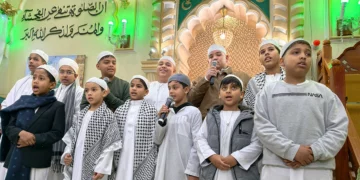
This article is based on a presentation delivered at the Al-Azhar Masjid Educational Institute (Madrassah) Ramadan Programme, February 21, 2026, Al-Azhar Masjid, Aspeling Street, District Six.
We live in a time when global turbulence presses directly upon the inner life of our communities. Wars and genocide unfold before us in real time. Economic insecurity shapes daily decisions about work, education, and survival.
Digital technologies reorganise attention, and artificial intelligence alters how knowledge is accessed, produced, and judged. Public institutions strain, schools struggle to stabilise learning, and insecurity erodes trust. These converging pressures generate not only structural instability but moral fatigue.
What is at stake is conscience.
The Qurʾān offers a language for interpreting such intensity through the metaphor of fire (nār, plural nīrān). Allah describes a Fire ‘which rises over the hearts’ (Sura Al Humazah, 104:6–7). Fire in the Qurʾānic imagination represents exposure and consequence. It signifies the outward unfolding of injustice and the inward burning of corrupted hearts. Crisis, therefore, operates both externally and internally. It shapes institutions, and it shapes souls.
The Qurʾān simultaneously teaches believers to turn to Allah in humility and supplication: ‘Our Lord, turn away from us the punishment of Hell. Indeed, its punishment is ever clinging’ (Sura Al Furqan, 25:65). While Fire exposes, supplication or duʿāʾ reforms. In moments of upheaval, the believer returns to remembrance, repentance, and conscious alignment with divine guidance.
Closely linked to this metaphor is the concept of fitna, trial and upheaval that tests moral fibre. Fitan disorient. They fragment attention and weaken discernment. In an age of digital acceleration and spectacle, clarity can dissipate quickly. Only a formed conscience, rooted in remembrance and disciplined reflection, can navigate such darkness with steadiness.
At such a time, the question of knowledge becomes central. What kind of scholarship steadies a community under pressure?
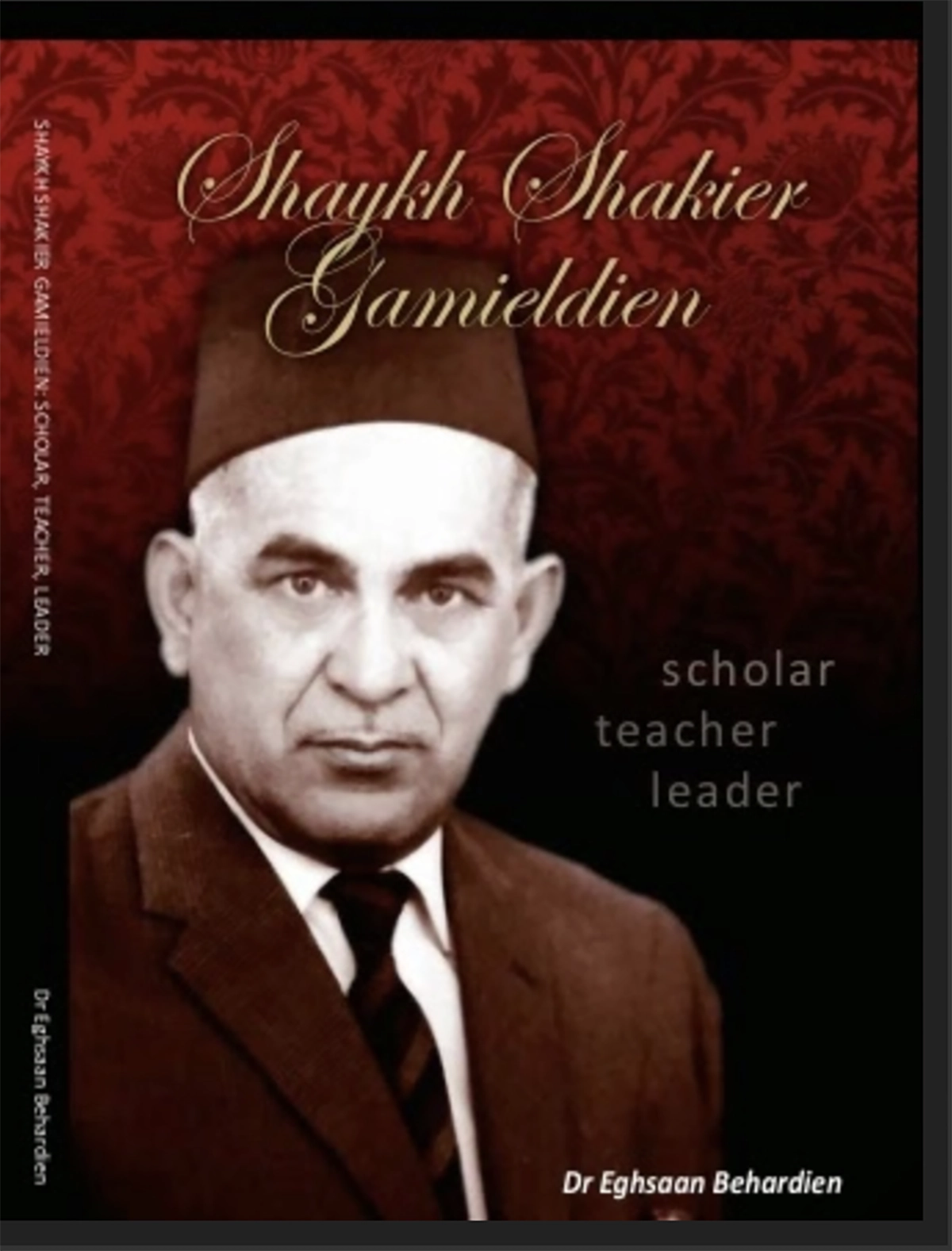
I often return to family accounts from the late 1970s concerning Shaykh Shaakir Gamieldien, the Al-Azhar-trained ʿālim who served as imam of the Al-Azhar masjid in District Six and also as the Mufti of the MJC. His understanding of the ʿālim was expansive and integrated. He described the scholar as one grounded in Sharīʿah, fiqh, ʿilm al-kalām, philosophy, ethics, scientific inquiry, and rational deliberation, all applied to a changing society. Religious depth and disciplined reasoning belonged together. Scholarship engaged lived complexity.
The Qurʾān names the archetype of such integration as ulū al-albāb, people of deep understanding. Allah declares: ‘Indeed, in the creation of the heavens and the earth, and in the alternation of the night and the day, are signs for people of deep understanding — those who remember Allah while standing, sitting, and lying on their sides, and who reflect upon the creation of the heavens and the earth, saying: “Our Lord, You have not created this in vain. Glory be to You; protect us from the punishment of the Fire”’ (Sura Aal Imran, 3:190–191).
You may also want to read


These āyāt describe individuals whose awareness of the cosmos leads to remembrance, whose remembrance leads to reflection, and whose reflection leads to humility and supplication. Knowledge moves from observation to reverence. Cognition culminates in accountability.
Sura Al Zumar reinforces this hierarchy of consciousness: ‘Say: Are those who truly know equal to those who do not know?’ (Sura Al Zumar, 39:9). The verse affirms that knowledge establishes a distinction in awareness. Yet it also reminds us that only ulū al-albāb truly take heed (Sura Al Zumar, 39:9). Information alone does not transform. Reflective insight awakens responsibility.
Sura Fatir deepens this connection between knowledge and moral disposition: ‘Only those endowed with knowledge among His servants truly have khashyah of Allah’ (Sura Fatir, 35:28). Khashyah signifies reverent awe rooted in understanding. The verse emphasises that scholars are ‘from among His servants’, reminding us that knowledge deepens humility. Authentic scholarship transforms the heart.
This Qurʾānic architecture resonates with the ḥadīth: ‘Wisdom is the lost property of the believer; wherever he finds it, he has the strongest right to it.’ Intellectual generosity, therefore, becomes a religious obligation. The believer seeks insight wherever it appears, yet receives it through disciplined discernment anchored in tawḥīd. Confidence and humility coexist.
Against this framework, the fires of our age become intelligible.
War, occupation, and genocide represent visible conflagrations. The destruction of homes, schools, and memory destabilises entire populations. Continuous exposure to risks can lead to emotional exhaustion and moral numbness. Islamic ethics affirms the sanctity of life and recognises human beings as bearers of divine trust.
The Prophetic example embodies restraint, mercy, and principled resistance. The educational task involves cultivating historical literacy, informed solidarity, disciplined civic engagement, and sustained duʿāʾ so that moral clarity endures without hatred.
Another fire burns through economic inequality and neoliberal precarity. Rising unemployment, informal survival economies, and widening disparities erode dignity and communal bonds. This quiet fire settles in households and in despair. Islamic social ethics responds through zakāh, waqf, and ṣadaqah, expressions of structural redistribution and shared responsibility. Economic justice forms part of tawḥīd. Education must therefore integrate skills formation, economic literacy, and moral consciousness, ensuring empowerment aligns with justice.
A further fire emerges through digital technologies and artificial intelligence. Algorithmic systems shape attention, influence desire, and mediate public discourse. Artificial intelligence increasingly participates in authorship and reasoning. Speed compresses depth. Surface engagement replaces slow reflection. The deeper danger lies in the erosion of epistemic depth and moral deliberation.
Islamic counter-practices of tafakkur (reflective thinking) and tadabbur (deep, deliberate reflection) cultivate an attentive, layered engagement with revelation and reality. Khashyah ensures that knowledge, including AI-mediated knowledge, deepens humility rather than inflates ego (Sura Fatir, 35:28). The ḥadīth on wisdom encourages confident technological engagement guided by discernment. Ethical AI literacy must orient learners toward accountable authorship and responsible judgment.
Social breakdown in health systems, education, and security constitutes yet another fire. Malnutrition, learning loss, and insecurity destabilise communal wellbeing. Prophetic ethics integrates raḥmah (mercy), ʿadl (justice), and iḥsān (goodness). Science, health planning, and social coordination become acts of worship when directed towards preserving dignity and life. Strengthening the masjid, school, and family builds resilience.
Prophetic pedagogy across centuries: Forming conscience amid the fires of our times
As we mark fifteen centuries since the birth of the Prophet ﷺ, renewed attention to his pedagogical method becomes urgent. He was a moral educator who formed character under pressure. Revelation unfolded in hardship. He embodied the Qurʾān in practice. He cultivated depth before reaction, restraint before retaliation, mercy within conflict, and beauty under constraint. He trained hearts to carry hardship without cruelty.

This pedagogy proved portable. Enslaved and exiled Muslims at the Cape preserved revelation through memory and recitation. Homes became schools. Ethics travelled through care and intergenerational transmission. They did not replicate seventh-century Arabia. They translated Prophetic principles into new conditions. Prophetic pedagogy remained resilient across oceans and under colonial violence.
The formation of conscience through intellectual generosity and disciplined discernment thus stands at the centre of a Muslim educational response to global upheaval. The Qurʾān describes ulū al-albāb as those whose knowledge leads them to proclaim, ‘Our Lord, You have not created this in vain … protect us from the punishment of the Fire’ (Sura Aal Imran, 3:191). Such people integrate remembrance, reflection, humility, and action.
In a world marked by nīrān (fires of consequence and moral exposure) and fitan (periods of trial, disorientation, and oppression), Prophetic pedagogy cultivates rootedness in tawḥīd, critical thought, spiritual attentiveness, and moral courage. While fires and trials will continue to test communities, souls formed through receptiveness to revelation, disciplined reasoning, and iḥsān will illuminate rather than burn.
Prof Aslam Fataar is a Research and Development Professor in Higher Education Transformation at Stellenbosch University and editor of the forthcoming book, Prophet Muhammad ﷺ at 1500: His Prophetic Legacy, Ethical Vision and Contemporary Resonance, published by the Prophetic Legacy Commission and Awqaf-SA, Cape Town.


![SABC dismisses call for transparency [+ video]](https://muslimviews.co.za/wp-content/uploads/2026/02/bccsa-template-75x75.webp)

