





![Does ta’wīl mean interpretation or fulfilment? A Quranic reassessment [+video]](https://muslimviews.co.za/wp-content/uploads/2026/10/Tawil-Kaskas-360x180.webp)












![Why becoming a wealthy Muslim is commendable in Islam [+videos]](https://muslimviews.co.za/wp-content/uploads/2026/09/Muslim-Trade-Business-1-360x180.webp)




As war spreads across the globe, the moral lessons of the Battle of Badr offer Muslims guidance on justice, unity and moral courage in an age of empire.
By PROFESSOR ASLAM FATAAR
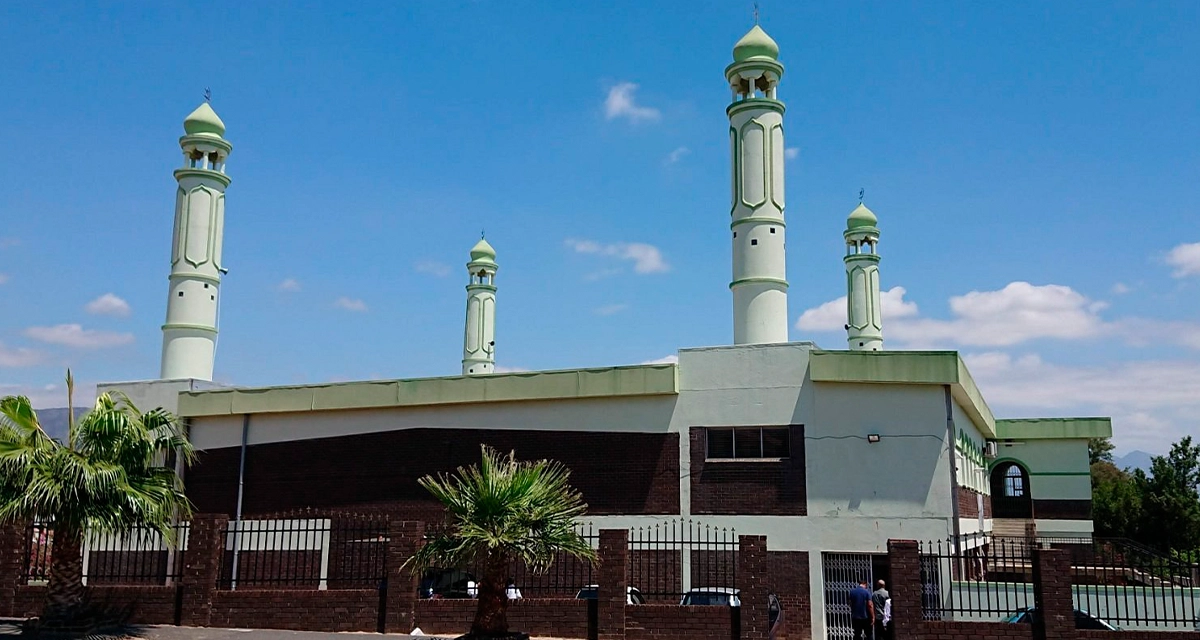
This article is based on a khutbah delivered at Masjidun Nur, Lappert Street, Paarl, on March 6, 2026.
Ramadan — a season of forgiveness and moral wakefulness
Ramadan is the month of maghfirah — forgiveness. Yet, in Islam, forgiveness is not a passive sentiment or a private ritual. It is a summons to moral wakefulness. The Holy Quran calls believers with urgency: ‘Hasten toward forgiveness from your Lord and a Garden as vast as the heavens and the earth, prepared for the people of taqwā.’ (Sura Aal Imran, 3:133)
Ramadan therefore calls Muslims not to retreat from the world but to return to God with humility, honesty and discipline. Seeking forgiveness requires us to confront arrogance within ourselves, to soften the heart, and to cultivate taqwā, the vigilant awareness of God that shapes our conduct in every circumstance.
While believers rush toward forgiveness, the world seems to race toward destruction. Throughout history, the zone of conflict has continued to grow. Gaza is still in ruins. Iran has faced bombings. Large groups in Africa and the Middle East live under siege, sanctions, drones, and the looming threat that devastation could strike at any moment.
Diplomacy fills press conferences and official statements, but its language increasingly resembles theatre. Negotiations are announced and then quietly unravel. Agreements appear within reach and then collapse. International law is invoked as reassurance even while bombing proceeds.
The lived reality of war, however, is never diplomatic language. It unfolds in kitchens and hospital corridors. It is a mother dividing bread carefully at ifṭār. It is a child who recognises the sound of drones before the sound of rain. It is a hospital generator flickering between electricity and darkness.
War is narrated in capitals but endured elsewhere. Very few consequences return to the cities that authorise military strikes. Their infrastructures remain intact. Their electricity does not fail. Their hospitals do not collapse. The grief is exported, and the rubble lies elsewhere. This is the asymmetry of imperial war: cheap for those who wage it and devastating for those who must endure it.
Empire and the fires of moral inversion
To understand these wars, we must speak plainly. The contemporary global order remains structured by Western empire, politically led by the United States, militarily dominant, economically entrenched, and protected by alliances that normalise its reach.
History suggests that empires often become most dangerous when their power begins to decline. As global influence gradually shifts toward other centres of power, the imperial order becomes more anxious to preserve its hierarchy.
In such an environment, countries that insist on maintaining independence from Western geopolitical alignment are quickly framed as destabilising actors. Their autonomy unsettles the imperial structure. Sanctions follow. Destabilisation campaigns follow. Covert interventions follow. What we are witnessing today is not a series of isolated conflicts but an expanding geography of imperial war.
Yet empire rarely names itself in such terms. Instead, it speaks the language of reform, order and peace. The Holy Quran recognised this moral inversion long ago: ‘When it is said to them: “Do not spread corruption on the earth,” they reply, “We are only reformers.” But truly, it is they who are the corrupters, though they do not realise it.’ (Sura Al Baqarah, 2:11–12)
The Quran also emphasises that the deepest injustices do not originate with violence or bombs but inside the heart. In Sura Al Humazah, Allah describes ‘the kindled Fire of Allah which rises over the hearts.’ (Sura Al Humazah, 104:6–7)
This fire is not shown as burning the skin but as ascending above the hearts. The most dangerous flames start in the moral imagination, in ideas that justify oppression, and in doctrines that portray cruelty as necessary.
Before cities burn, ideologies burn. Before bombs fall, doctrines are authorised. Before injustice spreads across lands, it is normalised in discourse. Colonial supremacy becomes a fire. Genocide becomes a fire. The belief that some lives are expendable becomes a fire. When these structural fires spread through political systems and public discourse, outward fires inevitably follow — the fires we see in shattered neighbourhoods and destroyed cities.
War, therefore, not only destroys buildings; it corrodes the moral imagination. It tempts societies to abandon empathy. It tempts communities to dehumanise in return. It tempts people to narrow compassion only to those who resemble them. If we are not vigilant, the fires imposed by empire begin to reproduce themselves within us.
Where Ramadan matters
This is precisely why Ramadan matters. Fasting disciplines the heart and cultivates taqwā, the vigilant awareness that prevents injustice from taking root within the believer. The Prophet Muhammad ﷺ repeatedly reminded his community that greatness in Islam is not measured by dominance but by character. He said: ‘The best of you are those who are best in character.’ (Sahih Bukhari and Sahih Muslim)
Moral excellence, not power, defines the ethical horizon of Islam.
Even the tiniest acts of kindness are meaningful. The Prophet ﷺ taught that ‘removing harm from the road is charity.’ (Sahih Muslim)
If taking a stone off the path is regarded as charity, then the duty to confront systems spreading harm throughout societies is even greater.
You may also want to read


However, Islam emphasises that such resistance should be disciplined. It should be driven by integrity, not anger, and by justice, not revenge.
Badr — standing firm without becoming empire
The month of Ramadan carries within it the memory of one of the most formative moments in Islamic history: the Battle of Badr. Badr took place in Ramadan, and it represents far more than a military encounter. It represents a moral moment in which a small and vulnerable community faced overwhelming power.
The early Muslims were refugees who had been expelled from their homes in Makkah. They were economically fragile and politically exposed. They faced a powerful order determined to extinguish their moral witness. Only a few hundred believers stood in the valley of Badr, outnumbered, under-equipped, and uncertain of survival.
Yet the Prophet Muhammad ﷺ did not approach that moment as an imperial conqueror. He stood as a servant before God. Throughout the night, he raised his hands in duʿāʾ, pleading for divine assistance.
Victory did not come through numbers or weapons. It came through divine help. The Holy Quran reminds believers: ‘Allah gave you victory at Badr while you were few and vulnerable.’ (Sura Aal Imran, 3:123)
Badr, therefore, represents something deeper than military success. It offers a moral orientation for confronting overwhelming power. It teaches that courage must remain anchored in character, that resistance must be disciplined by taqwā, and that confronting injustice requires humility before God.
The Quran commands believers: ‘O you who believe, stand firmly for justice as witnesses to Allah.’ (Sura An Nisa, 4:135)
To stand as witnesses to Allah means that our commitments cannot be determined by tribe, ideology or imperial allegiance. Our witness must be anchored in justice itself.
At a moment when devastation engulfs large parts of the Muslim world, Muslims must refuse the trap of sectarian division. Fragmentation weakens communities precisely when solidarity is most necessary. Our responsibility is clarity — to focus on the structures of domination that devastate societies, not on divisions that weaken us from within.
The Muslim ummah was never meant to be defined by borders drawn by empire. It is bound instead by justice, mercy and the remembrance of God. This is perhaps the deepest lesson of Badr for our time. When a community stands with sincerity, moral discipline and trust in God, it stands with dignity even in the face of overwhelming power.
In a world on fire, Ramadan calls Muslims not to become fuel for that fire and not to be consumed by it. It calls believers to stand united, with moral clarity and disciplined compassion. It calls us to stand with those who suffer oppression and, above all, to stand as witnesses to Allah.
Professor Aslam Fataar is a Research Professor in higher education transformation at Stellenbosch University.