










![Does ta’wīl mean interpretation or fulfilment? A Quranic reassessment [+video]](https://muslimviews.co.za/wp-content/uploads/2026/10/Tawil-Kaskas-360x180.webp)












![Why becoming a wealthy Muslim is commendable in Islam [+videos]](https://muslimviews.co.za/wp-content/uploads/2026/09/Muslim-Trade-Business-1-360x180.webp)
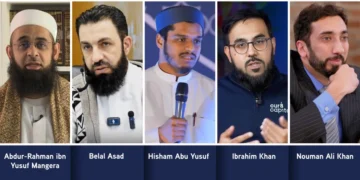



South Africa’s Muslim community has achieved remarkable upward mobility, but individualism may be quietly eroding collective strength and barakah.
By MOGAMAT ALI SALIE
WALK through any prosperous suburb in Cape Town or Johannesburg and you will find success stories everywhere; elegant homes, well-educated children, thriving professionals.
By most modern measures, South Africa’s Muslim community has achieved remarkable upward mobility. Yet beneath this visible success lies a quieter crisis, one rarely named but deeply felt. It is the slow replacement of collective purpose with individual happiness, and the corrosive belief that there is not enough to go around.
Modern happiness is marketed as personal fulfilment. The good life is defined by autonomy, lifestyle choice and self-optimisation. In this framework, success is something achieved alone and protected fiercely. Wealth becomes private security rather than communal capacity. Time is guarded. Knowledge is monetised. Networks are leveraged for personal advancement, not collective resilience.
This philosophy did not emerge from Islamic civilisation. It arrived packaged with global consumer culture, reinforced by economic uncertainty and South Africa’s long history of structural inequality. Scarcity thinking thrives where trust is fragile. When people believe opportunity is limited, generosity begins to feel risky and collaboration naïve. Helping another family succeed is quietly perceived as helping a future competitor.
The result is a community rich in individuals yet poor in shared infrastructure. We have successful doctors but underfunded clinics. Accomplished lawyers but fragile communal institutions. Business owners with global reach, yet masajid and schools constantly fundraising for basic sustainability. Wealth exists, but it does not circulate with intention.
This was not always the case.
Earlier Muslim communities understood prosperity as a collective condition. In classical Islamic cities, individual success was inseparable from communal contribution. Scholars were supported through endowments so knowledge could remain independent. Markets flourished because trust was enforced morally before it was enforced legally. Wealthy merchants funded roads, water systems, hospitals and madrasas not as charity, but as civic duty.
Closer to home, South Africa’s own Muslim history offers powerful examples. Under apartheid, communities that were economically marginalised built resilient support systems. Informal savings groups, interest-free loans and family networks ensured that education, housing and basic dignity were protected even when the state failed. Scarcity existed then in a real and material sense, yet the response was cooperation rather than hoarding.
What changed?
You may also want to read



Paradoxically, greater access to opportunity weakened the instinct to build together. As individuals escaped hardship, responsibility quietly narrowed. The question shifted from ‘How do we rise?’ to ‘How do I secure my position?’ In doing so, the community traded resilience for comfort and barakah for balance sheets.
Scarcity mindset is not about lack of money. It is about fear. Fear that generosity will diminish one’s own security. Fear that empowering others reduces relative advantage. Fear that collective systems are inefficient or prone to misuse. These fears may sound pragmatic, but they are deeply un-Islamic. Islam does not deny prudence, but it rejects the idea that provision is a zero-sum game.
The Qur’anic worldview treats wealth as amanah, a trust, not a possession. Barakah flows when wealth is structured, circulated and aligned with purpose. When wealth is trapped in private silos, it may grow numerically, but it shrinks spiritually and socially. Communities become fragmented, transactional and fragile in the face of crisis.
True excellence, whether economic or moral, has never been achieved through isolated success. It is built through institutions, norms and long-term thinking. The waqf system, the guilds, the charitable endowments of earlier Muslim societies were not acts of sentiment. They were strategic investments in continuity.
South Africa’s Muslim community now has a choice to make. The talent, capital and global exposure exist. What is missing is a renewed commitment to collective vision. Not nostalgia, and not blind idealism, but mature governance that channels private success into shared strength. Education funds that outlive founders. Business ecosystems that mentor rather than gatekeep. Family offices and community trusts that think in generations, not quarters.
Individual happiness is not wrong. But when it becomes the highest aim, it quietly erodes the foundations of communal life. Islam offers a more demanding, and ultimately more rewarding, vision. One where personal success is measured not only by what is achieved, but by what is built for others to stand upon.
Until that shift occurs, prosperity will remain uneven and potential unrealised. The choice before the community is not between wealth and faith, or success and sacrifice. It is between fragmentation and excellence. And history has already shown us which path leads to strength.
Mogamat Ali Salie is the founder and advisory partner at MuslimFin Family Office, a Shariah-compliant financial advisory and legacy-planning firm serving South African Muslims locally and abroad. He writes on Islamic finance, ethical wealth and the intersection of faith and community. Visit their website: www.muslimfin.co.za

- This article was first published in the January 16, 2026 print edition of Muslim Views.