


![Does ta’wīl mean interpretation or fulfilment? A Quranic reassessment [+video]](https://muslimviews.co.za/wp-content/uploads/2026/10/Tawil-Kaskas-360x180.webp)









![Why becoming a wealthy Muslim is commendable in Islam [+videos]](https://muslimviews.co.za/wp-content/uploads/2026/09/Muslim-Trade-Business-1-360x180.webp)






A viral confrontation in Norwood has renewed debate over racist and anti-Palestinian abuse, accountability and restorative justice, as the writer examines the responses of Chabad Norwood, the South African Jewish Board of Deputies (SAJBD) and other local community leaders.
By HASSEN LORGAT
It is the time of Atonement, but this comes with an open heart and accountability.
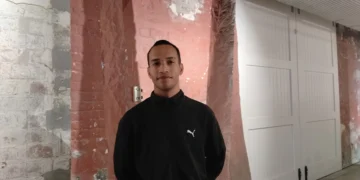
The news over the recent few days brought the stories of Gaza massacres literally into our streets. The video, which has since gone viral, shows an incident in which young Abdur Rahmaan Aziz is verbally abused by Rodney Plett, a businessman. It happened on Monday, September 21, the final hours of Yom Kippur, one of the holiest and most solemn days of the year in Judaism, also known as the Day of Atonement.
What adds to the drama is a dignified young man, who is Muslim, and an elderly Jewish person, who was irate and hurled racist insults at the young man. The young man, Abdur Rahmaan, at all times kept his cool, which was universally welcomed by all.
That this incident took place on this day around a synagogue, Chabad of Norwood, where Plett is a founding member, is cause for concern.
The narratives surrounding the hate crime scene
The young man recorded the video that we are now talking about.
In addition, a community newspaper reporting the incident cast some doubt when they wrote: “What happened before the camera started rolling is fiercely disputed, with both motorists resolute in their versions of events and both consulting lawyers following the confrontation.”
Abdur Rahmaan is on record as saying that he was pursued by the elderly gentleman who hurled religious and racial abuse at him. Nicola Miltz of the community newspaper, South African Jewish Report (SAJR), provides background explaining, from her perspective, what may have given rise to Plett’s conduct: that he had been fasting for 24 hours and that Abdur Rahmaan was speeding, driving badly and almost bumped him.
SAJR told its readers how Plett was when they asked how he was doing: “his response was emphatic, ‘I’m fine. I’m feeling perfect.’ ‘I’m used to dealing with impossible people like this in business every day,’ he added.”
It then quotes Plett saying: “I chased him and I caught up with him to ask him how he could turn without indicating.” He says the exchange “ended up in words.” Plett emphatically denies using the K-word in the initial, unrecorded confrontation: “I never ever used the K-word. Never.”
Abdur Rahmaan’s statement to the online radio, Salamedia, tells in detail the attacks Plett launched on Muslims, Palestinians and the Indian community.
Unfortunately, the SAJR does not question Plett about what was on record. It states that he never ever used the K-word, but does not engage him on what he is caught on camera saying, using misogynistic language — “You’re a pxxs” — and racist language to refer to Indian people — “You’re an Indian Cxxt.”
Gendered and racist expletives aimed at undermining the dignity of another are part of the package of hate crimes and are not dissimilar to using the K-word. There is no hierarchy or racial hierarchy of whom you could insult or whom you cannot. These hateful words are in contravention of the Promotion of Equality and Prevention of Unfair Discrimination Act, 4 of 2000 (Equality Act) and Plett’s utterances were not protected by freedom of expression within the Constitution.
Precedents set, crimen injuria
But this incident does not exist in a vacuum. Two processes in the Magistrates Court and another at the Equality Court are relevant here.
- The Letsoalo case (2020)
This incident took place over six years ago — November 2020 — when the Jewish community celebrated “justice is served”.
Matome Letsoalo was found guilty of crimen injuria in the Randburg Magistrates Court. He allegedly posted a series of tweets, over a period of more than two years, threatening and maligning the Jewish community.
“This is the first-ever criminal verdict in an antisemitism case in South Africa, and is a major advance in the battle against online antisemitism. Aside from bringing to justice the perpetrator of this particular attack, the precedent established will probably be of considerable assistance to us in terms of our other criminal cases before the courts, as well as any further such cases it might be necessary for us to lodge in the future,” the SAJR reported at the time.
The newspaper further reported that in the Letsoalo case, tracking down the guilty party to serve a summons was difficult, but giving up was never an option.
National Director of the South African Board of Deputies (SAJBD), Wendy Kahn, stated that the outcome sends a clear message that hate-filled attacks on the Jewish community will not be tolerated, and that the SAJBD will pursue justice for as long as it takes.
This may be instructive in the case of Abdur Rahmaan, who is proceeding with the case at the Equality Court.
- The Equality Court: the Motlane case (2016)
The second case I want to refer to happened almost ten years ago. Here the Equality Court ruled on the matter, which found the K-word to be unlawful. The SAHRC welcomed the ruling.
Like Plett’s fasting, so too does Ben Pretorius have his story and so does Nelson Maloma Motlane.
In May 2016, Nelson Maloma Motlane went to Ben Pretorius’s farm with his employer, a Mr Grobler, to do building work. Pretorius called Motlane the “K-word”. Motlane felt angry and humiliated but stayed calm and reported the matter to the police instead. The police advised him to take the case to the Equality Court in Thabazimbi.
The court found that the respondent’s utterances were in contravention of the Promotion of Equality and Prevention of Unfair Discrimination Act, 4 of 2000 (Equality Act) and that the respondent’s utterances were not protected by Freedom of Expression within the Constitution. The Equality Court thus found that the respondent must furnish Motlane with an unconditional apology within 21 days of the court order and further awarded damages.
The Chabad’s swift response
In the Plett incident, what is undeniable is that the Chabad in Norwood and some leaders of the Jewish community acted swiftly as they realised the damage this does to their community and its relations with other South Africans. It appears sincere as well as an exercise in damage limitation, hence the haste in getting it resolved.
In addition, Rabbi Mordechai Rodal from the Norwood Chabad went on television to plead for respect and apologised for the incident, but it was not Mr Plett.
Rabbi Rodal did, however, point out that he had spoken to Abdur Rahmaan and is keen that together they build bridges. In various other statements he reiterated the unequivocal fact: no matter what had allegedly happened on the road, it couldn’t justify Plett’s subsequent behaviour.
Elsewhere the Rabbi and his wife are on record condemning racist language used outside their synagogue, saying they are appalled and distressed by the comments. They stressed that racism, prejudice, and demeaning language have no place in their community and unequivocally condemned such behaviour.
The SAJBD’s response: it is the individual
In their statement to Mail & Guardian the SAJBD said: “We reject all of these utterances. The Middle East conflict is an extremely divisive issue. It is unnecessary for this painful conflict to be imported to the streets of Johannesburg.”
This is similar to what they said to the SAJR.
The SAJBD said Plett’s behaviour was unacceptable, adding that the outrage generated by the footage was “mirrored by our community”. It was an individual and not the community.
“I did what I did. I was very angry. I made an error. I made a mistake. I lost my temper. I was incorrect in insulting him and therefore I apologised,” Plett is quoted as saying in a report in the SAJR.
Anyone following this discussion will know that it variously involves an injury to human dignity of not only the person but also to Indians, Muslims, Palestinians and women.
In their statement the SAJBD further argued: “It is important that we do everything to de-escalate the friction between these communities and rather allow for a spirit of respectful co-existence.”
Kahn, the SAJBD National Director, is quoted in the SAJR as saying: “Unfortunately, the situation in the Middle East often causes tension between the two communities, especially over the past three years. We continue to call for foreign conflicts not to be imported onto the streets of Norwood and South Africa, where they cause unnecessary hatred between fellow citizens.”
As an aside, I have noticed that in all their comments on this case they consistently seek to evade the story of Palestine and the genocide, as if it is a foreign affair.
Coming from the SAJBD, this is disingenuous, as in their official statement they stop short of adding that aspect of international issues. On their website and Facebook pages they simply state that “the SAJBD remains committed to building a South African society based on the Constitutional values of dignity, equality and respect for all.” They do not ask their readers and members not to bring in the international dimension. (This sounds very DA to me, especially when Zille was campaigning: “I’m fighting to be mayor of Joburg, not Ramallah, or Bethlehem, or Tehran, or Gaza City, or Tel Aviv. I’m focusing on fixing Joburg.”)
The haste to resolve
In addition, I have observed that when perpetrators of a hate crime appear to be “Jewish” or when the SAJBD or its lawyers advise, it appears that they want to get the matter resolved urgently. Thus we have the individualisation of the problem and, in so doing, the haste to get an apology and lay the matter to rest. It stands in stark contrast to how they deal with matters when the SAJBD or members of the community they represent, or those who approach them, are the aggrieved party. They would go to formal institutions to make law, set precedents and have it as a matter of official or court record, as we have seen.
Whilst they try to individualise this case around Plett, it will not stick.
Palestine, Muslims and Indians and the Jewish Board’s role
Ebrahim Fakir echoes these sentiments when he writes in the Mail & Guardian on September 25: “The South African Zionist Community, of which the SAJBD is an active part, has long been entrenched in a vulgarity of its own, actively encouraging and defending Israel’s genocide against Palestinians.”
Fakir added that the South African Jewish Board of Deputies (SAJBD) is accused of acting as part of the Zionist political machinery under a religious guise, routinely attacking even mild criticism of Israeli conduct and condemning, alienating, and ostracising anyone—including devoutly religious Jews—who expresses anti-Israeli views.
In countries like Germany and the UK, Zionist supporters and the authorities have been vile to even Holocaust survivors.
We all know what the SAJBD says and does every day. They are very public.
The SAJBD defends Israel’s military actions as necessary self-defence aimed at dismantling Hamas and protecting Israeli citizens, while placing full blame on Hamas for initiating the war through its October 7, 2023 attacks and for refusing to release hostages. We know they were interested only in Israeli captives, which is problematic as it overlooks the hundreds of Palestinians held captive, jailed, or imprisoned by Israel. Many are children in so-called detention centres.
You may also want to read


Palestinian lives matter: the human costs
The UN Human Rights office documented that between October 2023 and August 2025, at least 75 Palestinians died in Israeli detention, including a 17-year-old child. The report cited “systematic torture and ill-treatment,” including beatings, denial of medical care, and inhumane conditions. UN Special Rapporteur Francesca Albanese stated in March 2026 that torture has become “state doctrine” in Israel’s prison system, describing it as an instrument of genocide.
On August 13, 2026, the Palestinian Prisoners’ Club and the National Campaign for the Retrieval of Martyrs’ Bodies issued a joint statement following a Haaretz report, confirming that Israel holds the bodies of 1,700 Palestinians, including in so-called “cemeteries of numbers” and in morgues. They called the policy illegal, immoral, and a violation of international human rights law — a systematic form of collective punishment amid the low-intensity genocide that has now spread to the West Bank. The figure, originally reported by Haaretz, includes bodies held in both morgues and the “cemeteries of numbers.”
The cherry on top must be the vehement opposition by the SAJBD of South Africa’s Department of International Relations and Cooperation (DIRCO) for our country’s role in pursuing an ICJ genocide case against Israel, characterising it as diplomatic bias—not genocide. Thus they are not peaceful mediators but an active player in the game.
Gaza’s destruction
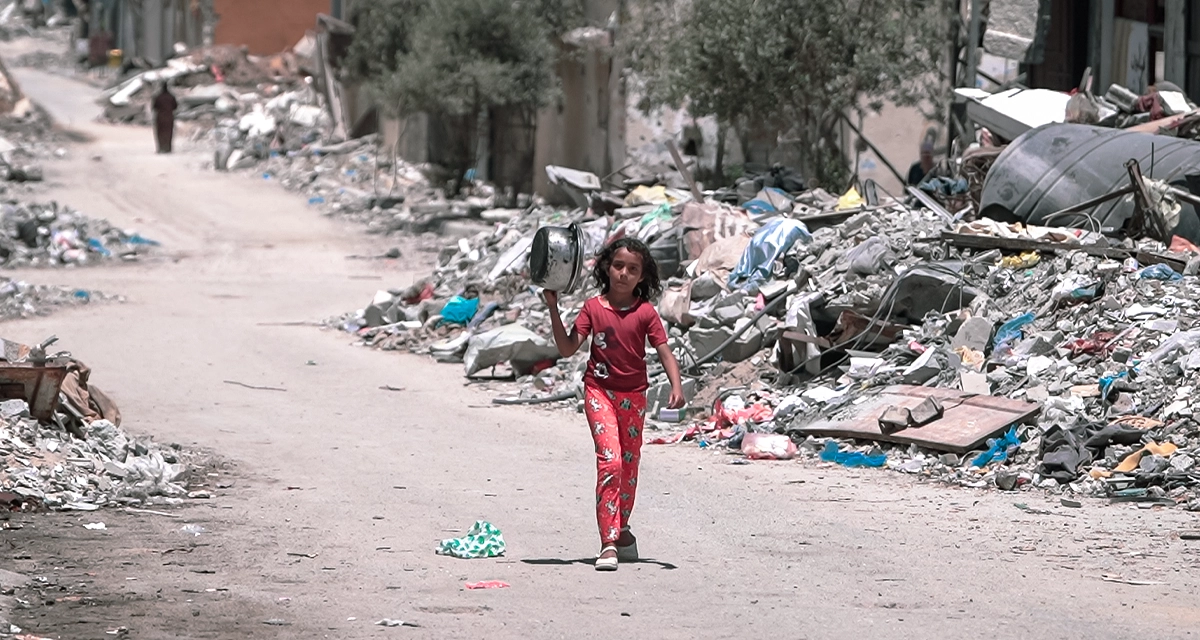
Gaza has been cut down from the civilisations that its people enjoyed.
The UN Satellite Centre (UNOSAT) confirms that approximately 82% of the living space, places of worship, and places of healing have been destroyed. Around 201 290 buildings—equivalent to 82% of all structures in Gaza—were damaged as of mid-June 2026. This includes 134 422 destroyed buildings and thousands more severely damaged. Hundreds of thousands are facing acute hunger, with 1.4 million people in Phase 3 (crisis mode) and 212 000 in Phase 4 (emergency mode) with regard to food insecurity, and the situation remains deeply fragile.
South Africa’s ICJ case is about that, and it is not a side-show in this story. We must centre it at all times.
The cost of dissent
True reconciliation must start with treating others like how you would like to be treated.
How the SAJBD treats those who are allegedly and/or genuinely accused of antisemitism may provide some guidelines of what is out there. It must be pointed out that anti-Zionist activists, particularly Jewish, have been severely ostracised and victimised for going outside the tribe.
I recall the number of people, aggrieved — some activists but not all — who were bullied and vilified and threatened that they would lose their jobs if they did not recant. There seems no space for education; only for total vilification and submission.
One thinks of Jo Bluen and Megan Choritz, and dozens of others.
We reached out to Megan Choritz who explained the flak she received: “From name calling to suing me for defamation, Zionist hatred for me is a perfect example of how they dictate what it means to be Jewish in South Africa. They are totally comfortable with public expressions of hatred towards members of the South African Jews for a Free Palestine (SAJFP) in general, and me in particular. Not once has a Zionist come to my defence when I have been called a kapo, vermin, a leech, or told to go to Gaza to get my head chopped off.”
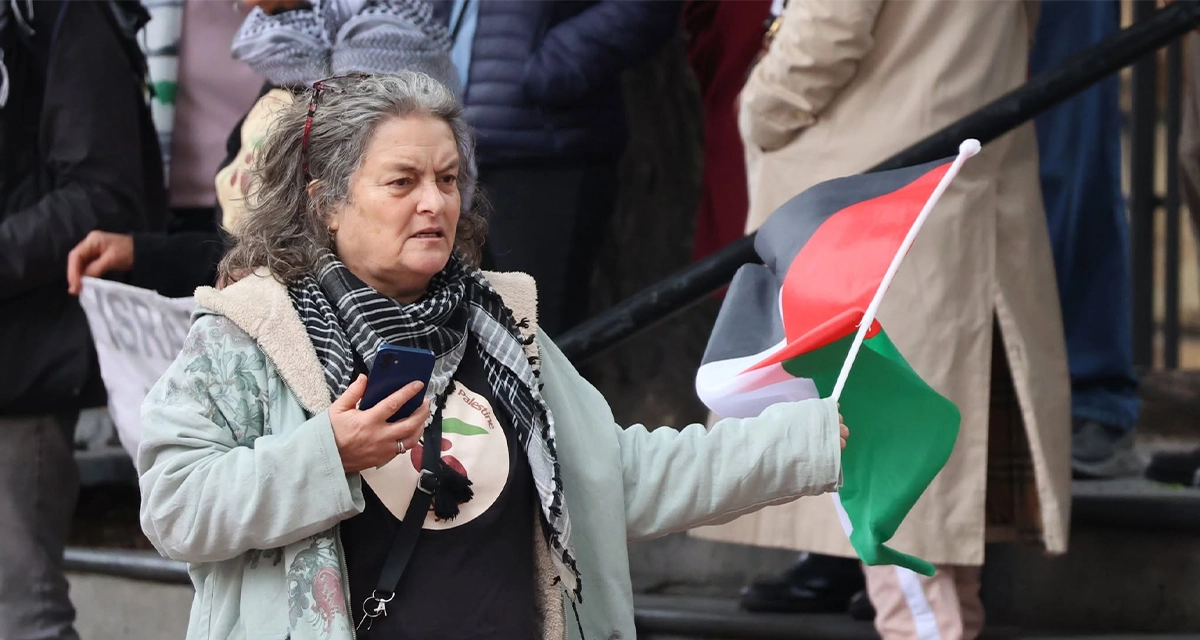
Many have spoken of being ostracised from Jewish functions including places of worship as well as cultural organisations including media because of ideological differences.
It is out there on the internet how Bluen, a PhD candidate at the London School of Economics and a prominent member of South African Jews for a Free Palestine (SAJFP), has faced similar attacks. A public open letter to her university accused her of affiliations with terrorist organisations, promoting hate speech, and glorifying violence, calling her a “morally blemished” person and a “traitor.” The language used is designed to delegitimise and expel; not to educate or persuade.
The pattern and the truth: it is collective
This is not an individual incident but collective. Anti-Palestinian hate is often also Islamophobia. In all these incidents, they do not necessarily involve the SAJBD and other organised Zionist organisations or any other sentiments of Jewish political groups.
- The Cape Town incident (September 2026)
A short viral video posted on X showed a man, now known as UK citizen Haydn Ellwood, attacking a pro-Palestinian woman activist and pulling her hair, while another woman was heard warning them not to touch a woman.
A clearer view of the assault can be seen here: https://www.youtube.com/shorts/gp_VgKudPbI
When she joined the shuffle to save her friend, she was pushed away by one of the men.
Advocate Shameemah Salie, national spokesperson for the Al Jama-ah political party, described what happened in Simonstown near Cape Town when pro-Israeli supporters started counter-pickets.
“Allegations are that last weekend one of the pro-Zionist members made a statement to females in the pro-Palestinian group that they are beautiful and had they been in Gaza Hamas would rape them,” she said.
- The Durban incident (June 2024)
In this incident, we have seen the same approach at play before and subsequently.
The SAJBD attempts to isolate and individualise the matter when it involves those connected to Jewish institutions in South Africa.
On June 2, 2024, in Durban’s Glenmore neighbourhood, 49-year-old Halima Hoosen-Preston was killed and her husband and son were severely stabbed in an Islamophobic attack that also targeted their younger daughter.
The suspect, 44-year-old Grayson Beare—the estranged adopted son of Julian Beare, chairperson of Beare Holdings and the South African Holocaust and Genocide Foundation—was arrested at the scene by police.
Media reports affirm that the assault allegedly centred around or was “motivated by the conflict between Israel and Hamas” as Miltz writes in the SAJR. Other reports add that after an altercation Beare had with Hoosen-Preston, during which she allegedly laughed upon hearing that his cousins had been killed in Israel, he identified himself as a former Zionist who has rejected the Jewish religion. He made this statement in a video that went viral on social media.
Then, those criticising the Islamophobic attack, such as activist groups, were accused of playing politics. This was a man troubled with mental problems, it was argued.
Chief Rabbi Goldstein said that “the perpetrator, in custody, is known as a severely troubled individual with a history of drug abuse and serious mental illness. It goes without saying that he doesn’t represent the Jewish community or Jewish values in any way.” He added that Jews and Muslims have “always enjoyed uniquely peaceful and friendly relations in spite of our very different views on the Israeli-Palestinian conflict.”
This argument was submitted to court as well. The defence submitted that the accused was diabetic, bipolar, and suffered from schizophrenia. (Reference: SAJR, Miltz, June 6, 2024)
What Plett said
It is true that Plett spoke of Israel beating Palestinians and accused Hamas of sexual violence. There is, as Fakir points out, a longer discussion at play which has its roots in dispossession, annexation of Palestinian lands, language and cultures. Their very existence. Will the Jewish and Zionist representative bodies overcome their Rubicon and engage with these discussions? I doubt it, but Fakir points to the internal complicity — or what I will call ideological affinity — to the Zionist programme. Fakir wrote that “the SAJBD might find it hard to do this, since they craft the narratives on which these practices rest. The hypocritical double standard that demands strict non-racialism and constitutional protection domestically while endorsing ethno-supremacist state action abroad has to end.”
True atonement and the way forward
True atonement is premised on openness of heart and mind, and it must include overcoming the obstacles that I have raised above here. The SAJBD, Plett, or the Chabad must go beyond the performance and theatrics.
Others have dealt with approaches towards beginning restorative justice.
Start with those movements and organisations that support Plett.
Fakir, for instance, asked for a substantive apology; one that is not a press statement or performative. The SAJBD must begin with an understanding that these racist outbursts are not isolated anomalies but a product of deep ideological conditioning in micro spaces—home, play and, at times, places of worship. For this reason there must be a deep internal inspection that grapples with the “hypocritical double standard that demands strict non-racialism and constitutional protection domestically while endorsing ethno-supremacist state action abroad has to end.”
The magnanimity of Abdur Rahmaan must not be seen as a sign of weakness. It takes courage to be compassionate — after years of violence and greed-infected politics.
The lesson that both the SAJBD and SAZF must learn is to treat others the way Abdur Rahmaan has treated Plett — with compassion and learning.
I wonder why, as part of the settlement, Abdur Rahmaan does not approach the offices of the SAJBD to convene with him a symposium where restorative justice lessons of this case can be aired and recorded? My reasoning is simple. It has been recorded that they have or were going to complain to the SAHRC.
Abdur Rahmaan’s Ubuntu—I am because you are—speaks to his humanity and also compels him to work in community and obtain their wise counsel. The methodologies are centred on modes of operation that favour restorative justice methodologies. This is a joyous circle of humanness… and the SAHRC or others may be co-hosts of this.
Justice must be done and must be seen to be done.
We will be watching.
Hassen Lorgat is a trade unionist and media justice activist. He writes in his personal capacity.