



![Does ta’wīl mean interpretation or fulfilment? A Quranic reassessment [+video]](https://muslimviews.co.za/wp-content/uploads/2026/10/Tawil-Kaskas-360x180.webp)
















![Why becoming a wealthy Muslim is commendable in Islam [+videos]](https://muslimviews.co.za/wp-content/uploads/2026/09/Muslim-Trade-Business-1-360x180.webp)

![The market-builder who restrained the market [Part 2]](https://muslimviews.co.za/wp-content/uploads/2026/08/PHOTO-2026-08-25-17-16-32-360x180.jpg)








By YASEEN BARDIEN
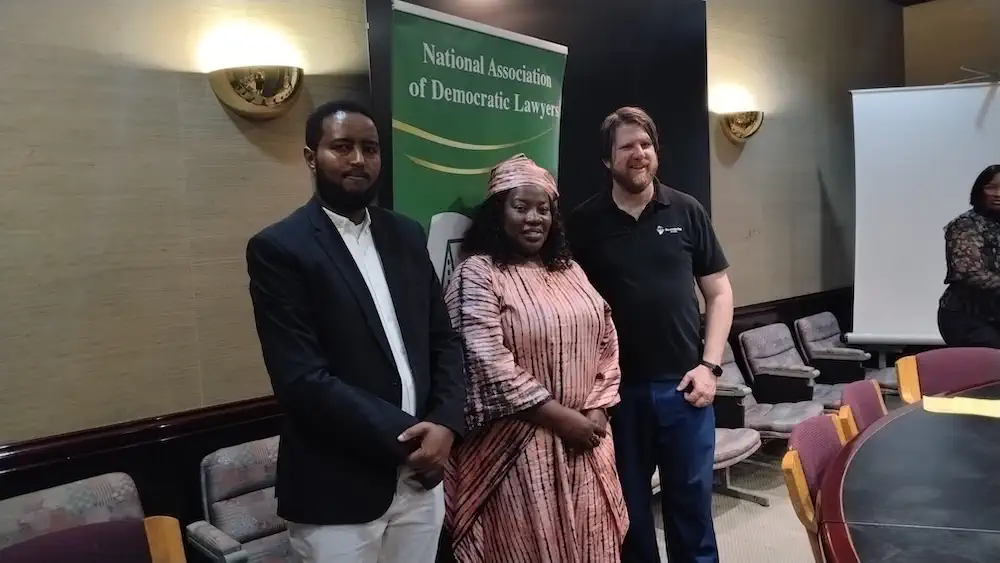
Xenophobic violence, migrant rights and gaps in South Africa’s immigration system came under scrutiny at a NADEL branch meeting, where speakers urged lawyers, the media and government to confront discrimination and strengthen protection.
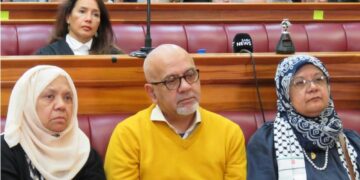
The meeting, held on Wednesday, September 16, heard from Abdikadir Mohamed, national chairperson of the South Africa Refugee-Led Network (SARLN), Micheline Minani Muzaneza of Sonke Gender Justice and James Chapman of the Scalabrini Centre.
Minani focused on how xenophobia and the immigration system affect women, children and the LGBTQI community, saying migrants were not affected equally.
She said women could be separated from their children when detained, while LGBTQI people faced particular challenges in detention.
Minani described cases involving women whose refugee applications were linked to husbands who were the main applicants.
“Then when you are undocumented, if you are caught, you’ll be deported. Before being deported, you’ll be first detained,” she said.
She called for lawyers to be more sensitive to gender and migration issues, saying language barriers had left some women vulnerable to exploitation and abuse.
“Because of language, we found so many women who have been exploited or abused,” she said.
Minani suggested NADEL could work more closely with communities, schools, police, clinics and religious and traditional leaders.
“If NADEL can start with those ones, we will reach somewhere,” she said.
You may also want to read


Mohamed, who is also the executive director of the Somali Association of South Africa, raised concerns about how migrants and foreign nationals are described in the media, saying the choice of headlines could be “triggering”.
News anchors he had spoken to told him that editors chose the headlines and gave instructions. He suggested that the South African National Editors’ Forum should be involved in discussions with the media.
Mohamed also drew a distinction between migration enforcement and xenophobic discrimination.
“There’s a critical distinction that we must make, the difference between migration enforcement and xenophobic discrimination. Enforcement is the application of law to ensure compliance. Xenophobia, however, is a systemic prejudice that seeks to dehumanise.”
“When immigration operations target specific ethnic groups or neighbourhoods based on profiling rather than evidence, enforcement is no longer about the law; it becomes a vehicle for xenophobic discrimination.”
Mohamed compared South Africa with other African countries, saying refugees and asylum seekers had freedoms of expression and association in South Africa that were not available in some other countries.
“When South Africa is being criticised, it means South Africa can do better,” he said.
Chapman said xenophobia could occur at different levels of society, including when people took it upon themselves to stop others and demand their immigration documents.
He said informal traders with legitimate trading permits, asylum or refugee documents, and in some cases permanent residence, had been unable to return to work since the June 30 protests.
He also spoke about displacement leading up to the protests, including people gathering outside the Zimbabwean consulate in Cape Town.
“You had 400 women with babies under the age of two out in the rain and the cold,” Chapman said.
Chapman then turned to immigration detention and access to legal aid, referring to Section 34 of the Immigration Act.
“So yeah, Section 34 is where we need to go with legal aid,” he said.
He questioned why refugee protection fell under the security cluster and raised concerns about children who reached adulthood without documentation.
Chapman also raised concerns about the revised White Paper on Citizenship, Immigration and Refugee Protection (CIRP), which Cabinet approved for implementation in March 2026.
Chapman also criticised the implementation of the National Action Plan (NAP) to Combat Racism, Racial Discrimination, Xenophobia and Related Intolerance.
“It is incredibly underfunded,” he said.
He said government dialogues could become a “tick-box” exercise.