










![Does ta’wīl mean interpretation or fulfilment? A Quranic reassessment [+video]](https://muslimviews.co.za/wp-content/uploads/2026/10/Tawil-Kaskas-360x180.webp)
















![Why becoming a wealthy Muslim is commendable in Islam [+videos]](https://muslimviews.co.za/wp-content/uploads/2026/09/Muslim-Trade-Business-1-360x180.webp)






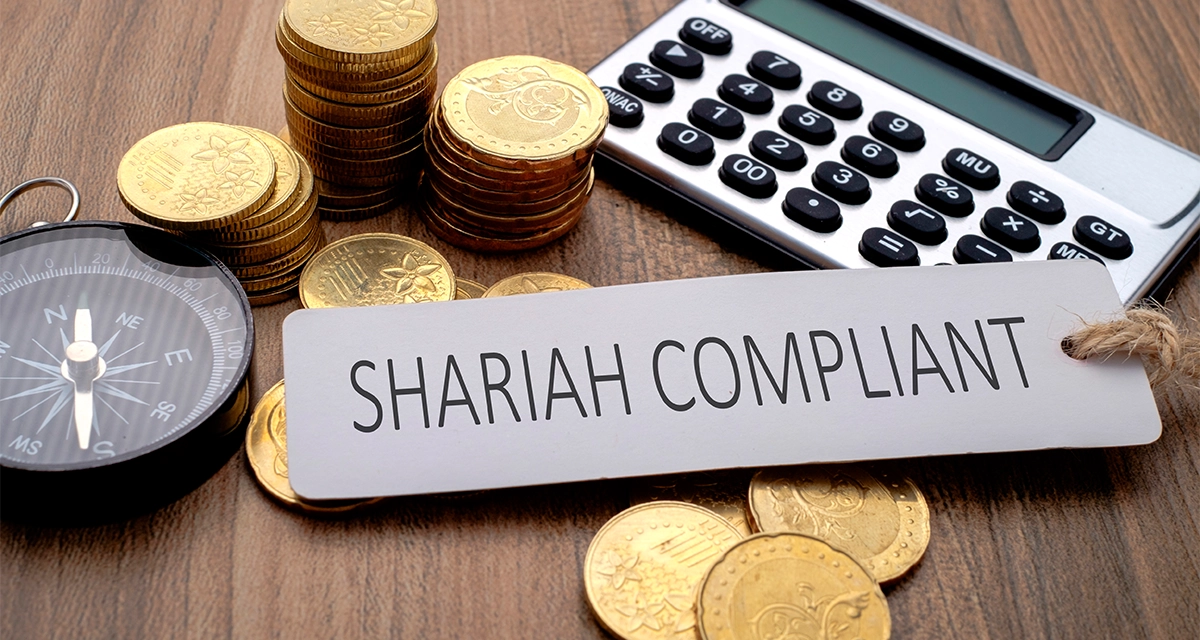

Islamic banking promises justice and ethical finance, but critics argue it often mirrors conventional systems. This analysis examines whether South Africa’s Islamic banks have lost their moral core.
By SHIRAAJ BUZIEK
In a country where inequality remains one of the most pressing economic challenges, Islamic banking was once hailed as a moral alternative — a financial system rooted in justice, inclusion and ethical clarity. Yet as South Africa’s Islamic finance sector grows in size and sophistication, a provocative question is gaining traction: has Islamic banking lost its soul?
From Cape Town to Johannesburg, Muslim consumers are increasingly asking whether products marketed as ‘Shariah-compliant’ are genuinely different from conventional offerings, or whether they simply carry a halal label while delivering the same outcomes. This controversy is not merely theological. It strikes at the heart of how fairness, access and authenticity are defined within a financial system built on the rejection of riba (interest), maysir (speculation) and gharar (excessive uncertainty).
The illusion of difference
Walk into any major South African bank offering an Islamic window and you will encounter products such as murabaha (cost-plus financing), ijara (leasing) and mudarabah (profit-sharing). These structures are designed to avoid interest by anchoring transactions in tangible assets and shared risk.
The problem lies in the pricing. In many cases, mark-ups are benchmarked to conventional interest rates such as JIBAR or prime. While contracts avoid the explicit language of interest, the financial outcome often mirrors that of a conventional loan. Banks earn similar returns, risk remains largely one-sided, and qualification criteria — credit scores, income verification and collateral — are virtually identical.
If the outcomes are the same and the risk continues to fall on the consumer, what, then, makes these products Islamic?
Islamic windows: bridge or betrayal?
South Africa’s Islamic banking landscape is dominated by Islamic windows — Shariah-compliant divisions within conventional banks. These windows offer a pragmatic entry point into Islamic finance within an interest-driven system, but they also raise uncomfortable questions.
Are funds genuinely segregated from interest-based operations? Are Shariah boards fully independent, or do commercial imperatives limit their authority? And can an institution that profits from interest in one division legitimately claim ethical integrity in another?
You may also want to read




![Why becoming a wealthy Muslim is commendable in Islam [+videos]](https://muslimviews.co.za/wp-content/uploads/2026/09/Muslim-Trade-Business-1-120x86.webp)
Attempting to build an ethical system within a fundamentally interest-based framework is deeply problematic. It is akin to planting a rose in concrete and expecting it to flourish.
Access denied: where is the justice?
Perhaps the most damning critique of Islamic banking in South Africa is its failure to serve the poor. Despite its roots in social justice, Islamic finance often excludes those it was meant to uplift. If an individual does not qualify for a conventional loan, they are unlikely to qualify for an Islamic one.
The reason is simple: banks continue to rely on conventional risk metrics — collateral, stable income and low default risk. While Islamic finance espouses profit-and-loss sharing, most products are structured to minimise bank exposure rather than expand access.
There is no qard al-hasan (benevolent loan) for the single mother in Mitchells Plain, nor a micro-mudarabah for the informal trader in Soweto. The system speaks the language of justice while delivering exclusion.
Growth without soul?
To be fair, Islamic banking in South Africa has grown. Assets under management are increasing, consumer awareness is rising, and universities now offer Islamic finance programmes. But growth alone does not equate to success — particularly when it is driven primarily by middle-class demand rather than systemic reform.
Globally, the Islamic finance industry is valued at more than four-and-a-half trillion dollars. Yet much of this is concentrated in debt-like instruments that closely resemble conventional finance. Equity-based models, social-impact funds and community-driven waqf initiatives remain marginal.
Compliance has become the obsession. But compliance without conscience is merely bureaucracy. Islamic finance was intended as a revolution, not a replica.
A call to action: from means to movement
Despite its shortcomings, Islamic banking remains a meaningful alternative in a system where riba is deeply entrenched. Choosing a Shariah-compliant product may not be a perfect solution, but it signals ethical intent and a willingness to challenge the status quo.
As adoption grows, Islamic finance can scale, evolve and mature. It may not yet offer a complete answer, but it represents a conscious effort to move away from interest-based systems — and that effort matters. Even when outcomes resemble conventional finance, the pursuit of alternatives itself constitutes resistance.
That is the heart of the movement: not purity, but progress; not perfection, but participation.
Islamic finance is not only about avoiding interest. It is about building a system rooted in justice, transparency and shared prosperity. South Africa has the talent, the demand and the moral imperative to lead that transformation.
But it begins with us — with every account opened, every question asked and every alternative chosen.
Because the road out of riba is not paved with shortcuts; it is built with conviction.