






















Iran’s ambassador to South Africa has called for unity across Muslim communities while condemning US-Israel attacks, during a high-level Cape Town briefing.
By YASEEN BARDIEN
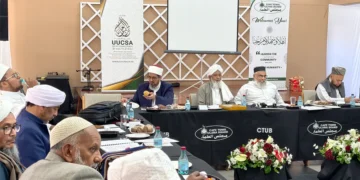
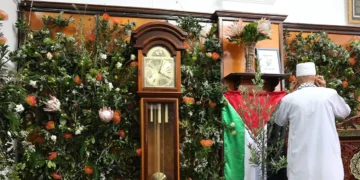
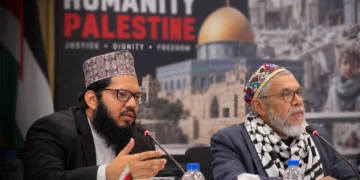
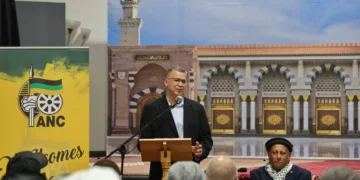
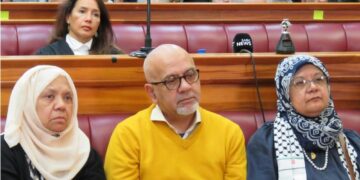
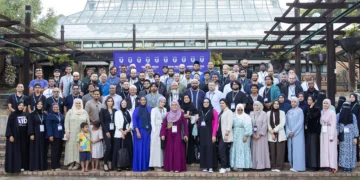
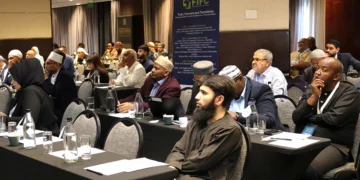
The Cape Town Ulama Board hosted a diplomatic briefing with the Iranian Ambassador to South Africa on Wednesday, March 18, at the Cape Heritage Museum in the Castle of Good Hope.
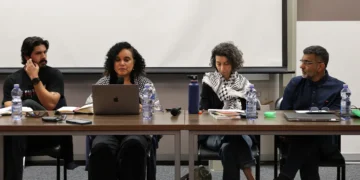
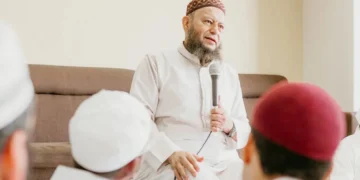
Mansoor Shakibmehr addressed the audience, which included religious leaders, political party representatives and members of the media, on the ongoing joint United States-Israel attacks on the Islamic Republic of Iran.
Ambassador Shakibmehr began by condemning what he described as a ‘dangerous and unprecedented violation of international law’, following the assassination of Iranian leader Ayatollah Ali Khamenei.
He explained that, under international law, heads of state are considered protected and untouchable and that targeting them weakens the foundations of sovereign equality and sets a dangerous precedent that could destabilise the international system.
‘The assassination of the leader of the Islamic Republic of Iran, by the United States and Zionist regime, is a dangerous and unprecedented violation of international laws,’ he said.
Thereafter, Ambassador Shakibmehr reflected on the legacy of the former leader, describing him as both a committed politician and a deeply respected religious scholar. He praised his humility and dedication to the Iranian people.
The ambassador described the current US-Israel military actions as aggressive and illegal, noting they occurred while Iran was engaged in diplomatic efforts to de-escalate tensions. He emphasised that these attacks have not only political but humanitarian consequences, citing civilian casualties.
‘In the city of Minab in southern Iran, a girl’s elementary school was almost completely destroyed and nearly 170 children lost their lives. This terrible crime against children shocks the conscience of humanity and is a symbol of dangerous disregard for the fundamental principles of international humanitarian law. Killing civilians, especially children, is not only a violation of international law, but also a breach of human ethics.’
Photographs of the victims were shown to the audience, a stark reminder of the human cost of war.
The ambassador has consistently defended Iran’s actions as self-defence under international law. During the briefing, he reiterated that Iran is not and has never been the initiator of war.
‘The Islamic Republic of Iran emphasises its inherent and legal right to self-defence under Article 51 of the United Nations Charter.’
He emphasised that exercising this right is not for revenge, but within the framework of international law to protect national security and sovereignty, and that Iran’s military responses target solely US and Israeli assets, not neighbouring countries.
‘These are our inherent rights,’ he stated.
Addressing sectarian divisions within Islam, Ambassador Shakibmehr said these differences should not take precedence during times of crisis.
‘Religious leaders and scholars, Allah has placed a heavy responsibility on your shoulders. People listen carefully to your words. It’s your duty to convey the truth to the people. You know better than anyone that all religions and schools of thought emphasise following truth and justice. Do not let Western media stories cover the eyes and hearts of those seeking the truth.
‘True friends are those who help us in times of need. Prayers are valuable, but today more than ever, we need action and practical solidarity to show truth to the world. It is our responsibility to defend truth and justice.’

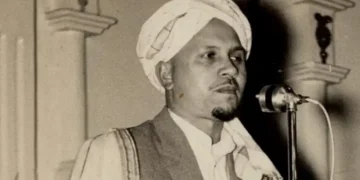
In his address to the gathering, Shaykh Ighsaan Taliep said that people weaponised sectarian differences, which are often exploited in times of conflict.
‘The weaponising of sectarian differences, or rather differences into sectarianism within religion, are things that come out of the playbooks of the pharaohs of this world.’
He emphasised that while disagreements of policies, including those of governments such as Iran, may exist, when human life is at threat, people must unite.
‘We may be prepared to have disagreements in terms of certain ways of how we view certain policies, being perpetrated or being upheld and maintained by governments, including the Islamic Republic of Iran. But when it comes to the overarching existential questions of the threat against the lives of human beings being mass exterminated in the way that it has always occurred throughout history, then I think we are very clear where we need to stand.
‘We need to stand as part of the axis of resistance against oppression, against colonisation, and against white supremacy.’
Shaykh Ighsaan stressed the importance of unity, noting that solidarity in support of justice is what should unite people. He highlighted the Sunni-Shia question as a critical issue.
‘The Sunni-Shia question is something that is an elephant in the room and needs to be addressed. I think we need to address it head on.’

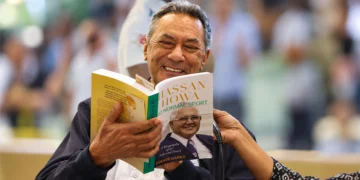
The co-ordinator of the Palestine Solidarity Campaign (PSC), Professor Usuf Chikte, speaking to Muslim Views after the event, echoed the ambassador’s views on the attempts by the mainstream media to cause division. He believes that in the past the media may have fooled and divided ordinary people but today, due in no small part to social media, that is not the case.
‘The illegal and barbaric attack by the United States and Israel has united people across the world, and across the Muslim communities as well. They have set aside the divisions and seen the illegal aggression for what it is.’
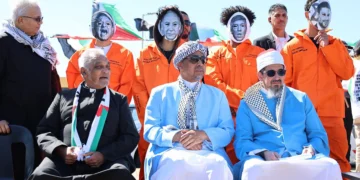
He added that recent marches in South Africa have drawn support from across faiths, not only within the Muslim community, but also Christian and Jewish communities, standing together against oppression.
Leader of the Opposition in the Western Cape Legislature, ANC MPL Muhammad Khalid Sayed, described the current conflict as an ‘unprovoked war’ against Iran.
‘It is a war of aggression to try and undermine Iran’s sovereignty and to weaken Iran so that it can no longer play the role of being in the vanguard of the struggle for Palestine.’
You may also want to read


He added that in terms of the sectarian division, the war had served to unite people beyond the Muslim community.
‘What we have started to see with the US-Israeli imposed war on Iran, is that broadly speaking, the progressive movements, people from different faiths and religious groups have come together in solidarity with the people of Iran.’
One notable moment within the briefing occurred when the ambassador insisted that Iran is to be referred to as part of West Asia, not ‘Middle East’. He argued that using the latter term distorts understanding of the geopolitical landscape.
In his closing remarks, he expressed appreciation for South Africa’s steadfast support, including media, parliamentarians, political parties and ordinary citizens for their understanding and response towards the conflict.
Ambassador Shakibmehr ended with a reminder from Prophet Muhammad (SAW): ‘Whoever wakes up in the morning and does not care about the affairs of Muslims, is not a Muslim.’ (Hadith)


