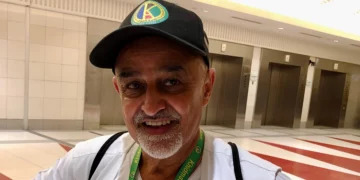
















MOOSA KAPREY : November 1, 1943 – 19 October 2026
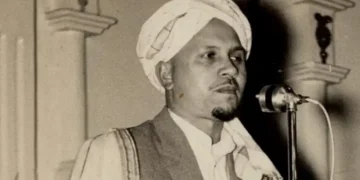
Anti-Apartheid activist and community leader Moosa Kaprey was remembered as a man whose life embodied service, justice and unwavering principle during a tribute hosted by the ANC Robert Waterwitch Thornhill branch.
By FARID SAYED
From his teenage involvement in the Habibia Siddiqui Brigade, to establishing a local Belmore football club, helping lead resistance to Apartheid education, serving in the ANC and championing safer communities on the Cape Flats in the democratic era, Moosa Kaprey lived a life rooted in service.
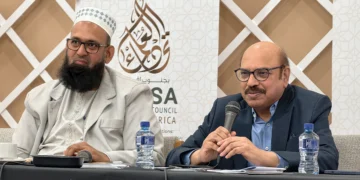
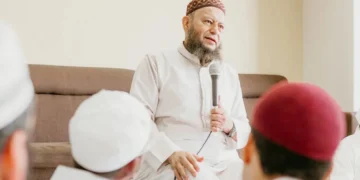
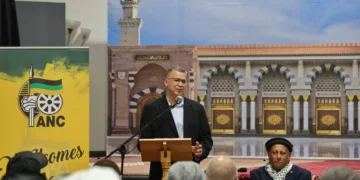
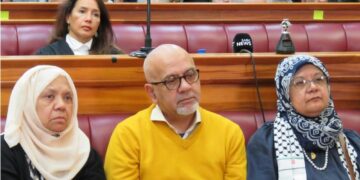
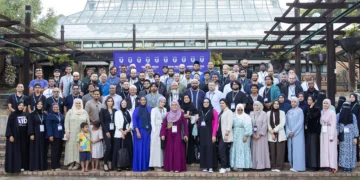
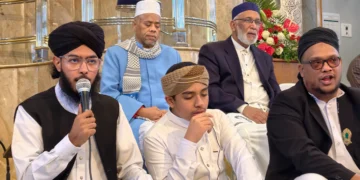
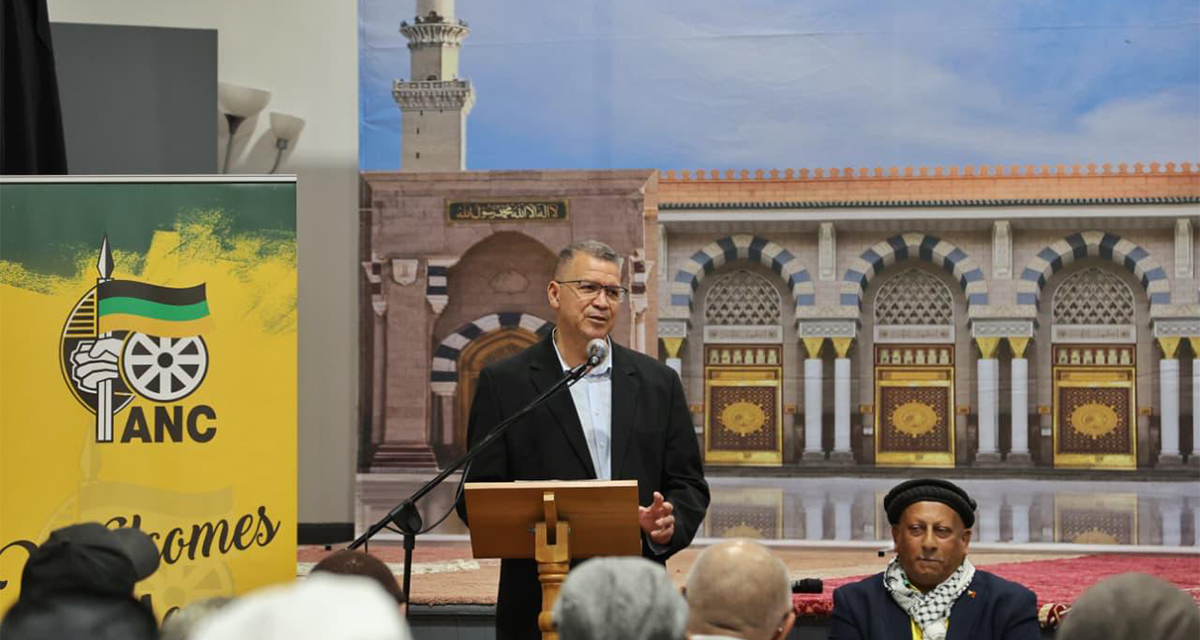
Those many strands of activism were woven together during a tribute hosted on October 26 at Madina Institute in Belgravia by the African National Congress (ANC) Robert Waterwitch Thornhill branch, where family members, comrades, community activists and political leaders gathered to honour his legacy.
The programme was directed by Majid Mowzer of the ANC Robert Waterwitch Thornhill branch, while branch chairperson Faldiela de Vries welcomed guests and reflected on Kaprey’s enduring contribution to community life and political activism.
Although speakers approached Kaprey’s life from different perspectives, a common portrait emerged: that of a principled leader, mentor and servant of the people who remained committed to justice throughout his life.
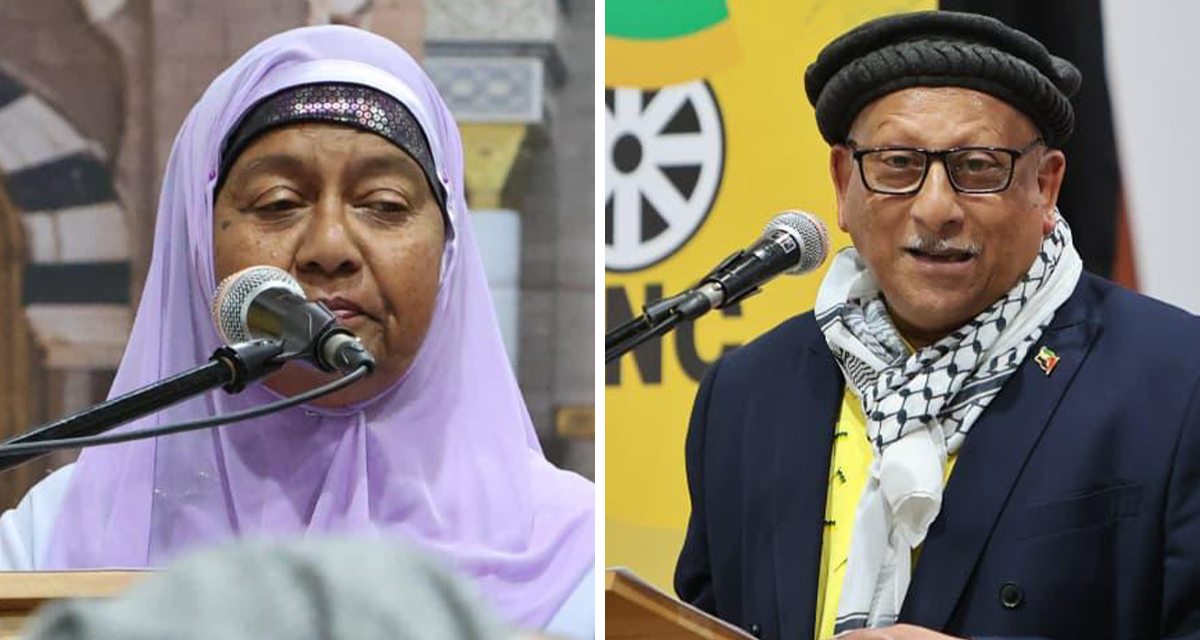
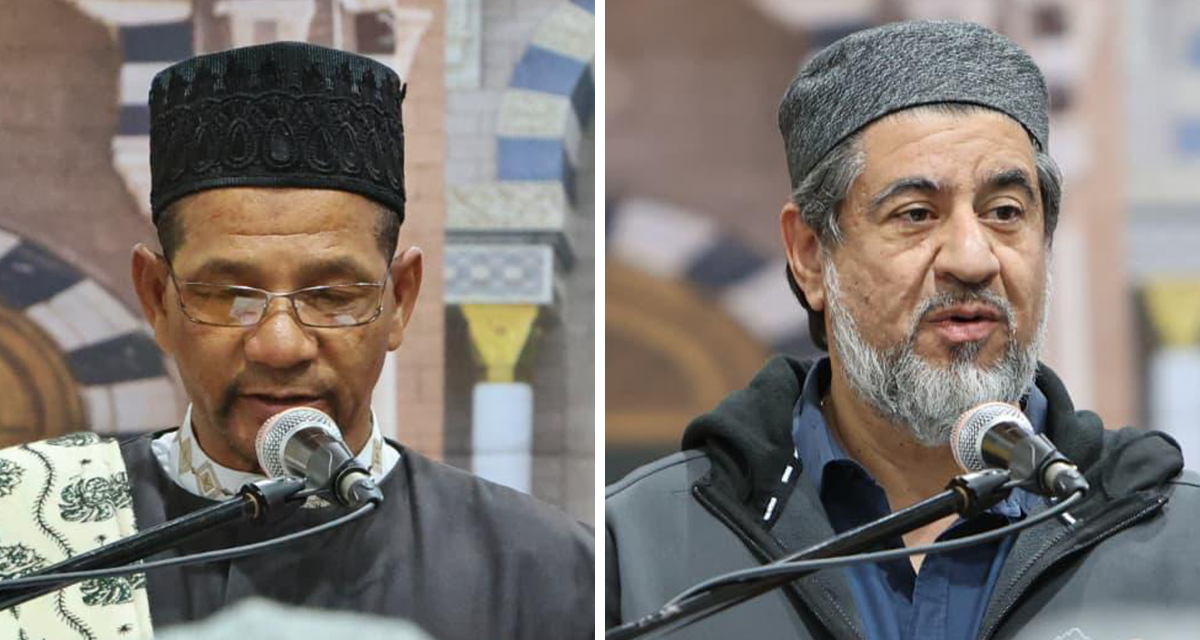
After an opening prayer by Shaikh Ebrahim Cloete and a message from the imam of Masjidul-Quds in Gatesville, Shaikh Abdurahman Alexander, the first tribute was delivered by veteran activist Saleem Mowzer. He who worked closely with Kaprey during some of the most turbulent years of the liberation struggle.
For Mowzer, it was impossible to separate Kaprey’s legacy from the education struggles of the 1980s.
“Comrade Moosa Kaprey was at the centre of these education struggles as Chairperson of the National Education Crisis Committee (NECC) in the Western Cape.”
The NECC became one of the foremost structures opposing Apartheid education and mobilising communities around the demand for a democratic education system. As chairperson of the organisation in the Western Cape, Kaprey helped unite students, teachers, parents and community organisations in what became one of the defining struggles of the anti-Apartheid movement.
Mowzer recalled a leader who believed education was inseparable from liberation.
In working alongside young activists, Kaprey understood that political change required cultivating future leaders.
“Comrade Moosa played a father-figure role to our emerging students and youth leaders,” Mowzer said.
Many of those young activists would later emerge as leaders in democratic South Africa, carrying forward lessons learnt under Kaprey’s guidance. His leadership style, Mowzer recalled, was characterised by direct involvement rather than distant oversight.
“Comrade Moosa led from the front.”
Whether organising meetings, supporting campaigns, arranging transport for rallies or assisting families affected by political repression, Kaprey consistently immersed himself in the daily realities of struggle.
Mowzer paid particular attention to Kaprey’s commitment to unity.
“One of his greatest strengths was his firm belief in a non-racial, non-sexist and democratic South Africa.”
At a time when Apartheid policies deliberately divided South Africans along racial lines, Kaprey worked tirelessly to build alliances across communities.
According to Mowzer, those principles did not disappear with the advent of democracy.
“Comrade Moosa continued to play an active role in community service.”
Even after liberation, Kaprey remained deeply involved in tackling community problems, particularly crime, gangsterism and social disintegration on the Cape Flats.
If Mowzer presented Kaprey the activist and organiser, the next tribute revealed the man behind the public figure.
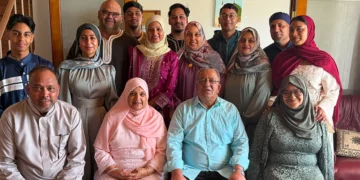
In an emotional address, his daughter, Tasleema Latief, spoke about growing up in a household where service to the community was not merely encouraged but lived every day.
She began by recognising the sacrifices made by her mother, Shireen Kaprey, and countless spouses whose contributions to the struggle often went unnoticed.
“The struggle had its heroes in the streets, but it also had them at home. And history must never forget them.”
For many activist families, political commitment came at a tremendous personal cost. Homes became meeting places, safe houses and organising centres.
The Kaprey household was no exception.
“My father, Haji Moosa Kaprey, was a freedom fighter. He was an activist. He was a comrade, a community leader, a son, a brother, husband, father and a friend to so many.”
Latief recalled a home whose doors remained open to comrades and community members.
“It was a safe house for those who were on the run. It was a meeting place for comrades organising against Apartheid.”
While others may have seen a political activist, she remembered a father whose values shaped the lives of those closest to him.
“We learnt about compassion. We learnt about resilience. We learnt about responsibility. We learnt that we have a duty to humanity.”
Those values, she said, remain among her father’s greatest gifts to his family.
Reflecting on the many tributes that followed his passing, Latief noted that a life of service acquires new meaning after death.
“One of the most beautiful things about a life of service is that, when the person is no longer with us, the testimony of that life begins to speak through others.”
Her remarks resonated strongly with the audience, many of whom had gathered precisely because of the impact Kaprey had made on their lives.
In one of the most memorable reflections of the evening, she said:
“The greatest measure of a human being is not what they take from this world, but what they give to it.”

That sentiment was echoed in a message from veteran cleric and struggle stalwart Rev Dr Allan Boesak, read on his behalf by Kaprey’s eldest daughter, Shanaaz Sonday.
Boesak’s tribute placed Kaprey within the broader history of the liberation struggle and highlighted the esteem in which he was held by fellow activists.
He said Kaprey’s life constituted an enduring legacy for future generations and expressed gratitude for having known him as both comrade and friend.
Having shared decades of resistance, campaigns and sacrifice, Boesak described Kaprey as a man whose commitment never wavered.
“He embodied all of that. Truly. Faithfully. Consistently. And with unshakeable integrity.”
Boesak recalled working alongside Kaprey during difficult years marked by detention, repression and political uncertainty.
Yet his memories were defined not by hardship alone, but by Kaprey’s steadfast character.
In one of the strongest endorsements offered throughout the evening, Boesak declared:
“The struggle would have been so much less without him.”
The statement underscored the often-unheralded role played by grassroots organisers whose names seldom occupy the centre of historical narratives, yet whose labour sustained the movement.
Boesak reserved his most powerful words for the conclusion of his tribute.
“The struggle was not only in his heart, and his heart in the struggle. He was the heart of the struggle.”
The phrase lingered in the room.
For many present, it captured the essence of a man whose life was inseparable from the causes he championed.
Speaking as one from a generation that emerged in the post-Apartheid era, ANC Western Cape Leader of the Opposition Khalid Sayed, offered a perspective that combined politics, faith and personal friendship.
While acknowledging Kaprey’s many contributions to the liberation movement and the ANC, Sayed focused on the guidance and support he received from him over the years.
You may also want to read



“He was a shoulder to cry on and a steady source of wisdom.”
Sayed described Kaprey as a trusted mentor whose advice carried weight precisely because it was grounded in experience and principle.
According to Sayed, Kaprey’s Muslim faith was not something separate from his activism.
“His faith was not merely a private conviction, but a moral foundation that shaped his understanding of justice, compassion, human dignity and service.”
Those values found expression in everything from his anti-Apartheid work to his community activism and anti-crime initiatives.
Sayed also reflected on one of his final conversations with Kaprey about the state of the ANC.
Despite acknowledging the challenges facing the organisation, Kaprey remained committed to its renewal.
“Yes, the ANC has its challenges, but let’s build the ANC. It is still the vehicle, the best vehicle for the emancipation of our people.”
For Sayed, the comment reflected a man who remained hopeful even when confronted by disappointment.
Concluding his tribute, he broadened the significance of Kaprey’s life beyond politics.
“South Africa, beyond the ANC and any political organisation, needs dedicated, unsung heroes like Comrade Moosa.”
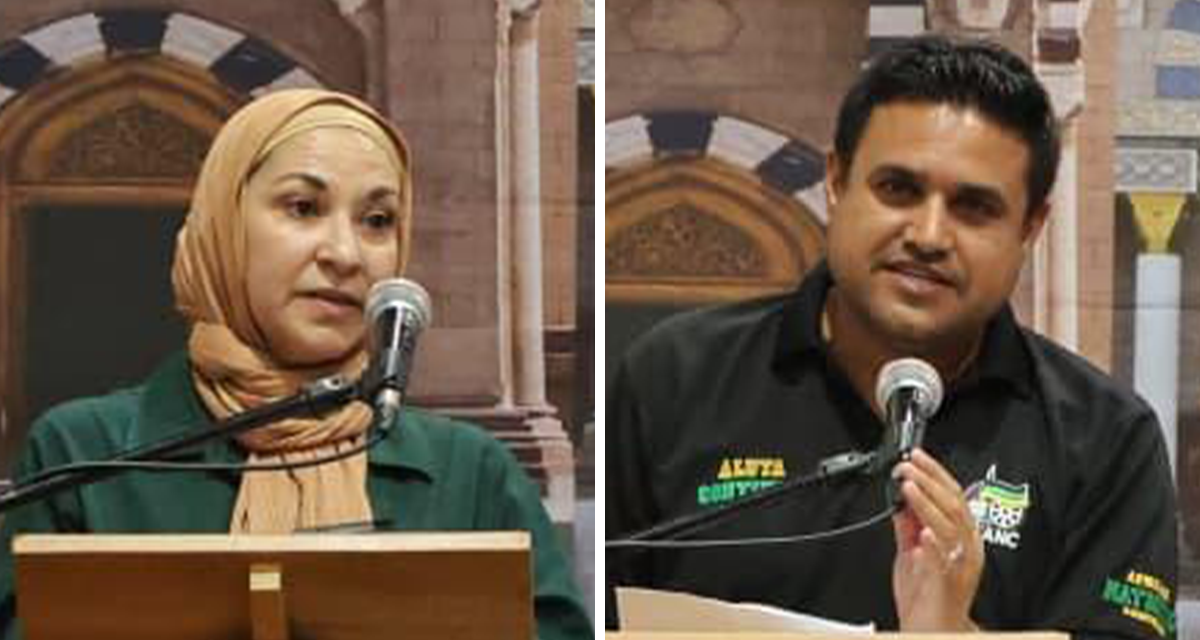
By the time keynote speaker Prof Irvin Kinnes took to the podium, the audience had already heard Kaprey described as an activist, mentor, father, friend, community leader and servant of the people.
Kinnes drew those threads together into a single idea.
“Moosa Kaprey was a real comrade with a capital C.”
The phrase immediately resonated with the audience and arguably became the defining description of the evening.
For Kinnes, comradeship was not merely a political label.
“A real comrade is someone who knows what it means to be free… someone who instinctively knows that they cannot truly be free without everyone being free.”
That understanding, he argued, was evident throughout Kaprey’s life.
Kinnes noted: “Moosa Kaprey understood that we can never be free when others still suffer from violence, when others still suffer from fear and when all our children, and mothers and sisters are held hostage by gangsters and drug dealers. That is why, after all that he had been through: from the Athlone Action People’s Action Committee, the National Education Crisis Committee, the Detainees Parents Support Committee, the United Democratic Front, the Mass Democratic Movement, the Athlone Community Police Forum, to the Western Cape Anti-Crime Forum, Comrade Moosa consistently placed public interests above personal ambition.”
Kinnes recalled formally meeting Kaprey through the Athlone Community Police Forum in 1995 and later working closely with him in the Western Cape Anti-Crime Forum (WCACF). He described Kaprey as one of the organisation’s most reliable and committed executive members, someone who was unafraid to challenge colleagues when necessary but always did so in pursuit of principled leadership and organisational accountability.
“I have never met a man such as Moosa,” he said. “He was a servant leader.”
Kinnes first encountered Kaprey through community policing structures in the mid-1990s and later worked with him in the Western Cape Anti-Crime Forum.
Those experiences allowed him to witness another important dimension of Kaprey’s activism.
“He was one of the first people to recognise that we have to fight hard to build people’s power through making our communities safer.”
Long before crime became one of South Africa’s defining social challenges, Kaprey understood the devastating impact violence had on ordinary communities. His response was not simply to criticise institutions but to organise people.
As Kinnes recounted numerous campaigns and initiatives, another characteristic emerged.
“Moosa Kaprey was a measured man.”
He listened before speaking, sought consensus where possible and resisted unnecessary conflict.
“He was always urging us to work together and unite.”
Those qualities enabled him to build relationships across different communities, organisations and political traditions.
Kinnes also offered one of the evening’s most poignant reflections. He recalled Kaprey’s distress when confronted by allegations of misconduct and governance failures within structures he served.
“It broke him. I have never seen such a principled person lament the absolute lies and the fact that he was even prevented from delivering his annual report when he wanted to reveal irregularities.”
The story revealed a side of Kaprey often overlooked: a man whose commitment to accountability was as strong as his commitment to activism. For Kinnes, that integrity remained one of his defining qualities.
As he brought his keynote address to a close, he turned to the words of revolutionary thinker Amílcar Cabral. The quotation, he said, reflected the principles by which Kaprey had lived: “Hide nothing from the masses of our people. Tell no lies. Expose lies whenever they are told.”
By then, the portrait painted throughout the evening was complete.
The activist remembered by Saleem Mowzer, the father described by Tasleema Latief, the comrade honoured by Allan Boesak, the mentor celebrated by Khalid Sayed and the servant leader praised by Prof Irvin Kinnes were all the same man.
Moosa Kaprey’s legacy lives not only in the organisations he helped build or the struggles he helped lead, but also in the values repeatedly associated with him throughout the evening: integrity, courage, humility, justice, unity and service.
For those gathered in tribute, that is why he remains, in the words of Prof Kinnes, “a comrade with a capital C”.

Photos: Rehad Rahim