























The Cape Town Ulama Board’s recognition of the Habibia Soofie Saheb Complex offers an opportunity to examine how scholarship, Sufism and wasatiyyah continue to shape one of South Africa’s most enduring Islamic institutions.
SAYED RIDHWAAN MOHAMED
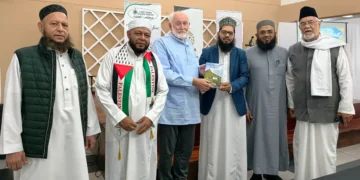
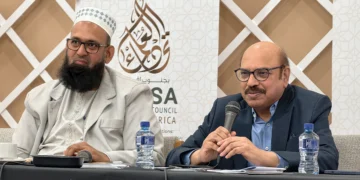
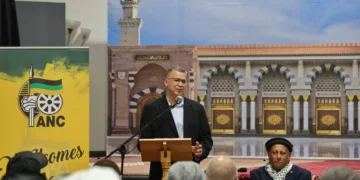
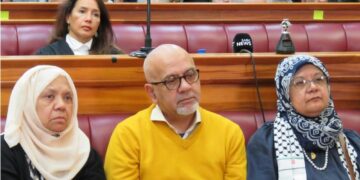
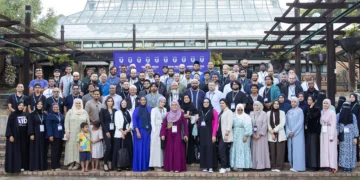
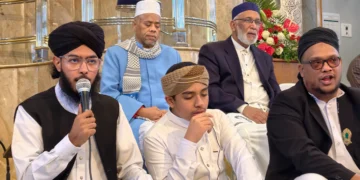
On November 1, 2026, the United Ulama Council of South Africa (UUCSA) hosted the ‘Awliya of the Cape’ research and educational outreach session, where the Cape Town Ulama Board presented the Shield of Tradition to the Habibia Soofie Saheb Masjid complex in Cape Town, received by Dr Moulana Mohammed Luqmaan Kagee.
This article investigates the sociological and theological mechanics of this recognition. By examining Dr Kagee’s published research on Islamic tolerance alongside the historical evolution of the waqf located in Rylands Estate – and still popularly referred to as Doornhoogte – we demonstrate how Habibia functions as an exemplar of wasatiyyah (the balanced Islamic middle path), an institutional framework that synthesises classical Sufi metaphysics with modern civic welfare (khidmah).
Tradition as an active dynamic
In contemporary South African Islamic discourse, traditionalism is frequently mischaracterised by detractors as either an antiquarian veneration of shrines or an insular devotional quietism. However, the conferral of the Cape Town Ulama Board’s Shield of Tradition upon the Habibia Soofie Saheb Complex, presented jointly by Moulana Sayed Imraan Shah Ziyaee, Deputy President of the Sunni Ulama Council Cape, and Moulana Abdul Khaliq Allie, President of UUCSA, illustrates an alternative paradigm.
The presentation citation formally honoured “decades spent educating the community and upholding the flag of Sufism in Cape Town. Your station remains an important link in the sacred chains of the Tariqah.”
The significance of this commendation lies in its structural implication: the preservation of a sacred chain (silsilah) is not measured solely by esoteric genealogy, but by sustained public service, educational infrastructure, and doctrinal equilibrium (wasatiyyah).
Doctrinal framework: Dr Luqmaan Kagee and the Chishti ethic of cohesion
The institutional trajectory of Habibia is articulated in the academic output of its resident leadership.
In his foundational treatise, The Concept of Tolerance in Islam (2021), Dr Mohammed Luqmaan Kagee re-evaluates the classical sources of Islamic legislation to formulate a theory of communal engagement. Analysing the sociopolitical architecture of the Charter of Madinah (Dustūr al-Madīnah), Kagee posits that Islamic orthodoxy rests upon two non-negotiable, co-equal pillars: servitude to the Creator (‘ibādah) and proactive service to His creation (khidmah) (Kagee, 2021).
Kagee rigorously critiques modern conceptions of tolerance that reduce the virtue to passive forbearance or indifference. Instead, drawing upon Abu Hamid al-Ghazali’s The Alchemy of Happiness, he elevates tolerance to an ontological and spiritual necessity: “Know that the world is one stage of the stages of the journey to God Most High. All in this station are travellers. Since the destination of journey of this caravan of travellers is the same, they are all as one. There must be friendship and unity among them and mutual aid” (al-Ghazali, cited in Kagee, 2021).
This metaphysical posture explains why the Chishti Sufi tariqah, throughout its development from Khwaja Mu‘in al-Din Chishti to its South African expressions, systematically prioritised non-violence, the remediation of social inequity, and universal benevolence (sulh-i kul) (Haeri, 2000; Kagee, 2021). Under Dr Kagee’s direction as Principal of the Habibia Soofie Madressa, this pedagogical vision translates into a conscious institutional rejection of ideological extremism, anchoring the complex in mainstream Sunni wasatiyyah.
The tripartite institutional model: Land, learning, and care
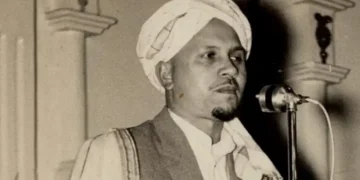
The contemporary efficacy of Habibia cannot be understood in isolation from its institutional design. When Hazrat Ghulam Muhammad Soofie Saheb (1850-1911) and his appointed Khalifa, Moulana ‘Abd al-Latif al-Siddiqi (1860-1916), inaugurated the Doornhoogte project in 1905, they implemented an integrated institutional model consisting of three interdependent spheres (Da Costa & Davids, 1994; Morton, 2025):
- Pedagogical expansion: Established initially to preserve Islamic identity and provide linguistic stability through Urdu instruction for subcontinental families, the institution rapidly integrated into the broader Cape community (Morton, 2025). Today, its primary and secondary school establishments, alongside theological seminars, educate a wide cross-section of youths across the Cape Flats.
- Institutionalised khidmah: Departing from purely ceremonial Sufism, the complex permanently instituted an orphanage, an old age home, and emergency relief provisions (Morton, 2025). This practice concretised the foundational Chishti ethos of personally safeguarding the vulnerable, an ethic observed in early documentation of the founders attending to orphaned charges during the night (Habib, 1989, as cited in Morton, 2025).
- Cross-madhab ecumenism: The historic alliance formed during the 1906 mosque opening, wherein the inaugural Friday sermon was delivered by the Shafi’i luminary Shaykh Muhammad Salih Hendricks of the Azzawia, established a lasting precedent of jurisdictional cooperation (Morton, 2025). Rather than fostering factionalism, Habibia emerged as a common civic sanctuary.
Liturgical grounding: The anchor of continuity
You may also want to read


The Shield of Tradition explicitly honours the survival of the tariqah network. Historically, Moulana ‘Abd al-Latif sustained a demanding spiritual discipline: daily Qur’anic recitations, the Chishti silsilah, 1 200 post-Dhuhr prophetic salutations (salawat), and weekly assemblies of the Khatm al-Khwajagan and Imam al-Jazuli’s Dala’il al-Khayrat (Morton, 2025). Significantly, he integrated Ba ‘Alawi litanies, Ratib al-Haddad and Ratib al-‘Aydarus, and the regular recitation of Mevlana Jalal ad-Din Rumi’s Persian Mathnawi-i Ma’nawi, establishing a unique regional synthesis of Chishti, Qadiri, and Hadrami devotional traditions (Morton, 2025).
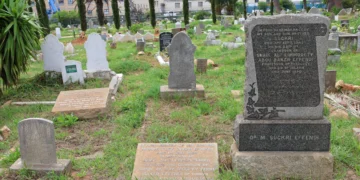
This liturgical anchor remains visible today at the kramat of Moulana ‘Abd al-Latif, positioned within the complex grounds (Morton, 2025). It operates not as an inert memorial, but as the contemplative core from which the institution’s educational and charitable endeavours draw their moral impetus.
The Cape Town Ulama Board’s conferral of the Shield of Tradition upon the Habibia Soofie Saheb Complex recognises an institutional ecosystem that has successfully resisted theological reductionism and temporal decay.
Under the scholarly stewardship of Dr Moulana Mohammed Luqmaan Kagee and fellow mainstream ulama, Habibia proves that traditional tasawwuf is fundamentally aligned with intellectual rigour, inter-communal tolerance, and dedicated civic welfare. The complex stands as a living demonstration that the sacred chains of the past remain the strongest pillars for community resilience in the modern world.
Sustaining the sacred trust (amānah)
In a modern socio-religious landscape often strained by polarisation, literalist revisionism, and communal apathy, Habibia stands as tangible evidence that classical tasawwuf is not a disengaged, quietist relic of the past, but a vibrant intellectual discipline rooted in orthodox jurisprudence, scholarly rigour, and ethical public life.
The institution continues to embody the holistic vision charted by Hazrat Soofie Saheb and Moulana ‘Abd al-Latif over a century ago. By deliberately linking interior purification (tazkiyah) to outward civic responsibility (khidmah), Dr Kagee’s leadership actualises the prophetic principles of the Charter of Madinah and the ethical maxims of Imam al-Ghazali, proving that profound mystical awareness naturally manifests as active inter-communal tolerance, pastoral empathy, and public compassion.
Moreover, Habibia’s enduring alliance between diverse traditions, from the recitation of the Persian Mathnawi and classical Hadrami rawātib to the shared pulpits uniting Hanafi and Shafi‘i scholarship, reinforces the principle of wasatiyyah (the balanced middle path) as the true bedrock of South African Muslim identity.
The complex remains a living sanctuary where devotional assembly, rigorous schooling, and social protection converge into an unbroken chain of service. Ultimately, this honour affirms that the spiritual lineages anchored at the Cape are not mere chapters in history books, but enduring pillars of resilience, moral clarity, and communal cohesion in an ever-shifting world.
References
- Da Costa, Y., & Davids, A. (1994). Pages from Cape Muslim History. Shuter & Shooter.
- Haeri, M. (2000). The Chishtis: A Living Light. Oxford University Press.
- Habib, M. (1989). Hazrat Soofie Saheb and His Khanqahs. Impress Printers (as cited in Morton, S., 2025: 299).
- Kagee, M. L. (2021). The Concept of Tolerance in Islam. Academia Letters, Article 2987. https://doi.org/10.20935/AL2987
- Morton, S. (2025). The Circle of the Saints: Stories of the Kramats at the Cape (1st ed.). National Awqaf Foundation of South Africa (Awqaf SA). ISBN: 978-1-037091-22-3.
Shaykh Sayed Ridhwaan Mohamed is a South African community journalist, researcher and Honours graduate in Islamic Studies. A steadfast advocate for humanitarian rights and global justice, he lends his expertise to numerous committees specialising in interfaith advocacy and the advocacy of human rights in Palestine and beyond. He currently serves on the executive committee of the Cape Town Ulama Board, is an Executive Member of the Sunni Ulama Council (Cape), and co-founder of the Ahlus Sunnah Media Network.