








































A new framework presented at the Foundation of Islamic Finance Conference argues that Shariah compliance alone is not enough. By applying the Maqāṣid al-Sharīʿah to investing, it seeks to align Muslim capital with deeper ethical responsibility.
By ANWAR OMAR
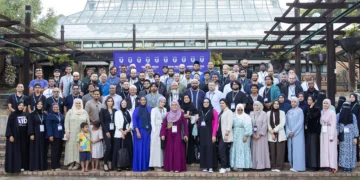
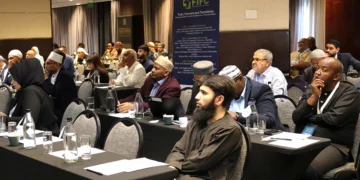
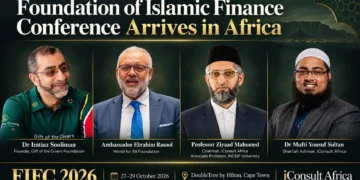
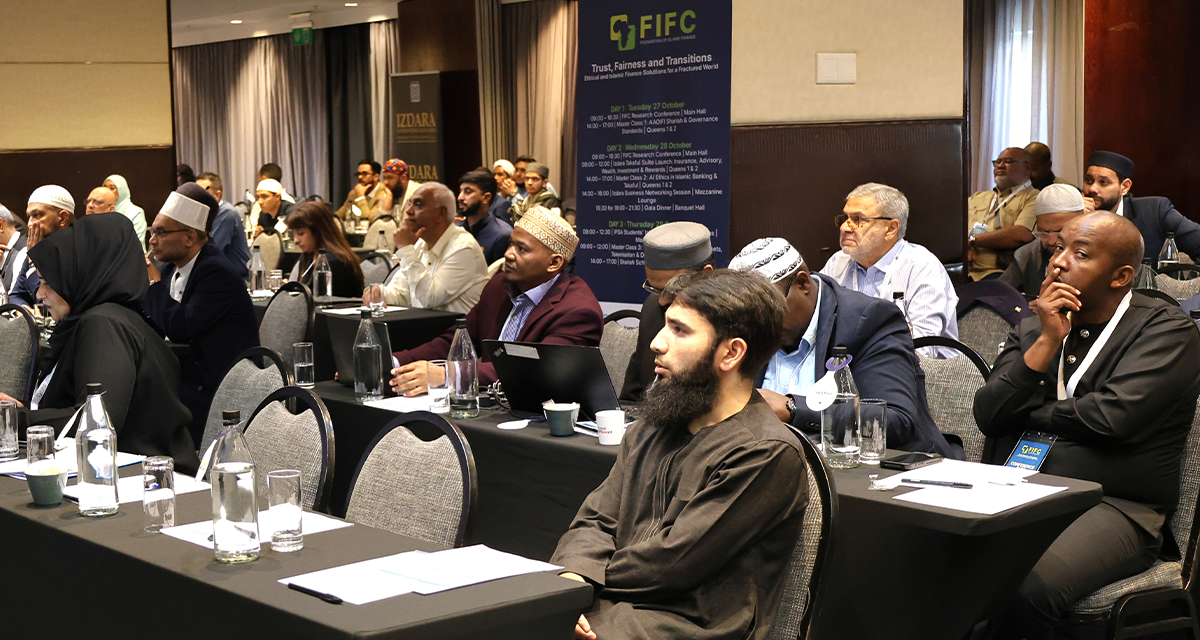
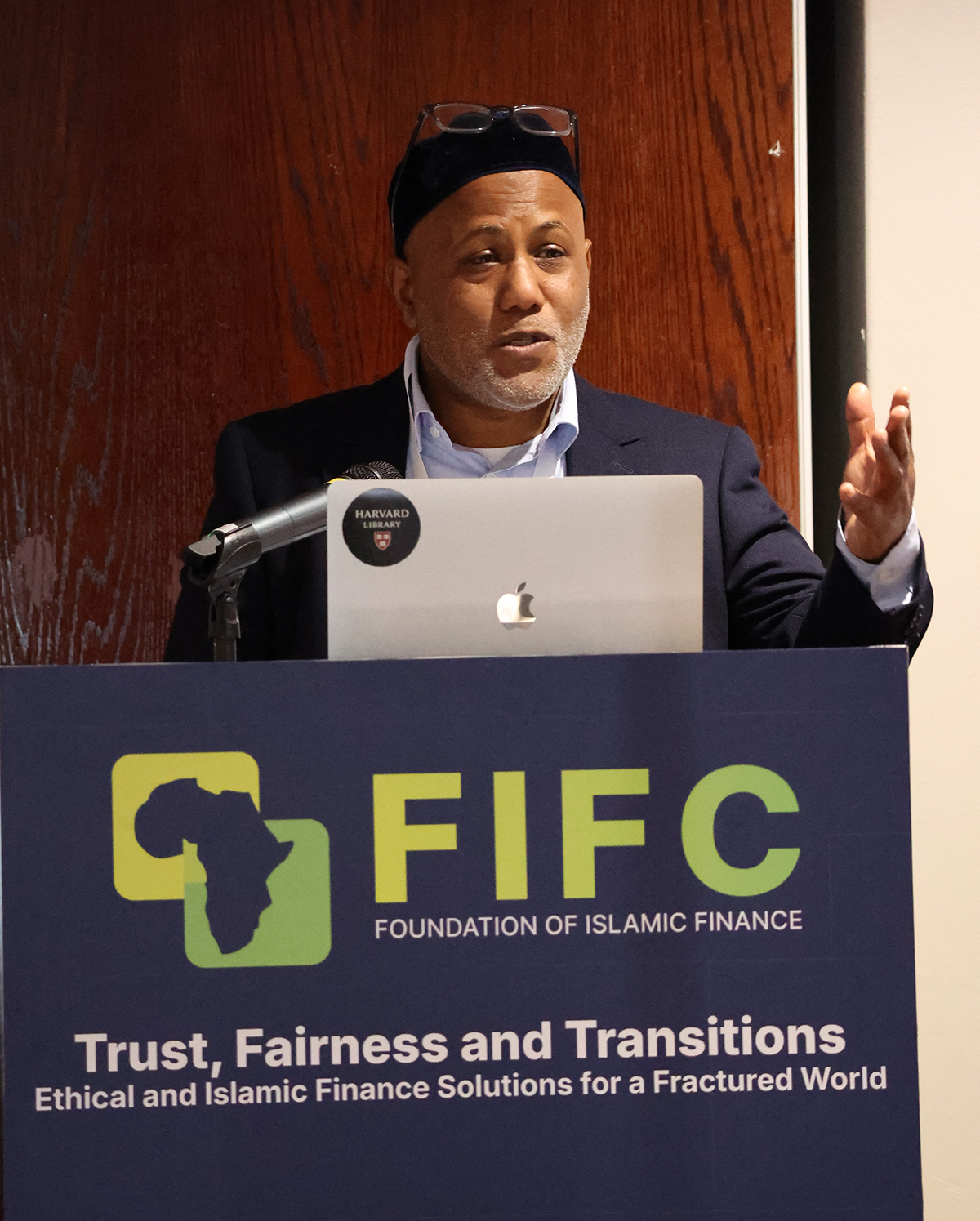
At the 14th Foundation of Islamic Finance Conference (FIFC) in Cape Town, delegates heard every company in HSBC’s Islamic Global Equity Index Fund passed the Shariah screen.
They include Palantir Technologies, which partnered with Israel’s Defence Ministry in January 2024 to support “war-related missions”. This year the HSBC fund, which underpins most UK halal pensions, bought about US$38 million of Palantir shares.
That gap between what Islamic finance certifies and what clients believe they are buying set the agenda for the opening day on October 27, 2026. The most developed response came from Dr Fatima Essop and Saliegh Salaam in “Beyond Compliance: A Maqāṣid-Aligned Stewardship Framework for Islamic Equity Investing”.

From eligibility to responsibility
Dr Essop presented two hypothetical companies, both passing the same Shariah screen, but one does far more good and far less harm than the other.
She asked whether investors should treat them the same and answered with an analogy. A building code sets the safety standards every building must meet but says nothing about how well the building serves the people inside it, or whether it uses energy efficiently. Shariah screening, she argued, works the same way.
In South Africa, eligibility is set by the standards of the Accounting and Auditing Organisation for Islamic Financial Institutions (AAOIFI), the Bahrain-based standard-setter for the global industry. Its business-activity screen assesses what a company does, and its financial-ratio screen applies thresholds on debt and interest. Together they determine what a Muslim investor may own, but not what that capital should protect or advance once invested.
Dr Essop explained that for savers who are told their pensions are funding a war, the issue goes beyond a portfolio statement: it touches conscience, identity and trust. Telling them the stock passed the screen addresses only the compliance issue. What they are really asking is what the fund is doing about the company’s conduct.
The framework she presented measures corporate adab, a company’s conduct towards people, society and the environment, against the five classical Maqāṣid al-Sharīʿah, the higher objectives of Islamic law: protection of faith, life, intellect, lineage and wealth.
The tip of the iceberg
Salaam moved the debate beyond Palantir, which he called “just the tip of the iceberg”. It sits in a passive, rules-based index fund and could be dismissed as an aberration. However, Microsoft is held in actively managed Shariah funds worldwide, passes the AAOIFI screen, and faces significant concerns over military AI and the mass surveillance of Palestinians.
In September 2025, Microsoft cut off some cloud and AI services to a unit of Israel’s Defence Ministry, after reports that military intelligence Unit 8200 had used its Azure platform to store mass-surveillance data on Palestinians. Its broader commercial relationship with the Israeli military continues. A July 2025 report by UN Special Rapporteur Francesca Albanese named Microsoft, Alphabet, Amazon, IBM and Palantir among companies she said were embedded in an “economy of genocide”.
From a Maqāṣid perspective, Salaam said, the preservation of life comes first. Investors need to know what safeguards are in place, and what evidence shows they work.
He argued that once eligibility is determined, the Shariah board should implement a stewardship policy and ensure that it works.
A gap between compliant companies
The presenters rated 1 441 listed companies worldwide, all of which already passed the AAOIFI screen. Corporate evidence was mapped onto the five Maqāṣid. Air-emissions data, for example, feeds the scores for preservation of life and progeny. Business-involvement flags drawn from United Nations and Human Rights Watch datasets, and UN lists of companies active in “questionable” jurisdictions, adjust the scores further.
The results showed how much the Shariah screen missed. About 54% of companies scored an A for alignment with the Maqāṣid, 38% scored average, and roughly 7% were flagged as a material concern. All were Shariah compliant, yet in Salaam’s words there was “an ocean between” them.
An alternative yardstick
Salaam argued that this is not simply environmental, social and governance (ESG) investing with an Islamic label. Sustainalytics, a leading ESG rater, scores Broadcom as average and Microsoft as exceptionally good. The Maqāṣid rating reverses the order: Broadcom aligns strongly, while Microsoft aligns only averagely. The difference, he said, is the point of reference: ESG uses its own categories; the Maqāṣid rating uses Islamic ethical values.
You may also want to read





The rating then guides shareholders. Under jalb al-maṣāliḥ (securing benefit), they should back Broadcom, whose emissions have fallen about 40% in four or five years. Under darʾ al-mafāsid (repelling harm), they should press Microsoft’s management to stop enabling AI surveillance.
Salaam pointed out that the industry has asked only: “May we own it?” The Maqāṣid framework asks: “Once you own it, what is your Islamic and ethical responsibility?”
Minimum standard, maximum expectation
Dr Essop highlighted that the paper’s purpose is to move beyond the permissible towards iḥsān, excellence; putting substance ahead of form.
For Salaam, this is where the trust gap lies. Scholars certify a minimum standard of eligibility, but clients who hear “Shariah compliant” assume a maximum.
Asked whether Microsoft should be sold, he was circumspect. The framework neither overrules the Shariah board nor adds a compliance label. A manager may still hold Microsoft but must use shareholder rights to challenge what the framework flags, with the Shariah board checking this happens. Another may decline to hold it.
For the presenters, Shariah compliance establishes the floor, whereas excellence keeps it from becoming the destination.
Analysis: who designs the building?
“Beyond Compliance” is an advance on pass-or-fail screening: its rating is transparent, its evidence traceable, and it gives Shariah boards and fund managers a framework for engagement. But its structure is narrower than its ambition.
It rests on the five classical essentials of Maqāṣid al-Sharīʿah, based on roughly 500 normative Qurʾanic verses. The presenters closed with a verse combining justice (ʿadl) and excellence (iḥsān), the language of the Qurʾan’s wider objectives, yet their framework uses only the narrower Maqāṣid al-Sharīʿah legal framework.
Contemporary Maqāṣid thought has shifted from preservationist apologetics to an open, systemic paradigm. Its deliberative trajectory is conservative and justificatory and uses the Maqāṣid to defend rulings already made. Its managerial trajectory is creative and reform-minded, and uses them to design law and policy, extending the objectives to society, the environment, humanity at large, peace (salām), trust (amānah) and civilisational renewal. It is better suited to policy reform, especially financial reform.
Measured against it, “Beyond Compliance” remains largely deliberative: it accepts the AAOIFI screen as given, grades what has passed it, and adds engagement on top of it.
The presenters’ circumspection, respecting the Shariah board’s authority over eligibility, is deliberate and defensible as a first step. But if compliance is the building code, someone has to design the building. To close the trust gap, the Maqāṣid must shape not only how Muslim capital behaves once it owns, but what it chooses to fund from the outset.
The proposed approach is retroactive: shares are screened and bought, and only then assessed. A managerial approach is transformative from the foundation, bringing the Maqāṣid into portfolio construction before shares are acquired. Applied from the outset, it would have made the Palantir holding an allocation decision, not a stewardship problem managed in retrospect.