







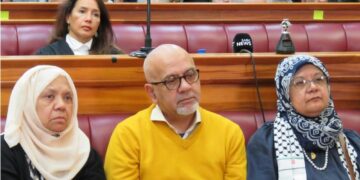
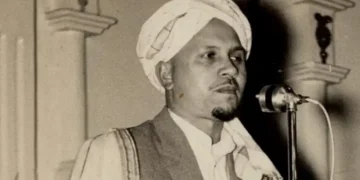


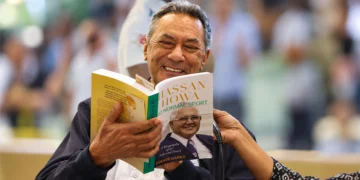

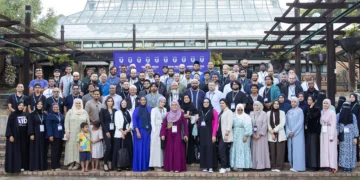








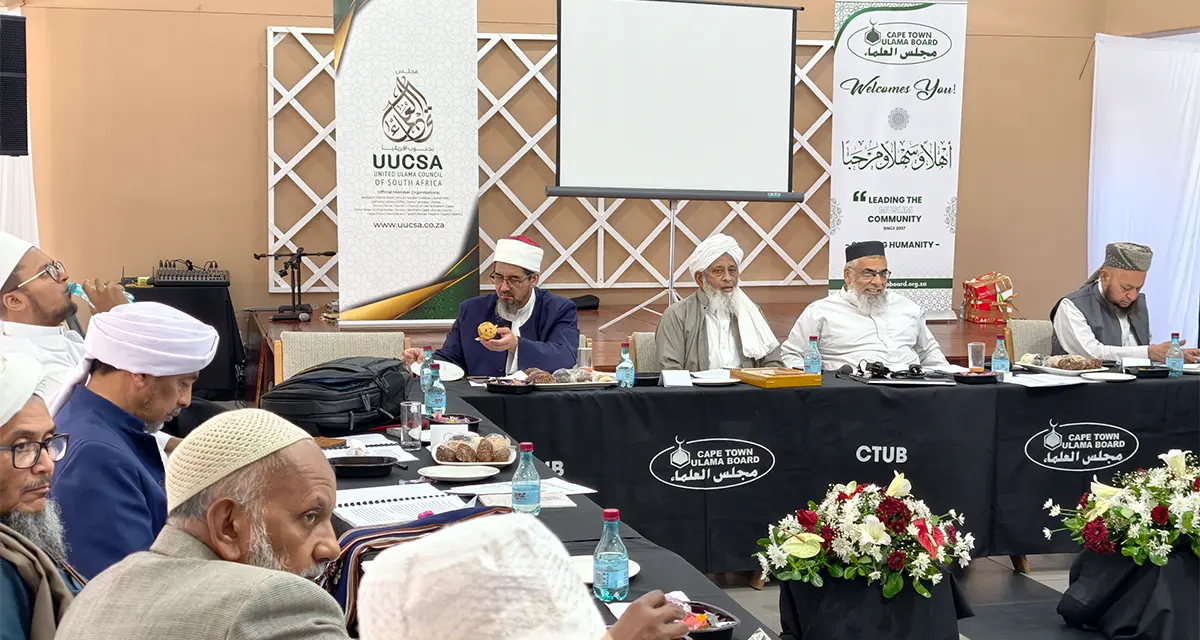
The United Ulama Council of South Africa (UUCSA) concluded its triennial elective AGM in Cape Town, re-electing its leadership while advancing discussions on civic engagement, Islamic finance, digital challenges and the preservation of Muslim heritage.
By SAYED RIDHWAAN MOHAMED
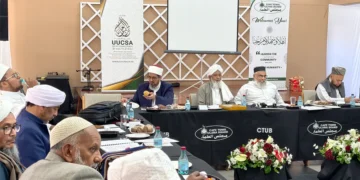
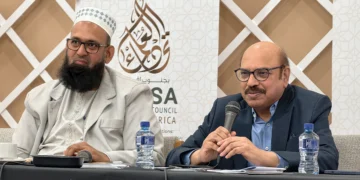
The United Ulama Council of South Africa (UUCSA) successfully concluded its 32nd Annual General Meeting (AGM) and a series of dynamic outreach sessions on November 1 and 2, 2026.
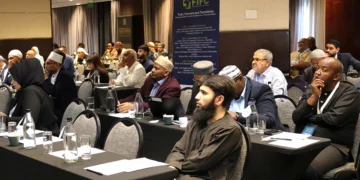
Hosted at the Cape Town Ulama Board headquarters in Eagle Park, Cape Town, the two-day gathering brought together senior scholars, legal minds, financial specialists and civic leaders from across the country to chart a strategic path forward for South Africa’s Muslim community.
The event culminated on Monday, November 2, with UUCSA’s triennial elections. The general assembly unanimously renewed its confidence in the incumbent executive leadership.
Moulana Abdul Khaliq Ebrahim Allie was re-elected as President. Serving alongside him are four Deputy Presidents representing regional member councils: Moulana Ibrahim Bham (Jamiatul Ulama SA), Moulana Yusuf Ghafoor (Sunni Jamiat ul Ulama SA), Moulana Sayed Yusuf (Sunni Ulama Council), and Mufti Tahir Hansa (Jamiatul Ulama KZN).
Moulana Yusuf Patel was re-elected as Secretary-General, supported by Moulana Sulaiman Ravat as Assistant Secretary-General. Faizal Amiroodien and Shaykh Zakariyya Harnekar will oversee the treasury as Treasurer and Deputy Treasurer, respectively.
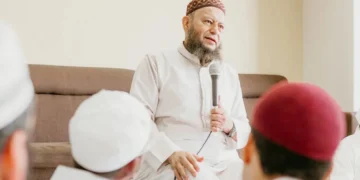
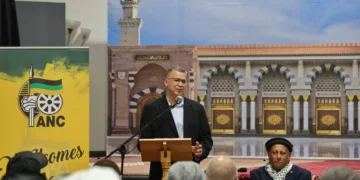
In his presidential address, Moulana Abdul Khaliq Allie emphasised that UUCSA’s strength lies in principled consultation (shūrā), broad civil engagement, structured mentorship for emerging scholars, and active advocacy against rising Islamophobia and global humanitarian crises.
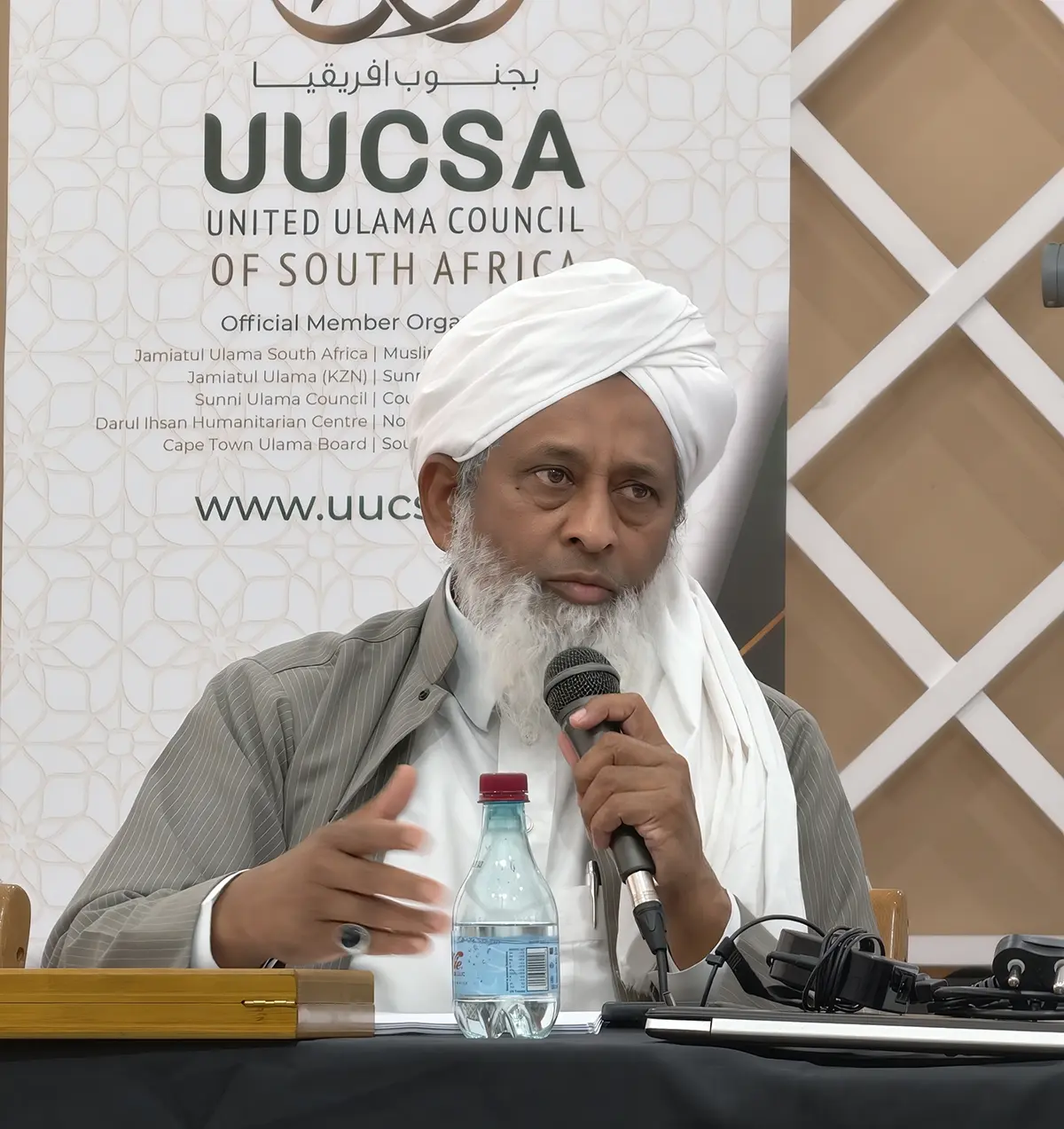


The AGM was preceded on Sunday, November 1, by three intensive outreach and strategy sessions addressing vital facets of communal life.
1. Political strategy, digital landscapes and the J Fund
The opening morning session delivered a two-year operational report on the UUCSA Political Strategy Committee (J Fund). Spearheaded by Moulana Sulaiman Ravat, Mahomed Cajee and Shabir Chohan, the initiative marks a transition towards proactive, data-driven civic advocacy. Key milestones included the execution of a National Muslim Community Survey, civil consensus documents, engagements with major political parties, and voter registration drives.
Digital researcher Mohamed Cajee unveiled analytical findings examining generative AI and social platforms. The data revealed that while Muslim humanitarian work enjoys high positive recognition, imported anti-Muslim rhetoric requires systematic monitoring and proactive digital communication. Delivering the keynote address, retired Justice Siraj Desai underscored the constitutional imperative of addressing systemic economic inequality, advising the community to maintain a structured, principled legal defence capability against emerging lawfare.
2. Ethical economics and Islamic finance
The afternoon convened an engagement with the Islamic Finance Council of South Africa (IFCSA), chaired by Mufti Shafique Jakhura. The council noted that formal-sector Shariah-compliant banking deposits have surpassed R110 billion in South Africa. IFCSA presenters detailed efforts to provide unified scholarly oversight across registered Islamic banking windows, takaful operators and asset management funds managing over R57 billion. The deliberations centred on the ethical imperative of community financial self-reliance, regulatory engagement with the National Treasury, and vigilance against unregulated investment schemes.
3. Commemorating the Cape awliya and sacred heritage
You may also want to read


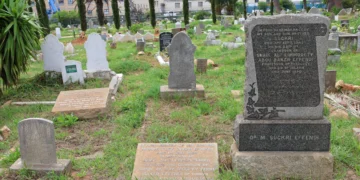
The programme transitioned on Sunday evening to a landmark heritage session celebrating the history of the Cape awliyā (saints). Secretary-General Moulana Yusuf Patel and Moulana Abdul Khaliq Allie welcomed scholars to reflect on the early Muslim luminaries who endured colonial exile and slavery to plant the seeds of Islam in Southern Africa.
Author and journalist Shafiq Morton presented historical findings from his research on the kramats, detailing the resilience of exiled leaders and enslaved community members. Mufti Sayed Haroon Al-Azhari, President of the Cape Town Ulama Board, commended the initiative, announcing efforts by the Cape Town Ulama Board to integrate this documented history into local madrasah curricula.
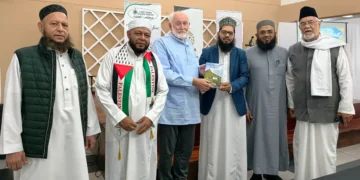
The evening closed with special awards presented to Shafiq Morton, Dr Moulana Luqmaan Kagee, and UUCSA’s executive leadership, honouring their joint dedication to preserving communal memory and fostering inter-fraternal harmony.