

































As South Africa prepares for local government elections, the real question is not only who will govern, but what ideas will shape governance. The writer explores why political theory and political practice must work together.
By MPHUTLANE WA BOFELO
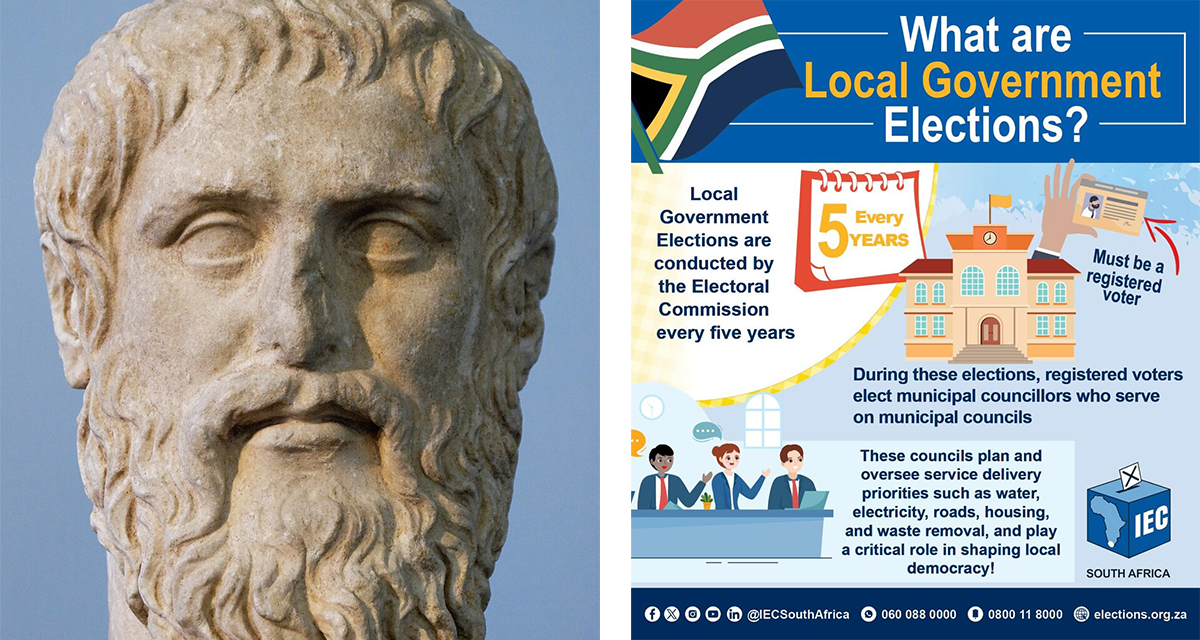
As South Africa approaches its local government elections on 4 November, attention will inevitably turn to political parties, electoral campaigns, candidates, coalitions and the contest for political power.
Yet beneath the electoral contest lies a more fundamental question: what ideas, principles and governing philosophies will inform the exercise of political power after the votes have been counted?
Winning elections is one thing; understanding what political power is for, how it should be exercised and how it can transform people’s lives is another. The distinction brings into focus the relationship between political theory and political practice, and why bridging the two is essential to the future of local government in South Africa.
Politics operates at the intersection of ideas and execution, or, more precisely, between political theory, which constructs abstract ideals of how society should be organised, and political practice, which entails the pragmatic application of how power is acquired, exercised, maintained and contested.
Political theory is concerned with conceptualising the ideal state, defining justice, interrogating the foundations of political authority and critiquing existing systems.
Political practice, by contrast, concerns the realities of winning elections, passing legislation, allocating public resources and governing.
Whereas the principal currency of political theory is ideas, logic, ethics and intellectual frameworks, that of political practice is votes, legislative majorities, budgets, institutional influence and public policy.
Traditionally, political theory has been associated with philosophers, academics, political theorists and ideologues, while political practice has been the domain of politicians, diplomats, activists and bureaucrats.
Similarly, the terrain of political theory has typically been the academy, think tanks and intellectual literature, whereas that of political practice has been parliament, town halls, protest movements and the campaign trail.
In this sense, political theory provides the intellectual architecture through which societies imagine, justify and critique their political arrangements, while political practice constitutes the pragmatic, often messy, business of statecraft, governance and institutional management. It requires navigating immediate pressures, institutional constraints, competing interests and the unpredictable complexities of human behaviour.
Yet these distinctions, useful as they may be analytically, become far less clear-cut in the realities of social, political and economic life. The boundaries between theory and practice are neither fixed nor impermeable. The two constantly intersect, inform and reshape one another. The terrain is far more turbulent than a neat conceptual distinction might suggest. The interaction between political ideas and political action is often volatile, ambiguous, complex and uncertain. Political actors move between roles and across terrains, sometimes shifting from theorising to practising politics and back again. At other times, they occupy both positions simultaneously: articulating visions of how society ought to be organised while actively mobilising power to bring those visions into effect.
This dynamic is particularly pronounced in local government politics, where the relationship between political theory and political practice is often immediate, tangible and consequential. Many who contest local government elections emerge from the ranks of social, political, civic and community activism. Some are theorists and public intellectuals, while others are community leaders whose political consciousness has been shaped by direct engagement with the lived realities of their communities. Indeed, many organisations that eventually enter the corridors of local government begin as civil society formations operating outside the state, seeking to influence public policy, hold public institutions accountable and advocate for social and political change.
The transition from civil society activism to participation in local government brings into sharp focus the limitations of separating political theory from political practice. Those who enter the political arena from activist and community-based backgrounds often discover that political practice, without a sound grounding in political theory, risks becoming hollow, reactive and devoid of a coherent intellectual and ideological foundation. The ability to mobilise communities, win elections and occupy positions of political authority does not, in itself, translate into an understanding of how power ought to be exercised, how institutions should function, or what constitutes just, accountable and developmental governance. Without a coherent conception of justice, democracy, participation and the public good, political action can become little more than the pursuit and maintenance of power.
Conversely, political theorists and civic activists are often compelled to confront the messy realities of political practice when they recognise that persuasion, advocacy, protest and pressure from outside the state, while necessary and often powerful instruments of political change, are not always sufficient to transform the character and performance of local government. Civil society organisations may expose institutional failures, mobilise communities, challenge political authorities and articulate alternative visions of governance. Yet the capacity to influence those who exercise power is not always equivalent to the capacity to change how power is exercised. There comes a point when external pressure must be complemented by direct engagement with the institutions, processes and decisions through which political authority is exercised and public resources are allocated. For some, this realisation leads to participation in elections, the formation of political movements or the assumption of positions within local government itself.
Local government as a meeting point
Local government thus becomes a critical meeting point between political theory and political practice. It is where abstract principles encounter the immediate realities of service delivery, spatial planning, municipal finance, public participation, institutional accountability and the competing demands of communities. Questions that may appear theoretical in the academy become concrete political dilemmas in municipal governance: What constitutes distributive justice when public resources are limited? What does democratic participation mean when communities disagree over priorities? How should political representatives balance electoral mandates, administrative constraints, legal obligations and the long-term public interest? How can local government advance social and economic transformation while operating within inherited institutional arrangements and unequal distributions of power?
These questions demonstrate that local governance is not merely a technical exercise in administration. It is also a deeply political and intellectual undertaking involving competing conceptions of justice, development, democracy and the public good. Decisions about budgets, infrastructure, land use, service delivery and community participation are never entirely detached from questions of political philosophy. They reflect assumptions about whose needs matter, how resources should be distributed, what responsibilities the state should fulfil and whose interests public institutions should serve. Political practice, therefore, inevitably embodies theoretical assumptions, whether or not political practitioners consciously acknowledge them.
At the same time, political theory cannot remain insulated from the practical consequences of the ideas it advances. The realities of local government test the adequacy of theoretical frameworks, expose the limitations of ideological positions and reveal the institutional and material conditions that enable or constrain political transformation. An ideal of participatory democracy, for instance, must confront the practical questions of how participation is organised, whose voices are heard, how competing demands are reconciled and whether community input meaningfully influences decisions. Similarly, a commitment to social justice must find expression in actual budgetary priorities, development plans and patterns of resource allocation. Theory is thus challenged to demonstrate not only its intellectual coherence but also its relevance to the lived realities of the people whose lives political institutions shape.
For those who enter local government from activism, the challenge is to translate principles into policy, ideals into institutional arrangements and political demands into tangible improvements in people’s lives. For those who enter from the world of theory, the challenge is to test ideas against institutional constraints, competing interests, limited resources and the unpredictable realities of governing. Neither trajectory is straightforward. Activists may find that the moral clarity of opposition becomes complicated by the compromises and responsibilities of governing, while theorists may discover that the intellectual persuasiveness of an argument does not automatically translate into political support, institutional change or effective implementation.
Moreover, the relationship between political theory and political practice is not simply a movement from ideas to action, as though theory provides a blueprint that practice must faithfully execute. The relationship is reciprocal and continually evolving. Political ideas shape political programmes, institutional choices and governing priorities; political experience, in turn, generates new questions, challenges established assumptions and demands theoretical reconsideration. Political practitioners become theorists when they reflect critically on the meaning and consequences of their actions, while political theorists become practitioners, in a broader sense, when they engage with the institutions and political struggles through which their ideas might be realised. Some actors inhabit both worlds simultaneously, combining intellectual reflection with political mobilisation, institutional participation and the exercise of public authority.
You may also want to read




Beyond campaign rhetoric
As South Africans prepare to vote, these considerations should inform how candidates are evaluated and how political programmes are interrogated. The question should not be limited to which party is likely to win, which candidate is most popular, or which campaign makes the most compelling promises. Voters should also ask what conception of local governance underpins each political programme, what principles guide its approach to public resources, how it understands community participation and whether its promises are matched by a credible grasp of municipal institutions and the practical responsibilities of governing. Equally, political parties and candidates must demonstrate that their ideas extend beyond campaign rhetoric and can be translated into coherent policies, sound administrative decisions, institutional accountability and measurable improvements in people’s lives.
The elections should therefore be understood as more than a contest for political office. They offer an opportunity to interrogate the intellectual and ideological foundations of local governance itself. What kind of municipalities do South Africans want? What values should guide the allocation of scarce resources? How can local government become more responsive to communities while remaining accountable, institutionally capable and financially sustainable? And what kind of political leadership can bridge the distance between the promises made on the campaign trail and the realities experienced by residents after the election?
Ultimately, the transformation of local government requires more than the acquisition or exercise of political power. It requires the capacity to think critically about power while understanding how to wield it; to articulate a vision of what local governance ought to be while mastering the institutional and political means through which that vision might be realised. It demands an appreciation of political theory not as an abstract luxury, but as a framework for making sense of political choices, evaluating institutional performance and clarifying the purposes of governance. Equally, it demands an understanding of political practice not merely as the pursuit of office, but as the difficult work of translating political commitments into institutional decisions and material outcomes.
Theory and practice are interdependent
The central challenge, therefore, is not to choose between political theory and political practice, but to cultivate a productive relationship between them. Political theory without practice risks remaining detached from the realities it seeks to explain and transform; political practice without theory risks losing its intellectual coherence, normative direction and transformative purpose. Local government makes this interdependence particularly visible because it brings political ideas into direct contact with the everyday experiences and material needs of communities.
As South Africa approaches 4 November, the stakes extend beyond who will occupy municipal offices. They concern the quality of political thought informing local leadership, the capacity of political actors to translate ideas into action and the extent to which local government can respond meaningfully to the needs and aspirations of the people it serves. The ballot determines who receives the authority to govern, but it does not, by itself, guarantee the wisdom, principles or competence with which that authority will be exercised.
Politics is consequently best understood not as a linear progression from thought to action, nor as a contest between competing domains, but as a continuous and contested movement between ideas, power, institutions and lived experience. It is in this movement between principle and pragmatism, critique and responsibility, political imagination and institutional action that the relationship between political theory and political practice becomes most tangible, and where its transformative possibilities, particularly at the local level, must ultimately be tested.
Dr Mphutlane wa Bofelo is a scholar and researcher in governance and political transformation, specialising in development politics, public leadership, popular politics and worker education.