

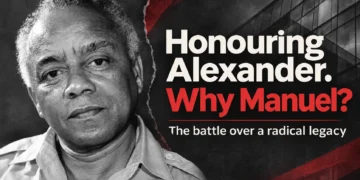











































An objection to Trevor Manuel’s invitation to deliver Unisa’s Neville Alexander Memorial Lecture raises a question beyond the choice of speaker argues MAHMOOD SANGLAY. Can a university honour a socialist while sidelining his challenge to corporate power?
Prof Salim Vally and a collective of Neville Alexander’s colleagues, comrades, family members and life partner have called on the University of South Africa (Unisa) to withdraw its invitation to former finance minister Trevor Manuel to deliver the memorial lecture honouring Alexander.
The event is scheduled for Wednesday, November 18, 2026, at the Lagoon Beach Hotel in Milnerton, Cape Town. Unisa’s November 16 advisory confirms him as the speaker for the 14th annual lecture, under the theme “The Making and Remaking of South Africa, the Scholar and his Thoughts”. It emphasises his anti-apartheid activism and ministerial experience.
In a letter addressed to vice-chancellor Prof Puleng LenkaBula, circulated on Vally’s Facebook profile, the collective argues that Manuel’s economic and corporate record conflicts fundamentally with Alexander’s socialist commitments. Other listed signatories include Enver Motala, Karen Press, Brian Ashley, Mercia Andrews, Jane Duncan, Issa Shivji and Patrick Bond.
“Our objection to Mr Manuel is not personal,” the letter states. Its authors distinguish his freedom to defend his politics from the appropriateness of choosing him to deliver a lecture commemorating someone who opposed those politics.
They ask Unisa to reconsider the invitation, consult Alexander’s close associates and establish a process to safeguard his intellectual legacy. Alternatively, they urge Manuel to decline.
According to the accompanying statement, the collective submitted its appeal three days before making it public and requested a response by the morning of November 16. The statement says the registrar’s office subsequently confirmed that the event would proceed unchanged, citing advanced logistical preparations and offering future consultation and a meeting after the lecture. This account comes from the objectors; the registrar’s correspondence was not included in the supplied material.
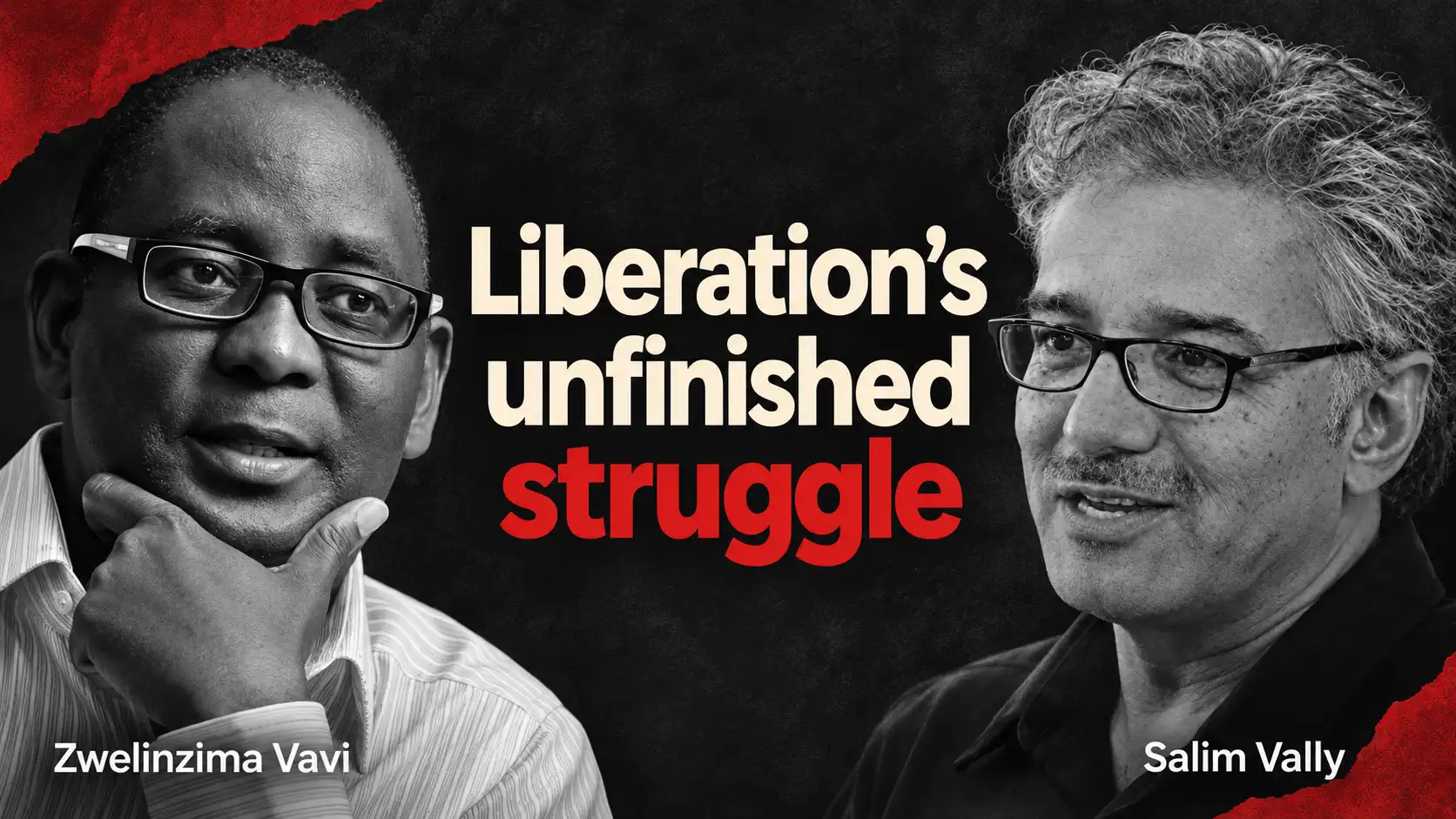
A separate contribution reproduced alongside the objection is an extract from trade unionist Zwelinzima Vavi’s November 15 article in Jacobin, “South Africa’s ANC Is Collapsing. The Far Right Is Rising.” Vavi is not listed among the letter’s signatories, and the extract does not directly address Manuel’s invitation.
His intervention nevertheless supplies a related critique: he argues that neoliberal economic policy, corruption and weakened popular organisation have undermined democratic transformation, creating opportunities for xenophobic and authoritarian politics. He calls for independent working-class organisation rooted in socialism, democracy and opposition to discrimination.
The contradiction identified by the objectors concerns the meaning of liberation. Alexander’s socialism demanded transformation of the economic relationships that reproduce deprivation. Manuel’s ministerial record centred on integrating democratic South Africa into a competitive capitalist economy. Their disagreement concerned who should exercise economic power and whose needs should determine development.
You may also want to read



Alexander’s work linked racial domination to capitalist exploitation. His commitment to multilingual education also concerned access to knowledge and participation: political equality means less when language and class continue to exclude people from institutions. Against racial capitalism: Selected writings, edited by Vally and Motala, documents the breadth of this intellectual project and his opposition to the post-apartheid neoliberal turn.
Manuel, finance minister from 1996 to 2009, was a leading political custodian of the Growth, Employment and Redistribution (GEAR) strategy. Its framework combined accelerated deficit reduction, tariff reductions, relaxation of exchange controls and restructuring of state assets with measures intended to encourage private investment.
GEAR’s stated objectives were employment, redistribution and improved public services. It also envisaged increased infrastructure investment. The dispute therefore cannot be reduced to a claim that its architects publicly rejected the poor. It concerns whether their chosen mechanisms subordinated social transformation to profitability and investor confidence.
For Alexander’s comrades, that reliance on capital was the central breach with emancipation. Their letter argues that GEAR failed working people and entrenched corporate power. This is a political assessment that deserves scrutiny through employment, ownership and the distribution of resources, rather than acceptance of policy promises as evidence of success.
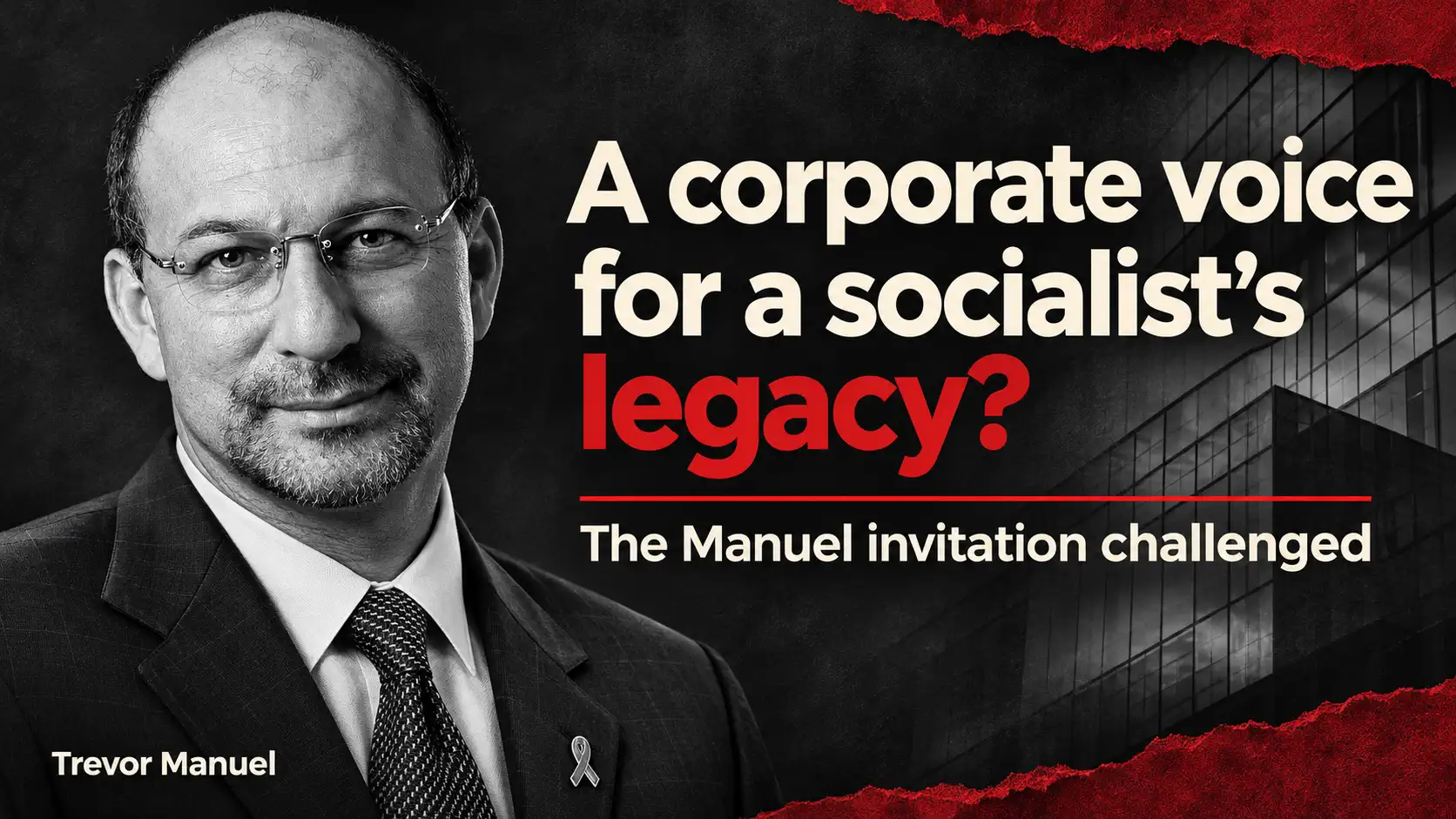
Manuel’s subsequent corporate career sharpens the contrast. Rothschild & Co announced in 2019 that he would return as non-executive deputy chairman of its South African board while continuing as a senior adviser to the group. He also chaired Old Mutual; the company announced his retirement from that position for June 2026.
These roles place him within the leadership structures of corporate finance. Read alongside his policy record, they give concrete substance to the critique of his role as an agent of global corporatism: he has helped shape and govern institutions through which capital exercises influence. Alexander’s project sought to challenge the economic order these institutions sustain.
Vavi’s argument extends the stakes beyond commemoration. In his account, economic exclusion erodes confidence in democracy, while reactionary movements redirect anger towards migrants. From a universal social justice perspective, protecting vulnerable people requires both resisting scapegoating and confronting the conditions that make it politically effective. Accountability must also extend to unions and parties claiming to represent workers.
Universities should host disagreement, including challenges to Alexander’s ideas. But a memorial lecture carries an additional responsibility to represent its namesake honestly. Inviting Manuel could serve serious debate only if the conflict between their positions were made explicit and Alexander’s critique received substantive engagement.
On the collective’s account, logistical readiness answered an objection about intellectual integrity. Preparations explain the inconvenience of changing an event; they do not resolve the contradiction in its purpose. Unisa owes the public an explanation of how its choice advances engagement with Alexander’s actual politics.
Honouring his commitment to human dignity requires keeping his challenge to concentrated wealth open to public scrutiny. A lecture bearing his name should enable that encounter, with meaningful participation by those defending his legacy and room for Manuel to answer their criticism.