
















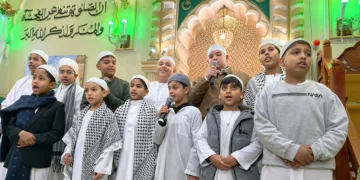




Faith leaders, activists and community members gathered in Claremont to plant olive trees from a Gaza grieving garden, honouring Imam Abdullah Haron, Gaza’s children and a shared legacy of resilience, remembrance and solidarity.
By ANWAR OMAR
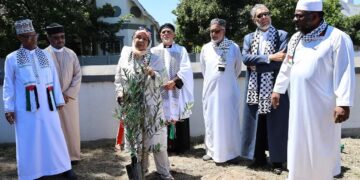
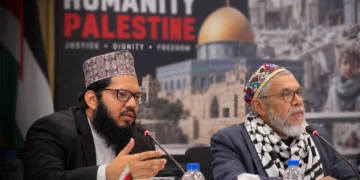
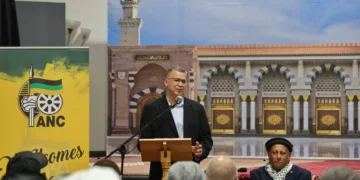
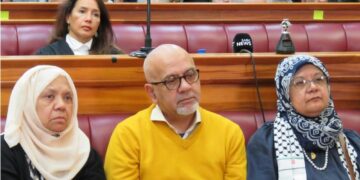
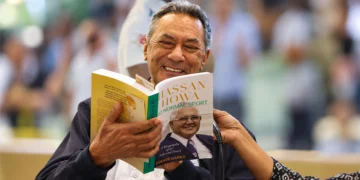
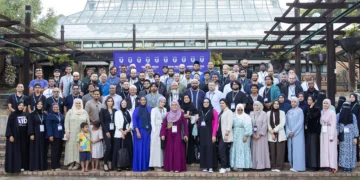
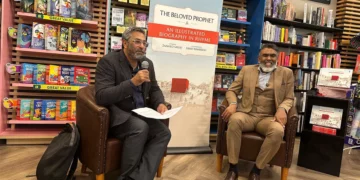
On Tuesday, November 10, four days after the Shabbat at Claremont Main Road Mosque (CMRM), congregants, elders, activists and faith leaders gathered at the Stegman Road Cemetery for an olive tree planting ceremony, hosted by CMRM in collaboration with Al-Jaamia Masjid.
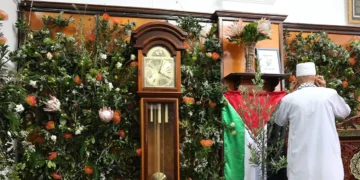
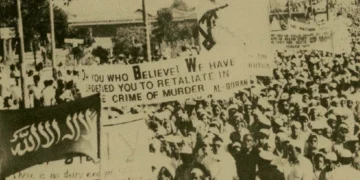
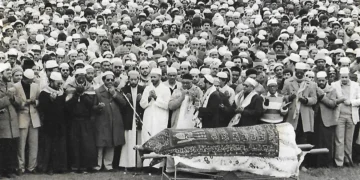
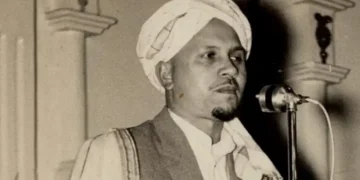
Six olive saplings from CMRM’s grieving garden for Gaza were planted along the cemetery’s Palmyra Road boundary. The two mosques sit on either side of Claremont’s railway line, and both carry the memory of Imam Abdullah Haron, murdered by the apartheid regime in 1969.
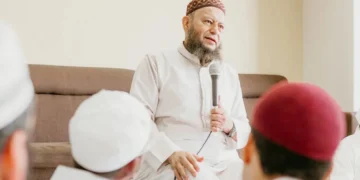
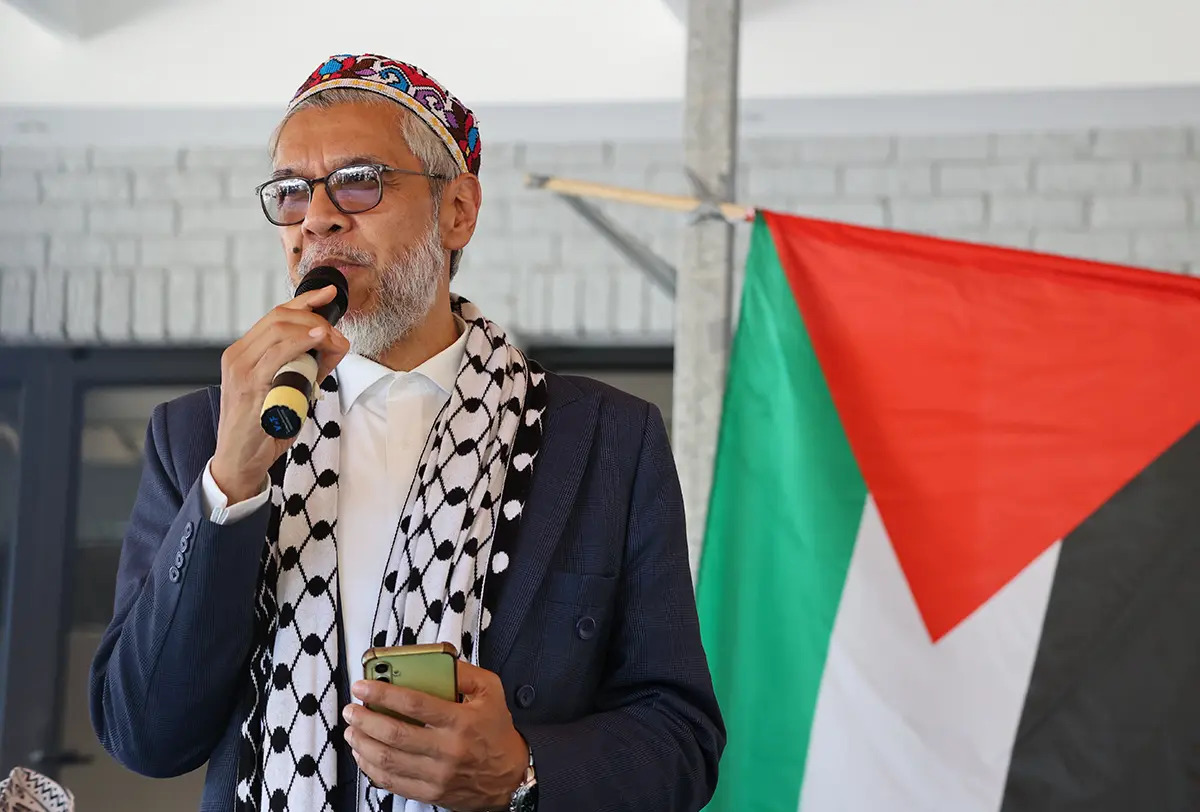
Welcoming guests, Imam Rashied Omar, CMRM’s presiding imam, reminded them the genocide in Gaza was continuing: devastating rains had deepened the suffering, and children were still dying every day. He urged those present to share the Palestinians’ sumud, their perseverance, and not to tire of showing solidarity. That solidarity, he said, must be linked to local struggles: “It can’t be Palestine there and then ignore the reality of the inequalities.”
The planting
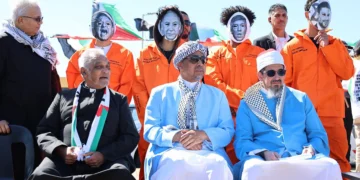
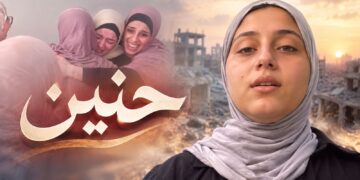
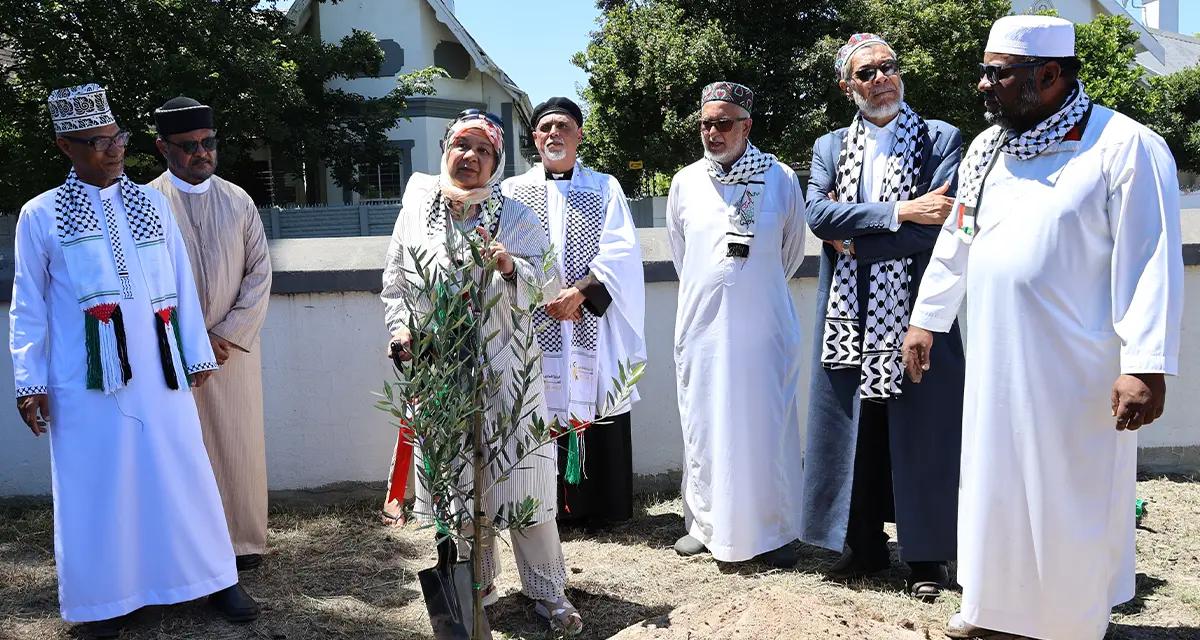
Six olive saplings were then planted along the Palmyra Road cemetery wall. They came from the grieving garden that artist Thania Petersen created at the CMRM on Friday, November 6. That day, Imam Omar’s Jumu’ah khutbah, “Gaza Ecocide and Our Sacred Trust to Care for the Earth”, opened a day of prayer that ended at sunset with “Shabbat Against Ecocide”, the fourth annual Shabbat held at the mosque by South African Jews for a Free Palestine, joined this year by Mothers for Gaza.
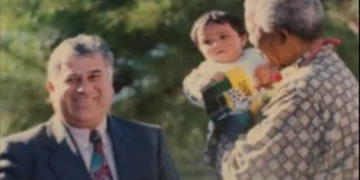
The first two trees honoured al-Shahid Imam Abdullah Haron and his wife, Galiema Haron (née Sadan). Their daughter, Fatiema Haron-Masoet, planted them with Shaikh Sa’dullah Khan. Her mother, she said, was “very powerful in her own way”, hard-working, and had sacrificed her life for her family. “I stand here today on her two shoulders. When my father was murdered, I was only six.” Her mother raised, fed and housed her. Thinking of the orphans of Gaza, she spoke of the strangers who have become their families, and prayed that the trees would live on and keep growing.
The third honoured Cape Town’s interfaith solidarity, which Imam Omar counted among the city’s most precious gifts and hoped to see built on.
The fourth honoured Hind Rajab, killed aged six in 2024, and the martyred children of Gaza, along with Gaza’s women and mothers. Gonda Perez, who planted it with Megan Choritz on behalf of Mothers for Gaza, asked where, beyond the shroud, Cape Town could have a permanent memorial to remember the children who have died. It was deeply symbolic, she added, to plant beside the mosque where Imam Haron had preached.
The last two celebrated the marriage of Muhammad Yusuf Heylen and Sophie-Charlotte Bertrand-Van Ouytsel, whose nikah Imam Omar was to conduct that Sunday. Yusuf is the great-great-grandson of Sulaiman Shah Mohamed, founder of Al-Jaamia Masjid.
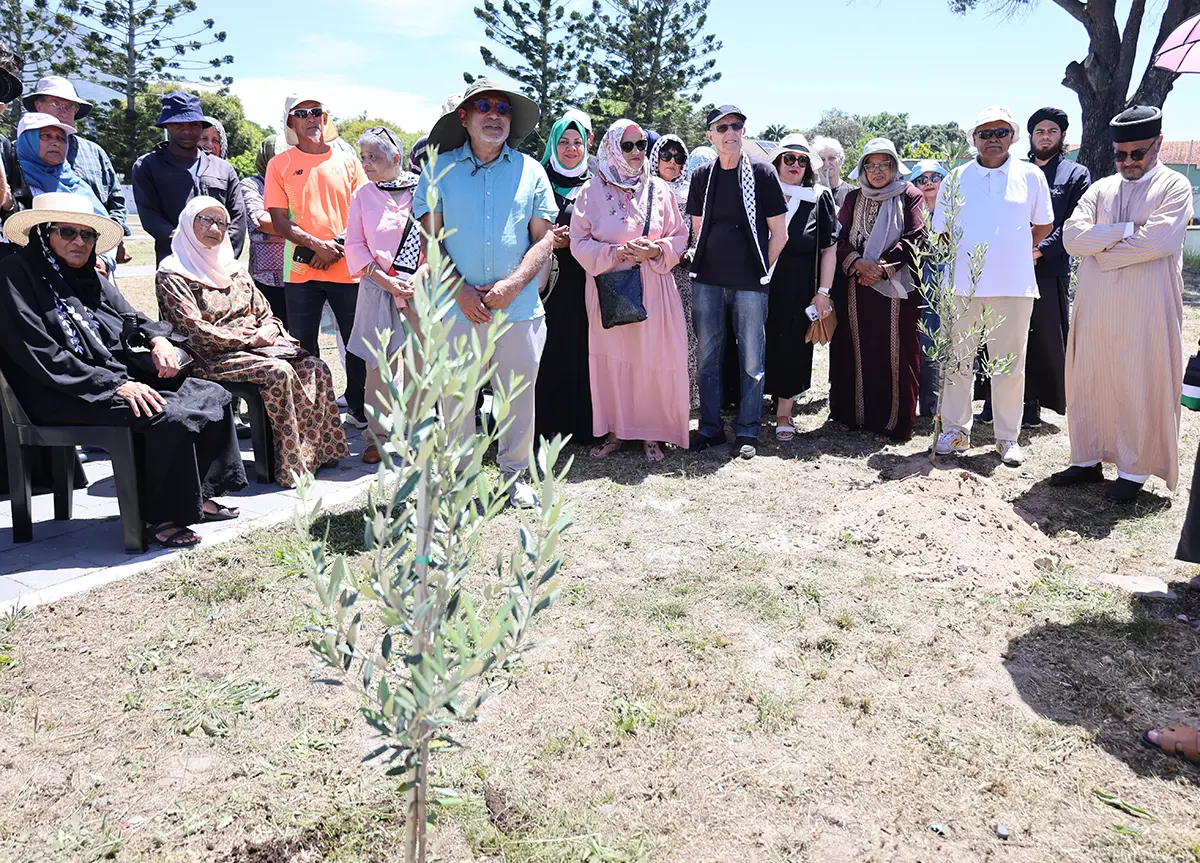
The planting honoured the mosque’s elders too. Imam Achmat Booley stood in for his father, Imam Amanullah Booley, a former co-imam of Al-Jaamia, now over 90 and one of Imam Haron’s oldest surviving students. Uncle Umar Hajwani, whose family lived opposite the masjid until the forced removals, recalled playing hide-and-seek in the then-overgrown cemetery, and his family’s bond with Imam Haron until the imam was taken on Moulood Day and, in his words, murdered.
Prayers for the olive trees
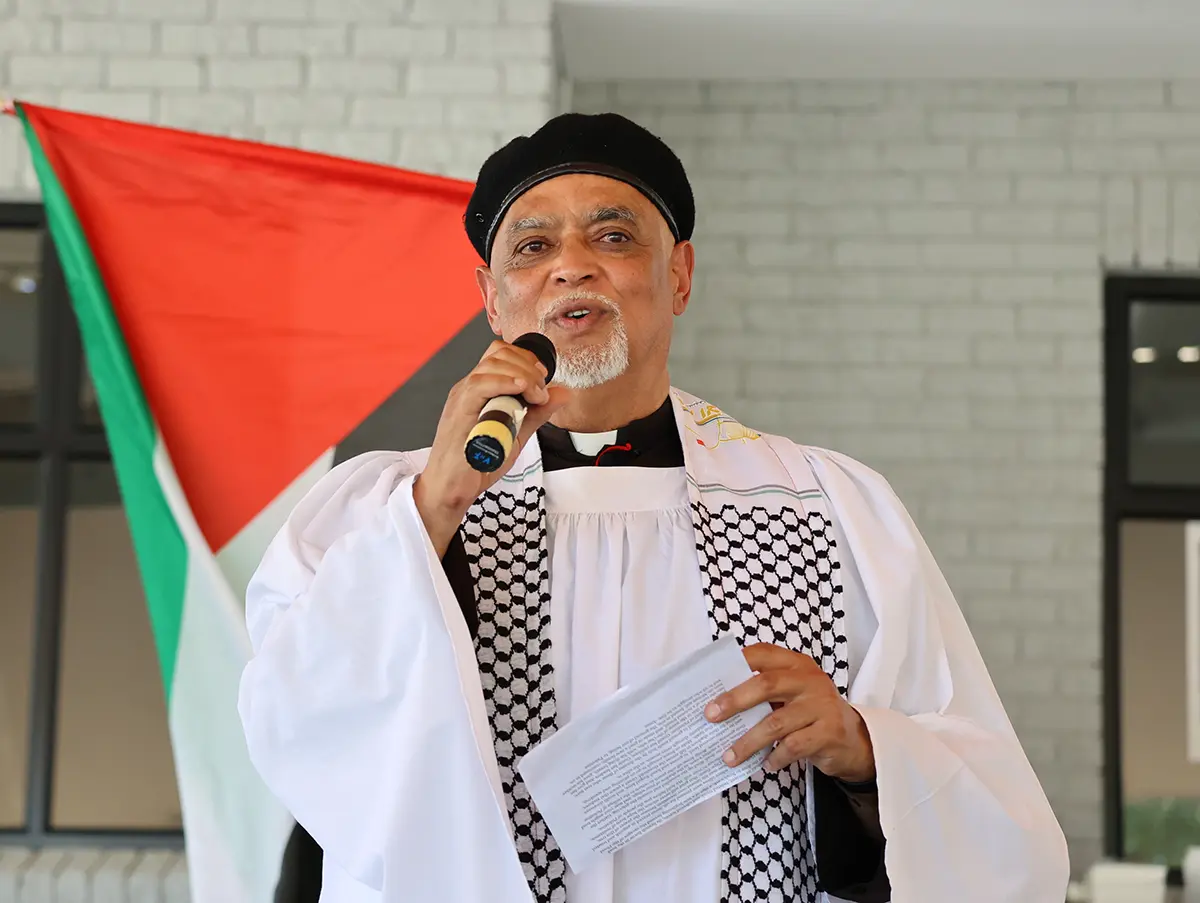
The Reverend Canon Michael Weeder, Anglican priest, poet and former Dean of St George’s Cathedral, opened the interfaith prayers. He greeted his fellow vigillers from the weekly Wednesday interfaith vigil against the genocide in Gaza, who over three years had grown, he said, into a small family.
He read a prayer he had written for the occasion, “the blessing of the olive tree”, addressed to the “God of Abraham, of Sarah and Hagar, of Isaac and Ishmael”. He remembered the Palestinian writer Ghassan Kanafani and Palestine’s farmers, who have watched their trees uprooted, their land taken and their homes demolished. He prayed that the trees, “rooted here among the dead, for the sake of the living”, would grow in the spirit of sumud and stand as a witness: “We did not look away.”
Shaikh Ighsaan Taliep, Islamic scholar and educator and former Principal and Academic Director of International Peace College South Africa, offered the Muslim du‘ah. Recalling the hadith of the seedling from Friday’s khutbah, he called it a profound message of hope. The shroud of remembrance, he said, bore the names of more than 22 000 children killed in Gaza, written by hands young and old, Muslim, Christian, Jewish and of no faith. It stretched 20 metres and still could not hold every name. “For every child is sacred.”
Planted as an act of sumud, the olive was a living prayer for Palestinian steadfastness and hope. “We refuse to let grief have the final word,” he prayed.
A poem: “Olive Tree Story”
Megan Choritz, a Cape Town writer, playwright, actor and poet and a member of South African Jews for a Free Palestine (SAJFP), had planned to read a Palestinian poet’s work but instead wrote her own for the occasion. Moving, she said, from grief to a more political space, she read “Olive Tree Story”. It tells of an ancient olive tree burned by marauders as an old man weeps beneath it, of water rerouted, wells cemented and pipes severed. “Only monsters murder olive trees,” it says. Yet the poem refuses to curse. It answers destruction with planting: an olive tree rooted 7 503 kilometres away, as the crow flies. Its closing secret is that cruelty is its own punishment: the destroyers wither, bitter and without joy.
The history of the maqbarah
The last speaker was Nazeem Jamie, chairperson of Al-Jaamia Masjid, whose generosity, Imam Omar said, had made the day possible. Imam Omar had asked for 20 trees; they agreed on six, “and we can see how it grows from there”. At a time when the world wants to divide us, Jamie said, so diverse a gathering was a sign of hope.
You may also want to read


The maqbarah has two sections: one owned by the Moslem Community Claremont Trust, bought by the community to bury its dead, and one allocated by the City of Cape Town. They can hold about 1 420 graves; about 120 people are buried there.
Claremont’s Muslims, he said, were among the first forcibly removed under the Group Areas Act. To right that wrong, the trust set aside 300 graves that displaced elders could pre-reserve, so they could rest in the soil they were torn from. Applications poured in from across the Cape Flats.
He urged elders to bring the youth into the work, and thanked Imam Omar for fostering “a neighbourly brotherhood between the two masjids”.
A garden of remembrance
In closing, Imam Omar said he had been overwhelmed by people wanting to buy olive trees and would return to Al-Jaamia for more. He called the cemetery a garden of remembrance, with no kramats, or shrines: “All the graves are the same.” The writing of the Gaza Children’s Shroud, he announced, continues.
For Palestinians, the olive stands for rootedness, endurance and sumud. Planted in a cemetery reopened after Claremont’s forced removals, these six trees join two histories of dispossession: Gaza’s and Claremont’s own. May they grow, as the organisers hoped, into enduring symbols of love, resilience and hope.


