
















As South Africa heads to the polls, an important question confronts Muslim voters: does belief in Allah’s sovereignty support or discourage participation? The writer argues that voting can be a principled act of stewardship and accountability.
By MOULANA EBRAHIM BHAM
Affirmation that sovereignty belongs to Allah alone should not be reason to stay at home on November 4. Rather, it should be one of the best reasons to vote.
On November 4, South Africans will elect the councillors who run their wards and municipalities. For Muslims, the most searching question about that poll is not which party to support. It is a prior question: who is sovereign? Islam answers it without hesitation. Legislative authority belongs to Allah, and every human authority is delegated, derivative and answerable to Him.
That answer is sometimes taken as a reason for caution at the polling station. This essay argues the opposite. A firm affirmation of divine sovereignty is compatible with voting, and it supplies the standards by which a believer should vote. It turns the ballot from a civic habit into an act of nobility: a choice made, a trust rendered and counsel offered, all under the authority of the One who will ask about each.
Questions worth asking first
Whose law?
The Quran is explicit. “Judgement belongs only to Allah” (Sura Yusuf, 12:40). “Is it the judgement of ignorance that they seek?” (Sura Al-Ma’idah, 5:50). Disputes are to be referred to Allah and His Messenger (ﷺ) (Sura An-Nisa, 4:59), and once Allah and His Messenger (ﷺ) have decided a matter, the believer has no independent choice in it (Sura Al-Ahzab, 33:36).
Human authority exists, but it is held on trust. South Africa’s Constitution, for its part, declares itself “the supreme law of the Republic” (section 2). Section 43 vests legislative authority in Parliament, the provincial legislatures and municipal councils, and the Constitutional Court, in Masetlha v President of the Republic of South Africa, confirmed that all public power is subject to constitutional control.
A believer therefore knows that a measure may be valid in Limpopo and still fall short before Allah. The Constitution is a framework within which Muslims live, but it does not necessarily have to entail the final measure of right and wrong.
Whose terms?
Secularism presents itself as a neutral arena in which faiths coexist. It is better understood as a set of claims about truth, morality, authority and the purpose of life. Islam is a dīn that speaks to all of these too.
Clarity follows from recognising this. The modern category of “religion” tends to shrink dīn into private belief, so Muslims do well to argue from their own premises: hijab, for instance, rests on obedience to Allah, and individual freedom is a useful shield for it rather than its foundation.
The state decides what counts as religion and where its reach ends, and the colonial era reshaped Islamic law, endowments (waqf) and education in ways that political independence did not reverse. None of these call for withdrawal from public life. Rather, they ask of us a clear distinction between living under a system and believing in it; between using its tools and adopting its worldview. Correct actions begin with correct conceptualisation and the intentions that underpin such understanding.
Both questions deserve full attention. Liberal neutrality is a claim, not a fact, and political philosophers and thinkers of many persuasions have said so. Constitutional supremacy is a real doctrine with tangible implications. And a community that votes only for access, licences and photo opportunities has confused the means with the end. Asked with care, these questions lead somewhere constructive.
Some clarifications
Divine sovereignty has always made room for human judgement
“Judgement belongs only to Allah” is a verse of the Noble Quran and beyond dispute. The tradition has also long understood how it should be applied. When the Khawarij rejected the arbitration at Siffin with the cry lā ḥukma illā lillāh, Ali ibn Abi Talib called it “a word of truth by which falsehood is intended” (Sahih Muslim).
Ibn Abbas, sent to reason with them, showed that the Noble Quran itself entrusts judgement to people: two arbiters to reconcile a quarrelling couple (Sura An-Nisa, 4:35), and two just men to assess the penalty for killing game in a state of iḥrām (Sura Al-Ma’idah, 5:95).
Divine sovereignty means that human decisions are bounded by revelation and answerable to it, without ever suggesting that no human decides anything.
Responsibility follows agency and intention
Muslims in South Africa pay rates, register marriages, litigate in the High Court and may even approach the Constitutional Court to protect their masājid. Community leaders, including ulama, have long done so on our behalf. None of this makes them partners in every law the state passes.
Classical jurisprudence treats cooperation in wrongdoing (al-i‘āna ‘alā al-ithm), forbidden by Sura Al-Ma’idah (5:2), by distinguishing direct agency from remote causation and by weighing intention. “Actions are only by intentions” (Sahih Bukhari and Sahih Muslim) is a Shariah principle for the evaluation of deeds.
The distinction between living under a system and believing in it is precisely the distinction that makes a vote permissible and consequential.
Every vote shapes a council that will sit regardless
Municipal councils will be constituted on November 5 in any case. What a Muslim voter contributes is a judgement about who should sit in those council chambers. The real choice is therefore between a council chosen with Muslim input and one chosen without it.
Participation is how believers bring their standards to bear on an outcome that will happen either way.
Sovereignty and stewardship
The jurists drew the decisive distinction long before the ballot box: between the source of normative authority and the administration of public affairs. The first belongs to Allah without partner. The second is a trust (amānah) He places in human hands, to be discharged within His ordained limits.
A believer who votes first affirms the Sovereign and, secondly, acts on the responsibility of stewardship.
You may also want to read




Delegated authority
The Quran commands that trusts be rendered “to those entitled to them” and that people be judged with justice (Sura An-Nisa, 4:58), then commands obedience to Allah, His Messenger (ﷺ) and “those in authority among you” (Sura An-Nisa, 4:59). It praises believers “whose affairs are by mutual consultation” (Sura Ash-Shura, 42:38).
Al-Mawardi described the caliphate as a contract concluded by “those who loosen and bind”. Ibn Taymiyyah built al-Siyāsa al-Shar‘iyya on verses 4:58 and 4:59: the duty is to appoint the most fit, and where he cannot be found, the next best.
In each case, authority originates with Allah and is exercised by people He holds to account.
What a vote is, in the Shariah’s own terms
South African law treats the vote as a personal constitutional right, cast in secret. Islamic jurisprudence describes it best as ikhtiyār [a choice], dalālah [an act of guidance] or ibdāʾ al-raʾy [a considered opinion] on whether a candidate is fit for office.
Contemporary scholarly discourse does not classify it as testimony (shahādah). Neither does it rise to the level of an oath of allegiance (bayʿah) nor the appointment of a candidate as the voter’s agent (wakālah). Rather, it is a means (wasīlah) of protecting the community and warding off harm.
Hence, casting the vote is both permissible and commendable for Muslims.
Our deliberate choice is for the lesser harm
No candidate on the ballot will rule by the Shariah, and none is offering to. Here the jurists’ method matters more than any single proof text. It was Ibn Taymiyyah’s view that the Shariah came to secure benefits and perfect them, and to remove harms or reduce them.
He pointed to the Prophet Yusuf (AS), who asked to be placed over the storehouses of a land ruled by a king outside the faith (Sura Yusuf, 12:55), and who did what justice he could even though he could not implement all he wished.
‘Izz al-Din ibn Abd al-Salam held that where only flawed candidates exist, the least flawed should be appointed. Allah asks of believers what they are able (Sura At-Taghabun, 64:16). The absence of the perfect does not preclude us from exercising options over feasible choices.
A settled consensus
These principles have been applied directly to Muslim minorities voting in states that are not Muslim. The Islamic Fiqh Council of the Muslim World League, meeting in Makkah in 2007, endorsed participation in parliamentary and municipal elections where it secures benefit or averts harm.
Mufti Taqi Usmani has criticised the habit of treating politics as foreign to religion, and Indian authorities, from Mufti Kifayatullah Dehlawi onwards, held that supporting a party for a benefit does not mean endorsing its whole ideology.
Where scholars have differed, they have differed over application; all agree that Allah is sovereign.
All in all, divine sovereignty sets the criteria; the vote applies them. A Muslim who marks a ballot after weighing trustworthiness, competence and justice is doing what Sura An-Nisa (4:58) asks: rendering a trust to the one most entitled to it, among those actually available.
The South African vote, and how to cast it
Local context strengthens the case. Section 43 of the Constitution lists municipal councils among the legislatures, but section 156 confines their law-making to the functions in Schedules 4B and 5B: water and sanitation, refuse removal, municipal roads, electricity reticulation, building regulations, street trading and local amenities.
These are largely affairs which revelation leaves to human judgement, and they are where the poor feel the state most. A councillor cannot redefine marriage. He can decide whether a township has water this week, and whether a tender goes to the best bidder or to his cousin.
Some municipal decisions do carry moral weight. Councils zone land and regulate outlets that sell liquor to the public. That is a strong reason for Muslims to be present, informed and heard when those decisions are made.
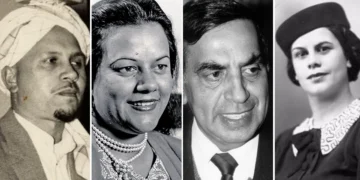
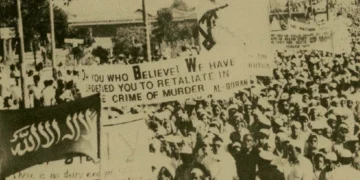
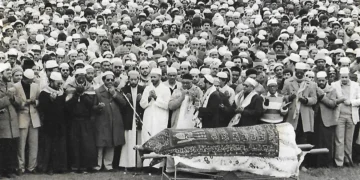
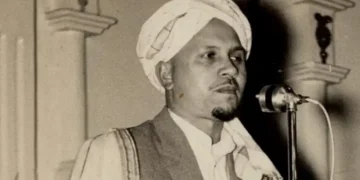
One-person-one-vote was not achieved freely as a gift to South Africa. It was paid for, among many others, by Imam Abdullah Haron, who died in security police detention in 1969, and Ahmed Timol, who was recently remembered on the 55th anniversary of his murder in Johannesburg.
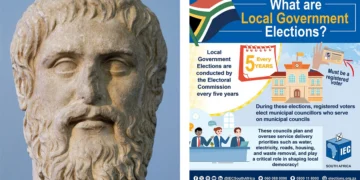
A minority of under 2% of the population that sacrificed their lives for freedom has every reason to treasure it. Fewer than half of registered voters turned out at the last municipal poll in 2021. Nonetheless, councils elected on low turnout are no less powerful. Rather, they are simply less accountable.
Every additional principled voter alters the possible outcomes.
Muslims can honour every concern about sovereignty through the way they vote. A principled Muslim voter would observe at least the following:
- Vote with a declared intention. The ballot is a choice and an act of guidance, offered under Allah’s sovereignty. We should affirm this in sermons and classes so that the community defines the meaning of its own act.
- Apply revelation’s criteria. Trustworthiness, competence, a record on corruption and service, and the treatment of the weak. A vote should be given as honest guidance that is never traded for a food parcel or a favour.
- Keep the vocabulary faithful. Use constitutional rights as a shield where they help, but argue from Islamic premises among Muslims, so that faith remains the reason and rights remain the instrument.
- Set clear principles for institutions as well as voters. Success is measured by outcomes and integrity, not by access to a mayor; protection matters more than recognition. Muslim bodies should engage the state while keeping their judgement independent on matters such as regulation of Muslim marriages.
- Continue after polling day. The Prophet (ﷺ) said: “Religion is sincere counsel”, including to those in authority (Sahih Muslim). Attend ward committee meetings, comment on the Integrated Development Plan and budget, stand for school governing bodies and community policing forums. The Prophet (ﷺ) praised the Ḥilf al-Fuḍūl, a pact made before Islam to protect the wronged, and said he would answer such a call even in Islam. Clean water and honest procurement are causes of that kind.
The sovereignty of Allah is neither diminished nor negated when a Muslim in Lenasia, Chatsworth or the Bo-Kaap marks a ballot on November 4. A Muslim brings the spirit of divine standards into a choice that will be made with or without him or her, chooses the most trustworthy of imperfect candidates and then holds that person to account.
Asking who is sovereign is the right place to begin. Answered carefully, the question leads to the polling station. In a country where the franchise was won at great cost, leaving that vote unused is no neutral act.
Moulana Ebrahim I Bham is the President of Jamiatul Ulama South Africa and imam of Hamidia Masjid at Newtown, where he leads one of the largest congregations in Johannesburg.