




















![The market-builder who restrained the market [Part 2]](https://muslimviews.co.za/wp-content/uploads/2026/08/PHOTO-2026-08-25-17-16-32-360x180.jpg)
![The merchant preceding the Prophetic mission [Part 1]](https://muslimviews.co.za/wp-content/uploads/2026/08/01-360x180.jpg)






A simple wooden heart inspired a deeper reflection on the purpose of the mosque. The writer explores how our masajid can become centres of taʿāruf – compassion, justice and community-building – embodying the true spirit of ‘One Heart. One Ummah.’
By ADNAAN ADAMS
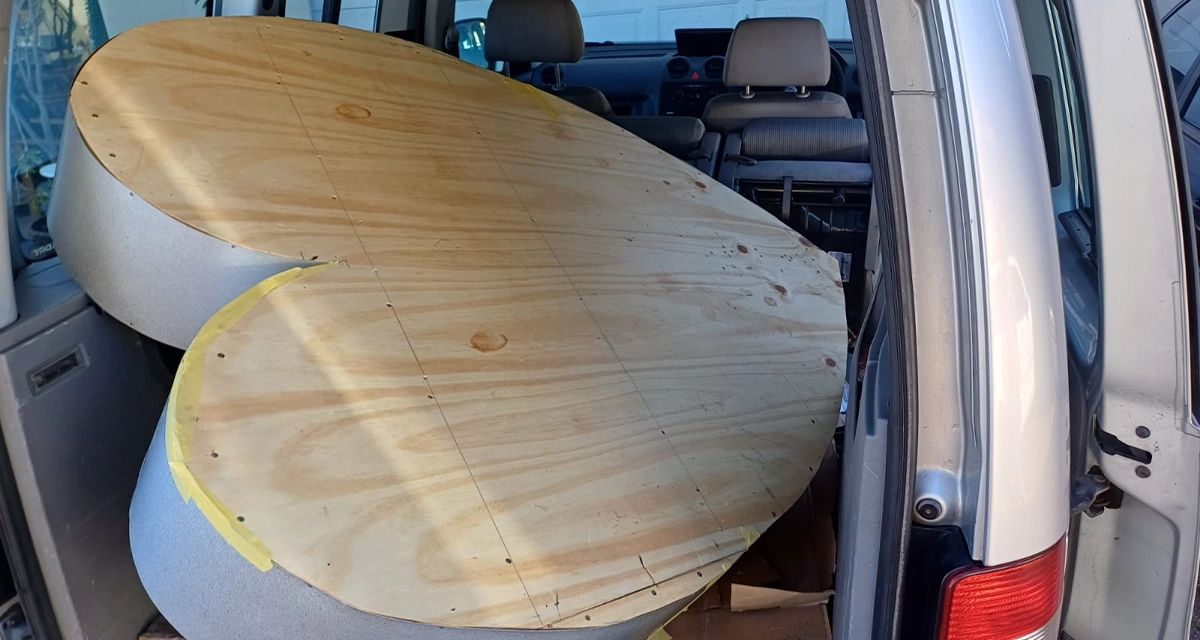
Over the past few days, I had the privilege of constructing a giant wooden heart commissioned by a local mosque committee. Its message is beautifully simple: ‘One Heart. One Ummah’.
As I shaped the plywood, cut the curves and fastened each panel together, I found myself reflecting on something far deeper than wood, screws and measurements. A heart is never merely a decorative prop. It is a symbol. More importantly, it is an invitation.
The heart will eventually stand in the foyer of a mosque. It will undoubtedly capture attention, invite photographs, become a talking point and, I am sure, find its way onto social media. The more important question is not what people will think of the heart, but what the heart asks of us.
It immediately brought to mind Allah’s profound words:
‘O mankind! Indeed, We created you from a male and a female and made you into nations and tribes so that you may come to know one another.’ (Sura Al-Hujurat, 49:13)
In recent years, my understanding of this verse has been profoundly enriched by Professor Yusef Waghid’s reflection on taʿāruf as associative knowing, developed in his chapter, ‘Rethinking Education in Contemporary Times: Learning from Taʿāruf’, published in Prophet Muhammad at 1500, edited by Professor Aslam Fataar. His reading moves taʿāruf beyond mere acquaintance, inviting us to see it as an ethical way of knowing one another through encounter, dialogue, mutual recognition and shared responsibility. It is this understanding of taʿāruf that informs the reflections which follow.
Perhaps this is what ‘One Heart. One Ummah’ truly demands. If so, then every mosque must aspire to become more than a place where people gather for prayer (salaah). It should become the moral, intellectual and social heart of its community – a place where relationships are nurtured, differences are embraced with dignity, and the common good is actively pursued.
It also raises important questions for every mosque committee:
- Are we simply maintaining a building, or are we building a community?
- Do we intentionally cultivate justice, compassion and solidarity?
- Are young people finding purpose within our walls?
- Do women, reverts, the elderly and those on the margins feel genuinely welcomed?
- How do we welcome immigrants, refugees and those who are new to our community? Do they find family, or merely familiarity?
- When appropriate, do we open our doors to neighbours of other faiths, schools, organisations and the wider community, allowing them to know Islam through encounter rather than assumption? Again, Sura Al-Hujurat (49:13) reminds us that people are created in their diversity ‘so that you may come to know one another’. This Quranic invitation extends beyond our own congregations; it challenges us to cultivate relationships that build understanding, trust and the common good.
- What vision of the Ummah are we intentionally nurturing?
These are not merely questions of governance or programming. They are questions of purpose. They ask whether our mosques are becoming places where the Quranic vision of taʿāruf – of people coming to know, understand, serve and care for one another – is made visible.
You may also want to read


If the mosque is the heart of the community, then the health of that heart should not be measured only by the number of worshippers it gathers, but by the quality of relationships, compassion, justice and hope it cultivates beyond its walls.
The Prophet (SAW) transformed the mosque into far more than a place of ritual devotion. It was a place of learning, consultation, reconciliation, hospitality and public service. It welcomed the traveller, supported the poor, educated the young, resolved disputes and prepared believers to contribute positively to society. Worship and community-building were never separated.
Perhaps our mosque foyers should become more than entrances; they should become reminders. Every person who walks past a giant heart should be prompted to ask:
How am I contributing to the heart of this community?
Symbols matter. They inspire, provoke and remind. But symbols fulfil their purpose only when they give rise to action. The wooden heart I built will eventually become part of a display. My hope, however, is that it becomes something more: an invitation for every mosque committee and every congregant to reflect on the kind of community we are intentionally building together.
In the end, the greatest expression of ‘One Heart. One Ummah’ will not be the heart standing in the foyer.
It will be the hearts walking through its doors – hearts committed to justice before judgement, compassion before convenience, service before status, and taʿāruf before division. Only then will our mosques truly become what they were always intended to be: the beating heart of the Ummah.
Adnaan Adams is founder and director of The Muslim Thinker (www.themuslimthinker.org). He can be contacted via WhatsApp on 083 867 0559.