



















![The market-builder who restrained the market [Part 2]](https://muslimviews.co.za/wp-content/uploads/2026/08/PHOTO-2026-08-25-17-16-32-360x180.jpg)
![The merchant preceding the Prophetic mission [Part 1]](https://muslimviews.co.za/wp-content/uploads/2026/08/01-360x180.jpg)








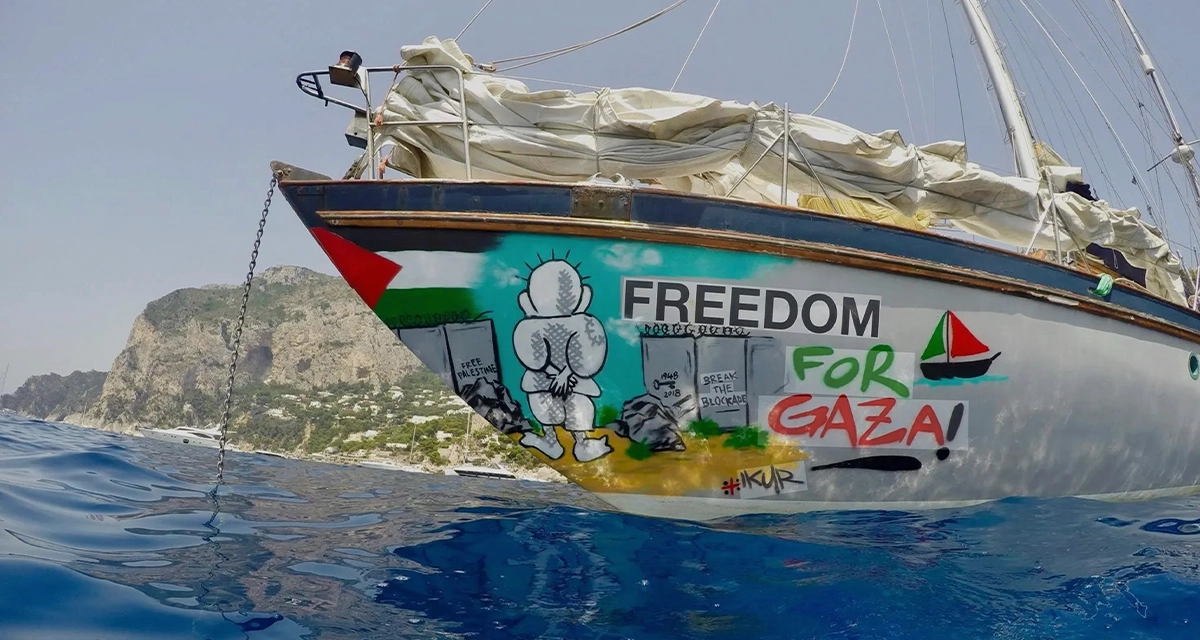

The BCCSA has ruled that the SABC breached its broadcasting code by airing unbalanced interviews on the Gaza flotilla interception, granting an Israeli official uncontested airtime while failing to provide opposing perspectives.
By MAHMOOD SANGLAY
In a landmark ruling for media accountability, the Broadcasting Complaints Commission of South Africa (BCCSA) has found the South African Broadcasting Corporation (SABC) in breach of the code of conduct for free-to-air broadcasters.
The judgment, released on February 12, 2026, stems from a complaint lodged by activist Hassen Lorgat, supported by a coalition of civil society organisations, regarding the SABC’s unbalanced coverage of the genocide in Gaza and the interception of the global sumud flotilla.
The complaint centred on three specific broadcasts aired in October 2025 on SAfm and SABC News. These programmes (Update at Noon and The Weekend View) featured extensive, largely uncontested interviews with Ariel Seidman, Deputy Chief of Mission at the Embassy of Israel. (Seidman has since been declared persona non grata for violations of diplomatic norms and practice by South Africa.)
During the broadcast segments, the SABC granted Seidman a platform to label the humanitarian aid flotilla — which included South African activists — as a ‘Hamas’ operation and to deny the ongoing genocide in Gaza, framing it instead as a war where ‘people suffer’. Lorgat’s complaint argued that the SABC violated clause 13.1 of the code by granting Seidman ‘preferential, uncontested airtime to present a single, factually inaccurate narrative’ while failing to present opposing views or challenge the Israeli government’s perspective with established international law.
The BCCSA tribunal, chaired by Prof Sunette Lötter, was not convinced by the SABC’s defence that it was merely providing a ‘right of reply’. The judgment concluded that the SABC had indeed infringed upon the code. While the broadcaster eventually interviewed a Palestinian spokesperson weeks later, the tribunal noted that this discussion focused on a ceasefire rather than the flotilla incident itself. This failure to address opposing views within a reasonable time and with comparable prominence constituted a clear breach according to the BCCSA.
A pattern of breaches across broad and print platforms
The BCCSA’s ruling points to a broader, more dangerous trend in South African media where pro-Zionist narratives are afforded the status of ‘fact’ while Palestinian solidarity is treated as a ‘viewpoint’ to be balanced.
The SABC’s recent failure echoes the historic ethical collapse of the newspaper, the South African Jewish Report (SAJR). In May 2022, the Press Council of South Africa (PCSA) took the unprecedented step of expelling the SAJR — the first expulsion of a member in the council’s history. The BCCSA holds jurisdiction over content aired by television and radio broadcasters, ensuring compliance with the code of conduct for electronic media. On the other hand, the PCSA oversees the ethical standards of its member print and online publications, adjudicating complaints based on the South African Press Code.
This expulsion followed the SAJR’s refusal to comply with rulings involving the SA BDS Coalition and the General Industrial Workers Union of South Africa (GIWUSA). In a 2021 finding, Acting Press Ombud Johan Retief ruled that the SAJR had breached the Press Code by presenting its interpretation of a GIWUSA cartoon as an absolute fact rather than an opinion. (In 2025 Retief also censured the Sunday Times and The Citizen for a breach of editorial integrity.) The SAJR had, without qualification, labelled the cartoon and the activists ‘antisemitic’.
When the SAJR’s leave to appeal was dismissed by Judge Bernard Ngoepe, the publication chose to attempt a withdrawal from the Press Council rather than publish the required apology. The SAJR was ‘wilfully refusing to obey rulings of the Press Ombud and the Chair of Appeal’ according to the late Press Council chair Judge Phillip Levinsohn. This mirrors the SABC’s recent attempt to frame its one-sided reporting as ‘journalistic integrity’.
The myth of ‘neutrality’ in the face of genocide
Media organisations that adhere to an editorial policy rooted in the pursuit of social justice and the defence of the oppressed do not view the occupation of Palestine as a ‘conflict’ between two equal sides. Israel is an apartheid state, and, as recognised by the International Court of Justice (ICJ), it is implicated in a case of plausible genocide.
The SABC’s defence — that it was merely ‘giving both sides a platform’ — is a dereliction of its duty. As the complainant rightly pointed out: if one person says it is raining and another says it is dry, a journalist’s job is not to quote both. It is to look out the window and report the truth.
You may also want to read




By allowing an Israeli official to dismiss the genocide and smear humanitarian activists without rigorous, fact-based pushback, the SABC acted as a megaphone for state propaganda. This is the same brand of journalism that led to the SAJR’s breach of the press code: the presentation of Zionist propaganda as objective reality, and the labelling of those who stand for human rights as ‘threats’ or ‘extremists’.
South Africa has led the world in bringing the case of genocide against Israel to the ICJ. It is therefore perplexing that our own public broadcaster seems more interested in ‘courtesy’ toward an occupying power’s spokesperson than in the factual reality of the starvation and slaughter of Palestinians.
The BCCSA finding, coupled with the legacy of the SAJR’s expulsion, reminds us that media organisations have a moral and legal obligation to provide context. Truth is not found in the middle ground between the ‘genocider’ and the victim. It is found in the evidence of international law and the testimonies of the oppressed.