













![The market-builder who restrained the market [Part 2]](https://muslimviews.co.za/wp-content/uploads/2026/08/PHOTO-2026-08-25-17-16-32-360x180.jpg)
![The merchant preceding the Prophetic mission [Part 1]](https://muslimviews.co.za/wp-content/uploads/2026/08/01-360x180.jpg)






‘The clergy [has] embarked on a process of better understanding the structural drivers of the [crime] crisis to ensure that our response targets these causes. As we head into local government elections next year, there will undoubtedly be no shortage of populist, but highly destructive responses to crime. Let us … not allow ourselves to get swept up in the kinds of slogans that will never deliver us from this crisis.’
By FATIMA SHABODIEN
The Qur’an teaches us in Surah al-Mā’idah, revealed in Madinah, about laws, ethics, justice, and communal harmony. Among its most profound verses is a declaration that reverberates across time: ‘Whoever kills a soul—it is as if he has killed all of humanity; and whoever saves a life—it is as if he has saved all of humanity’ (5:32).
This is not simply a statement about crime and punishment; it is a declaration of the sacredness of human life. To unjustly take one life is not regarded as a small transgression, but as the moral equivalent of annihilating the entire human race. Murder shatters the divine principle of dignity and safety upon which community rests. Conversely, to save one life—whether by preventing harm, rescuing someone in danger, or even meeting their basic needs—is to uplift all of humankind. The verse elevates our responsibility beyond the individual to a cosmic moral duty: to be protectors of life.
This teaching weighs heavily in the context of the Cape Flats, where murder and violent crime have become tragically common. In this surah, we are reminded that every act of violence is not simply one among many; each killing is an assault on the sanctity of humanity itself. And, just as importantly, every small act of saving or protecting life—whether standing up to injustice, offering support to victims, or intervening to prevent harm—is an act of worship equal in weight to saving the world.
For decades, this part of our city has endured what can only be described as a low-intensity war. Entire communities live under siege. Children grow up surrounded by gunfire, and young lives are cut short before they even begin to blossom. Every new wave of killings is followed by a brief spark of public outrage, which soon fades into silence and indifference. What should be a national emergency has been absorbed into the daily rhythm of life.
Recent months alone have seen execution-style shootings in Bishop Lavis, Nyanga, Gugulethu, Philippi, and Samora Machel. Families grieve in private while society quickly moves on. These killings are spoken of in numbers—four here, seven there, three more somewhere else. Human beings, with stories, dreams, parents, children, and siblings, are reduced to statistics.
Too often, their deaths no longer even make headlines. We become numb to the numbers, and in that numbness, we participate in the dehumanisation of our own neighbours. Behind every number is a rupture: a mother burying her son, a child growing up without a father, siblings scarred by trauma. These violent deaths are not just consequences of a crime pandemic; they are also its fuel, reproducing cycles of trauma and despair.
This is the reality of crime here: The Western Cape today records the highest murder rate in South Africa. It suffers a disproportionate rate of drug addiction. It has the highest rates of gender-based violence in a country already burdened with GBV levels five times higher than the global average. And while the visible face of crime and gangsterism is male, I would be remiss if I did not point out (on this last Jumu’ah of August, Women’s Month) that we should make no mistake: like all other social justice problems, this one is also profoundly gendered as it is women and young girls who disproportionately carry the fallout of the crisis and drive its response. The people with the least material wealth, working-class women, have already organised and responded to the crisis in a range of manners.
I am not going to get into the detailed crime stats here today. What matters more is to recognise that there is not a single person here who has not been affected by the crisis of crime. We all know children in our families or communities struggling with drug addiction. We know that GBV is rife in our communities. We know about the shootings. Please allow me to leave you with this visual: The number of murders in Cape Town is roughly the equivalent of a Boeing 727 filled with people crashing every two months. Were such a disaster to occur, flags would fly at half-mast and national days of mourning would be declared. Yet because the deaths are scattered across impoverished neighbourhoods, they rarely provoke the same recognition of catastrophe. These are not numbers; they are our mothers, our fathers, our sisters, our brothers, and our children.
In this moment of despair, faith communities are rediscovering their historic role. Religion has long sustained people in times of suffering, from enslaved ancestors who clung to faith as a source of resilience, to freedom fighters who drew strength from their churches and mosques during apartheid. Today, religious leaders are again called to respond, not with sentimentality, but with a sober recognition that real solutions must be both immediate and long-term. While the state has a critical responsibility, it cannot solve this crisis alone. The moral voice and social infrastructure of faith institutions must be reimagined as central to healing.
Faced with this moral emergency, a growing movement of faith and civic leaders has begun to respond. The Cape Crime Crisis Coalition (the 4C’s), in collaboration with the Muslim Judicial Council and the Western Cape Provincial Council of Churches, has emerged as a united voice. On July 16, 2025, more than eighty leaders gathered at the Islamia Auditorium in Lansdowne and adopted the Imam Haron Road Declaration. They named the crime crisis what it truly is: a moral catastrophe.
This interfaith initiative has been notable thus far not for easy or punitive responses, but for its refusal to give in to them. It is tempting, in moments of fear and anger, to cry out for harsher punishments or to ‘lock them all away.’ Yet such responses do not address the root causes of the problem and will therefore never resolve the crisis.
The reality is that crime on the Cape Flats is not a series of individual criminal incidents, but a deeply systemic problem rooted in a painful history. This crisis of crime is driven by a complex combination of social, economic, political, and cultural factors that reinforce each other. Persistent poverty and unemployment drive young people into the arms of a parallel criminal economy. Drug addiction spreads across families, hollowing out the bonds of care and protection. The erosion of moral leadership and the breakdown of social cohesion have created a vacuum in which gangsterism thrives.
What has stood out for me most thus far has been the refusal to reach for lazy or populist punitive-focused responses. It is easy and tempting to push the ‘lock them all away and throw away the keys’ approach. Recognising that this moment presents a profound opportunity to address the brokenness and dysfunction in communities, the interfaith collective instead embarked on a sober reflection of what is working, what is broken, and where the real levers of change are located.
To this end, the clergy embarked on a process of better understanding the structural drivers of the crisis to ensure that our response targets these causes. As we head into local government elections next year, there will undoubtedly be no shortage of populist, but highly destructive responses to crime. Let us watch out for these and not allow ourselves to get swept up in the kinds of slogans that will never deliver us from this crisis.
In this manner, religious leaders identified several key structural drivers of crime. Because of time constraints today, I will highlight a few of the main drivers identified.
Role of religion
First, the role of religion in shaping prevailing societal values was acknowledged. This is significant in a country where close to 90 percent of people belong to some form of organised religion and hold deep moral and spiritual beliefs. Yet the gap between these beautiful faith-values (peace, justice, equality, ubuntu) of our scriptures and the realities in communities remains significant. Religion has a key role to play in making these beautiful values real in society.
Intergenerational trauma
Another significant driver of the crisis was identified as intergenerational trauma. This refers to the transmission of psychological, emotional, and even biological effects of trauma from one generation to the next. This can be seen in patterns of parenting (often violent), coping mechanisms, and stress responses. Communities still carry the wounds of their enslaved great-great-grandmothers’ violence in their bodies today. This means that the unprocessed pain of slavery, colonialism, and apartheid lives on in the present. Is it any wonder that in these communities, violence has become a normalised response to conflict?
Entrenched inequality
Predictably, the economic crisis was raised as a major driver of crime. If there is to be seriousness about addressing crime and violence, the economic conditions that create fertile ground for them to thrive must be confronted. For 30 years, South Africa has pursued a neoliberal economic path that has entrenched inequality, deepened poverty, and abandoned poor communities. This economic model has failed the majority—not only in South Africa, but globally—and its consequences are written into the daily realities of hunger, unemployment, and desperation. To break the cycle of violence, there is an urgent need for a bold and transformative economic strategy, one that puts people before profit and instead centres justice, dignity, and inclusion.
In the context of deepening unemployment and widespread poverty, crime is driven by a parallel criminal economy that exploits the vulnerabilities of impoverished communities. Deep and persistent poverty, combined with widespread unemployment, leaves many with limited options inside the formal legal economy.
This renders young people particularly vulnerable to being recruited into crime. This is exacerbated by growing levels of drug addiction, weakened family structures, and the absence of strong community support systems. The erosion of moral leadership and the breakdown of social cohesion have created a vacuum in which criminality thrives.
Recognising the limitations and failures of the state, the imams and priests agreed on the importance of holding the state accountable to its mandate to provide safety while simultaneously finding tangible ways for religion to meaningfully support communities in crisis.
While government has a critical role to play, the state at this stage is so mistrusted and ineffective it will not be able to lead us out of this crisis. To this end the moral voice and social infrastructure of religious communities must be reimagined as the centre of the response. Religious leaders need to be equipped not only theologically, but also politically and psychologically, so they can guide communities through the complexity of this moment.
And while it may be tempting to place the entire burden on the South African Police Service (SAPS) to solve the crisis of crime, it would be mistaken to believe that even a fully functional SAPS will solve the entirety of the complex problem of crime. There is a desire to advocate for greater urgency in dealing with corruption and dysfunction within SAPS, but placing the full burden of societal repair on SAPS alone is simply not realistic.
The reality of prisons was also brought sharply into focus. South Africa has one of the highest incarceration rates in the world and an alarmingly high rate of repeat offending (recidivism). Prisons are massively overcrowded. But prisons are not simply failing due to overcrowding. The prison system lacks the approach and resources needed to rehabilitate. Prisons, in their current form, are not part of the solution but are very much a driver in the problem of crime. Prisons have become ‘universities of crime’ where those imprisoned often sink deeper into crime.
One of the more complex challenges raised was the growing alienation of young people from religion. By and large, the youth are increasingly disconnected from churches and mosques. Religious leaders were challenged to consider what it would mean to make religion relevant and compelling to a generation who feels increasingly alienated from traditional religious practice, even as they hunger for meaning and community.
If religious institutions intend to play a leading role in social transformation, they will have to find new ways to reach and provide meaning in the lives of young people. Another particularly vulnerable demographic are girls and women. While often less visible, gender-based violence is a critical dimension of the crisis. The Western Cape has among the highest GBV rates in a country already facing one of the worst GBV epidemics globally. Cape Flats communities like Delft, Nyanga, Gugulethu, and Mitchells Plain are nationally recognised GBV hotspots, where women and girls face daily threats in homes, streets, and public spaces.
As religious leaders grapple with the complex nature of the crime crisis, there is a constant reminder that while the urgency is real, the solution has to be long term and sustainable. We don’t want to run the risk of starting yet another initiative in a moment of outrage only for it to fade over time when the guns momentarily go quiet. This will be a long and challenging journey. It demands a confrontation with the brutalities of the present while laying the foundations for a different future rooted in healing, justice, and restoration.
There is broad consensus on the need to focus on healing, given how much trauma communities have endured. This is not only about individual spiritual healing, but also about collective healing from trauma and brokenness. Many, if not most, live with deep emotional wounds that remain unacknowledged and unhealed. Religious institutions are uniquely positioned to create spaces for storytelling, mourning, and healing. These processes are essential to breaking the cycles of hurt that show up in the forms of addiction, violence, or despair.
This requires honesty. Religious communities must also confront the gap between the values we proclaim—peace, justice, compassion—and the realities of our practices in our religious institutions.
They must find ways to engage meaningfully with youth, many of whom feel alienated from traditional religious spaces, even as they hunger for meaning and belonging. They must acknowledge the profoundly gendered nature of the crisis, where women and girls, though less visible in the statistics of gangsterism, bear the brunt of violence in homes, streets, and public spaces. And above all, we must take seriously the work of healing, not only individual healing, but collective healing of whole communities scarred by generations of trauma.
So what does this mean for Muslims in Cape Town? What can we do? Having established that we all have a responsibility to act to save lives, there is much to be done.
There is already a rich spread of responses on the Cape Flats—mainly led by working-class women. We don’t have to start new initiatives, but have a role to play in supporting what people have already started. There is an urgent need to lend our support to the existing response, to build linkages between community initiatives for the exchange and support of ideas, strategies and resources. This would include our involvement in Community Policing Fora and other local peace structures.
Utilise the spaces in our masajid to create awareness of issues such as intergenerational crime or slavery, GBV, and to offer support.
We all have to take individual responsibility for healing from our own traumas in ways that work for us—whether this be therapy, prayer, meditation, etc. This responsibility for our own healing rests with each of us as adults.
We have to show up for and provide support to the victims and survivors of crimes and their families. This can be done in a variety of ways: providing emotional support, helping families navigate legal processes, and connecting people with the necessary professional services or to the media to amplify their voices. Engage in conversations within our families and talk specifically to children and youth about the history of our community. There is a wonderful opportunity with Heritage Day coming up later in September for us to talk about the history of slavery.
This year there are two bills scheduled for review on the parliamentary programme: the Firearms Act and the SAPS Act, both of which have a direct bearing on crime. At this masjid [Claremont Main Road] we will be convening a longer engagement within the next few weeks where we will unpack the crisis of crime and identify how we want to respond as the CMMR community.
The congregation is also invited to attend the next community meeting of the interfaith forum, which is scheduled to take place on Thursday September 11 at the Mitchells Plain Town Centre Masjid.
Prisons, too, are failing us. Overcrowded and punitive, they function as ‘universities of crime’ rather than spaces of rehabilitation. Without meaningful reform, they will continue to drive cycles of violence.
As this collective reflection continues, there is broad agreement that healing—individual and collective—must be central. Religious spaces can play a unique role in providing opportunities for storytelling, mourning, and spiritual restoration, which are essential for breaking cycles of violence.
So what does this mean for Muslims in Cape Town? Having established that we all carry a responsibility to save lives, there is much to be done:
- Support and strengthen the grassroots responses already led by working-class women.
- Build linkages between community initiatives for the exchange of strategies and resources.
- Use our places of worship to raise awareness about intergenerational trauma, GBV, slavery, and crime, and to provide support.
- Take personal responsibility for healing our own traumas through therapy, prayer, meditation, or other means.
- Provide practical support to victims and survivors of crime and their families.
- Engage our children and youth in conversations about the history of our communities, especially as Heritage Day approaches.
- Participate in upcoming policy discussions, including on the Firearms Act and the SAPS Act, both of which directly affect crime.
- Join the longer engagement this masjid will convene in the coming weeks to unpack the crisis and define our response as the Claremont Main Road Masjid (CMRM) community.
- The congregation is also invited to attend the next interfaith forum meeting, scheduled to take place on September 11 at the Mitchells Plain Town Centre Masjid.
Closing prayer
At this sacred hour of Jumu’ah I ask you to join me in special prayer for peace everywhere by especially on the Cape Flats
In the Name of God, the Most Compassionate, the Most Merciful
Ya Rabba al-Salam – O God of Peace
There are some children, women and men who do not experience Your peace and tranquility and who live with the daily threat of violence and crime in their schools, neighborhoods and homes
Ya Rabb al-Rahma – O Lord of Mercy and Compassion,
We beseech You to protect our communities from all forms of violence.
Ya Rabb al-Qist – O Lord of Justice,
We beseech You to assist all of us in stemming the epidemic of gang violence and crime within our communities.
We pray for all who dedicate their lives working to break the cycle of violence in our society.
Allahumma anta al-Salam – O God Thou art peace
Wa minka al-Salam – and Peace emanates from Thee,
Fa hayyina Rabbana bi al-Salam – Allow us to live and subsist in peace
You may also want to read


Allahumma Amin
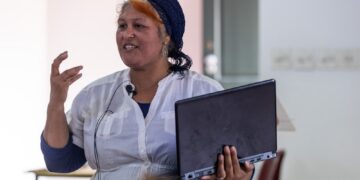
This the text of a pre-khutbah talk delivered by Fatima Shabodien, Claremont Main Road Mosque on Friday, August 29, 2025. She can be contacted by email: fatimashabodien1@gmail.com)
- Click here to read the report on the latest meeting meeting of the interfaith religious grouping to combat crime on the Cape Flats