



Muslim Views
No Result
View All Result
  • News
    • All
    • Local
    • National
    • World
    Muslim Views Zamzam investigation wins national Story of the Year award

    Muslim Views Zamzam investigation wins national Story of the Year award

    Voting glitches trigger extension for Mowbray Cemetery elections

    Voting glitches trigger extension for Mowbray Cemetery elections

    Mowbray Cemetery elections: Competing narratives and an unverified candidate list

    Mowbray Cemetery elections: Competing narratives and an unverified candidate list

    New judge takes Mowbray Cemetery case as 53 nominees cleared for ballot

    New judge takes Mowbray Cemetery case as 53 nominees cleared for ballot

    Beyond charity: Rethinking the economic potential of waqf in South Africa

    Beyond charity: Rethinking the economic potential of waqf in South Africa

    Read our Moulood-un-Nabi edition online

    Read our Moulood-un-Nabi edition online

    Primary school nasheed competition rewards dedication

    Primary school nasheed competition rewards dedication

    Cape Town art exhibition explores untold histories through art and archives

    Cape Town art exhibition explores untold histories through art and archives

    Operation Ubuntu march calls for arrests and action against xenophobia

    Operation Ubuntu march calls for arrests and action against xenophobia

    Honouring our Huffadh as Cape Town celebrates guardians of the Qur’an

    Honouring our Huffadh as Cape Town celebrates guardians of the Qur’an

    • National
    • World
    • Local
  • Opinion
    • All
    • Columnists
    • Discussions with Dangor
    • Editorial
    • Guest Writer
    Why Gaza’s kites demand urgent global solidarity

    Why Gaza’s kites demand urgent global solidarity

    Another hatchet job on Choritz — but is this fair and balanced journalism?

    Another hatchet job on Choritz — but is this fair and balanced journalism?

    Reading the Prophet: knowing the sīrah, reading ourselves

    Reading the Prophet: knowing the sīrah, reading ourselves

    The immigration debate: class, race and South Africa’s unresolved crisis

    The immigration debate: class, race and South Africa’s unresolved crisis

    Moulood – When love stands

    Moulood – When love stands

    SADC’s “old wine in new bottles” model unlikely to transform political economy

    SADC’s “old wine in new bottles” model unlikely to transform political economy

    Independence interrupted: Pakistan’s unfinished passage from colony to country

    Independence interrupted: Pakistan’s unfinished passage from colony to country

    Keep your eyes on the victims of genocide, Mr President

    Keep your eyes on the victims of genocide, Mr President

    President Ramaphosa meeting IDF soldier’s family raises crucial questions

    President Ramaphosa meeting IDF soldier’s family raises crucial questions

    Mecca pact signals move against fading US security order

    Mecca pact signals move against fading US security order

  • Features
    • All
    • 1500 Years of Prophetic Legacy
    • AWQAF SA
    • General Features
    • Imam Haron
    • Tributes
    Reading the Prophet: knowing the sīrah, reading ourselves

    Reading the Prophet: knowing the sīrah, reading ourselves

    The living heritage of Moulood traditions at Zandvliet

    The living heritage of Moulood traditions at Zandvliet

    Ummah bids farewell to global luminary Pir Sayed Hasin ud Deen Shah (RA)

    Ummah bids farewell to global luminary Pir Sayed Hasin ud Deen Shah (RA)

    Marking 140 years since the closure of the Tana Baru

    Marking 140 years since the closure of the Tana Baru

    Abbas Rumaney remembered for his faith, wisdom, humour and generosity

    Abbas Rumaney remembered for his faith, wisdom, humour and generosity

    Grappling with Apartheid labels

    Grappling with Apartheid labels

    The scholar who refused to turn Islam into an enemy: The legacy of John Esposito

    The scholar who refused to turn Islam into an enemy: The legacy of John Esposito

    The greatest monuments are not in stone, but in lives transformed

    The greatest monuments are not in stone, but in lives transformed

    Legacy of educator Haji Mogamat Rashad Jedaar lives on

    Legacy of educator Haji Mogamat Rashad Jedaar lives on

    Reclaiming agency: From ritual to action Part 3

    Reclaiming agency: From ritual to action Part 3

    June 16, the Call of Islam, and the many rivers of liberation

    June 16, the Call of Islam, and the many rivers of liberation

    Reclaiming agency: From ritual to action Part 2

    Reclaiming agency: From ritual to action Part 2

    Reclaiming agency: From ritual to action Part 1

    Reclaiming agency: From ritual to action Part 1

    Goolam Hoosain Abed: The last of the famous sporting family departs

    Goolam Hoosain Abed: The last of the famous sporting family departs

    Abdullah Ibrahim crafted a magnificent new culture for South Africa

    Abdullah Ibrahim crafted a magnificent new culture for South Africa

  • Lifestyle
    • All
    • Arts
    • Books
    • Education
    • Food
    • Health
    • Motoring
    • Sport
    • Technology
    Reading the Prophet: knowing the sīrah, reading ourselves

    Reading the Prophet: knowing the sīrah, reading ourselves

    Cape Town art exhibition explores untold histories through art and archives

    Cape Town art exhibition explores untold histories through art and archives

    Choritz captures a fierce new dystopia in The Sound of Ice

    Choritz captures a fierce new dystopia in The Sound of Ice

    Languages of Care: Extending worship through art

    Languages of Care: Extending worship through art

    Cape Town musicians rally behind displaced Palestinian composer

    Cape Town musicians rally behind displaced Palestinian composer

    More than a game, or the Clash of Titans

    More than a game, or the Clash of Titans

    Help Ruqaya Ismail represent SA at the Commonwealth Fencing Championship

    Help Ruqaya Ismail represent SA at the Commonwealth Fencing Championship

    Goolam Hoosain Abed: The last of the famous sporting family departs

    Goolam Hoosain Abed: The last of the famous sporting family departs

    Abdeyah da Costa and the dihlīz of Dorp Street

    Abdeyah da Costa and the dihlīz of Dorp Street

    A mother’s taweez and the Cape’s interfaith traditions [+ video]

    A mother’s taweez and the Cape’s interfaith traditions [+ video]

  • Finance
    • All
    • Islamic Finance
    Beyond charity: Rethinking the economic potential of waqf in South Africa

    Beyond charity: Rethinking the economic potential of waqf in South Africa

    Islamic banking in South Africa: why interest-free finance matters

    Islamic banking in South Africa: why interest-free finance matters

    When AI becomes your financial adviser, who protects the vulnerable?

    When AI becomes your financial adviser, who protects the vulnerable?

    Why a professionally drafted will can better protect your family and legacy

    Why a professionally drafted will can better protect your family and legacy

    When the halal investment label becomes a weapon for financial deception

    When the halal investment label becomes a weapon for financial deception

    Don’t leave your family with your janazah and a legacy of problems

    Don’t leave your family with your janazah and a legacy of problems

    When Shariah-compliant investments finance oppression and injustice today

    When Shariah-compliant investments finance oppression and injustice today

    How Islamic finance is rebuilding Africa’s economic grid

    How Islamic finance is rebuilding Africa’s economic grid

    Islamic finance’s green promise for a sustainable future

    Islamic finance’s green promise for a sustainable future

    First Abu Dhabi Bank’s African opportunity could reshape Islamic finance

    First Abu Dhabi Bank’s African opportunity could reshape Islamic finance

  • Islam
    • All
    • Eid
    • Faith and Practice
    • Family
    • Hajj and Umrah
    • Moulood
    • Quran
    • Ramadaan
    Reading the Prophet: knowing the sīrah, reading ourselves

    Reading the Prophet: knowing the sīrah, reading ourselves

    The living heritage of Moulood traditions at Zandvliet

    The living heritage of Moulood traditions at Zandvliet

    Moulood – When love stands

    Moulood – When love stands

    Moulood-un-Nabi: A beacon of mercy, love and unyielding courage

    Moulood-un-Nabi: A beacon of mercy, love and unyielding courage

    When Sipho asked me to make duʿa

    When Sipho asked me to make duʿa

    A sound heart in a world of strangers

    A sound heart in a world of strangers

    Can our mosques become the heart of the Ummah?

    Can our mosques become the heart of the Ummah?

    Karbala – between obligation and inability

    Karbala – between obligation and inability

    16 June 1976: Qibla’s call to conscience

    Reclaiming our future – drawing lessons from Karbala and Soweto 1976

    Karbala, Gaza and xenophobia: Why history still matters today

    Karbala, Gaza and xenophobia: Why history still matters today

  • Archives
  • Donate
Muslim Views
  • News
    • All
    • Local
    • National
    • World
    Muslim Views Zamzam investigation wins national Story of the Year award

    Muslim Views Zamzam investigation wins national Story of the Year award

    Voting glitches trigger extension for Mowbray Cemetery elections

    Voting glitches trigger extension for Mowbray Cemetery elections

    Mowbray Cemetery elections: Competing narratives and an unverified candidate list

    Mowbray Cemetery elections: Competing narratives and an unverified candidate list

    New judge takes Mowbray Cemetery case as 53 nominees cleared for ballot

    New judge takes Mowbray Cemetery case as 53 nominees cleared for ballot

    Beyond charity: Rethinking the economic potential of waqf in South Africa

    Beyond charity: Rethinking the economic potential of waqf in South Africa

    Read our Moulood-un-Nabi edition online

    Read our Moulood-un-Nabi edition online

    Primary school nasheed competition rewards dedication

    Primary school nasheed competition rewards dedication

    Cape Town art exhibition explores untold histories through art and archives

    Cape Town art exhibition explores untold histories through art and archives

    Operation Ubuntu march calls for arrests and action against xenophobia

    Operation Ubuntu march calls for arrests and action against xenophobia

    Honouring our Huffadh as Cape Town celebrates guardians of the Qur’an

    Honouring our Huffadh as Cape Town celebrates guardians of the Qur’an

    • National
    • World
    • Local
  • Opinion
    • All
    • Columnists
    • Discussions with Dangor
    • Editorial
    • Guest Writer
    Why Gaza’s kites demand urgent global solidarity

    Why Gaza’s kites demand urgent global solidarity

    Another hatchet job on Choritz — but is this fair and balanced journalism?

    Another hatchet job on Choritz — but is this fair and balanced journalism?

    Reading the Prophet: knowing the sīrah, reading ourselves

    Reading the Prophet: knowing the sīrah, reading ourselves

    The immigration debate: class, race and South Africa’s unresolved crisis

    The immigration debate: class, race and South Africa’s unresolved crisis

    Moulood – When love stands

    Moulood – When love stands

    SADC’s “old wine in new bottles” model unlikely to transform political economy

    SADC’s “old wine in new bottles” model unlikely to transform political economy

    Independence interrupted: Pakistan’s unfinished passage from colony to country

    Independence interrupted: Pakistan’s unfinished passage from colony to country

    Keep your eyes on the victims of genocide, Mr President

    Keep your eyes on the victims of genocide, Mr President

    President Ramaphosa meeting IDF soldier’s family raises crucial questions

    President Ramaphosa meeting IDF soldier’s family raises crucial questions

    Mecca pact signals move against fading US security order

    Mecca pact signals move against fading US security order

  • Features
    • All
    • 1500 Years of Prophetic Legacy
    • AWQAF SA
    • General Features
    • Imam Haron
    • Tributes
    Reading the Prophet: knowing the sīrah, reading ourselves

    Reading the Prophet: knowing the sīrah, reading ourselves

    The living heritage of Moulood traditions at Zandvliet

    The living heritage of Moulood traditions at Zandvliet

    Ummah bids farewell to global luminary Pir Sayed Hasin ud Deen Shah (RA)

    Ummah bids farewell to global luminary Pir Sayed Hasin ud Deen Shah (RA)

    Marking 140 years since the closure of the Tana Baru

    Marking 140 years since the closure of the Tana Baru

    Abbas Rumaney remembered for his faith, wisdom, humour and generosity

    Abbas Rumaney remembered for his faith, wisdom, humour and generosity

    Grappling with Apartheid labels

    Grappling with Apartheid labels

    The scholar who refused to turn Islam into an enemy: The legacy of John Esposito

    The scholar who refused to turn Islam into an enemy: The legacy of John Esposito

    The greatest monuments are not in stone, but in lives transformed

    The greatest monuments are not in stone, but in lives transformed

    Legacy of educator Haji Mogamat Rashad Jedaar lives on

    Legacy of educator Haji Mogamat Rashad Jedaar lives on

    Reclaiming agency: From ritual to action Part 3

    Reclaiming agency: From ritual to action Part 3

    June 16, the Call of Islam, and the many rivers of liberation

    June 16, the Call of Islam, and the many rivers of liberation

    Reclaiming agency: From ritual to action Part 2

    Reclaiming agency: From ritual to action Part 2

    Reclaiming agency: From ritual to action Part 1

    Reclaiming agency: From ritual to action Part 1

    Goolam Hoosain Abed: The last of the famous sporting family departs

    Goolam Hoosain Abed: The last of the famous sporting family departs

    Abdullah Ibrahim crafted a magnificent new culture for South Africa

    Abdullah Ibrahim crafted a magnificent new culture for South Africa

  • Lifestyle
    • All
    • Arts
    • Books
    • Education
    • Food
    • Health
    • Motoring
    • Sport
    • Technology
    Reading the Prophet: knowing the sīrah, reading ourselves

    Reading the Prophet: knowing the sīrah, reading ourselves

    Cape Town art exhibition explores untold histories through art and archives

    Cape Town art exhibition explores untold histories through art and archives

    Choritz captures a fierce new dystopia in The Sound of Ice

    Choritz captures a fierce new dystopia in The Sound of Ice

    Languages of Care: Extending worship through art

    Languages of Care: Extending worship through art

    Cape Town musicians rally behind displaced Palestinian composer

    Cape Town musicians rally behind displaced Palestinian composer

    More than a game, or the Clash of Titans

    More than a game, or the Clash of Titans

    Help Ruqaya Ismail represent SA at the Commonwealth Fencing Championship

    Help Ruqaya Ismail represent SA at the Commonwealth Fencing Championship

    Goolam Hoosain Abed: The last of the famous sporting family departs

    Goolam Hoosain Abed: The last of the famous sporting family departs

    Abdeyah da Costa and the dihlīz of Dorp Street

    Abdeyah da Costa and the dihlīz of Dorp Street

    A mother’s taweez and the Cape’s interfaith traditions [+ video]

    A mother’s taweez and the Cape’s interfaith traditions [+ video]

  • Finance
    • All
    • Islamic Finance
    Beyond charity: Rethinking the economic potential of waqf in South Africa

    Beyond charity: Rethinking the economic potential of waqf in South Africa

    Islamic banking in South Africa: why interest-free finance matters

    Islamic banking in South Africa: why interest-free finance matters

    When AI becomes your financial adviser, who protects the vulnerable?

    When AI becomes your financial adviser, who protects the vulnerable?

    Why a professionally drafted will can better protect your family and legacy

    Why a professionally drafted will can better protect your family and legacy

    When the halal investment label becomes a weapon for financial deception

    When the halal investment label becomes a weapon for financial deception

    Don’t leave your family with your janazah and a legacy of problems

    Don’t leave your family with your janazah and a legacy of problems

    When Shariah-compliant investments finance oppression and injustice today

    When Shariah-compliant investments finance oppression and injustice today

    How Islamic finance is rebuilding Africa’s economic grid

    How Islamic finance is rebuilding Africa’s economic grid

    Islamic finance’s green promise for a sustainable future

    Islamic finance’s green promise for a sustainable future

    First Abu Dhabi Bank’s African opportunity could reshape Islamic finance

    First Abu Dhabi Bank’s African opportunity could reshape Islamic finance

  • Islam
    • All
    • Eid
    • Faith and Practice
    • Family
    • Hajj and Umrah
    • Moulood
    • Quran
    • Ramadaan
    Reading the Prophet: knowing the sīrah, reading ourselves

    Reading the Prophet: knowing the sīrah, reading ourselves

    The living heritage of Moulood traditions at Zandvliet

    The living heritage of Moulood traditions at Zandvliet

    Moulood – When love stands

    Moulood – When love stands

    Moulood-un-Nabi: A beacon of mercy, love and unyielding courage

    Moulood-un-Nabi: A beacon of mercy, love and unyielding courage

    When Sipho asked me to make duʿa

    When Sipho asked me to make duʿa

    A sound heart in a world of strangers

    A sound heart in a world of strangers

    Can our mosques become the heart of the Ummah?

    Can our mosques become the heart of the Ummah?

    Karbala – between obligation and inability

    Karbala – between obligation and inability

    16 June 1976: Qibla’s call to conscience

    Reclaiming our future – drawing lessons from Karbala and Soweto 1976

    Karbala, Gaza and xenophobia: Why history still matters today

    Karbala, Gaza and xenophobia: Why history still matters today

  • Archives
  • Donate
Muslim Views
Advertisement

The Saudi distortion of dissent in Islam

25 May 2022 - Updated on 12 November 2024
in Faith and Practice, ISLAM, Premium Content, World
Reading Time: 7 mins read
A A
The Saudi distortion of dissent in Islam

On March 7, 2018, hundreds of people protested in London outside Downing Street against the visit of Saudi Crown Prince Mohammed Bin Salman. The protest marked just over one thousand days into the Saudi bombing of Yemen, which is almost entirely supported by the United Kingdom and the United States. (Photo ALISDARE HICKSON/CREATIVE COMMONS)

Share on TwitterShare on FacebookShare on Whatsapp

ZIYAD MOTALA cites examples from the time of the Prophet (SAW) and the caliphs to illustrate how the Saudis’ reaction to a peaceful protest near the Prophet’s (SAW) resting place against a delegation of Pakistani politicians is a distortion of the right of dissent in Islam.

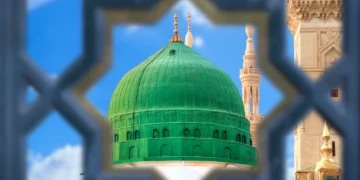
A POWERFUL event of peaceful protest occurred on April 28, 2022, in the Saudi kingdom, at the Prophet’s (SAW) mosque – something not seen in Madinah for over fourteen hundred years. A visiting delegation of Pakistani politicians, including Prime Minister Shahbaz Sharif and two ministers from the recently installed government, were greeted by worshippers repeatedly chanting ‘chor’, which in English translates as ‘thief’.

Did Prime Minister Sharif, who is out on bail on multiple criminal charges for alleged financial improprieties, visit the holy places to burnish his religious bona fides to a citizenry back home? If that were the case, the optics of what happened has had the opposite effect. The images of the protest have been relayed and amplified with commentary and gone viral on social media. For adherents of the Islamic faith, being called a ‘thief’ near the resting place of Prophet Muhammad (SAW) is a profound jolt. It has been interpreted by many as signifying that these politicians were not worthy of traversing such sacred terrain.

As was expected, the Saudi authorities who brook no dissent were incensed by the protests. Politically, one can understand the Saudis’ concern. Protests of ‘chor’ against Pakistani officials if left unchecked could blossom to protests against Saudi governance or human rights violations. The Madinah police have since arrested five suspects for ‘abusing and insulting’ the Pakistani ministers. The spokesperson for the police remarked that the actions of the protesters is against Islam and ‘contradict the sanctity of the place’. The protest took place a distance from the Prophet’s (SAW) grave.

Islamic scholars, all the way back to Caliph Omar and the Prophet’s (SAW) wife, Ayesha (RA), instructed Muslims not to raise their voices next to the Prophet’s (SAW) grave. Understandably, political discourse and protests in the mosque even far from the grave of the Prophet (SAW) would undermine the worship of other pilgrims. Given the crowds, time, manner and place, restrictions on protest are needed. But the notion that no protests are permitted in Islam or that political discourse never took place in the Prophet’s (SAW) mosque is incorrect. The efforts of smart phones and citizen reporting of the incident offers a monumental teachable moment for Muslims and others about the correct Islamic conception of democracy, freedom of speech and accountability of government officials for malfeasance.

The Saudis and ‘freedom’ of speech
There is a litany of Prophetic examples that illustrate the Saudi view of freedom of speech and protest, like so much of their brand of Islam, is the antithesis of Islamic scriptures and Prophetic (SAW) practice. Islamic scriptures are replete with calls on every Muslim to enjoin good and forbid wrong. Muslims unanimously agree that the Prophet (SAW) proclaimed that speaking against an unjust ruler is the highest form of sacrifice in the path of God. Muslims also unanimously concur that the Prophet (SAW) said when you see a wrong, change it with your hand. If you cannot change it with your hand then speak against the wrong. And if you cannot change the wrong with your words then despise that wrong in your heart but that is the lowest level of faith.

There are many examples of freedom of speech and protest in the Prophet’s (SAW) mosque, or during the pilgrimage during the life of the Prophet (SAW) and the four immediate successors of the Prophet (SAW), who Sunni Islam unanimously proclaims as the four noble or rightly guided caliphs. Their instructions and examples represent sources of Islamic law. Here are a few illustrations.

The Prophet (SAW) was once delivering a speech and a man interrupted the Prophet (SAW) and inquired about the unlawful detention of his neighbour. The man rose two more times and asked the same question. Thereafter, the Prophet (SAW) asked the police officer to release the man’s neighbour. The incident is instructive at several levels. First, it occurred in the Prophet’s (SAW) mosque. Second, it was the Prophet (SAW) that was being interrupted. Third, the Prophet (SAW) did not say that the interruption disrespected him or his mosque. Fourth, the Prophet (SAW) recognised the validity of someone concerned about injustice and raising the concern publicly.

On assuming office after he was selected leader of the state after the Prophet’s (SAW) death, Abu Bakr, the first noble caliph, addressed the community and remarked, ‘You have made me your leader although I am in no way superior to you. Co-operate with me when I do right; correct me when I err.’ He also said, ‘Turn away from me when I deviate.’ Abu Bakr admonished the community that if he errs and departs from ethical principles, which by definition preclude corruption, immorality and injustice, the community has an obligation to speak truth to power.

Meanwhile, Saudi Crown Prince Mohamed Bin Sultan recently asked the Saudi population to accept austerity measures while personally spending about half a billion United States dollars on a supposed Salvador Mundi painting of Christ, which turned out to be a fake. Islamic tenets demand that the public must hold leaders accountable for their actions. Caliph Abu Bakr stated, ‘[T]o tell the truth to a person commissioned to rule is faithful allegiance; to conceal it is treason.’

Dynasty vs khilaafah
Abu Bakr recognised the equality of society, which is replete in the sayings of the Prophet (SAW). The legitimacy of Abu Bakr’s leadership was not derived from dynastic rule. The subsequent three caliphs were also selected through a process of mutual consultation, which arguably represented the first implementation of a rudimentary democracy; rule by consensus as opposed to coercion. It was also a rejection of hereditary leadership. On his deathbed, the second caliph, Omar, asked for a consultative committee of the leading personalities of the time to choose his successor. Omar was absolutely emphatic that his successor could not be his son, thus eschewing dynastic rule.

Neither the Prophet (SAW) – considered by Muslims as the greatest personality that lived – nor the caliphs gave the state their family name. The Saudi state is named after the ruling family and constitutes an absolutist, dynastic and family-centred government, the members of whom have amassed enormous wealth. The family treats the resources and treasury as their private piggy bank.

Caliph Abu Bakr warned his officials against making state appointments based on nepotism or leaders enriching themselves. On assuming office, Caliph Abu Bakr asked his daughter to take stock of his assets so that a determination could be made at the end whether he had been enriched in office. This might be the earliest recorded instance of a leader concerned about corruption, and providing a self-imposed check against corruption.

Limits to obedience
Like his predecessor, the second caliph, Omar, instructed the Muslim community that no leader should be obeyed if he acts against the tenets of the faith. Omar remarked that the community has rights over him and must be able to enforce those rights. Omar took meticulous measures to ensure that political power was not an entrance to richness. For example, he asked every officer he appointed to take a pledge that they would live simply and eat simply. Those who breached the rule were reported by the citizenry and were sanctioned. A detailed inventory of the assets of the officials was prepared at the time of their appointment and reassessed at the end of their tenure. The officials had to account for any increases in their assets.

You may also want to read

African Muslim Intellectual History: Scholars, Revivalists, and Reformists of the early 19th to early 21st Centuries

African Muslim Intellectual History: Scholars, Revivalists, and Reformists of the early 19th to early 21st Centuries

7 November 2023 - Updated on 3 December 2024
A time for increasing blessings upon the Prophet (SAW)

A time for increasing blessings upon the Prophet (SAW)

4 September 2024
World rugby must not succumb at the altar of apartheid Israel

World rugby must not succumb at the altar of apartheid Israel

23 February 2023 - Updated on 28 August 2024
Imran Khan: Global coalition demands medical transparency

Imran Khan: Global coalition demands medical transparency

27 February 2026
Helpline opens for abuse victims seeking shelter

Helpline opens for abuse victims seeking shelter

11 December 2020 - Updated on 28 August 2024
The panellists at the Muslim Personal Law symposium at the University of Cape Town on June 8, clockwise from top right: Professor Fatima Seedat, Ayesha Royker, Rehema Namukose and Khensani Motlhante. (Photos: Anwar Omar)

Advancing gender justice in Muslim Personal Law

19 June 2026

The Saudi monarchy and the sycophant clerics on the government payroll distort material aspects of Islam to justify and fortify the survival of the Al Saud dynasty. They demand absolute obedience to a ruler. This is an inversion of Islamic teachings and contradict historical examples concerning issues of justice, morality and corruption being addressed in the Prophet’s (SAW) mosque or during the pilgrimage.

Caliph Omar was confronted in public in the Prophet’s (SAW) mosque and in the streets by ordinary people who raised concerns about inappropriate behaviour by government officials. Omar protected the right of a person who once interrupted his speech, and is reported to have said, ‘If the people do not give me good advice they are useless, and if I do not listen to it, I am useless.’ On another occasion, Omar asked the assembly what they would do if he, Omar, strayed from the straight path? A man stood up and responded he would confront Omar and even suggested he would take up arms against him. Omar replied, ‘Praise be to God that among my people are present men who could put me on the straight part if I deviated from it.’

A distortion of Islam
The Saudis demand that the pilgrimage and visits to the holy mosques be conducted as an exclusive exercise of rituals and individual spirituality – a reflection and strengthening of the individual’s relationship with God in a morally blind manner. The Prophet (SAW) and the caliphs conducted political and military meetings in the Prophet’s (SAW) mosque. The caliphs Omar and Uthman required their senior government officials come to Makkah at the time of the annual pilgrimage and people were encouraged to voice any complaints they might have had against any official. Omar is known to have taken action against aberrant government officials during these occasions.

The Saudi rulers distort the comprehensive Islamic injunction of enjoining good and forbidding evil, and turn it on its head to preclude any questioning of their rule. In doing so, they offer an obtuse and destructive assault on absolute principles of justice, ethics, morality and good governance, which in Islam cannot be derogated from.

The protest in Madinah in the last week of Ramadaan did not happen next to the Prophet’s (SAW) grave, which would have been problematic. Not since the time of the noble caliphs have we seen this sort of peaceful rebuke of public officials, albeit not Saudi, in the first Muslim capital. The protest offers Muslims an opportunity for self-reflection beyond the positivist diet fed by absolute dictators that they are owed unquestionable obedience by virtue of their hold on power.

Caliphs Abu Bakr and Omar rebuked an inert or indifferent citizenry and ordered them to hold their leaders publicly accountable. The Prophet (SAW) and the noble caliphs would not countenance illegitimate or dynastic rule, profligacy, corruption, authoritarianism, human rights violations, the slaughter of civilians in Yemen or Saudi support for repression in Egypt and Palestine.

The obligation to enjoin good and forbid evil requires every Muslim to talk out against these abuses. The concept of deen – that Islam is an all-encompassing way of life – requires the rejection of Saudi and other brands of Islam that pigeonhole Islam as sanitised rituals, devoid of moral, ethical and political dimensions.

Professor Ziyad Motala was born in South Africa and is Professor of law at Howard University School of Law, in Washington DC. He served as an Honorary Professor of Law at the University Of Western Cape School of Law and is currently director of the Howard South Africa Summer Abroad Programme. Motala is the co-author, with Cyril Ramaphosa, of ‘Constitutional Law Analysis and Cases’.
This article was first published in https://muslimmatters.org/


Subscribe to our Newsletters

* indicates required
Choose the newsletters you'd like to receive
Advertisement

You may also want to read

Reading the Prophet: knowing the sīrah, reading ourselves
Books

Reading the Prophet: knowing the sīrah, reading ourselves

21 August 2026
The living heritage of Moulood traditions at Zandvliet
Moulood

The living heritage of Moulood traditions at Zandvliet

20 August 2026
Moulood – When love stands
OPINION

Moulood – When love stands

19 August 2026
Moulood-un-Nabi: A beacon of mercy, love and unyielding courage
Moulood

Moulood-un-Nabi: A beacon of mercy, love and unyielding courage

14 August 2026
When Sipho asked me to make duʿa
ISLAM

When Sipho asked me to make duʿa

28 July 2026
A sound heart in a world of strangers
Faith and Practice

A sound heart in a world of strangers

24 July 2026
August 2026

August 2026

FILE SIZE : 15 MB
Download
Advertisement

Latest News

Muslim Views Zamzam investigation wins national Story of the Year award

24 August 2026

Why Gaza’s kites demand urgent global solidarity

24 August 2026

Voting glitches trigger extension for Mowbray Cemetery elections

24 August 2026

Another hatchet job on Choritz — but is this fair and balanced journalism?

21 August 2026

Mowbray Cemetery elections: Competing narratives and an unverified candidate list

21 August 2026

Reading the Prophet: knowing the sīrah, reading ourselves

21 August 2026
Advertisement
Advertisement
Next Post
Book Review: Islam and Evolution: Al-Ghazālī and the Modern Evolutionary Paradigm by Shoaib Malik

Book Review: Islam and Evolution: Al-Ghazālī and the Modern Evolutionary Paradigm by Shoaib Malik

Grassroots Educare celebrates ECD graduation

Grassroots Educare celebrates ECD graduation

The activist who cared for the needy

The activist who cared for the needy

Roundtable puts Arabic on the local map

Roundtable puts Arabic on the local map

ABOUT MUSLIM VIEWS
About Us
Archives
Terms & Conditions
Privacy Policy
Contact Us
Donate to Muslim Views
NEWS
Local
National
World
OPINION
Columnists
Discussion with Dangor
Editorial
Guest Writers
FEATURES
AWQAF SA
Imam Haroon
Tributes
FINANCE
Islamic Finance
ISLAM
Eid
Faith and Practice
Family
Hajj and Umrah
Moulood
Quraan
Ramadaan
FEATURES
Arts
Books
Education
Food
Health
Motoring
Sport
Technology

© Muslim Views 2026. All Rights Reserved

Design by: theimagehouse

Loading...
No Result
View All Result
  • NEWS
    • Local
    • National
    • World
  • OPINION
    • Columnists
    • Discussions with Dangor
    • Editorial
    • Guest Writer
  • FEATURES
    • AWQAF SA
    • Imam Haron
    • Tributes
    • 1500 Years of Prophetic Legacy
  • LIFESTYLE
    • Arts
    • Books
    • Education
    • Food
    • Health
    • Motoring
    • Sport
    • Technology
  • FINANCE
    • Islamic Finance
  • ISLAM
    • Eid
    • Faith and Practice
    • Family
    • Hajj and Umrah
    • Moulood
    • Quran
    • Ramadaan
  • ARCHIVES
  • DONATE