










![Does ta’wīl mean interpretation or fulfilment? A Quranic reassessment [+video]](https://muslimviews.co.za/wp-content/uploads/2026/10/Tawil-Kaskas-360x180.webp)





















![Why becoming a wealthy Muslim is commendable in Islam [+videos]](https://muslimviews.co.za/wp-content/uploads/2026/09/Muslim-Trade-Business-1-360x180.webp)









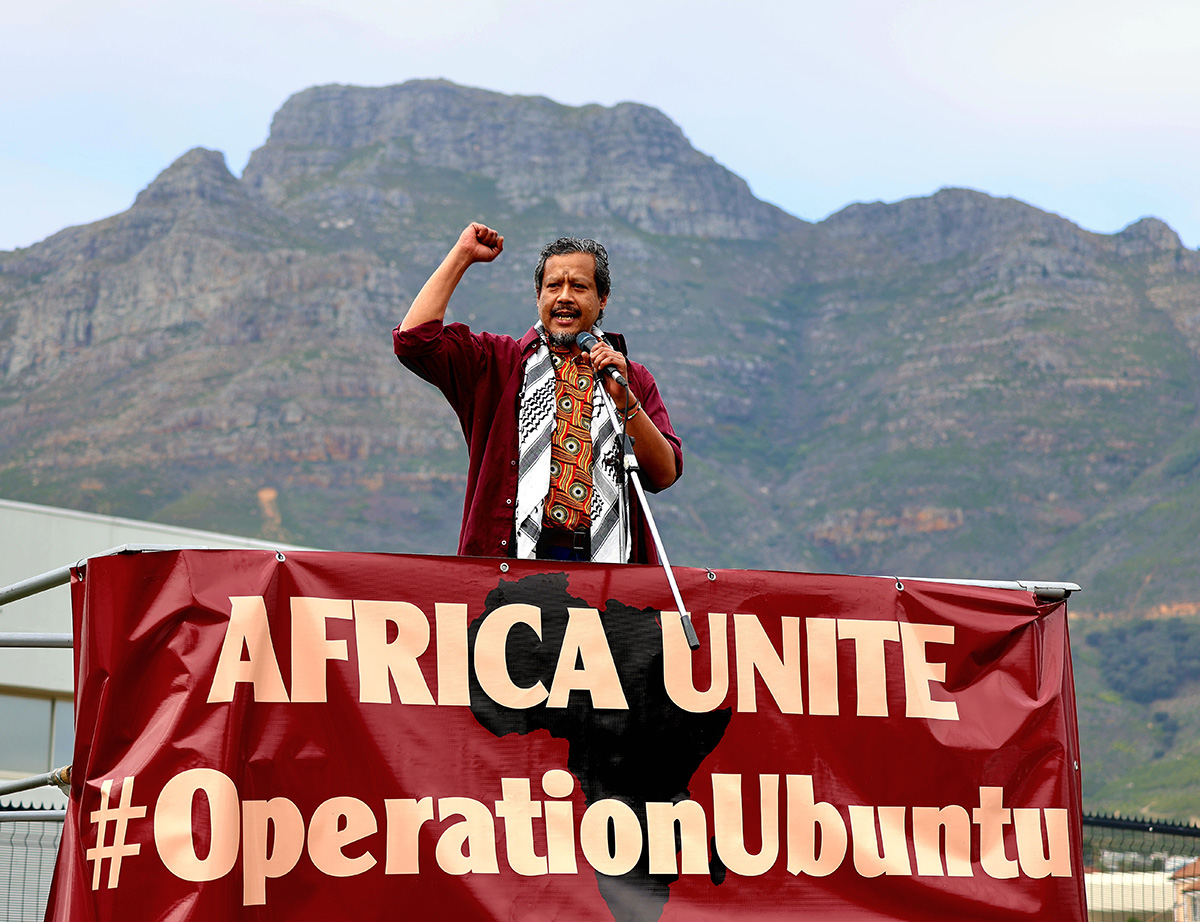

Around 350 people from 80 organisations joined Cape Town’s Operation Ubuntu anti-xenophobia march, calling for arrests, migrant protection and government accountability as a consolidated memorandum was handed to police and officials.
By ANWAR OMAR
Representatives from 80 organisations gathered in District Six on the morning of Saturday, August 8, 2026, kicking off the Cape Town leg of the #OperationUbuntu national and continental day of action against xenophobia. An estimated 350 people assembled near CPUT on Hanover Street before setting off on a route through the city centre to Parliament, where a consolidated memorandum of demands was formally handed over to government representatives.
At the outset on Hanover Street, organiser Tauriq Jenkins addressed the crowd, drawing a link between Table Mountain and the broader struggle for dignity and unity. He explained that the name Hoerikwaggo – Mountain rising from the Sea – reflects the deep spiritual connection the indigenous people had with the mountain long before Europeans arrived. He said that “the message that is being portrayed on all of our behalf is not the message that belongs to us and we make it very clear that no entity…can ever announce that the concept of Ubuntu has been suspended”.
Background
The march culminates weeks of organising that began July 11, when over 30 organisations met at Community House in Salt River to respond to xenophobic and vigilante attacks that had, by their count, forcibly removed more than 50 000 African immigrants. Drawing inspiration from Kopanang Africa Against Xenophobia’s April “March for Dignity”, the coalition grew to nearly 80 endorsing organisations.
The current wave of anti-migrant mobilisation is driven by several vigilante groups and civic movements, most notably March & March, Operation Dudula, and the South Africans for Constitutional Reform (SACR). These groups triggered the present crisis by setting a June 30, 2026 deadline for all undocumented immigrants to leave the country, sparking widespread fear and forced displacements.
The route
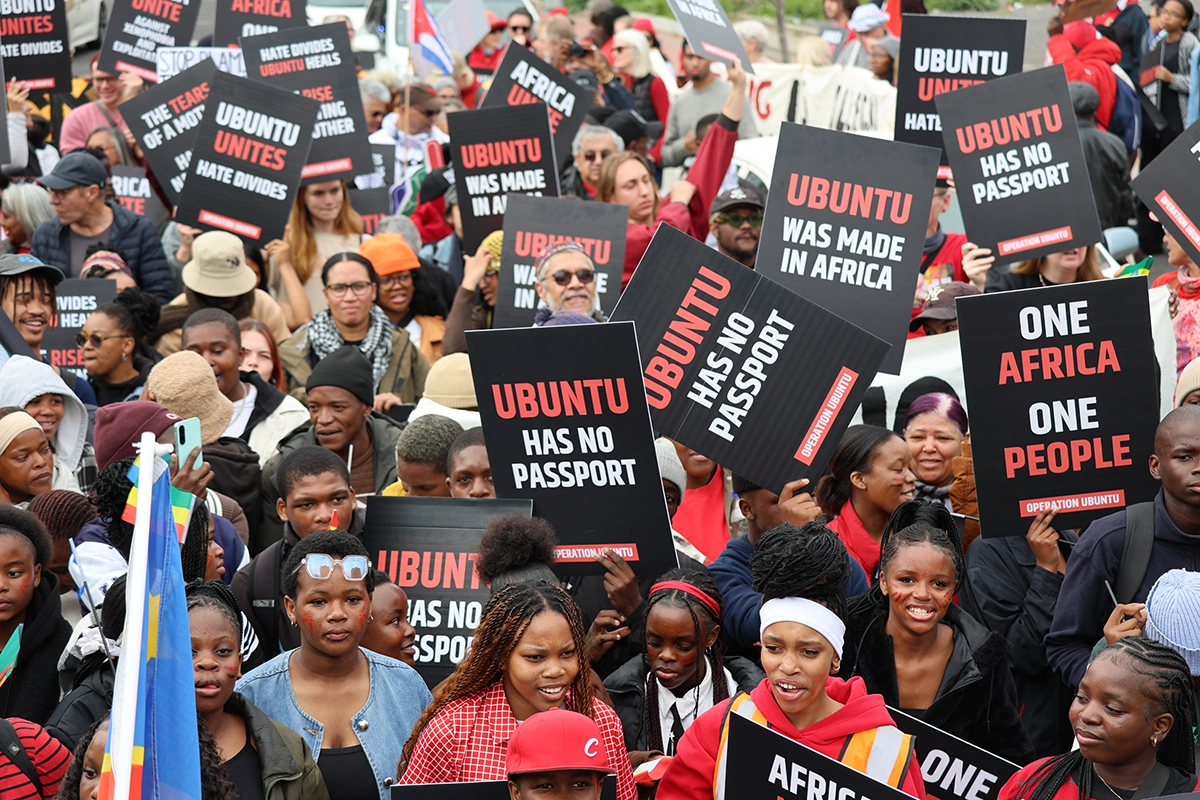
Participants who gathered on Hanover Street were welcomed by chanting, singing youth, who led the march in freedom songs and slogans that carried through the entire procession.
You may also want to read




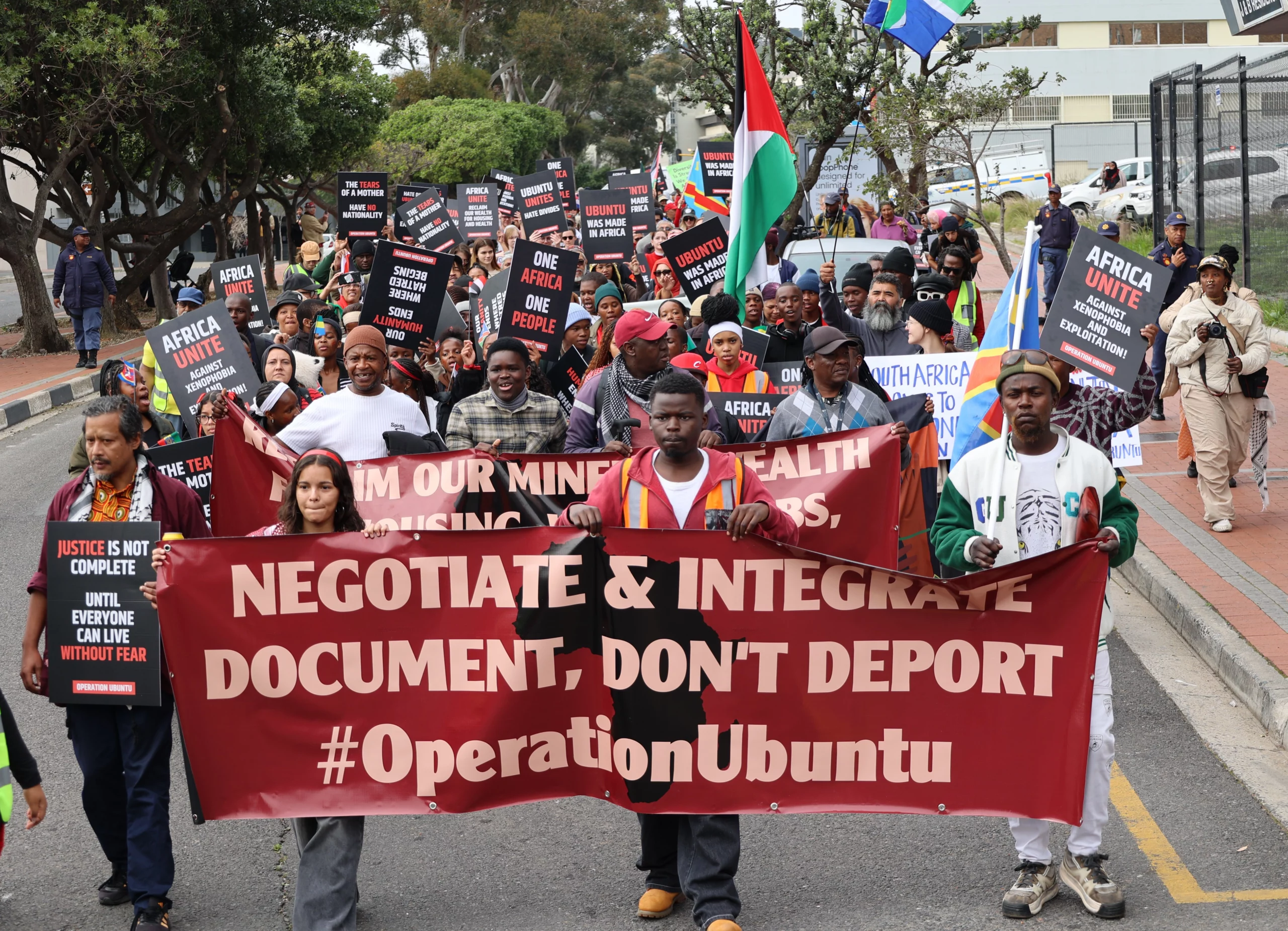
From there, marchers turned into Buitenkant Street, filing past the Granary, home to the Desmond and Leah Tutu Legacy Foundation, before pausing outside Cape Town Central Police Station, where Lieutenant General Sizakhele William Dyantyi of the Western Cape SAPS provincial commission accepted the memorandum.
At the handover outside Central Police Station, activist Shaheed Mahomed called for the immediate arrest of March and March leaders Jacinta Ngobese-Zuma and Nkosikhona Ndabandaba. Mahomed’s call, delivered in the Lieutenant General’s presence, reflected a demand echoed throughout the memorandum: that those responsible for inciting the June 30 expulsions be held to account. He urged the police to “arrest and charge individuals engaging in incitement of violence and hate against foreign nationals”.
Key demands
The memorandum handed over, endorsed by 80 other organisations, sets out a wide-ranging set of demands directed at the Presidency, the Department of Home Affairs, the Department of Human Settlements, the Department of Cooperative Governance, and the South African Police Service.
The memorandum focusses on what organisers call the “Musina Moment” when, on June 30, 2026, the “March and March” campaign ordered undocumented migrants to leave the country. According to them, state tolerance enabled the expulsion of over 160 000 people. They declared that their nation-wide action on August 8, on the eve of Women’s Day, is their response to the reclaiming of Ubuntu and a demand for accountability.
The memorandum’s demands, addressed to five government entities, call on:
· The Presidency to condemn xenophobic violence publicly, halt deportations immediately, hold inciters accountable, and recommit to the African Union principles of unity and free movement.
· Home Affairs to scrap the First Safe Country Principle from its draft White Paper, impose a two-year moratorium on expulsions, and clear the identity documentation backlog affecting some 4 million South Africans.
· Human Settlements to reject the PIE Amendment Bill, halt evictions, and adopt an “upgrade, not evict” policy for informal settlements.
· COGTA to invoke the Disaster Relief Act for displaced communities, including refugees camped outside eThekwini’s Home Affairs Refugee Reception Centre.
· South African Police Service to protect migrants from vigilante violence, prosecute those organisers blame for inciting the June 30 expulsions, and act on gender-based violence and the criminalisation of poverty.
The memorandum closes by demanding monthly accountability meetings with the President, starting at the end of August, to track progress on every demand.
Parliament
The march then cut right into Roeland Street and pressed on to Parliament, where representatives of Home Affairs, Human Settlements, and the Presidency received the document. Both handovers were formally acknowledged, and at Parliament the memorandum was read aloud to the waiting delegations.
Speeches were delivered at the handover of the memorandum at the Central Police Station, and at Parliament, with chanting of slogans and freedom songs along the route.
At each handover point, the various government officials acknowledged receipt of the document. At Parliament, Mr Jobs Phala, representing Home Affairs, formally acknowledged receipt of the memorandum and committed to “take it to the relevant section within the Department, including the Director General and the Ministry” and recognised the right of assembly to present the memorandum in a peaceful manner.
National context
Saturday’s Cape Town march was one leg of a coordinated national and continental action, with simultaneous marches held in Johannesburg and Durban and a candlelight vigil planned for 8pm across South Africa and the wider continent. The action followed weeks of mobilisation by the March Organising Committee, whose July 24 press release first set out the campaign’s call for a “day of mass action against xenophobia and for African unity”.