





![Does ta’wīl mean interpretation or fulfilment? A Quranic reassessment [+video]](https://muslimviews.co.za/wp-content/uploads/2026/10/Tawil-Kaskas-360x180.webp)








![Why becoming a wealthy Muslim is commendable in Islam [+videos]](https://muslimviews.co.za/wp-content/uploads/2026/09/Muslim-Trade-Business-1-360x180.webp)



In Part Two of Reclaiming Agency, DR ISMAIL ADAM PATEL argues that coloniality confined Islam to the private sphere and transformed a faith of justice into one of passivity. He outlines how Muslims can restore Islam’s public role through institutions, language and collective action.
Part Two
The Diagnosis – A religion of revolution turned into a sedative
If the landscape names what is being done to us – as we discussed in part one – the diagnosis must name what has happened within us. There are two factors, and they are joined at the root.
The first is that, under colonialism and the coloniality that outlived it, Islam became privatised. This was not an accident. It was a design. The modern order can tolerate Islam as a religion. That is Islam as a private faith, a heritage, a cuisine, a way of dying. What it cannot tolerate is Islam as a political subject, as a name around which two billion people might assemble and make demands of the world. So, a bargain was offered, and over a century we quietly accepted it. To be able to exist/ live within the Eurocentric order we accepted to keep Islam in the heart, in the home, in the masjid, and out of history. Believe what you like on Friday, provided it changes nothing on Monday.
The second is that Islam, a faith born as a revolution, a faith that was willing to suffer migration, oppression and taunts; a faith through sacrifice that established a political order and began by smashing idols and overturning the hierarchies of Mecca, has been slowly converted into its opposite. Into a sedative. A painkiller. Something we take to make the suffering bearable rather than to end it.
The impact of this dual action is precisely the helplessness we opened with.
We have traded an Islam that fights for justice — measuring success against the standard of the hereafter — for a ‘sedative Islam’: the Islam of endless ritual without consequence, of waiting passively for divine intervention while the world burns.
We took the most explosive concepts in our tradition and defused them. We turned shahada into a private ticket to Jannah. We turned taqdir and sabr, into an excuse to do nothing now. We perform the rituals flawlessly and we have forgotten what they were for.
Ask yourself honestly, when our communities feel the pain of Gaza, what do we reach for? Very often, another gathering, another night of supplication, another emotional lecture. And then sleep. The ritual absorbs the energy that should have become action. The painkiller works. That is exactly the problem. A sedative is judged successful when the patient stops moving. And a Muslim who has been sedated keeps the coloniser comfortable.
Duʿaʼ was never meant to be the end of our response to injustice. It was meant to be the beginning of it.
Duʿaʼ is a shield, yes, but remember that the power of a weapon lies not in its possession but in its use. A weapon fulfils its purpose only when it is wielded.
And that reframing is itself the beginning of the cure, because it costs nothing and is available every Friday. The same ritual that has been sedating us is, with one turn of intention, the most powerful mobilising engine any community on earth possesses. No other movement can gather its people weekly, by the hundred million, already primed to act for the sake of Allah. The mimbar that put us to sleep is the same pulpit that can wake us. We do not need a new tool. We need to remember what the one in our hands is for.

De-privatising the faith — the work nobody else can do for us.
Here I want to slow down, because this is the hinge of everything that follows, and it is the point I have been pressed to make plainer. It is not enough to diagnose the privatisation of Islam. We have to say, concretely, how a community overcomes it. How faith is brought back out of the private heart and into the shared world where power is actually contested. If privatisation was done to us by design, then de-privatisation must be done by us, also by design. It will not happen by sentiment.
Let me be exact about what privatisation is and is not, so that overcoming it is not mistaken for something cruder. De-privatising Islam does not mean policing private belief, nor seizing the apparatus of a state, nor imposing piety by force. It means refusing the false partition that says faith may govern the prayer mat but not the marketplace, the home but not the public square, the funeral but not the future. It means allowing Islam to do in public what it already does in private: to order our priorities, to name what is just and what is unjust, to summon us to act. Privatisation amputated the public limbs of the faith. De-privatisation is physiotherapy, teaching those limbs to move again.
How, then, does it actually happen? I would name several disciplines, and I want you to notice that each of them is something this room can begin without anyone’s permission.
It begins with naming the bargain out loud. A trap you cannot see, you cannot leave. The first act of de-privatisation is for the khateeb, the teacher, the parent to say plainly: we were offered a deal — keep Islam in your chest and out of the world — and we are declining it. Simply making the privatisation visible breaks half its power, because it has always worked best when we mistook it for piety. The man who keeps his faith quiet in public often believes he is being humble or prudent. He must come to see that he is, without intending it, honouring a settlement designed by people who wished his faith to have no consequences.
It continues with restoring the public vocabulary of the faith. A privatised religion is one whose words have been quietly relocated, where ideas of justice, witness, struggle, sanctuary surrendered to secular custody, while we are left with a vocabulary of private comfort only. To de-privatise is to speak ʿadl, ẓulm, shahada, amr bil-maʿruf, ribat, fadhail in public, about public things, without apology and without first translating them into someone else’s terms. The community that can only describe its own deepest commitments in borrowed language has already privatised itself, because it has agreed that its own words are unfit for the public square.
It requires rebuilding our own institutions. This is decisive, because privatisation is enforced by infrastructure, and only infrastructure overturns it. A faith with no schools of its own teaches its children in someone else’s frame. A faith with no waqf depends for its survival on the goodwill of those who would prefer it quiet. A faith with no media speaks only when granted a microphone, and then only on the terms of the one holding it. The masjid, the madrasah, the endowment, the legal fund, the journal, the media house, these are not optional extras to belief. They are the public lungs of a faith. Privatisation collapsed those lungs. Rebuilding them is how the faith breathes in public again. The Muslim institution is, in this precise sense, an instrument of de-privatisation.
It demands a public ethic that costs us something. Privatised religion is, above all, convenient, it asks nothing that would inconvenience our standing, our comfort, our careers. The boycott that makes us ethical consumers, the ‘political’ vote cast on principle against our own short-term interest, the vacation where solidarity trumps luxury, the civic commitment over leisure time, the public word spoken when silence would have been safer: these small, costly, visible acts are how faith re-enters the world. Every time a Muslim accepts a real cost for the sake of a public good named in the language of the deen, the partition between private faith and public life cracks a little further.
And it rests, finally, on the household. The partition is rebuilt or dismantled there before anywhere else. A child who learns that prayer is for the masjid, but the world runs on other rules has already been handed the privatised faith as an inheritance. A child raised to see her donation, her honesty, her courage, her refusal of a lie as part of her Islam, not as secular add-ons to a private devotion, has been inoculated against the bargain before it was ever offered to her. The family is the smallest unit of de-privatisation, and the one entirely within our hands.
None of this is the seizure of power. It is something more durable and more difficult: the patient reconstruction of a faith that expects to be consequential in the world. The privatised Muslim asks, ‘How can I preserve my personal piety without disturbing the world around me?’ The de-privatised Muslim asks, ‘How must I shape the world around me in obedience to Allah?’ The privatised Muslim seeks permission to believe; the de-privatised Muslim asks what must be offered to the world. The whole of the practical programme I will come to rests on that shift in orientation. The whole of the practical programme I will come to rests on having changed that one question.
You may also want to read




Questioning the question
So, the question before us seems to be the hardest one: why are we marginalised, oppressed, colonised? I say we must first question the question. Notice what it does. It turns the spotlight back on us and asks us to confess our defect. This question demands to explain what is wrong with Muslims, what we lack, where we fell behind. Every answer we give in that frame, however sincere, has already accepted the terms of the one who is interrogating us. It treats our subjection as a verdict on our worth. I want us to refuse the question as it is posed and ask a better one.
There is a brutal idea worth sitting with: that we are not subjugated because we are deficient, but because we are a threat. A people who carry within them a name Islam a faith that can summon a loyalty deeper than the nation, wider than the market, older than the empire. This is the Islam in which a father in Gaza accepts the death of his child, a mother in Xinjiang is ready to face the concentration camp, and young people in the West are willing to surrender comfort and luxury for justice. The coloniser’s deepest fear was never our backwardness. It was our coherence, the possibility that this Islam might one day gather us into a subject that acts.
The crisis of the Ummah is not that we are too weak to deserve a place in the world. It is that we are too strong to be ignored, and too whole to be absorbed.
Now, I want to be careful, because refusing the question ‘what is wrong with us?’ can become euphoric. It does not mean we have no work to do. It means we stop accepting that our suffering is a verdict on our worth. The bombs falling on Gaza are not a judgement on Palestinian character. The drain of our wealth, the redrawing of our borders, the propping-up of our dictators, these were done to us, and they were done precisely because a Muslim political subject was dangerous to the order that did them. To name that is not self-pity, and it is not self-blame. It is to see clearly.
And seeing clearly is a tool for self-respect. Because the answer to being made an object is to insist on being a subject, to insist on agency, Muslim agency. If our condition were caused entirely by others, then only others could fix it, and we would be reduced to spectators of our own fate. This idea refuses to let us be spectators. It says: there is a portion of this that is ours to repair, and that portion is the one place where our action is guaranteed to matter. We must be the agents of repair and carve our own future.
Think about it. We share the same time, the same resources, the same Allah-given intellect as anyone else. We are not lacking in capacity. What we have surrendered is something more dangerous to lose: the right to name our own world. We have let others supply the very words in which we are allowed to think about ourselves. We use their phones, their platforms, now their AI and that alone would be no shame; every civilisation borrows tools. The deeper surrender is that we have also borrowed their categories. That is, their measures of what counts as advanced, rational, civilised, moderate and thereafter judged ourselves by their standards and found ourselves wanting. That is the real occupation: not of our land, but of the standards by which we assess our own worth.
We import the West’s objects and call it progress, while we let it keep the deeper monopoly — the power to define what counts as progress at all. A people that cannot name its own world is governed even when it is not occupied.
But a civilisation that diagnoses itself this clearly is already reviving, because the moment we see that our subjection is a measure of our significance, not our defect, the shame lifts and the work begins. If the door was the door of privatisation, the deal that Islam stay in the heart and out of history, then we can refuse it from the inside. We are not waiting on the enemy’s mercy, and we are not confessing a defect. We are reclaiming a name that was always ours to carry into the world. That is not despair. That is the most empowering position in this whole discussion.
So put the two halves together. On one side, our faith was privatised. On the other, we turned our faith into a sedative. The combined effect was that the world was arranged so that a Muslim political subject could never assemble. These are not two diseases. They are one structure seen from inside and out and so, mercifully, they share a single cure: to refuse the privatisation and to turn Islam from a sedative into a stimulant, a catalyst, so that Muslims walk back into history as a subject, a people that acts.
Dr Ismail Adam Patel is the founder of the UK-based NGO, Friends of Al-Aqsa, and former visiting research fellow at the University of Leeds. He is a leading voice on Palestinian liberation and pivotal in mobilising civil society. His works include A Brief History of Palestine (Al-Aqsa Publishers, 2023), Madīna to Jerusalem: Encounters with the Byzantine Empire (Kube Publications, 2005), The Muslim Problem: From British Empire to Islamophobia (Palgrave Macmillan, 2024), and Treasures of the Holy Sanctuary (Turath Publications, 2026). He is committed to exploring decolonial thought and advancing Critical Muslim Studies.
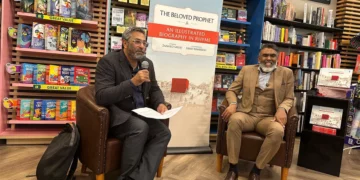
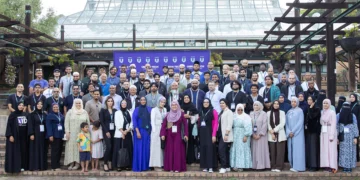
This is a transcript of a speech given Dr Ismail Adam Patel to Muslim scholars and activists at Monarch Hotel in Rosebank, Johannesburg on June 17, 2026. The event was hosted by Jamiat Ulama South Africa
Coming in Part Three
In the concluding instalment of Reclaiming Agency, Dr Ismail Adam Patel moves from diagnosis to practical action. Introducing the classical concept of ribat (standing firm in faith) as a model for modern civic engagement, he presents a practical roadmap for transforming devotion into organised action through institutions, scholarship, technology, media, economic activism, political participation and community leadership.