






![Does ta’wīl mean interpretation or fulfilment? A Quranic reassessment [+video]](https://muslimviews.co.za/wp-content/uploads/2026/10/Tawil-Kaskas-360x180.webp)










![Why becoming a wealthy Muslim is commendable in Islam [+videos]](https://muslimviews.co.za/wp-content/uploads/2026/09/Muslim-Trade-Business-1-360x180.webp)

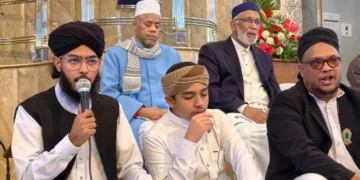


As we usher in Muharram, MUFTI SAYED HAROON AL AZHARI explores how the lessons of Karbala, justice and resistance remain relevant to Gaza and contemporary South Africa.
As the sacred months of Hajj conclude and Muharram begins, Muslims are reminded not only to remember history but to act upon its ethical lessons.
In a world witnessing atrocities in Gaza and xenophobic violence in South Africa, the Farewell Hajj, Ghadir Khumm, and Karbala remain deeply relevant. Together, they offer a moral framework for resisting oppression, challenging false narratives, and upholding justice.
During his Farewell Hajj, the Prophet Muhammad (peace be upon him) delivered a timeless message for humanity, putting into motion a movement for social and spiritual transformation grounded in justice. Central to his mission was removing zulm (oppression) and restoring adl (justice).
The Prophet did not only preach justice but lived it. In the Farewell Sermon, he affirmed the sanctity of human life, property, honour, and dignity. He abolished key injustices of the pre-Islamic period, including usury, beginning with the financial privileges of his own family. These were not symbolic acts but real systemic reforms with lasting consequences.
Equally significant was his rejection of racial and ethnic superiority. He proclaimed: ‘There is no superiority of an Arab over a non-Arab, nor a non-Arab over an Arab; neither a white over a black, nor a black over a white, except through God-consciousness.’ During the conquest of Makkah, he reminded humanity that all are children of Adam, created from dust. The rituals of Hajj reinforce this equality, uniting people of all races, nations, and social classes before Allah.
At the Farewell Hajj and Ghadir Khumm, the Prophet emphasized two enduring sources of guidance: the Quran and his Ahlul Bayt (Tirmidhi 3786-8; Muslim 2408). He warned against neglecting them and foretold the suffering his family would face. History records that when these principles were abandoned, distortion, tyranny, and political manipulation emerged. The martyrdom of Imam Husain at Karbala became the ultimate symbol of resistance against injustice and moral corruption.
The road to Karbala was preceded by years of political conflict, censorship, and manipulation of public perception, patterns that mirror how power and xenophobia today are sustained through distorted narratives and the shaping of fear against vulnerable groups. Karbala therefore teaches the importance of standing for justice and truth despite fear, pressure, or overwhelming odds. While some sought to silence discussion of Imam Husain, the Prophet himself foretold the trials his family would face. Historical reports indicate that Imam Ali, the father of Imam Husain, was also a target of political hostility. Various ahadith report that Banu Umayyah used to curse Imam Ali. Reports in Sahih Muslim (2409), Sunan Abi Dawud (4650), and others record attempts to command his public disparagement, alongside difficulty in preventing it.
The consequences of this climate were profound. Repeated false narratives shaped public consciousness over time. By the era of Imam Husain, many had inherited a distorted perception of reality. Some distrusted the Prophet’s family, others became normalised to injustice, and many remained silent due to fear or political pressure. The trials of the Ahlul Bayt and Karbala therefore show how propaganda and censorship prepare the ground for oppression.
The companions recognised this danger. Abu Saeed al Khudri challenged Governor Marwan for altering the Eid proceedings for political purposes (Sahih Bukhari 956). Ibn Hajar highlights that cursing Moula Ali from the pulpit was the policy of the Umayyads. Another companion, Sa’d bin Abi Waqas, protected Moula Ali by citing the Prophet’s words (Ibn Majah 121), while Ibn Abbas resisted political interference, stating: ‘They are only forsaking the Sunnah out of hatred for Ali.’ (Nasa’i 3006)
You may also want to read


Hadith scholars also recorded political censorship in early Islam. Abu Hurairah feared speaking, stating he would have been killed (Sahih Bukhari 120), while Ibn Umar avoided resisting to prevent bloodshed. Imam an-Nasa’i was persecuted for writing on the merits of Imam Ali. It shows how political power shaped knowledge transmission, and how preserving truth required resisting pressure, correcting priorities, and reclaiming authentic understanding.
Karbala stands as a reminder that truth must be defended against propaganda, injustice, and the manipulation of public opinion. It also highlights how societies become distracted from deeper structural injustices, lessons that remain urgently relevant today.
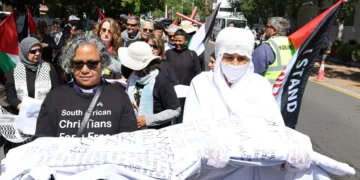
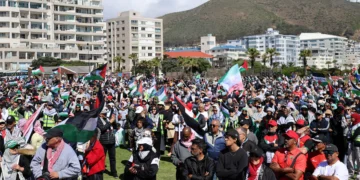
In Gaza, innocent civilians suffer violence and displacement. In South Africa, engineered xenophobic attacks target vulnerable migrants and foreign nationals, who are turned into scapegoats and violence falsely presented as legitimate social or economic grievances. While the contexts differ, both reflect the dehumanisation of human beings, distraction, and the normalisation of injustice.
Xenophobia is not an African value but reflects the logic of division rooted in colonialism and apartheid. It redirects public anger towards vulnerable migrants instead of addressing structural issues such as poverty, unemployment, corruption, inequality, and political failure. In this sense, it functions as a modern form of divide-and-rule politics. Modern borders, created by colonial and imperial powers, are still used to justify hostility towards people who share common histories and humanity. African unity and solidarity therefore remain essential, and people from other African countries should not be treated as enemies in South Africa.
Islam rejects such scapegoating. Human worth is not defined by nationality, ethnicity, race, or legal status. While states may regulate migration and uphold the law, no grievance justifies murder, vigilantism, or destruction of property. Violence against foreign nationals does not resolve economic hardship or government failure; instead, it deepens social fragmentation, weakens socio-economic conditions, undermines human dignity, and perpetuates injustice.
A central lesson of Karbala is the need to resist propaganda and false narratives. As the proverb states: ‘Those who control the narrative control perception.’ Muslims must cultivate critical awareness, verify information, challenge stereotypes, and refuse to be controlled through misinformation. Xenophobia, Islamophobia, and other forms of prejudice thrive when we allow fear to replace truth. The message of Karbala calls for principled action beyond moral outrage: education, solidarity with the vulnerable, civic engagement, and peaceful social reform.
As Muharram begins and the memory of Karbala returns, Muslims should renew their commitment to justice. In a world increasingly divided by fear, propaganda, and hostility, the spirit of Imam Husain and Karbala reminds us to defend human dignity, refuse silence in the face of injustice, and affirm that truth must always prevail over oppression and division.
Mufti Sayed Haroon Al Azhari is the Head of the Cape Town Ulama Board