












![The market-builder who restrained the market [Part 2]](https://muslimviews.co.za/wp-content/uploads/2026/08/PHOTO-2026-08-25-17-16-32-360x180.jpg)
![The merchant preceding the Prophetic mission [Part 1]](https://muslimviews.co.za/wp-content/uploads/2026/08/01-360x180.jpg)




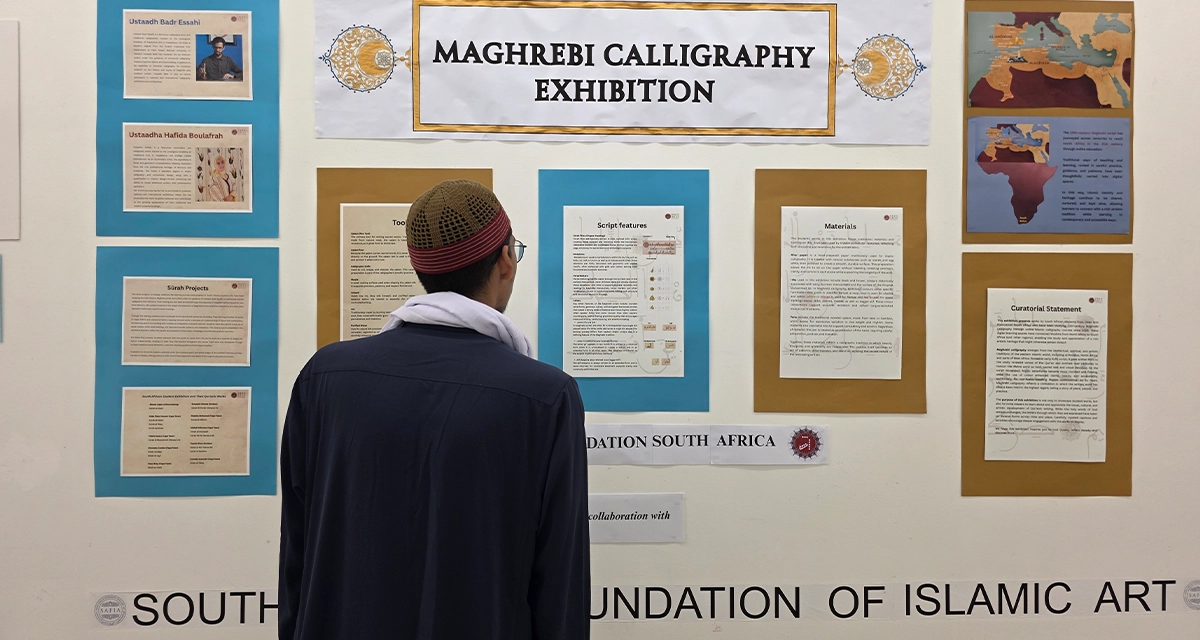

The Maghrebi Calligraphy Exhibition in Cape Town brings Islamic art, history and community into conversation, highlighting the living tradition of Maghrebi script in South Africa.
By WIDAD SIRKHOTTE
Visual arts are, sadly, not commonly pursued as a full-time career within the South African Muslim community. For many, they are practised quietly as a hobby or personal interest rather than embraced as a profession. This reality is not accidental. It is shaped by a long colonial and apartheid history in which the creative contributions of Muslim artisans were relied upon but systematically erased. Muslim hands designed, built, made and crafted buildings, interiors, clothing and objects, yet their names were rarely attached to their work, and their creative labour was neither recognised as contributing to society nor valued as art, knowledge or heritage.
A video overview of the exhibition (Video: Deen Arts Foundation South Africa)
During apartheid, visual art was not offered as a subject in schools that fell under the racialised Departments of ‘Coloured’, ‘Indian’ and ‘Bantu’ education. While a small number of Muslims not classified ‘white’ under apartheid did attend university, this required special permits, and access was restricted to certain disciplines. Studying art was uncommon, and when it did occur, the curriculum was firmly rooted in Eurocentric traditions.
Over time, this history has shaped how many South African Muslims view art today. Art is often seen as non-essential – something optional rather than formative. Yet art teaches us how to see, how to slow down, how to reflect and how to make meaning. It is about preserving heritage, culture and identity. It nurtures patience, discipline and sensitivity, qualities deeply aligned with Islamic values.
The Qur’an itself carries a deeply visual and written history. The development of the Arabic script used to convey its words tells the story of how Islam travelled across lands and cultures, and how knowledge was honoured through beauty, care and precision. Islamic calligraphic scripts are therefore not simply decorative. They are records of devotion, scholarship and transmission. Their practice is not only about learning to write beautifully, but about cultivating presence, humility, intention and adab.
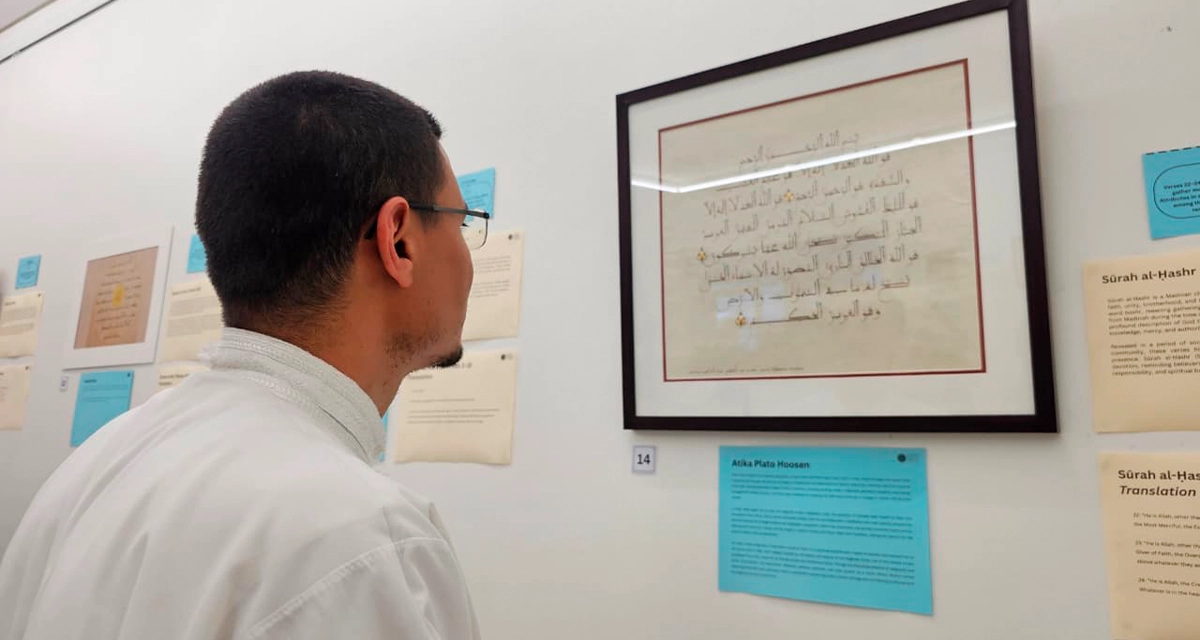
It is with this understanding that the Maghrebi Calligraphy Exhibition was carefully curated to be more than a viewing experience. It invites engagement and reflection. The artworks on display are Surah projects completed by South African Muslims studying this 13th-century Maghrebi script online with Badr Essahi and Hafitha Bouladrah, master calligraphers from Morocco who teach at Deen Arts Foundation South Africa (DAFSA). Accompanying the artworks is information about the specific Qur’anic verses, allowing visitors to connect intellectually and spiritually with what they see. The intention is not only to admire the works, but to feel inspired to reconnect with Islamic history and deepen one’s relationship with the Qur’an.
The exhibition also features infographics on the Maghrebi script itself, which developed across North Africa and parts of West Africa and Spain. Traditional tools used in the practice of this art are on display as well, offering visitors a fuller sense of the discipline and care behind each piece.
The exhibition is a collaboration between DAFSA, established in 2023 in response to a growing demand for traditional calligraphy, and the South African Foundation of Islamic Arts (SAFIA), founded in the 1980s by legendary South African artist Achmat Soni. SAFIA emerged at a time when creative expression itself was a form of political and cultural resistance. This collaboration brings together two Islamic arts organisations committed to recognising and supporting the work being done to nurture Islamic visual arts within the South African Muslim community.
A central figure in this collaboration is Mr Rafiq Desai, SAFIA’s gallery manager and a valued all-rounder, who played a key role in the conceptualisation and installation of the exhibition. Now in his late sixties, Mr Desai was born in Pietermaritzburg and is a multi-talented practitioner with a deep love for art and expertise in painting, graphic design, catalogue production, curating and exhibition installation. His skill is immediately evident, yet his journey reflects the lived realities many Muslim South Africans have faced.

He speaks of parents having to choose which child could attend university due to financial constraints, of leaving for Johannesburg to find work, and of navigating job applications during apartheid where skin colour often outweighed skill and passion. Through persistence, he found spaces that allowed him to explore his interest in art, largely through self-directed learning.
This self-directed pathway is sometimes met with hesitation, particularly within traditional Islamic art circles where knowledge is passed on through close teacher–student relationships. However, the South African context calls for a more compassionate and honest reading. While some Muslims not classified ‘white’ did attend university during the apartheid era, access was limited, disciplines were restricted, and studying art was rare. Moreover, Islamic arts were absent from university curricula, local teachers were scarce, and studying abroad was an option for very few, as online learning did not yet exist.
Within this reality, Muslim artists teaching themselves was not a rejection of tradition, but an act of resilience. They used colour paints instead of traditional inks, brushes instead of bamboo qalams (pens), and experimentation in place of a formal kurasa (syllabus), learning independently rather than under the guidance of a trained teacher. Creating Islamic art under apartheid, even when it departed from classical conventions, became a way of asserting faith, identity and belonging.
You may also want to read



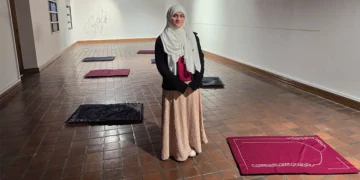
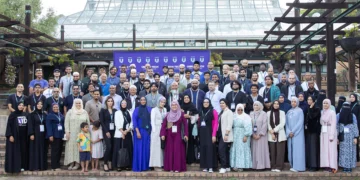
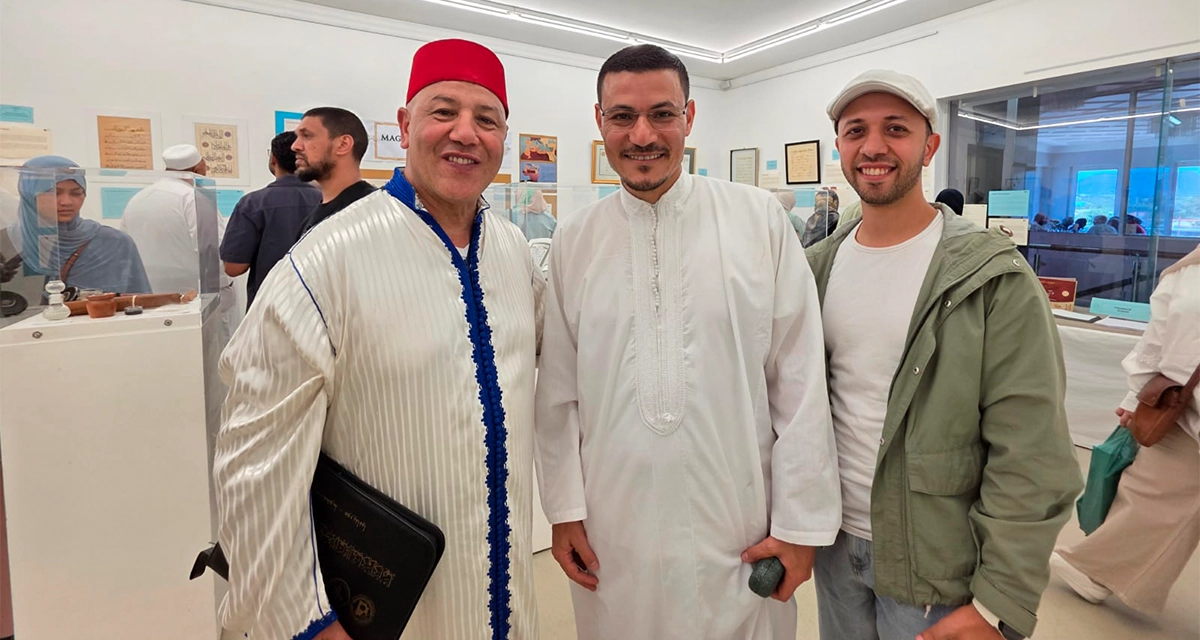
When the exhibition opened on Friday, January 24, 2026, at the Mariam Parker Art Gallery, it carried this layered history into the present. The audience included local artists, traditional calligraphers, university academics, Islamic scholars, students and professionals – both young and old, those who lived through apartheid and those who did not. It also brought together Muslims from North Africa living in Cape Town and South African Muslims, highlighting the shared connections that Islam makes possible within a diverse community. Much like the Maghrebi script itself, which has travelled from North Africa to South Africa through online education, the exhibition became a space of meeting and exchange.
This collaboration between DAFSA and SAFIA marks an important moment. Their approaches differ, but their values align. One emphasises traditional training; the other emerged in the 1980s as a platform for Muslim artists during political resistance. Together, they are nurturing a deeper appreciation for Islamic arts and gently challenging inherited colonial assumptions about the place of art in Muslim life.
This exhibition brings Islamic heritage, history and community into conversation, honouring the past while opening space for reflection, connection and continuity. It invites viewers to recognise Islamic art not as peripheral, but as a living tradition that shapes identity, knowledge and belonging in the present.
The exhibition runs until Friday, February 14, 2026. There is no entrance fee and all are welcome. Worksheets guide viewers through the exhibition to deepen engagement, and practical workshops are offered for those who wish to explore further. For more information, contact Kauthar Slemang via WhatsApp on 066 103 3088.
Widad Sirkhotte is a PhD candidate researching Islamic arts education in South Africa and the curator of this exhibition.