

















![The market-builder who restrained the market [Part 2]](https://muslimviews.co.za/wp-content/uploads/2026/08/PHOTO-2026-08-25-17-16-32-360x180.jpg)
![The merchant preceding the Prophetic mission [Part 1]](https://muslimviews.co.za/wp-content/uploads/2026/08/01-360x180.jpg)






Handwriting is more than a skill — it is a cognitive, spiritual and cultural practice. As digital tools dominate education, protecting Islamic calligraphy and writing traditions has never been more urgent.
By WIDAD SIRKHOTTE
In the digital era in which we find ourselves, handwriting is slipping quietly out of daily life. Typed assignments are now standard in primary schools. Fingers move across keyboards faster than our minds can register, and the feel of pen on paper is steadily becoming a relic of the past.
Yet writing forms an integral part of who we are as human beings. It is an extension of the self, giving form to thoughts and emotions. It is also a tool for reflection, for processing experience and for meaning-making.
For Muslims, handwriting carries an even deeper resonance. It is woven into our heritage. When we reflect on how the Qur’an was preserved in written form, and how its letters evolved into distinct scripts as Islam travelled across tribes, cultures and regions, we begin to grasp the depth of the Qur’anic verse: ‘We made you into nations and tribes so that you may know one another’ (Sura Al-Hujurat, 49:13). While letters took on different shapes and styles, the words of the Qur’an remained unchanged. Diversity did not weaken unity — it enriched it. The written word has always connected human beings across time, place and tradition.
From a neurological perspective, handwriting is a multisensory experience that engages motor, visual and cognitive regions of the brain. This strengthens neural pathways involved in learning, recall and deep understanding.
From an educational perspective, writing allows students to organise and translate ideas into text, developing critical thinking skills. It supports comprehension, fosters sustained attention and nurtures creativity — among the many benefits of handwriting.
Ibn Khaldun, the fourteenth-century North African scholar regarded as the father of sociology, identified writing as one of the foundations of civilisation. It preserves knowledge, cultivates intellectual habits and forms the basis of educational practice. South African Islamic history echoes this truth. We need only recall figures such as Tuan Guru (Imam Abdullah ibn Qadi Abdus Salaam), who meticulously wrote out the Qur’an from memory. His writings were acts of devotion, preservation and resistance, sustaining a community with limited access to Islamic resources and ensuring that Islam not only survived but flourished in South Africa.
Today, with mass printing and digital technologies, handwriting is often reduced to a hobby, an extracurricular activity or a once-off workshop. In this shift, we risk losing sight of its sacred history and purpose. Even the English word ‘calligraphy’, derived from the Greek kalligraphía and commonly used to translate khatt, emphasises outward technique. Islamic calligraphy, however, is far deeper. It is a spiritual and transformative practice.
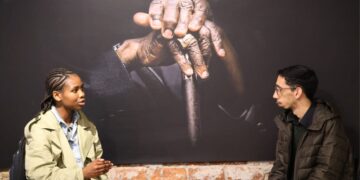
This becomes clear when listening to students at Deen Arts Foundation South Africa enrolled in long-term Islamic calligraphy programmes. They consistently describe the process as more meaningful than technical skill alone.
One student shared: ‘When I write subhanAllah, it is as if I am experiencing it.’ Another student, who is also learning hifdh, explained that repetitive writing deepens her connection with the Qur’an, encouraging reflection on the meanings of verses while supporting memorisation. Others describe the practice as therapeutic — a space of calm and reset amid work and daily pressures.
The essence of Islamic calligraphy lies in what is written. It is not the letters themselves that are beautiful, but the sacred words of Allah that confer beauty upon them. Islamic calligraphy invites engagement, reflection and refinement of character.
You may also want to read



My appeal to madrasahs, Islamic schools and higher education institutions, as they plan for 2026, is to rethink their curricula. Handwriting — particularly Islamic calligraphy — should be given meaningful space. It need not be confined to Arabic language classes, but can be integrated across subjects or offered independently, allowing devotional writing the attention it deserves. What handwriting cultivates is precisely what is missing in an increasingly digitised educational landscape.
More broadly, our intention should be to develop ourselves as reflective human beings. Islamic calligraphy invites thought, connection and discipline. It refines us. It grounds us. It helps us remain mindful of the written traditions that continue to shape who we are.
Widad Sirkhotte is a PhD candidate at Stellenbosch University researching Islamic calligraphy education in South Africa.