

















![The market-builder who restrained the market [Part 2]](https://muslimviews.co.za/wp-content/uploads/2026/08/PHOTO-2026-08-25-17-16-32-360x180.jpg)
![The merchant preceding the Prophetic mission [Part 1]](https://muslimviews.co.za/wp-content/uploads/2026/08/01-360x180.jpg)









By YASEEN BARDIEN
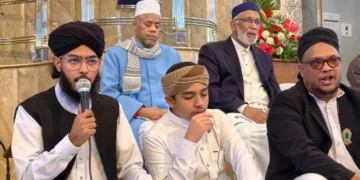
IMAMS were encouraged to engage contemporary social challenges while remaining rooted in Islamic principles and preserving the independence of the mimbar at a symposium in Cape Town on June 13.
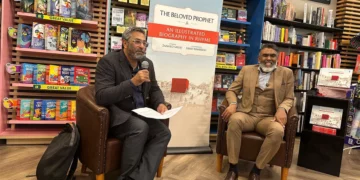
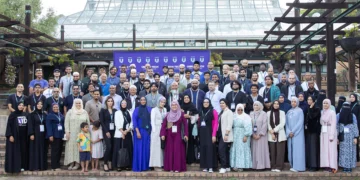
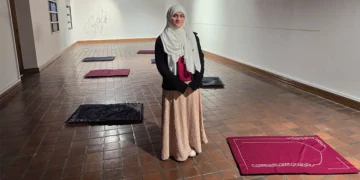
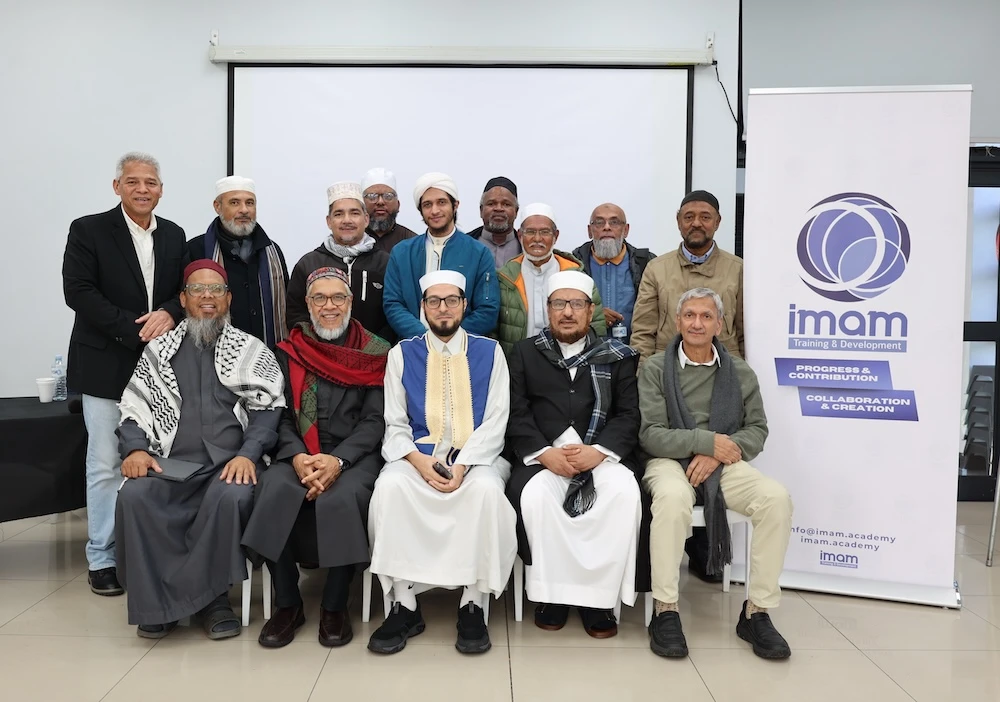
The half-day symposium, themed “Fiqh al-Waqi in Practice: The Imam and Khateeb as Guardian, Guide and Public Voice in Cape Town Today,” was co-hosted by The Imam Foundation UK and Wasatiyah Institute at Panorama Mosque, Parow.
The programme featured presentations by Dr Abdul Wahab Al-Turairi, Prof Mohammed Ali Belaoo and Shaykh Ighsaan Taliep. The discussions centred on the theme of fiqh al-waqi, translated as the jurisprudence of reality, referring to understanding contemporary realities and applying Islamic teachings within those realities.
Corruption, crime and responsibility
Shaykh Taliep focused on applying the concept to contemporary South African challenges, identifying corruption as a major concern.
He framed his discussion around the objectives of the Shariah, citing classical scholarship which described Islamic law as being rooted in justice, compassion, wisdom and public good.
“The most prevalent existential threat of South African society is the phenomenon of corruption,” he said.
Shaykh Taliep, who is a member of the Cape Town Ulama Board, argued that corruption sits at the root of many of the country’s social challenges, saying educational, healthcare and crime related problems often arise from deeper institutional failures.
He pointed to gang violence, youth unemployment and social fragmentation as challenges that require the attention of religious leaders and communities.
Referring specifically to Cape Town, Shaykh Taliep highlighted the city’s high levels of gang violence and murder, arguing that the preservation of life, one of the central objectives of Islamic law, should be a priority concern for communities and religious institutions.
He described youth unemployment as a “powder keg,” linking it to crime, despair and substance abuse and called for greater cooperation between mosques, civil society organisations, neighbourhood watches and community structures.
He also argued that the role of the imam should not just be limited to leading prayers, pointing to the example of Prophet Muhammad (SAW) as a model of religious leadership concerned with the well-being of society.
“The Prophet was certainly not confined to the role of a prayer leader,” Shaykh Taliep said.
Shaykh Taliep said religious leaders should help build institutions and mobilise expertise within communities to address issues such as crime, poverty and unemployment.
The mimbar and public engagement
Meanwhile, Prof Ali Belaoo addressed the role of the imam in engaging institutions and public affairs while maintaining independence and remaining grounded in Islamic scholarship.
“The mimbar is not merely a wooden platform to ascend,” he said. “It is a physical and spiritual extension of the Prophet’s (SAW) platform.”
He argued that religious leaders require both an understanding of Islamic sources and an understanding of contemporary realities when addressing modern challenges.
Prof Ali Belaoo argued that fiqh al-waqi was not about abandoning Islamic principles in order to accommodate society, but rather understanding people’s circumstances well enough to apply those principles appropriately.
Quoting classical scholarship, Prof Ali Belaoo, who is the President of the Imam Foundation (UK), said: “True knowledge is when a trustworthy scholar finds a valid concession for the people based on context. As for being rigid, anyone can do that.”
Prof Ali Belaoo encouraged engagement with society. However, he cautioned against turning religious platforms into partisan instruments. “The key is not to turn the mimbar into a political tool,” he said.
Drawing on examples from the UK and the rest of Europe, Prof Belaoo argued that community leaders should address public concerns through principled engagement, legal processes and cooperation with relevant institutions.
The Seerah lens


Dr Al-Turairi’s discussion was grounded in examples from the Seerah, highlighting how Prophet Muhammad (SAW) possessed detailed knowledge of influential personalities, connections amongst various tribes, economic conditions and religious communities. Using those examples, Dr Al-Turairi argued that understanding reality was an essential component of leadership and da’wah.
Drawing on examples from the Prophet’s (SAW) interactions with tribal leaders and members of other faith communities, Dr Al-Turairi argued that understanding society requires direct engagement with people and an awareness of the forces that shape communities.
Dr Al-Turairi added that contemporary imams should adopt a similar approach by developing a deeper understanding of the communities they serve and realities in which they operate.

Photo Anwar Omar
Despite addressing different topics, each speaker returned to a common theme, the need for religious leadership that is both rooted in Islamic principles and responsive to contemporary social conditions.
They argued that imams must understand the realities in the communities they serve while preserving the independence of the mimbar.
The event concluded with a Q&A session, where attendees were invited to comment on the discussion. Although more than 60 people had registered for the event, attendance was notably lower.