





![Does ta’wīl mean interpretation or fulfilment? A Quranic reassessment [+video]](https://muslimviews.co.za/wp-content/uploads/2026/10/Tawil-Kaskas-360x180.webp)












![Why becoming a wealthy Muslim is commendable in Islam [+videos]](https://muslimviews.co.za/wp-content/uploads/2026/09/Muslim-Trade-Business-1-360x180.webp)





Gang violence in the Cape Flats is more than crime — it is a moral and spiritual crisis. Why saving our children is fard* and how communities can respond.
BY SALIH DAVIDS
In many of our communities across the Cape Flats, the sound of gunfire has become as familiar as the athaan. Mothers fear the walk to school. Fathers carry silent anxiety. Our youth — our amaanah — are growing up between hope and hazard.
In one street, a mother stands a little longer at the gate than she needs to.
Not because her child has forgotten something — but because she is listening.
Measuring the silence.
Wondering if today will be a quiet day.
Her child walks ahead, already learning — without being taught — which corners to avoid.
But if we are honest, the problem does not begin with the gunshot.
It begins long before that — quietly, invisibly — in our poorest communities, where structure is fragile, opportunity is scarce, and hope is often thin.
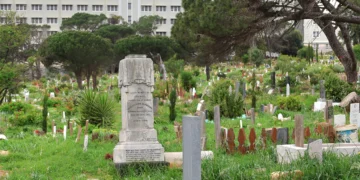
Many of these communities — Manenberg, Hanover Park, Mitchells Plain and surrounding parts of the Cape Flats — are home to both Muslim and non-Muslim families, living side by side, sharing the same streets, the same pressures, and the same fears.
A significant portion of the Muslim community is rooted here — alongside others who carry the same burdens, and the same hopes for their children.
This is not a distant crisis.
It is where we live. Where we raise families. Where our masaajid stand. Where the next generation is being shaped.
We must speak plainly: this is not only a crime problem.
It is a moral, social and spiritual crisis.
And for us, that makes it a matter of deen.
Amaanah and accountability
Allah ﷻ says: ‘Indeed, Allah commands you to render trusts to whom they are due.’
(Qur’an 4:58)
Our children are an amaanah. Their safety, their upbringing, their future — these are responsibilities we will answer for.
The Prophet ﷺ said: ‘Each of you is a shepherd, and each of you is responsible for his flock.’
(Ṣaḥiḥ al-Bukhari, Ṣaḥiḥ Muslim)
This is not a responsibility we can outsource — not to government, not to police, not to chance.
Where the problem begins
In many of these communities, the conditions are not abstract — they are lived.
Homes are crowded. Work is uncertain. Schools are under strain. Safe spaces for young people are limited. And from an early age, exposure to violence becomes normalised.
This is the soil in which gangs take root.
They do not appear suddenly. They grow where time is empty, where support systems are weak, and where young people are searching for identity, recognition and belonging.
And when that belonging is found on the street, it is often already too late.
If we get it right here — at the root — the impact will ripple outward.
If we ignore it here, it will spread everywhere.
A truth we can no longer avoid
We must confront something uncomfortable.
Among those we hear about — in gang leadership, in drug networks, in acts of violence — there are names we recognise. Names from our own communities.
This is not about labelling. It is about accountability.
We cannot continue to speak about gangsterism as if it exists ‘out there’, when it is also emerging from within our own spaces.
For too long, we have been silent.
At times, distant.
At times, in denial.
You may also want to read


The dangerous comfort of distance
There is a thinking that quietly settles in:
It’s not my child.
It’s not my street.
It’s not my area.
But this distance is an illusion.
What begins in one street does not stay there. Violence does not respect boundaries. Drugs do not recognise neighbourhood lines. And the erosion of values, once it begins, spreads quietly but steadily.
We are already seeing the effects — violence becoming normal, respect thinning, fear replacing trust.
Distance will not protect us.
The crisis we face
Gang violence today is not random. It is organised, funded and deeply embedded.
We have also seen how state failure has worsened the situation. Firearms meant to protect communities have found their way into the hands of gangs, as exposed in the case of Christiaan Prinsloo. Military deployments, such as Operation Prosper, have brought only temporary relief. Even where intelligence-led efforts showed promise, they could not sustain change on their own.
The lesson is clear: force alone cannot fix what is socially broken.
Where we must look — ourselves
We need to ask questions that are not easy to ask.
Why are our masaajid quiet after ‘Esha while the streets remain active?
Why are our halls locked when our youth have nowhere to go?
Why are our organisations struggling for resources, while gangs seem to operate without the same constraints?
Allah ﷻ reminds us:
‘Indeed, Allah will not change the condition of a people until they change what is within themselves.’
(Qur’an 13:11)
We cannot wait for change. We must become part of it.
A path forward
There is no single solution. What is required is balance — between immediate safety and long-term rebuilding.
There may be a role for law enforcement, even limited military presence, to reduce immediate violence and create breathing space. But this must be targeted, accountable and temporary.
What must follow is more important.
We need to reopen what has been closed. Our masaajid, our halls, our schools must once again become living spaces — places where young people can gather, learn and be guided.
Structured programmes matter — homework support, Qur’an classes, mentorship, sport, creative expression, even something as simple as a daily meal. These are not luxuries. They are lifelines.
Idle time is not neutral. It is recruitment space.
We must also make the right path visible and viable. Young people need to see a future that is not only morally right, but practically possible — through skills development, mentorship and pathways into work.
Families, too, need support. Parenting in environments shaped by pressure and fear is not easy. Counselling, mediation and practical assistance can strengthen the home — and strong homes build stronger communities.
Our masaajid and institutions must extend beyond sermons. They must be present in the lived struggles of the community — offering guidance that is both spiritual and practical.
This requires shura — consultation and cooperation — between masaajid, schools, NGOs, community leaders and, where appropriate, accountable structures of government.
And above all, we must stop looking away.
Silence does not protect us.
It enables the problem.
The cost of inaction
The Prophet ﷺ gave us a powerful image — the people of a ship:
‘…If they leave them, they will all perish; if they restrain them, they will all be saved.’
(Ṣaḥiḥ al-Bukhari)
If harm is allowed to continue unchecked, it will not remain contained. It will spread — into our homes, our masaajid and our hearts.
A call to action
This is not someone else’s problem.
This is our test.
Imams must lead beyond the mimbar, engaging with the realities on the ground. Parents must remain present — firm, compassionate and aware. Youth leaders must organise, mentor and guide. Professionals must contribute their skills, time and resources.
And communities must support — not stand at a distance and criticise.
Final reflection
Allah ﷻ reminds us: ‘Whoever saves one life, it is as if he has saved all of humanity.’
(Qur’an 5:32)
We are not powerless.
But we must move — together, sincerely and with purpose.
Because if we do not reclaim our communities, others already have.
Salih Davids is a Cape Town–based writer whose reflections engage questions of governance, faith and communal trust. Drawing on experience in public service and sustained study of religion, he writes from within an ongoing journey of accountability.
* Fard: a religious duty or obligation