




![Does ta’wīl mean interpretation or fulfilment? A Quranic reassessment [+video]](https://muslimviews.co.za/wp-content/uploads/2026/10/Tawil-Kaskas-360x180.webp)




















![Why becoming a wealthy Muslim is commendable in Islam [+videos]](https://muslimviews.co.za/wp-content/uploads/2026/09/Muslim-Trade-Business-1-360x180.webp)










After the Galloway-Ridley solidarity tour, this reflection asks what meaningful solidarity demands next: deeper relationships, local responsibility, ethical organising and a commitment to know communities beyond familiar circles today.
By ADNAAN ADAMS
Now that George Galloway and Yvonne Ridley have left South Africa, I find myself returning to a question: what should their visit ask of us?
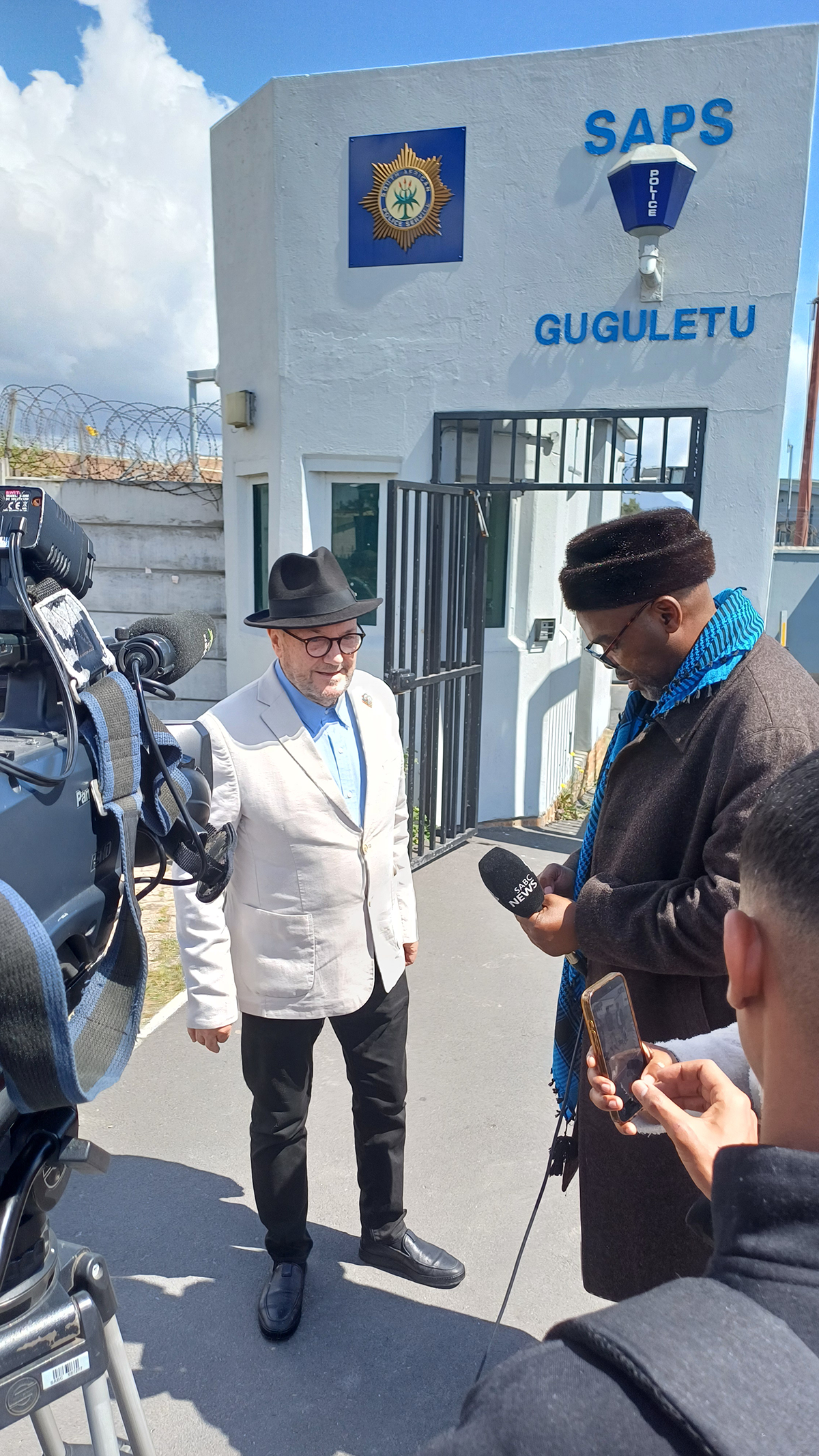
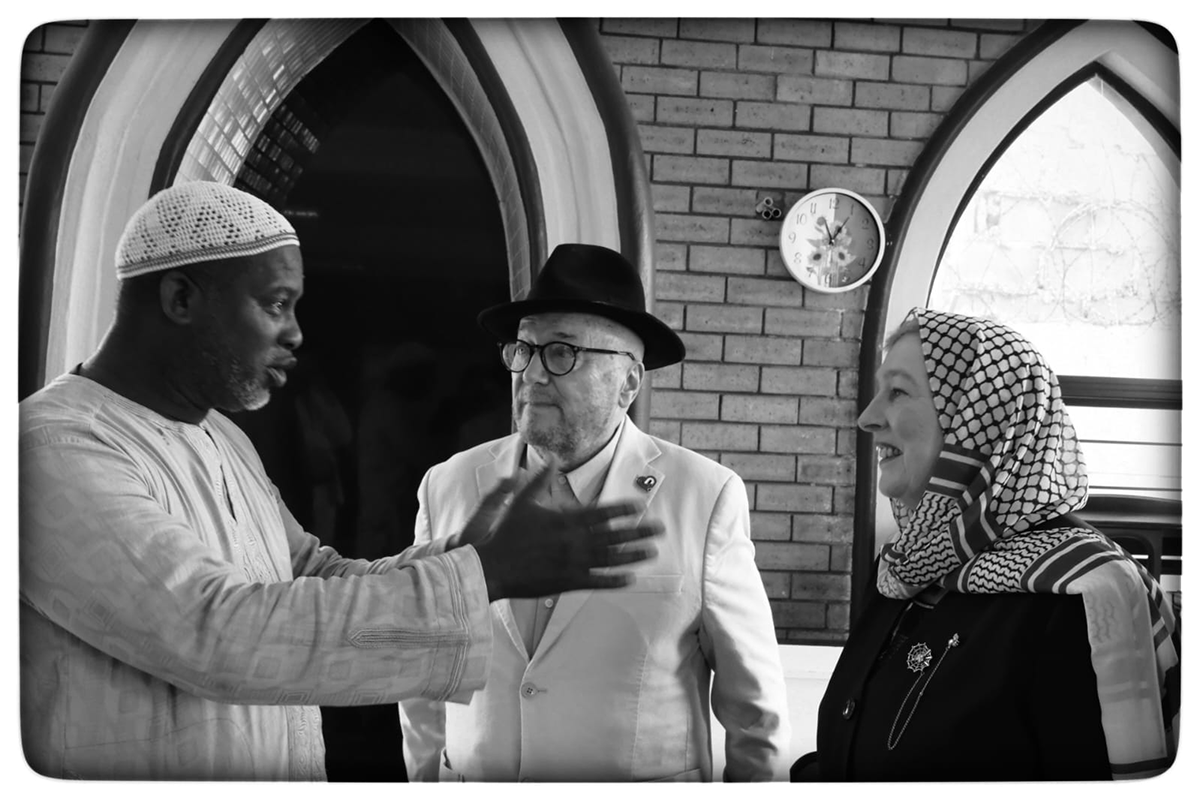
As a member of the Cape Town organising committee, convened by Academia Library, and founder of The Muslim Thinker, I helped shape the encounter. Reflection therefore begins with my own assumptions about meaningful engagement and what we owe the communities who receive us. The tour gathered us in solidarity with Palestine. Sustaining that solidarity requires us to consider how a shared moral concern becomes an enduring practice of responsibility, relationship and action. Over the preceding days, our guests participated in numerous engagements across sectors of society, including civic organisations and institutions. Within this wider programme, I focus on two moments, the Gugulethu engagement, encompassing the Islamic Centre and police station, and the solidarity protest walk in Sea Point. These offer a particular lens through which to reflect on encounter, dignity and the responsibilities of solidarity. One observation at the Gugulethu Islamic Centre has remained with me. As Shaykh Ismail Gqamane concluded the engagement, he remarked that white Muslims almost never visit their mosque.
His words prompted an uncomfortable reflection. How often do Muslims from other communities visit? Do people of other faiths build sustained relationships here? Have we been sufficiently attentive to communities experiencing poverty and marginalisation? What distances have we allowed to persist within our own understanding of belonging? His observation invites us to reflect on whom we make time for, whose experiences we take seriously and whether our care reaches those beyond our familiar circles.
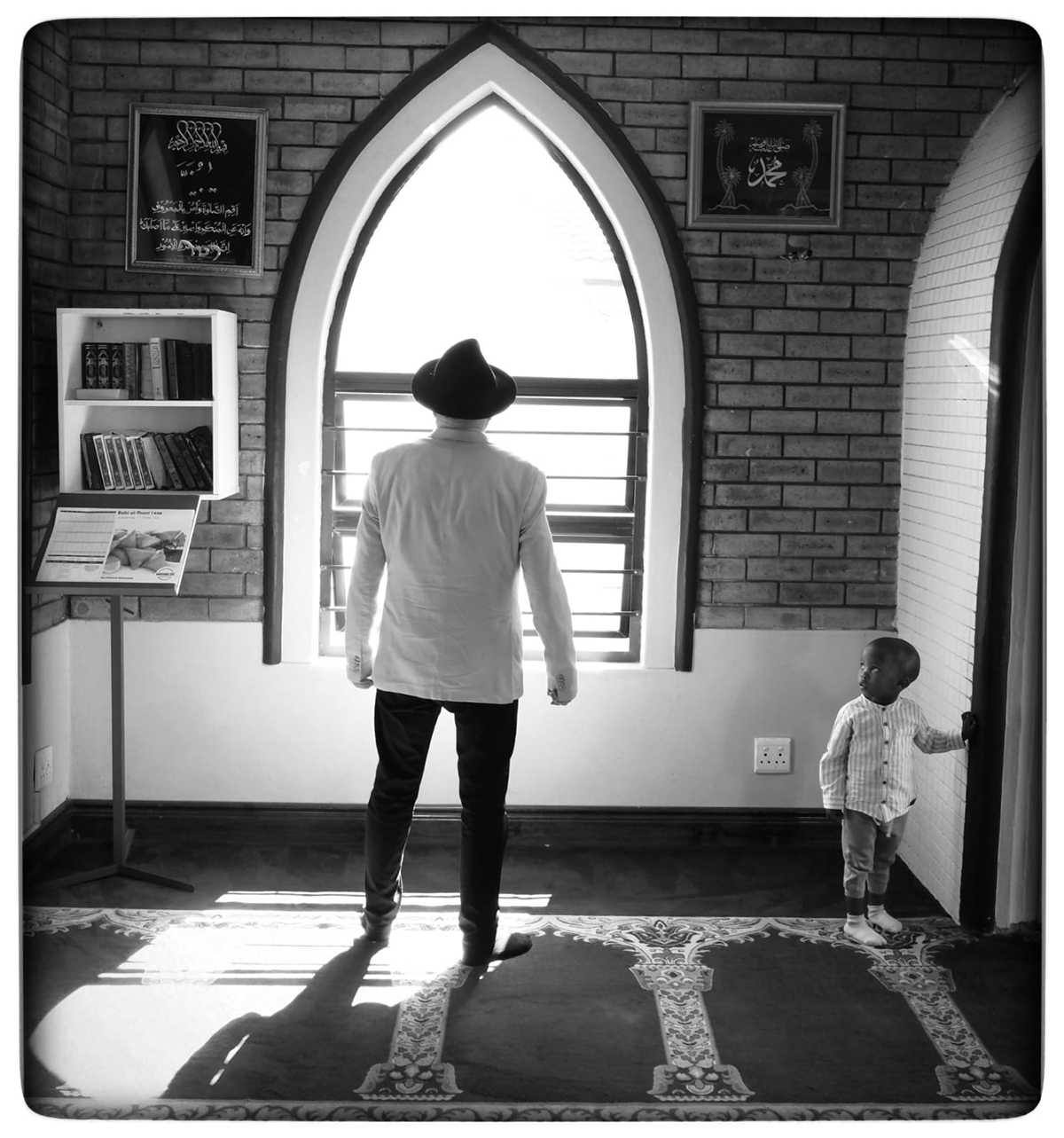
In introducing our guests at the Gugulethu Islamic Centre, I had invoked Sura Al-Hujurat, 49:13: humanity is created from a male and a female and constituted into peoples and tribes so that we may come to know one another. Through taʿāruf, the verse invites us to know one another across our differences; through taqwa, it challenges the hierarchies by which we assign human worth. Together, they ask us to cultivate relationships grounded in humility, understanding and responsibility.
Yvonne Ridley’s encounter with the Taliban in 2001 reminds us that encounters can unsettle our certainties. Here, too, taʿāruf asks us to listen with humility, allowing those we seldom meet to challenge our assumptions, and to recognise another’s humanity without surrendering our ethical judgement. Shaykh Ismail’s observation brought this responsibility close to home. Had we put our call to know one another into practice by building meaningful relationships with this community?
Knowing a community requires time, listening and exchange. People experiencing material deprivation carry histories, insights and aspirations that should shape our shared work. Solidarity respects their dignity when they help shape why and how we engage with their community.
The subsequent symbolic visit to Gugulethu Police Station, recalling Galloway’s assault there in 1985, connected the encounter to historical memory. Returning to a place associated with injury can affirm that injustice should be remembered and that change is possible. Its deeper meaning lies in recognising that, for those who live there, this history is part of an ongoing struggle for dignity, justice and belonging.
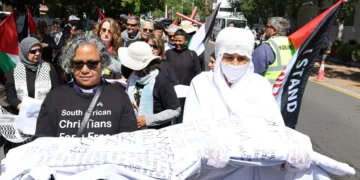
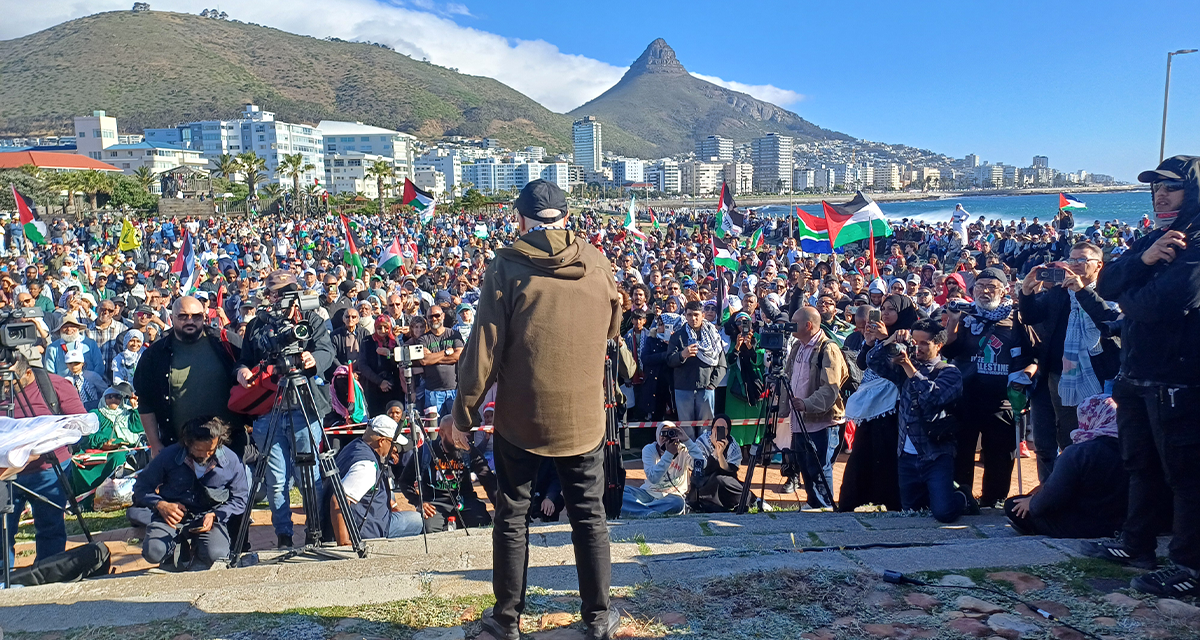
The protest walk from the Mouille Point lighthouse to the Mandela spectacles in Sea Point offered another encounter with memory. With Robben Island across the water, solidarity with Palestine unfolded within a landscape of imprisonment, resistance and the struggle for freedom. These moments raised a question of ethical consistency. How does the dignity we demand for Palestinians shape our relationships here? Our concern for freedom abroad should deepen our focus on racism, poverty and exclusion at home. Solidarity gains depth when we recognise these connected responsibilities.
That attentiveness must extend to how we organise. Did people have opportunities to question and shape the discussion? Were Palestinian perspectives central? Did young people have meaningful agency? Did we engage Cape Town’s intellectual life, including the knowledge held by educators, artists, activists and township communities? I ask as someone implicated in the choices made. Of course, high-profile visitors gather attention. Organisers must consider how that attention is shared and whether less visible voices gain space through the encounter. Respectful scrutiny of our guests’ ideas belongs alongside scrutiny of our own decisions.
Evaluation should become a practice of collective reflection, revisiting our intentions, listening to participants and those we failed to reach, and identifying which relationships and commitments should continue. For the Muslim Thinker, this concerns ethical leadership and public learning. For me, it is also a personal challenge to become more attentive to people and places I may have overlooked.
We thank Imaam Al Ghazali Global Relief for trusting the Cape Town organising team, convened by Academia Library, to organise George Galloway’s events and activities during the closing days of the solidarity tour. Our gratitude also extends to everyone who helped welcome our guests and supported the engagements through financial contributions, assistance in kind, time, hospitality and moral support. Their generosity made this collective undertaking possible.




Finally, Shaykh Gqamane’s observation remains an invitation to return, to listen, and to know one another more deeply. Honouring the effort behind this tour means carrying its solidarity into the relationships and responsibilities that remain. The question is not whether we hosted well, but whether we will now commit to the harder work of taʿāruf – the patient, transformative labour of truly knowing one another.
Adnaan Adams is the founder of The Muslim Thinker. He can be contacted via WhatsApp: 083 687 0559 or visit the website: www.themuslimthinker.org